Why the Fisker Karma Engine Still Puzzles Buyers
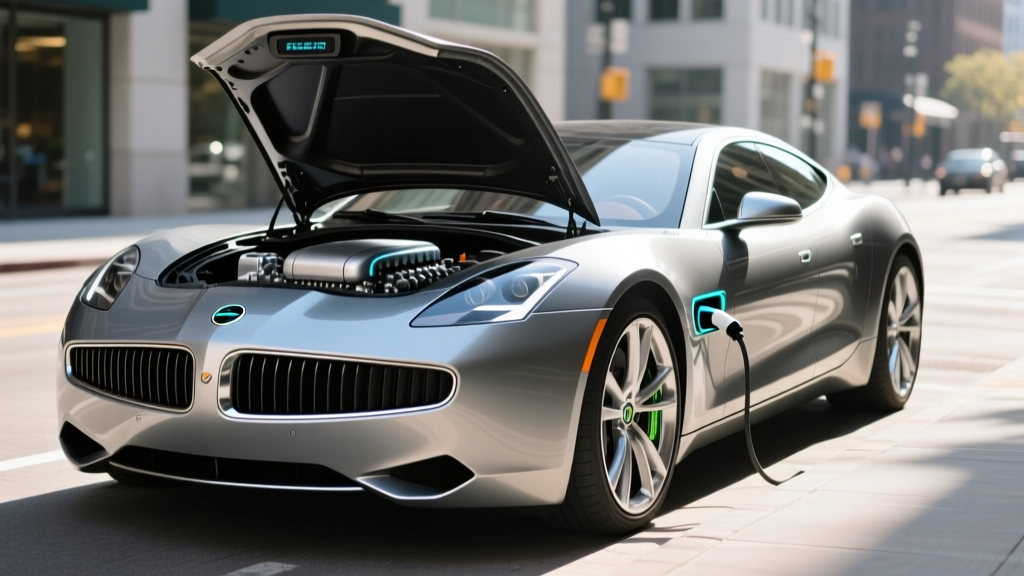
Search for "Fisker Karma engine" and you'll find a tangle of misinformation. Some sources call it a pure EV. Others describe a turbocharged four-cylinder cranking out 400 horsepower. Neither is quite right. The original Fisker Karma (2011–2012) and its later reincarnation as the Karma Revero (2017–2020) and Revero GT (2020–2021) use a series plug-in hybrid architecture — meaning the gasoline engine never drives the wheels directly. It exists solely as a generator to recharge the battery when the electric-only range runs out.
As of 2026, Karma Automotive (the successor company) has not produced a new vehicle since the Revero GT ceased production, and the company entered receivership in early 2024. This means any Karma you'll find is on the used market. Understanding exactly how this unusual powertrain works — and what it costs to live with — is essential before you sign any paperwork.
Spec Table: Fisker Karma & Revero GT at a Glance
| Specification | Fisker Karma (2012) | Karma Revero GT (2020–2021) |
|---|---|---|
| Powertrain Type | Series PHEV (range-extender) | Series PHEV (range-extender) |
| Gasoline Engine | 2.0L turbo I-4 (GM Ecotec) | 1.5L turbo I-3 (BMW) |
| Engine Role | Generator only (no mechanical link to wheels) | Generator only |
| Electric Motors | Twin rear-axle motors | Twin rear-axle motors (updated) |
| Total System Output | 403 hp / 959 lb-ft torque | 536 hp / 1,098 lb-ft torque |
| 0–60 mph | ~6.3 sec (Sport mode) | ~4.5 sec |
| Battery Usable Capacity | ~18.0 kWh (NMC) | ~26.4 kWh (NMC) |
| EPA Electric Range | 32 miles | 61 miles |
| EPA Combined MPGe (EV mode) | 54 MPGe | 70 MPGe |
| MPG (gas generator running) | ~20 MPG combined | ~22 MPG combined |
| Total Range (EV + gas) | ~230 miles | ~360 miles |
| Drivetrain | RWD (rear motors only) | RWD |
| DC Fast Charge | Not supported | Not supported |
| Level 2 Charge Rate | 3.3 kW | 6.6 kW |
| Level 2 Full Charge Time | ~6 hours | ~4.5 hours |
| Cargo Volume | ~7.0 cu ft (trunk) | ~7.0 cu ft |
| Seating | 4 passengers | 4 passengers |
| Original Base MSRP | $96,850 | $147,000 |
How the Range-Extender Engine Actually Works
The Fisker Karma operates in two modes. In Stealth mode (electric-only), the car draws exclusively from its lithium-ion battery pack, driving the rear wheels through two electric motors. You get 32 miles (original Karma) or 61 miles (Revero GT) of silent, zero-tailpipe-emission driving.
Once the battery depletes to a threshold (roughly 15–20% state of charge), Sport mode activates automatically — or you can trigger it manually. The gasoline engine fires up, but here's the critical distinction: it does not connect to the drivetrain. Instead, it spins a generator that produces electricity, which either feeds the motors directly or tops up the battery. Think of it as carrying a portable gas-powered generator in your trunk.
This series-hybrid approach means the engine can run at its most efficient RPM regardless of vehicle speed — a theoretical efficiency advantage. In practice, the conversion losses (chemical energy → mechanical → electrical → mechanical) mean the Karma achieves only about 20–22 MPG once the engine kicks in. That's unimpressive for a vehicle this heavy (over 5,300 lbs), and it's a key reason the Karma falls short of modern PHEV efficiency benchmarks like the Toyota RAV4 Prime (38 MPG combined on gas).
Real-World Range: What the EPA Sticker Doesn't Tell You
EPA electric range: 61 miles
Real-world highway (70 mph, moderate climate): ~45–50 miles
Real-world winter (30°F, highway): ~35–40 miles
Total range with full tank + full battery: ~300–340 miles (vs. EPA 360)
The original Karma's 32-mile EPA electric range shrinks to roughly 22–26 miles on the highway and as little as 15–18 miles in cold weather. For the Revero GT, the improved 26.4 kWh pack delivers a more usable 61 EPA miles, but highway driving at 75 mph with climate control running will cut that by 15–25%. Cold weather compounds the problem: lithium-ion cells lose efficiency below 40°F, and cabin heating in a series hybrid draws from the same battery that propels the car.
If your daily commute is under 40 miles round-trip and you can charge at home every night, you may rarely burn gasoline in the Revero GT. The original Karma, with its shorter range, is far less forgiving — expect the engine to activate on most trips over 25 miles.
Charging: Level 2 Only, and That's a Limitation
Neither version of the Karma supports DC fast charging. This is a significant drawback for road trips. Your only option is Level 2 AC charging (J1772 connector):
| Charging Level | Original Karma (2012) | Revero GT (2020–2021) |
|---|---|---|
| Level 1 (120V, 12A) | ~1.4 kW / ~4 mi/hr | ~1.4 kW / ~4 mi/hr |
| Level 2 (240V, 16A–32A) | 3.3 kW / ~10 mi/hr | 6.6 kW / ~18 mi/hr |
| DC Fast Charge | Not available | Not available |
| Full Level 2 Charge Time | ~6 hours | ~4.5 hours |
The Revero GT's 6.6 kW onboard charger is adequate for overnight home replenishment — plug in at 10 PM, wake up to a full battery by 6 AM. But on a road trip, you're entirely dependent on the gasoline range-extender once the battery depletes. Plan your routes around fuel stations, not chargers, when traveling beyond electric range.
For home charging, a standard 240V/32A Level 2 wallbox (such as a ChargePoint Home Flex or Emporia Vue) works well. Installation typically runs $800–$2,000 depending on panel proximity and local permitting. Since the Karma doesn't need a 48A circuit, most 200-amp home panels can accommodate it without an upgrade.
Performance: Surprisingly Quick, Surprisingly Heavy
Don't let the complexity fool you — the Karma is genuinely fast. The original's twin rear motors produce a combined 403 hp and a staggering 959 lb-ft of torque (electric torque is instantaneous, which inflates this figure compared to a gas engine's torque curve). The Revero GT bumps output to 536 hp and drops the 0–60 time to roughly 4.5 seconds.
However, all that battery and generator hardware adds mass. At 5,300+ lbs, the Karma feels its weight through corners and under hard braking. The steering is communicative but the chassis tuning favors grand-touring comfort over sports-car agility. If you're comparing it to a Tesla Model S Plaid or a Porsche Taycan, the Karma isn't in the same dynamic league — it's a luxury cruiser that happens to be quick in a straight line.
Pricing, Used Market, and Tax Credit Reality
The Fisker Karma originally stickered at $96,850 before a $7,500 federal tax credit brought effective pricing to roughly $89,000. The Karma Revero GT launched at $147,000, placing it firmly in exotic-car territory.
On today's used market (2026), original Karma examples trade between $25,000 and $55,000 depending on condition, mileage, and whether the high-voltage battery has been replaced. Revero GT models, being far rarer, hold value better — expect $80,000–$120,000.
Federal tax credit note: The §30D federal EV tax credit for new plug-in hybrids is $7,500 max, subject to MSRP caps ($80,000 for SUVs/vans/pickups, $55,000 for sedans), buyer income limits ($150K single / $300K joint), and critical-mineral/battery-sourcing requirements per IRS rules. Since the Karma is no longer sold new, §30D does not apply. Used-EV buyers may qualify for the §25E used clean vehicle credit (up to $4,000 or 30% of sale price, whichever is lower) if income limits are met and the dealer is registered with the IRS.
Interior, Cargo, and Daily Livability
The Karma's interior was designed by Henrik Fisker himself, and it shows — diamond-dust door handles, reclaimed wood trim, and a solar-panel roof that trickle-charges the 12V battery are conversation starters. But practicality is limited:
- Seating: 4 passengers only (no middle rear seat). Rear legroom is tight at ~30 inches — adequate for children, cramped for adults on long trips.
- Cargo: Roughly 7.0 cu ft of trunk space, compromised by the battery pack's location behind the rear seats. A rolling suitcase and a duffel bag will fill it.
- Infotainment: The original Karma's touchscreen was notoriously sluggish and buggy. The Revero GT received an updated system, but neither matches modern standards for responsiveness or app integration.
- Driver assists: Basic by 2026 standards — forward collision warning, lane departure warning, and rear parking sensors. No adaptive cruise control, no lane-keeping assist, no automatic emergency braking in the original.
Warranty and Battery Longevity Concerns
The original Fisker Karma came with a 6-year/60,000-mile basic warranty and a 6-year/60,000-mile powertrain warranty, plus a 5-year/50,000-mile battery warranty. A123 Systems, the original battery supplier, went bankrupt in 2012 — a factor in Fisker Automotive's own 2013 bankruptcy.
Karma Automotive (the successor) offered an 8-year/60,000-mile battery warranty on the Revero GT. However, with Karma Automotive now in receivership, warranty claims are essentially unenforceable. This is a major risk factor for any prospective buyer.
Battery replacement for the original Karma runs $8,000–$15,000 through third-party specialists, and availability of NMC replacement cells is limited. The Revero GT's larger pack would likely cost $15,000–$25,000 if a suitable replacement could even be sourced. Before purchasing, demand a State of Health (SoH) report from a qualified PHEV technician — any pack below 80% capacity should significantly reduce the price you're willing to pay.
Pros and Cons
- Head-turning design that still looks exotic
- Silent, smooth electric-only driving for short commutes
- Quick acceleration (4.5 sec 0–60 in Revero GT)
- Series-hybrid architecture means no range anxiety
- Revero GT's 61-mile EV range covers most daily needs
- Manufacturer defunct — no warranty support
- No DC fast charging
- Poor fuel economy (20–22 MPG) once engine runs
- Very limited cargo and rear-seat space
- Expensive, hard-to-source replacement batteries
- Outdated infotainment and minimal driver assists
- Heavy (5,300+ lbs) affects handling and tire wear
Is the Fisker Karma Worth Buying in 2026?
The Karma is a collector's curiosity, not a rational daily driver. If you want a plug-in hybrid with real electric range, strong reliability, and dealer support, the BMW i5 xDrive50, Mercedes S 580e, or even a more affordable Toyota Prius Prime (44-mile EV range, 52 MPGe) will serve you better.
The Karma makes sense only if: you want a design icon at a steep discount from its original MSRP, your daily driving stays under 40 miles, you have access to a specialist mechanic familiar with the platform, and you accept that parts scarcity and zero warranty support are permanent risks. Budget at least $5,000–$10,000 beyond the purchase price for potential battery work in the first two years of ownership.
Frequently Asked Questions
Does the Fisker Karma engine drive the wheels?
No. The gasoline engine in every Fisker Karma variant (original 2.0L GM Ecotec and Revero GT 1.5L BMW three-cylinder) functions exclusively as a generator. It produces electricity that powers the rear-mounted electric motors or charges the battery. There is no mechanical connection between the engine and the wheels.
What is the real-world electric range?
The original Karma delivers roughly 22–28 miles of real-world electric range (vs. 32 EPA). The Revero GT achieves about 45–55 miles in mixed driving (vs. 61 EPA). Cold weather and highway speeds reduce these figures by 20–35%.
How fast does it charge at home?
The original Karma charges at 3.3 kW on Level 2, adding about 10 miles of range per hour (full charge in ~6 hours). The Revero GT charges at 6.6 kW, adding about 18 miles per hour (full charge in ~4.5 hours). Neither supports DC fast charging.
Does the Fisker Karma qualify for any tax credit?
Not the new-vehicle §30D credit, since it's no longer sold new. Used buyers may qualify for the §25E used clean vehicle credit (up to $4,000) if purchased from a registered dealer and income limits are met ($75K single / $150K joint). Verify eligibility at irs.gov.
What's the biggest ownership risk?
Karma Automotive is in receivership with no active warranty support. The high-voltage battery is the single most expensive component, and replacement cells are scarce. A battery failure could cost $10,000–$25,000 with limited repair options. Always obtain a State of Health report before purchasing.
How does it compare to modern PHEVs?
Modern PHEVs like the BMW X5 xDrive50e (38-mile EV range, 50 MPGe, full warranty) or the Lexus RX 500h+ (37-mile EV range) offer better efficiency, faster charging, current safety technology, and dealer support. The Karma cannot compete on practicality — its appeal is purely aesthetic and historical.