The Fisker Karma Electric Car: Understanding What You're Actually Buying
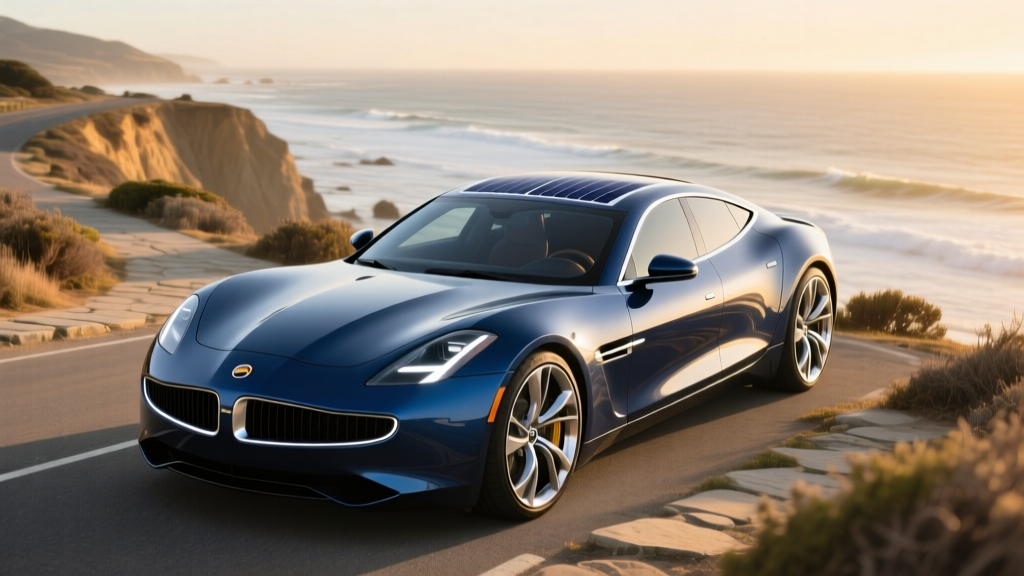
If you've been searching for a "Fisker Karma electric car," you're likely encountering a tangle of names, rebadges, and corporate history that even seasoned EV shoppers find confusing. Let's untangle it immediately: the original Fisker Karma (2011–2012) was never a fully electric car — it was an extended-range electric vehicle (EREV) with a 2.0L turbocharged gasoline generator. The modern successor, the Karma GS-6 (and its pure-electric variant, the Karma GSe-6), is what you'll find in today's market under the Karma Automotive brand.
As of 2026, Karma Automotive has faced significant financial restructuring, and production of the GS-6 and GSe-6 has been extremely limited. This review covers the most recent available specifications, real-world ownership data, and a frank assessment of whether this niche luxury EREV/EV is a sound purchase compared to established competitors. If you're considering one on the used market or as a collector piece, the numbers below are essential.
Range, Battery, and Efficiency: The Numbers That Matter
EPA Range (GS-6 EREV, EV-only mode): 52–61 miles electric-only before the gas generator engages
Real-World Expectation: Expect 40–50 miles of electric-only driving in mixed highway/city use with the EREV; the pure EV variant drops to roughly 60–70 miles at sustained highway speeds. Cold weather (below 32°F) can reduce these figures by 20–30%, consistent with NMC lithium-ion behavior.
The Karma platform uses an NMC (nickel-manganese-cobalt) lithium-ion battery pack. The GS-6 EREV carries a 42 kWh usable battery (from a total pack of approximately 44 kWh), while the GSe-6 pure-electric variant uses the same pack without the onboard generator. Neither offers an LFP option — the NMC chemistry provides higher energy density but follows typical NMC degradation curves of roughly 10–15% capacity loss over 100,000 miles, depending on charging habits.
| Specification | GS-6 (EREV) | GSe-6 (Pure EV) |
|---|---|---|
| Battery (usable) | 42 kWh NMC | 42 kWh NMC |
| EPA Electric-Only Range | 52–61 mi | ~80 mi (est.) |
| Total Range (with generator) | ~360 mi combined | 80 mi |
| MPGe (EV mode) | 58 MPGe | ~90 MPGe (est.) |
| Energy Consumption | 58 kWh/100mi | ~52 kWh/100mi |
| Drivetrain | RWD (dual rear motors) | RWD (dual rear motors) |
| Horsepower (EV mode) | 536 hp combined | 536 hp combined |
| 0–60 mph | 5.8 sec | 5.8 sec |
Efficiency is where the Karma platform shows its age. At 52–58 kWh per 100 miles, it consumes significantly more energy per mile than modern competitors. For comparison, the Tesla Model S uses roughly 28–32 kWh/100mi, and the Lucid Air achieves as low as 24 kWh/100mi. The Karma's heavy curb weight (over 5,400 lbs) and older powertrain electronics explain the gap.
Charging Speed: DC Fast Charge and Home Level 2
Charging is a critical consideration for any EV, and the Karma's capabilities reflect its older architecture. Here's what to expect:
| Charging Level | Power (kW) | Speed / Time | Connector |
|---|---|---|---|
| Level 1 (120V household) | ~1.4 kW | ~4–5 miles per hour | J1772 |
| Level 2 (240V home/public) | 6.6 kW (max onboard charger) | ~18–22 miles per hour; 0–100% in ~7 hours | J1772 |
| DC Fast Charge | ~50 kW peak (CCS1) | 10–80% in approximately 45–55 minutes | CCS1 |
The 6.6 kW onboard AC charger is a significant limitation. Most modern EVs accept 11–19 kW on Level 2, meaning overnight home charging is slower than competitors. A full charge from empty takes roughly 7 hours on a 48-amp Level 2 circuit.
On DC fast charging, the ~50 kW peak rate means the Karma cannot take advantage of 150–350 kW chargers at Electrify America or EVgo stations. You'll charge at the vehicle's maximum acceptance rate, not the station's capability. The 10–80% session in 45–55 minutes is functional for road trips but far behind the 15–25 minute sessions common in current EVs. The charge curve is relatively flat — there's no dramatic taper above 80% because the peak rate is already modest.
Performance, Interior Space, and Technology
The Karma's dual rear electric motors produce a combined 536 horsepower and deliver a 0–60 mph time of 5.8 seconds. In the EREV variant, the BMW-sourced 2.0L turbocharged inline-3 generator does not drive the wheels — it solely generates electricity to extend range. The result is smooth, linear electric acceleration with the security of a gas backup.
Interior space is the Karma's most polarizing characteristic. The car's dramatic, low-slung design sacrifices practicality:
- Front legroom: 42.3 inches (adequate for most adults)
- Rear legroom: 29.5 inches (cramped — best suited for children or short trips)
- Trunk/cargo: 7.0 cubic feet (very limited — the battery pack and generator consume space)
- Seating: 4 passengers only (no 5-seat option)
The infotainment system uses a 10.2-inch touchscreen with basic navigation, Bluetooth, and a premium audio system. However, the software platform is dated compared to 2026 standards — no over-the-air updates, limited app integration, and no native Apple CarPlay or Android Auto in earlier builds. ADAS features are minimal: forward collision warning and lane departure warning are available, but there is no adaptive cruise control, no automated lane centering, and no Level 2 driver-assist suite comparable to Tesla Autopilot or GM Super Cruise.
Pricing, Tax Credits, and Total Cost of Ownership
Pricing for the Karma GS-6 and GSe-6 requires careful attention, as production volumes have been extremely low and Karma Automotive's financial situation adds risk.
| Item | GS-6 (EREV) | GSe-6 (Pure EV) |
|---|---|---|
| Base MSRP (last listed) | $83,995 | $89,995 |
| As-Tested / Loaded Price | $95,000–$103,000 | $98,000–$106,000 |
| Federal §30D Tax Credit | Not eligible (EREV/PHEV MSRP cap: $80,000) | Not eligible (EV MSRP cap: $55,000 for sedans) |
| Estimated Out-of-Pocket | $83,995+ | $89,995+ |
Neither variant qualifies for the IRS §30D federal EV tax credit. The GS-6 exceeds the $80,000 MSRP cap for vans, SUVs, and pickup trucks (and as a sedan, would face the $55,000 cap). The GSe-6, classified as a sedan, exceeds the $55,000 cap. Additionally, battery sourcing and critical mineral requirements under current rules would likely disqualify the pack regardless of price. Always verify current eligibility with a tax professional and the IRS before purchasing.
Insurance costs run 15–25% higher than comparable luxury sedans due to low production volume, expensive body panels, and limited repair networks. Depreciation is steep — expect 45–55% value loss in the first three years, significantly worse than Tesla or Porsche equivalents.
Warranty, Reliability, and Long-Term Ownership
Karma Automotive offered the following warranty coverage on new GS-6/GSe-6 vehicles:
- Basic vehicle warranty: 4 years / 50,000 miles
- Battery and powertrain warranty: 6 years / 60,000 miles (notably shorter than the industry-standard 8 years / 100,000 miles)
- Roadside assistance: 4 years / 50,000 miles
The shorter battery warranty is a red flag. Most competitors — Tesla, Hyundai, Ford, BMW — provide 8-year/100,000-mile battery coverage with a guaranteed capacity retention threshold (typically 70%). Karma's warranty does not specify a clear State of Health (SoH) replacement threshold, which creates ambiguity if degradation claims arise.
Reliability data is sparse given the low production volume (estimated under 2,000 units total across all variants). Owner forums report issues with 12V auxiliary battery drain, infotainment freezes, and generator engagement vibrations. Service centers are extremely limited — fewer than 20 authorized facilities exist in the US — meaning most owners rely on independent shops or mobile technicians.
- Stunning, head-turning design — nothing else looks like it
- Smooth electric acceleration (536 hp, 5.8s 0–60)
- EREV variant eliminates range anxiety with 360+ mi total range
- Exclusivity — you will not see another one at the charging station
- Very short electric-only range (52–80 mi)
- Slow DC fast charging (~50 kW peak) and 6.6 kW Level 2
- Cramped rear seats (29.5" legroom) and tiny trunk (7.0 cu ft)
- No federal tax credit eligibility
- Limited service network and steep depreciation
- Dated infotainment with no OTA updates
- 6-yr/60,000-mi battery warranty (below industry standard)
Who Should (and Shouldn't) Buy the Karma
The Karma is a niche vehicle that suits a very specific buyer:
- You prioritize design exclusivity over practicality and efficiency
- You want an EREV with electric-only commuting under 40 miles and gas backup
- You accept high depreciation and limited service infrastructure
- You view the car as a collector or conversation piece as much as transportation
- You need a daily driver with practical cargo and passenger space
- You want fast DC charging for road trips (150+ kW capability)
- You want a full SAE Level 2 driver-assist suite
- You want to maximize federal/state tax incentives
- You prioritize long-term reliability data and resale value
For the price of a Karma ($84,000–$106,000), buyers can choose from the Tesla Model S (405 mi EPA range, 250 kW DC charging, full Level 2 ADAS), the Lucid Air Pure (410 mi, 200+ kW charging, spacious interior), the BMW i7 (318 mi, 195 kW charging, luxury features), or the Mercedes EQS (350 mi, 200 kW charging). Each offers dramatically better efficiency, charging speed, technology, and dealer support.
Frequently Asked Questions
What is the real-world range of the Fisker Karma electric car?
The GS-6 EREV delivers 52–61 miles of electric-only driving (EPA), but expect 40–50 miles in mixed real-world use. With the gas generator, total range reaches approximately 360 miles. The GSe-6 pure EV variant estimates around 80 miles EPA, dropping to 60–70 miles at highway speeds. Cold weather reduces EV range by 20–30%.
How fast does the Karma charge at home and on DC fast chargers?
On a Level 2 home charger (240V), the Karma accepts a maximum of 6.6 kW, adding about 18–22 miles per hour and fully charging in roughly 7 hours. On DC fast chargers, it peaks at approximately 50 kW (CCS1), reaching 10–80% in 45–55 minutes. These rates are well below 2026 EV averages.
Does the Fisker Karma qualify for the federal EV tax credit?
No. Both the GS-6 and GSe-6 exceed the IRS §30D MSRP caps ($55,000 for sedans). Battery critical-mineral and sourcing requirements would likely disqualify the pack independently. Consult a tax professional for your specific situation.
Is the Karma worth buying versus a Tesla Model S or Lucid Air?
For most buyers, no. The Model S and Lucid Air offer 4–5x the electric range, 3–5x faster DC charging, modern ADAS, OTA updates, vastly more cargo space, and stronger resale value — at similar or lower prices. The Karma's value is in design exclusivity, not measurable performance or ownership economics.
What is Karma Automotive's current status in 2026?
Karma Automotive has undergone financial restructuring, and new vehicle production has been extremely limited. Prospective buyers should verify current production status, parts availability, and authorized service center locations before committing to a purchase. Used-market purchases carry additional risk given the thin dealer network.
What battery chemistry does the Karma use and how long will it last?
The Karma uses NMC (nickel-manganese-cobalt) lithium-ion cells with a 42 kWh usable capacity. NMC batteries typically retain 85–90% capacity after 100,000 miles with proper care (avoiding frequent DC fast charging and keeping SoC between 20–80% for daily use). The battery warranty covers 6 years / 60,000 miles — shorter than the industry-standard 8/100,000.
Sources: fueleconomy.gov (EPA range and efficiency data), IRS §30D Clean Vehicle Credit rules, Karma Automotive official specifications (archived).