The Fisker Karma Ecosport occupies a strange corner of electrified-vehicle history. Originally launched in 2011–2012 by Henrik Fisker's namesake company, the Karma was one of the first production plug-in hybrid electric vehicles (PHEVs) positioned as a luxury grand tourer. The "Ecosport" trim was the mid-tier variant, sitting between the base EcoStandard and the top-shelf EcoChic. After Fisker Automotive's 2013 bankruptcy, the platform was acquired by Wanxiang Group, rebranded as the Karma Revero, and eventually evolved into the Karma GS-6 and Gyesera. If you are researching a Fisker Karma Ecosport today, you are almost certainly looking at the used market — and this review will help you understand exactly what you are buying, what to watch out for, and how this pioneering PHEV stacks up against modern alternatives.
This review focuses on the original 2012 Fisker Karma Ecosport as it was sold new, while also addressing what ownership looks like in 2026 for the pre-owned buyer. We will also note how the platform evolved under Karma Automotive for context.
What Exactly Is the Fisker Karma Ecosport?
The Karma is technically an extended-range electric vehicle (EREV) — a series plug-in hybrid. Its front-mounted 2.0-liter turbocharged GM Ecotec engine never drives the wheels directly. Instead, it acts as a generator, producing electricity that feeds the rear-mounted electric motors once the battery is depleted. This is fundamentally different from parallel hybrids like the Toyota Prius Prime, where the gas engine can mechanically drive the wheels.
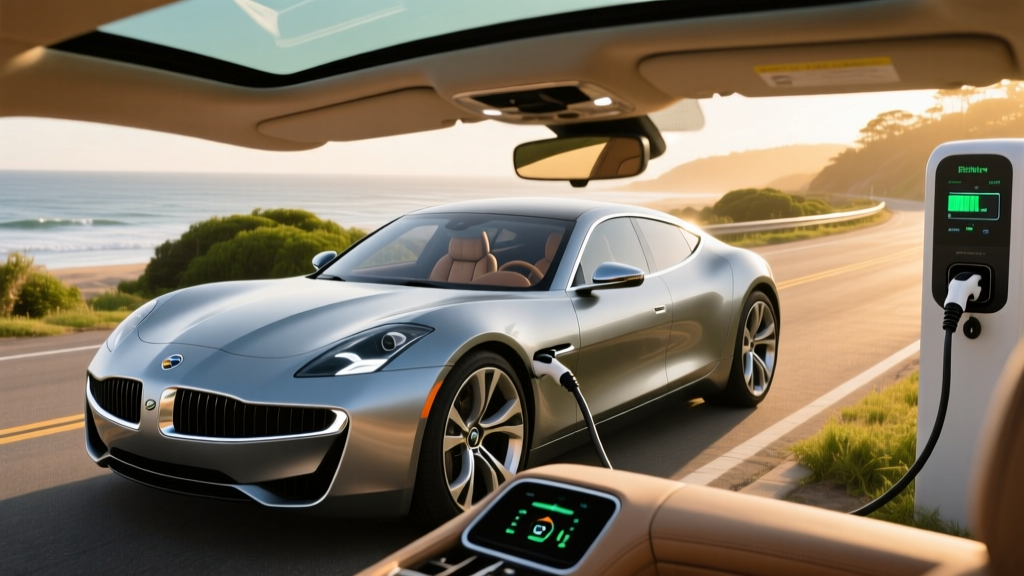
The Ecosport trim added 22-inch diamond-dust alloy wheels, a premium audio system, and a solar-panel roof that trickled charge to the 12V auxiliary system (not the traction battery). Interior materials included recycled wood and eco-suede, which was part of Fisker's sustainability branding.
| Spec | Value |
|---|---|
| Powertrain Type | Series PHEV / EREV |
| Electric Motors | Dual rear-mounted (295 kW combined peak) |
| Horsepower (electric) | ~260 hp (sustained) / ~403 hp (peak, Sport mode) |
| Torque | 959 lb-ft (peak) |
| 0–60 mph | 5.8 seconds (Sport mode) |
| Top Speed | 125 mph (Sport) / 95 mph (Stealth/EV-only) |
| Battery Capacity | 20.1 kWh gross / ~18 kWh usable (A123 Systems LFP) |
| EPA Electric Range | 32 miles |
| EPA Combined (gas generator) | 20 mpg (52 MPGe electric) |
| Fuel Tank | 9.5 gallons |
| Total Range (electric + gas) | ~230 miles |
| Drivetrain | Rear-wheel drive |
| Curb Weight | ~5,300 lbs |
| Length / Width / Height | 196.7" / 86.0" (w/ mirrors) / 52.4" |
| Original Base MSRP | ~$103,000 |
| Used Market Range (2026) | $18,000–$38,000 depending on condition and battery SoH |
Real-World Range and Efficiency: What to Expect
Real-World Expectation: 22–28 miles in mixed driving; 18–22 miles at sustained highway speeds (70+ mph); 25–30 miles in city/low-speed use. Cold weather (below 40°F) can reduce EV range by 25–35%, yielding as little as 15–20 miles on a full charge.
The EPA rated the original Karma at 32 miles of all-electric range in what was then called "Stealth" mode. However, that figure was optimistic even when new. The 20.1 kWh A123 Systems lithium iron phosphate (LFP) battery had roughly 18 kWh of usable capacity — and after a decade or more of calendar aging and cycle use, most used Karmas on the market today will deliver noticeably less.
In independent testing when new, reviewers at Edmunds and Motor Trend regularly observed 25–28 miles before the range-extender kicked in. At highway speeds, the tall, heavy sedan (over 5,300 lbs) consumed electrons quickly. Once the 260-hp GM 2.0L turbo fired up as a generator, fuel economy dropped to roughly 20 mpg combined — respectable for a car of its size and performance, but far from the efficiency of a modern PHEV like the Toyota RAV4 Prime (38 mpg combined, 42 miles EV range).
For 2026 buyers evaluating a used Karma Ecosport, the critical metric is battery State of Health (SoH). Request a diagnostic readout from a qualified technician before purchase. A pack at 70% SoH may only deliver 15–20 miles of electric driving, fundamentally changing the ownership experience.
Charging: Speeds, Connectors, and Home Setup
The Karma's charging capability reflects its 2012 engineering. It supports Level 2 AC charging only — there is no DC fast-charging port.
| Level | Power | Connector | Full Charge Time | Miles Added per Hour |
|---|---|---|---|---|
| Level 1 (120V) | ~1.4 kW | J1772 (standard) | ~14 hours | ~5 miles/hr |
| Level 2 (240V) | 3.3 kW (max onboard) | J1772 | ~6 hours | ~11 miles/hr |
| DC Fast Charge | Not supported | N/A | N/A | N/A |
The 3.3 kW onboard charger is the bottleneck. Even if you plug into a 48-amp Level 2 home charger capable of delivering 11.5 kW, the Karma will only accept 3.3 kW. A full 0–100% charge takes approximately six hours. For a daily commuter with 20–25 miles of electric driving, this means plugging in every night is essential — you cannot rely on opportunistic top-ups during a lunch break the way you might with a modern EV that accepts 150+ kW on DC.
The solar roof panel is largely symbolic. It generates roughly 200 watts in ideal conditions — enough to offset vampire drain and keep the 12V system topped up, but it adds negligible range to the traction battery. Do not factor it into your range calculations.
Performance and Driving Dynamics
In Sport mode, the Karma Ecosport delivers a genuine performance-car experience. The twin rear electric motors produce a combined 403 peak horsepower and a massive 959 lb-ft of torque — the latter figure available instantly from zero RPM. The 0–60 mph sprint takes 5.8 seconds, and the thrust is seamless because there is no transmission to shift. The single-speed reduction gear means acceleration is linear and uninterrupted.
Stealth mode (electric-only) caps output at roughly 260 hp and limits top speed to 95 mph. This is the mode for quiet, zero-local-emission city driving — and it is where the Karma feels most distinctive, gliding silently in a 5,300-pound luxury sedan.
The driving experience is GT-oriented rather than sports-car sharp. The Karma is long, wide, and heavy. Body roll is well-controlled thanks to the low-mounted battery pack, but this is a grand tourer, not a canyon carver. Ride quality is firm but composed, and the cabin is insulated from road noise — until the range-extender engine fires up, which introduces a noticeable droning hum that contrasts sharply with the electric silence.
Interior, Cargo, and Practicality
The Karma's cabin was ambitious for 2012: reclaimed wood trim, recycled-material upholstery, and a dramatic low-slung dashboard. However, practicality is the car's most significant weakness.
Because the battery tunnel runs through the center of the car (visible as a prominent spine between the rear seats), the Karma is strictly a four-seater. Rear legroom is tight at roughly 29 inches — adults over 5'8" will find their knees pressed into the front seatbacks. Headroom is compromised by the low roofline, and ingress/egress requires genuine flexibility.
Cargo space is severely limited. The trunk offers approximately 6.9 cubic feet — barely enough for two carry-on suitcases. There is no frunk (front trunk), as the engine bay houses the range-extender and power electronics.
Infotainment was dated even at launch. The touchscreen interface is slow, lacks Apple CarPlay or Android Auto, and the navigation system uses outdated mapping. Many owners have installed aftermarket head units to bring connectivity into the modern era.
Driver-assistance technology is minimal by 2026 standards: the Karma has basic stability control, ABS, and front/side airbags, but no adaptive cruise control, lane-keeping assist, or automatic emergency braking. It was not crash-tested by NHTSA or IIHS, so there are no official safety ratings.
Pricing, Tax Credits, and Ownership Costs
The original Fisker Karma Ecosport carried an MSRP of approximately $103,000 in 2012. Fisker Automotive went bankrupt in 2013, and the car has depreciated steeply. As of early 2026, used Karma Ecosport examples typically trade between $18,000 and $38,000, depending on mileage, cosmetic condition, and — critically — battery State of Health.
| Item | Value |
|---|---|
| Original MSRP (2012) | ~$103,000 |
| Current Used Market (2026) | $18,000–$38,000 |
| Federal Used-EV Tax Credit (§25E) | Up to $4,000 (30% of sale price, max $4,000; vehicle must be ≤$25,000, sold by licensed dealer, buyer income ≤$75K single / $150K joint) |
| New-Vehicle §30D Credit | Not applicable (discontinued model) |
| Estimated Annual Insurance | $2,200–$3,500 (varies widely; specialty/classic-car policies may be lower) |
| Battery Replacement (if needed) | $8,000–$15,000+ (limited aftermarket/remanufactured availability) |
Because the Karma is only available used, the relevant federal incentive is the §25E Used Clean Vehicle Credit, not the §30D new-vehicle credit. Under current IRS rules, a used PHEV can qualify for up to $4,000 (30% of the sale price, capped at $4,000) if the vehicle's sale price is $25,000 or less, it is purchased from a licensed dealer, and the buyer's modified adjusted gross income does not exceed $75,000 (single) or $150,000 (joint). The Karma's 32-mile EV range does meet the minimum 7-mile threshold for PHEVs under §25E. However, battery degradation may complicate eligibility if the vehicle no longer meets the range requirement at time of sale — consult a tax professional and verify current IRS guidance before relying on this credit.
Ownership costs carry real risks. The A123 Systems battery pack is no longer manufactured in its original form, and replacement options are limited to remanufactured units from specialty shops. Budget $8,000–$15,000 for a battery replacement if the pack is significantly degraded. Parts availability in general is a concern — Fisker Automotive's supply chain collapsed with the company, and while Karma Automotive (the successor) supports later Revero/GS-6 models, original Karma parts can require salvage-yard hunting or custom fabrication.
Battery Warranty and Longevity
When new, the Karma's battery was covered by a 5-year/60,000-mile warranty (extended to 6 years/60,000 miles in some cases under a 2012 recall-related extension). That warranty is long expired for all surviving examples.
The A123 Systems LFP chemistry is inherently more thermally stable and longer-lasting than the NMC chemistries common in modern EVs. LFP cells typically tolerate more charge cycles before significant degradation. However, calendar aging is unavoidable — a 12-to-14-year-old battery will have lost capacity regardless of mileage. Expect a well-maintained Karma battery to retain 60–80% of its original capacity; examples below 60% SoH should be priced accordingly, as replacement is expensive and sourcing is uncertain.
Who Is the Fisker Karma Ecosport For?
Pros
- Striking design that still turns heads in 2026
- Genuine performance (5.8s 0–60, 959 lb-ft torque) in Sport mode
- Series-hybrid architecture means no range anxiety — gas generator extends range to ~230 miles
- LFP battery chemistry is inherently stable and long-cycle-life
- Solar roof is a unique conversation piece
- Depreciated significantly — a $103K car now available for $20K–$35K
Cons
- Only 32 miles EPA electric range (less in real-world and with degradation)
- No DC fast charging; 3.3 kW Level 2 is painfully slow by 2026 standards
- Extremely limited cargo (6.9 cu ft) and cramped rear seats
- Parts scarcity and expensive battery replacement ($8K–$15K+)
- Dated infotainment with no CarPlay/Android Auto
- No official crash-test ratings
- Outdated driver-assist technology (no ADAS features)
- Specialist mechanic required; limited service network
The Karma Ecosport is best suited for:
- Collectors and design enthusiasts who value its Pininfarina-adjacent styling and place in EV history
- Short-distance commuters with reliable home charging and a sub-25-mile round trip who want a distinctive daily driver
- Technically inclined owners comfortable with a niche vehicle and willing to source parts independently
It is not well-suited for families (too cramped, no safety ratings), road-trippers (no DC fast charging, poor highway fuel economy), or anyone who needs a reliable appliance-style commuter without maintenance risk.
How It Compares to Modern PHEVs and EVs
The automotive landscape has moved dramatically since 2012. Here is how the Karma Ecosport stacks up against modern alternatives a 2026 buyer might cross-shop:
| Vehicle | Type | EV Range | DC Fast Charge | 0–60 | Used/New Price |
|---|---|---|---|---|---|
| Fisker Karma Ecosport (2012) | EREV/PHEV | 32 mi EPA | None | 5.8s | $18K–$38K (used) |
| Toyota RAV4 Prime (2025) | PHEV | 42 mi EPA | None (6.6 kW L2) | 5.7s | ~$44K (new) |
| BMW i5 eDrive40 (2025) | BEV | 295 mi EPA | 205 kW | 5.7s | ~$67K (new) |
| Karma GS-6 (2022–2023) | EREV/PHEV | 61 mi EPA | None | 4.5s | $40K–$60K (used) |
The RAV4 Prime offers more EV range, far better practicality, Toyota reliability, and a modern safety suite — for more money, but with none of the Karma's drama. The Karma GS-6 (the Karma Ecosport's spiritual successor) nearly doubles the electric range and cuts the 0–60 time, but it too lacks DC fast charging and carries similar parts-availability concerns. The BMW i5 is a fully electric luxury sedan with modern charging, ADAS, and dealer support, but it costs significantly more.
Verdict: Should You Buy a Fisker Karma Ecosport in 2026?
The Fisker Karma Ecosport is a fascinating artifact from the dawn of the plug-in-vehicle era — ambitious, beautiful, and deeply flawed. In 2026, it is a compelling enthusiast purchase at its depreciated price, but it demands an owner who understands what they are signing up for: limited electric range, slow charging, scarce parts, and a car that will always require more attention than a modern alternative.
Frequently Asked Questions
What is the real-world electric range of the Fisker Karma Ecosport?
The EPA rated it at 32 miles, but real-world driving typically yields 22–28 miles when new, and 15–25 miles for a 2026 used example depending on battery State of Health. Highway speeds and cold weather reduce range further.
Does the Fisker Karma support DC fast charging?
No. The Karma only supports Level 2 AC charging at a maximum rate of 3.3 kW, meaning a full charge takes about six hours. There is no DC fast-charge port.
How much does a used Fisker Karma Ecosport cost in 2026?
Most examples trade between $18,000 and $38,000, depending on mileage, condition, and battery health. Well-preserved, low-mileage examples with verified battery SoH command the higher end of that range.
Does the Fisker Karma qualify for any federal tax credit?
As a used vehicle, it may qualify for the §25E Used Clean Vehicle Credit of up to $4,000, but only if the sale price is $25,000 or less, the buyer meets income caps ($75K single / $150K joint), and the vehicle is purchased from a licensed dealer. The new-vehicle §30D credit does not apply. Verify current IRS rules before relying on this credit.
What is the biggest risk of buying a used Fisker Karma?
Battery replacement cost and parts scarcity. The A123 Systems LFP pack is no longer produced in its original configuration, and replacement can cost $8,000–$15,000 or more. Body panels, trim pieces, and electronic modules are also difficult to source since Fisker Automotive's 2013 bankruptcy.
Is the Karma Ecosport the same as the Karma Revero or GS-6?
They share the same basic platform, but they are different products. The Revero (2017–2020) was a refreshed version with an updated BMW-sourced range-extender and improved battery. The GS-6 (2021–2023) further modernized the powertrain with 61 miles of EPA electric range. All were produced by Karma Automotive (Wanxiang Group), not the original Fisker Automotive.
Can I daily-drive a Fisker Karma Ecosport?
You can, if your commute is short (under 25 miles round-trip) and you have reliable home Level 2 charging. However, be prepared for higher maintenance costs, limited cargo and passenger space, and the reality that any major electrical issue could sideline the car for weeks while parts are sourced.