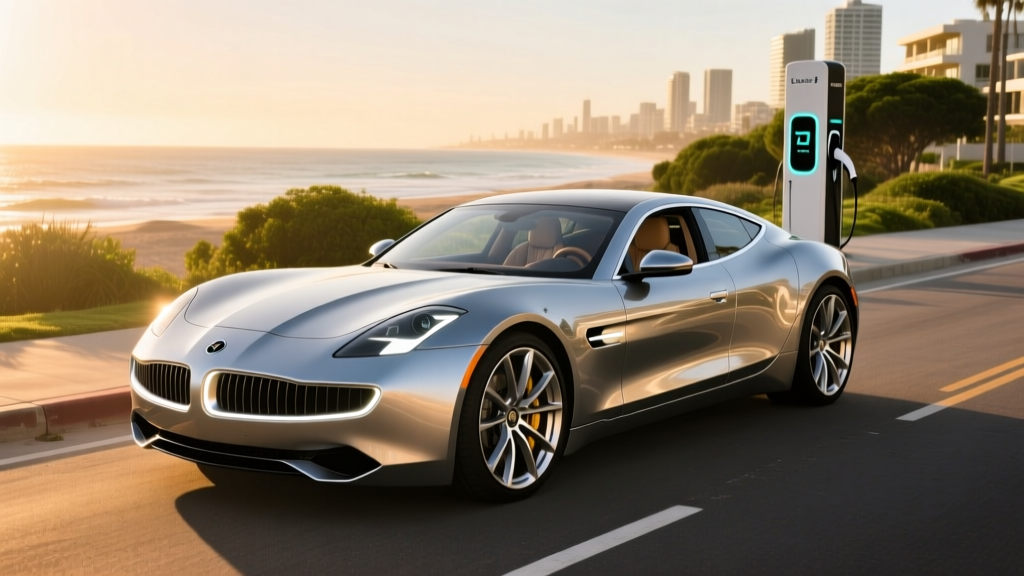
The Fisker Karma occupies a strange space in the electrified-vehicle landscape. Originally launched in 2012, revived as the Karma Revero in 2017, and then rebranded again under Karma Automotive, this luxury plug-in hybrid has always been more sculpture than daily driver. If you're researching the Fisker Karma cost of ownership in 2026, you're likely looking at the used or certified-pre-owned market — because Karma Automotive ceased new vehicle production and filed for Chapter 11 bankruptcy protection in early 2024.
This review breaks down what it actually costs to buy, charge, maintain, and live with a Fisker Karma (and its Revero/GS-6 successors) today, with hard numbers on range, efficiency, and how it stacks up against modern plug-in hybrids you can still buy new.
Quick Verdict: Who Should Consider a Fisker Karma in 2026?
The Fisker Karma is a collector-grade luxury PHEV for buyers who prioritize head-turning design and exclusivity over practicality, warranty coverage, or cutting-edge efficiency. It is not a rational commuter choice. If you want a usable daily-driver PHEV with a modern warranty, current safety tech, and dealer support, look at the BMW 5 Series PHEV, Lexus TX 550h+, or Toyota RAV4 Prime instead.
But if you understand what you're getting into — limited parts availability, no new-vehicle warranty, and a niche ownership community — the Karma can be acquired at a fraction of its original $102,000+ MSRP.
Fisker Karma / Revero: Core Specs at a Glance
| Specification | 2012 Fisker Karma | 2020 Karma Revero GT |
|---|---|---|
| Powertrain | 2.0L turbo I4 range-extender + 2 electric motors (RWD) | 1.5L turbo I3 (BMW-sourced) range-extender + 2 electric motors (RWD) |
| Combined Horsepower | 403 hp | 536 hp |
| 0-60 mph | 6.3 seconds (Sport mode) | 4.5 seconds |
| Usable Battery Capacity | ~18 kWh (A123 Systems LFP) | ~21 kWh (NMC lithium-ion) |
| EPA Electric-Only Range | 32 miles | 61 miles (Revero GT) |
| EPA Combined MPGe (Electric) | 54 MPGe | 70 MPGe |
| Gas-Only Fuel Economy | ~20 mpg combined | ~22 mpg combined |
| Total Range (Electric + Gas) | ~230 miles | ~360 miles |
| DC Fast Charging | Not supported | Not supported |
| Level 2 Charging (240V) | 3.3 kW (~6 hrs full charge) | 6.6 kW (~3 hrs full charge) |
| Drivetrain | Rear-wheel drive | Rear-wheel drive |
| Cargo Volume | ~7.0 cu ft (trunk) | ~7.5 cu ft |
| Seating | 4 passengers | 4 passengers |
| Original Base MSRP | $102,000 | $135,000 |
Real-World Range and Efficiency: What to Actually Expect
2012 Fisker Karma: EPA-rated 32 miles electric-only. Real-world: expect 22–28 miles on a full charge in moderate temperatures. Highway driving at 70+ mph drops this to roughly 18–22 miles. In cold weather (below 35°F), plan on 15–20 miles before the gasoline range-extender engages.
2020 Karma Revero GT: EPA-rated 61 miles electric-only. Real-world: 45–55 miles in mixed driving, 35–42 miles at sustained highway speeds, and 30–38 miles in freezing conditions.
Neither vehicle supports DC fast charging, so all charging is Level 1 (120V) or Level 2 (240V).
The Karma's series-hybrid architecture means the gasoline engine never directly drives the wheels — it acts solely as a generator to charge the battery once electric range is depleted. This gives smooth, electric-like acceleration at all times but sacrifices highway fuel economy compared to parallel-hybrid systems like Toyota's or BMW's.
Efficiency in charge-sustaining (gas-generator) mode is modest. The original Karma achieves roughly 20 mpg combined on gasoline, which is unimpressive for a vehicle with a $100,000+ original price tag. The Revero GT improved this to around 22 mpg thanks to the more efficient BMW-sourced 1.5L three-cylinder generator.
Charging Speed and Home Setup
This is where the Karma's age shows most clearly. Neither the original Karma nor the Revero GT supports DC fast charging. There is no CCS, NACS, or CHAdeMO port. All charging happens via a J1772 Level 2 connector or a standard 120V Level 1 cord.
| Charging Level | 2012 Karma (18 kWh) | 2020 Revero GT (21 kWh) |
|---|---|---|
| Level 1 (120V / 12A) | ~1.4 kW — ~13 hours (0–100%) | ~1.4 kW — ~15 hours (0–100%) |
| Level 2 (240V / 16A) | 3.3 kW — ~6 hours (0–100%) | 6.6 kW — ~3.5 hours (0–100%) |
| DC Fast Charge | Not supported | Not supported |
For daily use, a home Level 2 charger is essentially mandatory. A 240V/30A circuit installation typically costs $800–$2,000 depending on your electrical panel's proximity to the garage and whether a panel upgrade is needed (source: typical licensed electrician estimates). The Karma's 3.3 kW onboard charger (original) is painfully slow by 2026 standards — most modern PHEVs accept 7.2 kW or more on Level 2.
Fisker Karma Cost: Used Market Pricing in 2026
Because Karma Automotive is no longer producing new vehicles, all Fisker Karma and Revero purchases happen on the used, collector, or certified-pre-owned market. Here's what pricing looks like as of early 2026:
| Model / Year | Typical Price Range | Notes |
|---|---|---|
| 2012 Fisker Karma (base) | $22,000 – $38,000 | High mileage examples from $18K; low-mile collector cars up to $45K |
| 2012 Fisker Karma EcoSport | $28,000 – $42,000 | Upgraded interior, diamond-dust paint |
| 2017–2019 Karma Revero | $45,000 – $70,000 | First-gen Revero, limited production |
| 2020–2023 Karma Revero GT | $65,000 – $95,000 | Updated powertrain, better electric range |
| 2021–2023 Karma GS-6 | $55,000 – $80,000 | More affordable Revero variant |
For context, the original Karma's MSRP was $102,000–$110,000 depending on trim. Depreciation has been severe — early models have lost 65–80% of their original value. This makes the Karma one of the most depreciated luxury vehicles on the road, which is either a bargain or a warning sign, depending on your perspective.
Federal Tax Credit Eligibility
The Fisker Karma does NOT qualify for the federal §30D new clean vehicle credit — it is no longer sold new. However, you may be eligible for the Used Clean Vehicle Credit (IRC §25E), which provides up to $4,000 or 30% of the sale price (whichever is less) on qualifying used EVs and PHEVs purchased from a licensed dealer.
Key §25E requirements for the Karma:
- Sale price cap: The vehicle must sell for $25,000 or less to qualify. This eliminates most Revero GT and GS-6 examples but may include higher-mileage 2012 Karmas.
- Income limits: Modified AGI must not exceed $75,000 (single), $112,500 (head of household), or $150,000 (joint).
- Vehicle age: Must be at least two model years old (all Karmas qualify).
- Battery capacity: Must have at least 7 kWh (all Karmas qualify at 18–21 kWh).
- Dealer sale required: Private-party sales do not qualify.
Consult IRS.gov's Used Clean Vehicle Credit page for current eligibility rules and verify the specific VIN with the IRS tool before purchasing.
Maintenance, Insurance, and Total Ownership Cost
Ownership costs for a Fisker Karma extend well beyond the purchase price. Here's what 2026 ownership looks like in practice:
Maintenance and Repair Considerations
This is the single biggest risk of Karma ownership. With Karma Automotive in bankruptcy and no active dealer network, parts sourcing is a persistent challenge:
- A123 Systems battery (2012 Karma): The original LFP battery pack is known for premature failure. Replacement packs cost $8,000–$15,000 from third-party suppliers, and very few shops are qualified to perform the swap. Many early Karmas have already had battery replacements under the original warranty or via class-action settlements.
- Body panels and trim: The Karma's composite body panels and custom glass are not shared with any other production vehicle. Accident repair can be extremely expensive and slow.
- GM-sourced 2.0L turbo (2012): The Ecotec engine is common and serviceable by any competent mechanic.
- BMW-sourced 1.5L turbo (Revero GT): More specialized but supported through BMW's parts network.
- Tires: The Karma uses a staggered setup (wider rear tires). Expect $1,200–$1,800 for a set of four premium tires.
Insurance Costs
Insurance for a Fisker Karma typically runs $2,800–$4,500 annually for full coverage, depending on your driving record, location, and the car's agreed value. Specialty insurers like Hagerty or Grundy often offer better rates for collector vehicles if the Karma is a secondary car with limited annual mileage.
Estimated 5-Year Ownership Cost (2012 Karma, ~$30K Purchase)
| Category | Estimated Cost |
|---|---|
| Purchase Price | $30,000 |
| Insurance (5 years) | $17,500 |
| Electricity (charging, 12K mi/yr) | $2,400 |
| Gasoline (range-extender, 12K mi/yr) | $5,800 |
| Maintenance & Repairs | $6,000 – $12,000 |
| Tires (1 set) | $1,500 |
| Depreciation (est. 5-yr) | $8,000 – $12,000 |
| Total (5 years) | $71,200 – $82,200 |
Pros and Cons: The Honest Assessment
Pros
- Stunning, one-of-a-kind design — still turns heads in 2026
- Series-hybrid architecture provides smooth electric driving feel
- Massive depreciation means low entry price vs. original MSRP
- LFP battery chemistry (2012) offers long cycle life and thermal stability
- Exclusivity — fewer than 2,500 original Karmas were built
- Qualifies for HOV lane stickers in some states (check local rules)
Cons
- No DC fast charging — Level 2 only, at a slow 3.3 kW (2012)
- Karma Automotive is bankrupt — no dealer network or warranty support
- Tiny 7 cu ft trunk; rear seats are cramped for adults
- Parts scarcity makes collision repair slow and expensive
- Outdated infotainment and no modern ADAS (no automatic emergency braking, no lane-keep)
- Real-world electric range is 22–28 miles (2012) — short by 2026 PHEV standards
- High insurance costs relative to vehicle value
How the Fisker Karma Compares to Modern PHEVs
If you're cross-shopping a used Karma against new or recent PHEVs, here's how the numbers stack up:
| Spec | 2012 Fisker Karma | 2026 BMW 550e xDrive | 2026 Toyota RAV4 Prime |
|---|---|---|---|
| EPA Electric Range | 32 mi | ~40 mi | 42 mi |
| Battery (usable) | ~18 kWh (LFP) | ~18.7 kWh (NMC) | 18.1 kWh (NMC) |
| Combined HP | 403 hp | 483 hp | 302 hp |
| 0-60 mph | 6.3 sec | 4.4 sec | 5.7 sec |
| DC Fast Charging | No | No | No |
| Level 2 Rate | 3.3 kW | 7.4 kW | 6.6 kW |
| Cargo Volume | 7.0 cu ft | 18.4 cu ft | 33.5 cu ft |
| Warranty (powertrain) | Expired | 4 yr / 50,000 mi | 5 yr / 60,000 mi |
| Starting Price | ~$30K (used) | ~$60,900 (new) | ~$44,500 (new) |
| Federal Tax Credit | Up to $4K (§25E used) | Check §30D eligibility | Check §30D eligibility |
The comparison is stark. A 2026 RAV4 Prime offers more electric range, vastly more cargo space, a full warranty, modern safety systems, and dealer support — for roughly $44,500 new. The Karma's only advantages are exclusivity and design drama.
Interior, Technology, and Daily Livability
The Karma's interior was polarizing in 2012 and feels dated in 2026. The cabin uses sustainable materials (reclaimed wood, recycled suede) that were forward-thinking at launch but lack the fit-and-finish of contemporary German luxury sedans.
Infotainment: The original Karma uses a basic touchscreen system with limited functionality by modern standards — no wireless Apple CarPlay or Android Auto, no over-the-air updates, and a small display. The Revero GT improved this with a larger screen and smartphone integration.
Driver Assistance: The 2012 Karma has basic stability control and ABS but lacks any modern ADAS features. No automatic emergency braking, no adaptive cruise control, no blind-spot monitoring, no lane-keeping assist. This is a significant gap for a vehicle driven in 2026 traffic.
Passenger Space: The Karma seats four (not five). Rear legroom is tight at approximately 33 inches, and the transmission tunnel intrudes on foot space. Headroom is limited by the sloping roofline. This is a grand-touring coupe in sedan clothing, not a family hauler.
Cargo: At roughly 7 cubic feet, the trunk is smaller than a Mazda MX-5 Miata's. The battery pack sits behind the rear seats, eliminating any pass-through or fold-down capability.
Frequently Asked Questions
What is the real-world electric range of the Fisker Karma?
The 2012 Fisker Karma is EPA-rated at 32 miles electric-only, but real-world driving typically yields 22–28 miles in moderate conditions. Highway driving and cold weather reduce this to 15–22 miles. The 2020 Revero GT improved to an EPA-rated 61 miles, with real-world results of 45–55 miles.
How fast does the Fisker Karma charge?
The 2012 Karma charges at a maximum of 3.3 kW on Level 2 (240V), taking roughly 6 hours for a full charge. It does not support DC fast charging at all. The Revero GT upgraded to 6.6 kW Level 2, cutting charge time to about 3.5 hours. Neither vehicle has a DC fast-charge port.
Does the Fisker Karma qualify for any federal tax credit?
Not the new-vehicle §30D credit, since it's no longer sold new. However, if you purchase a qualifying used Karma for $25,000 or less from a licensed dealer and meet income limits ($75K single / $150K joint), you may qualify for the §25E Used Clean Vehicle Credit of up to $4,000. Verify eligibility at IRS.gov.
Is the Fisker Karma reliable?
Mixed. The 2012 Karma's A123 Systems battery had a high failure rate, leading to recalls and class-action settlements. The GM-sourced 2.0L engine is generally reliable. The bigger concern in 2026 is parts availability — with Karma Automotive bankrupt, sourcing replacement body panels, proprietary electronics, and high-voltage components is increasingly difficult.
Is the Fisker Karma worth buying in 2026?
Only as a collector or enthusiast vehicle. If you want a practical, warrantied PHEV for daily commuting, modern alternatives like the RAV4 Prime, BMW 550e, or Hyundai Tucson PHEV are superior in every measurable metric. The Karma is worth considering if you want an exotic-looking conversation piece with electric commuting capability and you're prepared for the maintenance risks.
Can I still get a Fisker Karma serviced?
There is no official Karma dealer network. Service depends on independent shops familiar with the platform, BMW technicians (for Revero GT models with BMW-sourced powertrains), and GM-qualified mechanics (for the 2012 Karma's Ecotec engine). High-voltage battery work requires a specialist. Joining owner forums like Fiskerati is strongly recommended for sourcing parts and finding qualified shops.
What's the difference between the Fisker Karma, Karma Revero, and Karma GS-6?
The Fisker Karma (2012) is the original Henrik Fisker-designed vehicle. After Fisker Automotive's 2013 bankruptcy, the assets were purchased by Wanxiang Group, which relaunched the car as the Karma Revero (2017–2023) with updated powertrains and styling. The Karma GS-6 (2021–2023) was a more affordable variant of the Revero platform. Henrik Fisker himself later founded Fisker Inc. (the Fisker Ocean SUV maker), which is a completely separate company that also filed for bankruptcy in 2024.