Quick Verdict: Is the Fisker Karma Car Still Relevant in 2026?
The Fisker Karma car occupies a strange space in EV history. Originally launched in 2011 as an extended-range electric vehicle (EREV), it was revived by Karma Automotive as the Revero GT and later the Gyesera. As of 2026, Karma Automotive has announced the Gyesera Rodion, but no new Karma vehicle is currently available for purchase. The original Fisker Karma and subsequent Revero models are only available on the used market, where they command collector interest but come with significant ownership risks.
This review covers what you need to know about the Fisker Karma car lineage, current availability, specs, and whether pursuing one in 2026 makes practical sense versus modern EV alternatives.
Fisker Karma Car: Model History and Current Status
The original Fisker Karma (2011-2012) was designed by Henrik Fisker and built by Valmet Automotive in Finland. It featured a 20 kWh lithium-ion battery paired with a 2.0L turbocharged GM Ecotec engine as a range extender. After Fisker Automotive's bankruptcy in 2013, Chinese conglomerate Wanxiang Group acquired the assets and relaunched the car as the Karma Revero in 2016, later updated to the Revero GT in 2020 with a BMW-sourced powertrain.
Karma Automotive announced the Gyesera sedan in 2024 with a claimed 250-mile electric range and 800V architecture, followed by the Gyesera Rodion variant. However, as of early 2026, the Gyesera remains in pre-production with no confirmed delivery timeline, final EPA certification, or publicly available pricing. Karma has also faced ongoing financial restructuring, making any purchase commitment highly speculative.
Specs Breakdown: Original Fisker Karma vs. Revero GT
| Spec | Fisker Karma (2012) | Karma Revero GT (2020-2023) | Karma Gyesera (Announced) |
|---|---|---|---|
| EPA Electric Range | 32 miles | 61 miles | ~250 miles (claimed, uncertified) |
| Total Range (EREV) | ~230 miles | ~360 miles | N/A (announced as BEV) |
| Battery Capacity | 20.1 kWh (NMC) | 28 kWh (NMC) | ~120 kWh (claimed, NMC) |
| Powertrain | 2× rear electric motors + 2.0L turbo range extender | 2× rear electric motors + 1.5L BMW 3-cyl range extender | Dual-motor AWD (announced) |
| System Output | 403 HP / 960 lb-ft | 536 HP / 550 lb-ft | ~590 HP (claimed) |
| 0-60 mph | 5.9 seconds | 4.5 seconds | ~3.9 seconds (claimed) |
| DC Fast Charge | None (Level 2 only) | None (Level 2 only) | ~250 kW (claimed, 800V) |
| Level 2 Charging | 3.3 kW (~6 hrs full) | 6.6 kW (~4 hrs full) | TBD |
| Original MSRP | $96,850 – $110,000 | $135,000 – $145,000 | Not announced |
Real-World Range and Efficiency: What Owners Actually Report
Efficiency figures from fueleconomy.gov for the 2012 Fisker Karma show 52 MPGe combined in electric mode and 20 MPG combined when running on gasoline. The Revero GT improved to approximately 70 MPGe combined electric and 26 MPG on gas, reflecting the larger battery and more efficient BMW-sourced range extender.
For context, these numbers are dramatically lower than modern EREVs like the BMW i3 REx (117 MPGe) or pure EVs like the Tesla Model S (120 MPGe). The Karma's heavy curb weight (~5,300 lbs for the original, ~5,400 lbs for the Revero GT) works against efficiency at every speed.
Charging: Slow by Modern Standards
Charging is the Fisker Karma car's most significant practical limitation for 2026 buyers:
| Charge Level | Fisker Karma (2012) | Revero GT (2020-2023) | Miles Added/Hr (Revero GT) |
|---|---|---|---|
| Level 1 (120V) | 1.4 kW | 1.4 kW | ~3 mi/hr |
| Level 2 (240V) | 3.3 kW | 6.6 kW | ~14 mi/hr |
| DC Fast Charge | Not supported | Not supported | N/A |
The absence of DC fast charging on every Karma vehicle ever produced is a dealbreaker for anyone without dedicated home charging. A full Level 2 charge on the Revero GT takes approximately 4-5 hours, and you cannot use Tesla Superchargers, Electrify America, or any public DC network. For an EREV with only 61 miles of electric range, this means most owners run the gasoline engine frequently, negating much of the efficiency benefit.
The announced Gyesera claims 800V architecture and ~250 kW DC fast charging capability, which would theoretically enable a 10-80% charge in roughly 18-22 minutes. However, these are manufacturer claims with no independent verification, and given Karma's production history, they should be treated skeptically until vehicles are in customer hands.
Interior, Cargo, and Daily Practicality
The Fisker Karma car was designed as a luxury grand tourer, and interior space reflects that priority over practicality:
- Seating: 4 passengers (2+2 configuration with a fixed rear center console)
- Front legroom: 42.5 inches
- Rear legroom: 29.6 inches (tight for adults on longer trips)
- Cargo volume: 7.0 cu ft (trunk) — the battery tunnel runs through the cabin, eliminating any pass-through or folding rear seats
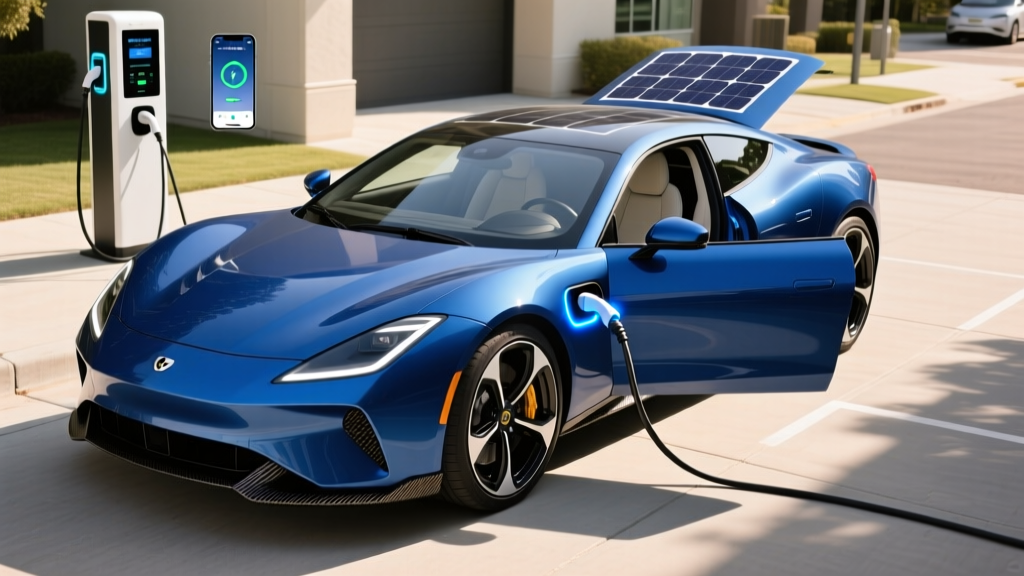
- Solar roof panel: Original Karma featured a solar panel on the roof that contributed marginal energy (~1 kWh/day in ideal sun) to the 12V system and cabin ventilation
The Revero GT improved infotainment with a larger touchscreen and updated UI, but the fundamental packaging constraints remained. For comparison, a Tesla Model S offers 28 cu ft of cargo space (including the frunk), and even a compact EV like the Hyundai Ioniq 5 provides 27 cu ft behind the rear seats.
Pricing, Used Market, and Tax Credit Reality
Because no new Karma vehicle is available, the federal §30D EV tax credit does not apply to any used Fisker Karma or Revero purchase. The used EV credit (§25E) provides up to $4,000 for qualifying used EVs, but the Karma faces several hurdles:
- Price cap: The used vehicle must sell for $25,000 or less. Most Revero GTs sell for $50,000-$80,000 on the used market, disqualifying them entirely.
- Original Fisker Karma pricing: 2011-2012 models have depreciated to $15,000-$30,000, potentially qualifying, but battery degradation (often 30-50% capacity loss) makes them unreliable daily drivers.
- Income limits: Buyer AGI must not exceed $75,000 (single) / $150,000 (joint) for the used credit.
- Dealer requirement: The sale must be through a licensed dealer, not a private party.
For the announced Gyesera, should it ever reach production, the §30D new EV credit (up to $7,500) would face these barriers:
- MSRP cap: Sedans are capped at $55,000 — the Gyesera will almost certainly exceed this given Karma's luxury positioning.
- Battery sourcing: Critical mineral and battery component requirements must be met, which is uncertain given Karma's supply chain opacity.
- Income cap: $150,000 (single) / $300,000 (joint) AGI limit.
Current used-market pricing for the Fisker Karma car lineage:
| Model | Used Price Range (2026) | Tax Credit Eligible? |
|---|---|---|
| 2011-2012 Fisker Karma | $15,000 – $30,000 | Possible ($4,000 used credit if ≤$25K via dealer) |
| 2016-2019 Karma Revero | $35,000 – $55,000 | No (exceeds $25K cap) |
| 2020-2023 Revero GT | $50,000 – $80,000 | No (exceeds $25K cap) |
| Gyesera (Announced) | Not yet priced | Unlikely (will exceed $55K MSRP sedan cap) |
Battery Longevity, Warranty, and Service Risks
The Fisker Karma car's battery situation is the single largest ownership risk:
Original Fisker Karma (2012): The 20.1 kWh A123 Systems NMC battery was prone to early degradation. Many original owners reported 30-50% capacity loss within 5-7 years. A123 Systems went bankrupt in 2012, complicating replacement. Third-party replacement batteries cost $8,000-$15,000 if available. The original powertrain warranty (5 years/60,000 miles) has long expired on all examples.
Revero GT (2020-2023): Karma Automotive offered a 6-year/60,000-mile basic warranty and an 8-year/100,000-mile battery warranty (covering defects, not normal degradation below a specified threshold). However, Karma's service network has always been extremely limited — fewer than 30 authorized service centers nationwide at peak — and the company's ongoing financial instability raises serious questions about long-term parts availability and warranty honoring.
For any used Karma purchase, obtain a battery state-of-health (SoH) report and budget $10,000-$20,000 for potential battery replacement within your ownership period. Independent EV shops may not have diagnostic tools or parts access for Karma-specific systems.
Pros and Cons
✅ Pros
- Striking, head-turning design that still looks exotic in 2026
- EREV powertrain eliminates range anxiety for road trips (gas backup)
- Strong straight-line performance (Revero GT: 4.5s 0-60)
- Low used prices for original Karma (collector/curiosity value)
- Solar roof panel (original) is a unique conversation piece
❌ Cons
- No DC fast charging on any production model
- Very limited electric range (32-61 miles) for a heavy luxury car
- Extremely tight rear seating and tiny 7 cu ft trunk
- Severe battery degradation risk and expensive replacement
- Nearly nonexistent service network; parts availability uncertain
- Manufacturer financial instability (Karma Automotive restructuring)
- No modern ADAS features (no adaptive cruise, lane-keep, or automatic emergency braking)
- Poor efficiency vs. any modern EV or EREV
Who Should (and Shouldn't) Consider a Fisker Karma Car
This car may suit you if:
- You're an EV collector or enthusiast who wants a rare, historically significant vehicle
- You have access to Level 2 home charging and a short daily commute under 30 miles
- You value design exclusivity over practicality, efficiency, or tech features
- You're comfortable with high maintenance costs and limited service options
Look elsewhere if:
- You need a daily driver with reliable service support and warranty coverage
- You want meaningful electric range for commuting (consider the BMW i4, Tesla Model 3, or Hyundai Ioniq 6)
- You need cargo space, rear-seat room, or family practicality
- You rely on public DC fast charging (no Karma supports it)
- You want modern driver-assistance features like adaptive cruise or lane-centering
Competitor Comparison: What $50K-$80K Buys Instead
At the used Revero GT price point ($50K-$80K), 2026 buyers have access to dramatically more capable, efficient, and supportable vehicles:
| Vehicle | EPA Range | DC Fast Charge | 0-60 mph | Cargo |
|---|---|---|---|---|
| Karma Revero GT (used) | 61 mi (electric) | None | 4.5s | 7 cu ft |
| Tesla Model S (2024-2025) | 402 mi | 250 kW | 3.1s | 28 cu ft |
| BMW i5 eDrive40 (new) | 295 mi | 205 kW | 5.7s | 17 cu ft |
| Mercedes EQE 350+ (new) | 305 mi | 170 kW | 6.2s | 15 cu ft |
| Lucid Air Pure (new) | 419 mi | 200+ kW | 3.5s | 32 cu ft |
Every competitor listed offers full DC fast charging, 5-15× more electric range, modern ADAS, full warranty coverage, and established service networks. The Karma's only advantage is exclusivity — you'll never see another one at a stoplight.
Frequently Asked Questions
What is the real-world range of the Fisker Karma car?
The 2012 Fisker Karma delivers 22-28 miles of real-world electric range (EPA rated 32 miles). The Revero GT achieves 50-55 miles in mild conditions from its EPA-rated 61 miles, dropping to 35-42 miles in cold weather. Both vehicles can extend total range via their gasoline range extender to 230-360 miles combined.
How fast does the Fisker Karma charge?
Neither the original Fisker Karma nor the Revero GT supports DC fast charging. Level 2 charging at 6.6 kW (Revero GT) takes approximately 4-5 hours for a full charge, adding about 14 miles of electric range per hour. Level 1 (120V) charging adds roughly 3 miles per hour. This is significantly slower than any modern EV.
Does the Fisker Karma qualify for any federal EV tax credit?
New Karma vehicles are not currently available, so the §30D new EV credit is not applicable. Used Fisker Karma models selling for $25,000 or less through a licensed dealer may qualify for the §25E used EV credit of up to $4,000, subject to buyer income limits ($75K single/$150K joint). Most Revero and Revero GT models exceed the $25,000 price cap and are ineligible. See IRS guidelines for current rules.
Is the Fisker Karma car worth buying in 2026?
As a daily driver, no. The lack of DC fast charging, minimal electric range, tiny cargo space, severe battery degradation risk, and nonexistent service network make it impractical. As a collector car or design piece, it has niche appeal at depressed used prices. Any modern EV or EREV at a similar price point is objectively superior in range, charging, efficiency, technology, safety, and ownership support.
What happened to the Karma Gyesera?
Karma Automotive announced the Gyesera sedan in 2024 with claimed 250-mile range and 800V fast-charging architecture. As of early 2026, it remains in pre-production with no confirmed delivery date, EPA certification, or final pricing. Given Karma's history of delays and ongoing financial restructuring, buyers should not count on this vehicle becoming available.
How much does a replacement battery cost for the Fisker Karma?
Replacement batteries for the original Fisker Karma (20.1 kWh NMC) cost $8,000-$15,000 through third-party suppliers when available. Revero GT battery replacement pricing is not publicly transparent but is estimated at $12,000-$20,000+. Availability is inconsistent, and Karma's service network limitations make scheduling replacements difficult.
Sources: U.S. EPA / fueleconomy.gov, IRS Used Clean Vehicle Credit, manufacturer specifications.