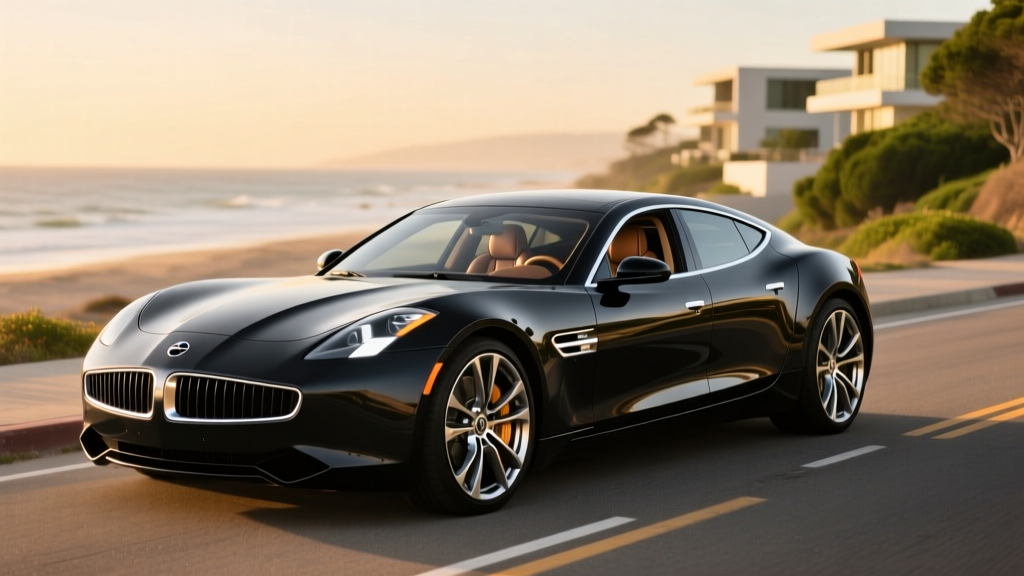
If you've been searching for a Fisker Karma 4 door electric sedan, you've likely encountered a tangled web of automotive history. The original Fisker Karma (2011–2012) was a plug-in hybrid, not a battery-electric vehicle. The revived brand — Fisker Inc., led by Henrik Fisker — launched the all-electric Fisker Ocean SUV before filing for bankruptcy in mid-2024. As of 2026, no new Fisker Karma 4 door EV is in production or available for purchase from the original manufacturer.
However, the Karma nameplate lives on through Karma Automotive, the company that acquired the original Karma's assets and tooling. Karma Automotive currently sells the Karma GS-6 and the limited-production Karma Gyesera — both 4-door luxury sedans with extended-range electric vehicle (EREV) powertrains. This review covers what the Karma GS-6 offers today, its real specs, and whether it deserves a place on your luxury EV shortlist.
What Exactly Is the Karma GS-6?
The Karma GS-6 is a 4-door luxury sedan built on the original Fisker Karma platform, heavily updated by Karma Automotive. It's an extended-range electric vehicle (EREV), meaning an on-board gasoline generator extends total driving range after the battery is depleted — similar in concept to the older BMW i3 REx or the upcoming Ram 1500 REV with a range extender option.
Karma Automotive also announced the Karma Gyesera, a more powerful variant with a larger battery, but availability remains extremely limited. For this review, we focus primarily on the GS-6, which is the more accessible model in Karma's current lineup.
Range, Battery, and Efficiency
| Spec | Value |
|---|---|
| Electric-Only Range (EPA est.) | ~74 miles |
| Total Range (with generator) | ~360 miles |
| Battery Capacity | 44 kWh (usable), NMC chemistry |
| Range Extender | 1.5L turbo 3-cylinder gasoline generator |
| MPGe (electric mode) | ~58 MPGe combined |
| Fuel Economy (generator mode) | ~20 MPG combined |
| Horsepower | 536 HP (dual electric motors) |
| 0-60 mph | ~5.4 seconds |
| Drivetrain | Rear-wheel drive (dual rear motors) |
| Base MSRP | ~$84,000 |
The 44 kWh usable battery uses NMC (nickel manganese cobalt) chemistry, which offers higher energy density than LFP but is more sensitive to sustained high states of charge. Karma recommends keeping the battery between 20% and 80% for daily use to maximize long-term battery health — a standard practice for NMC packs.
For context, fueleconomy.gov lists the Karma Revero GT (the GS-6's direct predecessor) at 61 miles of electric range and 20 MPG in generator mode. The GS-6's updated battery and powertrain yield a modest improvement, but efficiency remains a weak point compared to modern BEVs like the Lucid Air or Tesla Model S.
Charging Speed: DC Fast and Home Level 2
| Charging Level | Power / Rate | Time / Notes |
|---|---|---|
| Level 1 (120V household) | ~1.4 kW | ~31 hours for full charge; ~2 mi/hr |
| Level 2 (240V home/public) | ~7.2 kW | ~6 hours for full charge; ~12 mi/hr |
| DC Fast Charge | Not supported | No DC fast-charging port |
This is where the Karma GS-6 reveals its most significant limitation for modern EV buyers: it does not support DC fast charging. The vehicle charges exclusively via AC Level 1 or Level 2. With a 44 kWh battery, a full Level 2 charge at 7.2 kW takes roughly 6 hours — feasible for overnight home charging, but it means no quick top-ups on road trips.
Since the gasoline generator extends total range, Karma's design philosophy assumes the range extender handles long trips while the battery covers daily commuting. This works if your commute is under 50 miles round-trip and you have reliable Level 2 home charging. But if you're expecting to pull up to an Electrify America or Tesla Supercharger station and add 150 miles in 20 minutes, this vehicle cannot do that.
For home Level 2 charging, you'll need a 240V circuit rated for at least 40 amps (to support the 7.2 kW draw with the standard 80% continuous-load safety margin). Installation costs typically range from $800 to $2,500 depending on your electrical panel capacity and the distance from panel to charger location. Always consult a licensed electrician for final specs and permitting.
Performance and Driving Dynamics
The Karma GS-6 delivers 536 horsepower from its dual rear-mounted electric motors, sending all power to the rear wheels. The 0-60 mph time of approximately 5.4 seconds is respectable but not thrilling by 2026 EV standards — a Tesla Model S Plaid hits 60 in under 2 seconds, and even a BMW i5 eDrive40 manages it in about 5.8 seconds with less power.
Where the GS-6 stands out is its low center of gravity (the battery pack runs along the floor tunnel) and its surprisingly composed ride quality. The suspension tuning favors comfort over sportiness, which suits the car's grand-touring character. Steering is well-weighted, though the vehicle's ~5,400-pound curb weight is noticeable during aggressive cornering.
The gasoline generator is audible when it engages — a low drone that's more intrusive than the seamless transitions in the BMW i3 REx. On the highway with the generator running, cabin noise levels are higher than in purpose-built luxury EVs like the Lucid Air or Mercedes EQS.
Interior, Cargo, and Technology
The Karma GS-6 interior blends premium materials with some dated infotainment architecture. Leather and suede upholstery are standard, and the cabin feels hand-built — which it largely is, at Karma's facility in Moreno Valley, California. Build quality varies more than you'd find in a mass-produced German or Korean luxury sedan.
Passenger and cargo dimensions:
- Front legroom: ~42.5 inches
- Rear legroom: ~34.0 inches (tight for a vehicle of this exterior size)
- Trunk cargo volume: ~8.0 cubic feet (significantly compromised by battery and generator packaging)
- Seating capacity: 4 passengers (no 5-seat option)
The 8-cubic-foot trunk is a major drawback. For comparison, the Tesla Model S offers 28 cubic feet of rear cargo plus a front trunk. The Karma's EREV packaging — battery tunnel plus rear-mounted generator — consumes most of the cargo area. If you regularly carry luggage for four people, this car will frustrate you.
On the technology front, the GS-6 includes a 10.2-inch touchscreen infotainment system, Apple CarPlay, and a digital instrument cluster. However, the software feels a generation behind what you'll find in a 2026 Hyundai Ioniq 6 or BMW i5. Driver-assistance features are limited: adaptive cruise control and lane-keeping assist are available, but there's no advanced semi-autonomous system comparable to GM's Super Cruise or Ford's BlueCruise. This is an SAE Level 1 driver-assist setup — the driver must remain fully engaged at all times.
Pricing, Tax Credits, and Ownership Costs
| Item | Amount |
|---|---|
| Base MSRP (GS-6) | ~$84,000 |
| As-Tested (with options) | ~$95,000–$103,000 |
| Federal Tax Credit (§30D) | Not eligible (MSRP exceeds sedan cap; PHEV/EREV rules) |
| Destination Charge | ~$1,500 |
Federal tax credit eligibility: The Karma GS-6 does not qualify for the $7,500 federal EV tax credit under IRS §30D rules. There are two compounding reasons:
- MSRP cap: For sedars, the §30D credit caps vehicle MSRP at $55,000. The GS-6's ~$84,000 base price far exceeds this limit.
- Vehicle classification: As an EREV/PHEV, the vehicle must meet battery capacity and sourcing requirements that differ from pure BEVs, and Karma's low production volume makes battery-component sourcing compliance difficult to verify.
Additionally, buyer income caps apply to §30D ($150,000 single / $300,000 joint AGI), but these are moot since the vehicle itself is ineligible regardless of buyer income.
Some states offer their own EV/PHEV rebates that may partially apply — check your state's energy office or DMV for current programs. California's Clean Cars 4 All program, for example, has income-based rebates that occasionally cover PHEVs, but amounts and eligibility vary.
Warranty Coverage
Karma Automotive provides the following warranty coverage for the GS-6:
- Battery warranty: 8 years / 100,000 miles (capacity retention threshold: 70%)
- Powertrain warranty: 5 years / 60,000 miles
- Bumper-to-bumper: 4 years / 50,000 miles
- Roadside assistance: 4 years / 50,000 miles
The 8-year/100,000-mile battery warranty meets the industry standard for electrified vehicles and aligns with what you'll find from BMW, Mercedes, and Hyundai. The 70% capacity retention threshold is also standard — if the battery degrades below 70% of original capacity within the warranty period, Karma will repair or replace it. However, Karma's small production volume and limited dealer/service network mean warranty claims may take longer to process than at a major OEM.
Pros and Cons
✅ Pros
- Distinctive, head-turning design — nothing else looks like it
- 536 HP provides strong acceleration
- Range extender eliminates range anxiety on long trips
- Hand-built California craftsmanship
- Standard 8-yr/100,000-mi battery warranty
❌ Cons
- No DC fast charging — a dealbreaker for many EV buyers
- Tiny 8 cu ft trunk — impractical for a luxury sedan
- Only 4 seats; tight rear legroom
- No federal tax credit eligibility
- Dated infotainment and limited driver-assist tech
- Limited service network; low-volume manufacturer risk
- 20 MPG on gasoline is poor for an EREV
Who Should Consider the Karma GS-6?
The Karma GS-6 is a niche vehicle for a specific buyer: someone who values exclusivity and design above practicality, has reliable home Level 2 charging, commutes under 50 miles daily, and doesn't need significant cargo space. It's a conversation piece that happens to be a car — not a car that happens to be interesting.
Choose the Karma GS-6 if:
- You want a luxury sedan that no one else at the country club has
- Your daily commute fits within the 74-mile electric range
- You have home Level 2 charging and don't rely on public DC fast chargers
- Cargo space is not a priority
Look elsewhere if:
- You need DC fast charging for road trips
- You regularly carry more than two passengers or significant luggage
- You want the latest infotainment and driver-assist technology
- Tax credit eligibility matters to your purchase decision
- You want a robust dealer/service network for peace of mind
Key Competitors Compared
At $84,000+, the Karma GS-6 competes (on price, if not on concept) with several compelling alternatives:
- Lucid Air Pure (~$70,000): 419-mile EPA range, 300+ kW DC fast charging, 32 cu ft trunk, full BEV. Dramatically more practical.
- Tesla Model S (~$75,000): 402-mile EPA range, 250 kW Supercharging, Super Cruise–class Autopilot, 28 cu ft cargo + frunk.
- BMW i5 eDrive40 (~$67,000): 295-mile EPA range, 205 kW DC fast charging, 17.5 cu ft trunk, Level 2 Highway Assistant.
- Mercedes EQS 450+ (~$105,000): 352-mile EPA range, 200 kW DC fast charging, 22 cu ft cargo, MBUX Hyperscreen.
Every one of these competitors offers DC fast charging, more cargo space, more seating capacity, and more advanced technology. The Karma's only advantages are exclusivity and design — which may be enough for its target buyer, but aren't enough for most.
Frequently Asked Questions
What is the real-world range of the Karma GS-6?
The EPA-estimated electric-only range is approximately 74 miles, but real-world highway driving yields 55–62 miles. Cold weather can reduce this to 45–55 miles. With the gasoline generator running, total range extends to roughly 360 miles, though you'll be burning fuel at about 20 MPG.
How fast does the Karma GS-6 charge?
The GS-6 does not support DC fast charging. On a Level 2 home charger at 7.2 kW, a full charge takes approximately 6 hours, adding about 12 electric miles per hour of charging. Level 1 (120V) adds roughly 2 miles per hour.
Does the Karma GS-6 qualify for the federal EV tax credit?
No. The GS-6's MSRP far exceeds the $55,000 sedan cap under IRS §30D rules, and its PHEV/EREV classification introduces additional battery-sourcing requirements that Karma does not currently meet. No federal tax credit is available for this vehicle.
Is the Fisker Karma still being made?
The original Fisker Karma (2011–2012) is long discontinued. The brand name and assets were acquired and became Karma Automotive, which now produces the GS-6 and Gyesera. Fisker Inc. (the separate company that made the Fisker Ocean SUV) filed for bankruptcy in 2024 and is no longer producing vehicles.
Is the Karma GS-6 worth buying vs. competitors?
For most luxury EV sedan buyers, the answer is no — competitors like the Lucid Air, Tesla Model S, and BMW i5 offer more range, faster charging, more space, and more technology for less money. The GS-6 makes sense only if exclusivity and design are your top priorities and you accept the practical compromises.
What is the battery warranty on the Karma GS-6?
Karma Automotive covers the battery for 8 years or 100,000 miles, with a capacity retention threshold of 70%. If the battery degrades below 70% of its original capacity within this period, Karma will repair or replace it.