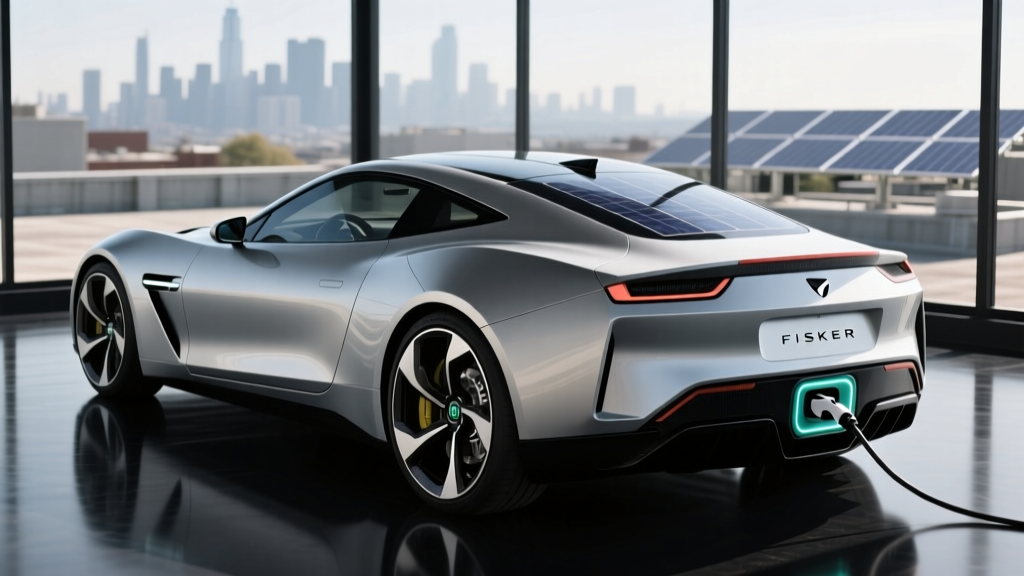
If you have been searching for information on the Fisker Karma 2024, you are likely encountering a confusing mix of old headlines, concept renders, and outdated forum posts. The short answer for buyers in 2026: there is no new-production Fisker Karma you can walk into a dealership and purchase today. The original Karma was a plug-in hybrid produced between 2011 and 2012, and subsequent revival attempts under various Fisker corporate entities never reached volume production before the company filed for Chapter 11 bankruptcy in June 2024.
That said, understanding what the Karma was, what the later concept iterations promised, and why the program ultimately stalled provides valuable context for anyone shopping the luxury electrified market today. Below is a precise, data-driven profile covering the vehicle's real specifications, the status of any planned successors, and what competitive alternatives actually exist for buyers who wanted the Karma's blend of design drama and electrified powertrain.
The Original Fisker Karma: What the Specs Actually Were
The Fisker Karma was never a battery electric vehicle (BEV). It was an extended-range electric vehicle (EREV) — a plug-in hybrid with a series-hybrid architecture where the gasoline engine acted solely as a generator, never driving the wheels directly. This is an important distinction for anyone evaluating used examples or comparing the Karma to modern EVs.
| Specification | Value |
|---|---|
| Powertrain Type | Series-hybrid EREV (not BEV) |
| Electric-only EPA Range | 32 miles |
| Total Range (electric + gas generator) | ~230 miles |
| Battery Capacity | 20.1 kWh usable (A123 Systems, NMC lithium-ion) |
| Onboard Generator | 2.0L turbocharged 4-cylinder (GM Ecotec), 260 HP |
| Drive Motors | Dual rear-mounted electric motors, 403 HP combined |
| 0-60 mph | 5.8 seconds (Sport mode, per Car and Driver testing) |
| Top Speed | 125 mph (electronically limited) |
| EPA MPGe (electric mode) | 54 MPGe |
| EPA MPG (gas generator mode) | 20 MPG combined |
| Level 2 Charge Rate | 3.3 kW (estimated 9-10 hours for full charge) |
| DC Fast Charging | Not supported |
| Length / Width / Height | 196.7" / 78.1" / 52.4" |
| Curb Weight | 5,300 lbs |
| Cargo Volume (trunk) | 6.9 cu ft |
| Seating | 4 passengers |
| Original MSRP (2012) | $96,850 – $110,000+ depending on trim |
What Happened to the Fisker Brand and Any Karma Successor
The original Fisker Automotive ceased production in 2012 after A123 Systems (its battery supplier) went bankrupt and a devastating Hurricane Sandy flood destroyed hundreds of Karma units at a New Jersey port. The company's assets were sold to China's Wanxiang Group in 2014, which rebranded the company as Karma Automotive.
Karma Automotive produced an updated version called the Karma Revero (2017-2020), and later the Revero GT, which used a BMW-sourced 1.5L three-cylinder range extender and a larger 21 kWh battery. The Revero GT claimed 61 miles of electric range and 360 total miles. However, production volumes remained extremely low — estimated in the low hundreds of units per year — and the vehicle was priced at approximately $135,000.
Meanwhile, Henrik Fisker (the original designer) launched a separate company called Fisker Inc., which focused on the Fisker Ocean SUV. Fisker Inc. filed for Chapter 11 bankruptcy in June 2024, halting Ocean production after fewer than 11,200 units were built. As of 2026, no entity holds an active production program for a vehicle badged as a "Fisker Karma" in any updated or redesigned form.
Concept vehicles like the Karma Kaveya (a luxury grand tourer) and the Karma Gyesera (a sedan) have been announced by Karma Automotive with projected specs, but neither has entered production, and no firm delivery timeline has been confirmed. Karma Automotive itself has faced financial restructuring reports as recently as late 2024.
Charging and Ownership Realities for Existing Karma/Revero Owners
If you own or are considering a used Fisker Karma or Karma Revero, charging infrastructure compatibility is a critical consideration:
| Charging Level | Karma (2012) | Revero GT (2020) |
|---|---|---|
| Level 1 (120V, 12A) | ~1.4 kW / ~4 mi/hr | ~1.4 kW / ~4 mi/hr |
| Level 2 (240V, 32A) | 3.3 kW / ~9 mi/hr | 6.6 kW / ~18 mi/hr |
| DC Fast Charging | Not supported | Not supported |
| Connector Type | J1772 | J1772 |
| Full Charge Time (Level 2) | ~6 hours | ~3.5 hours |
Neither the original Karma nor the Revero GT supports DC fast charging. This is a significant limitation for road-trip practicality. On a long highway drive, you are entirely dependent on the gasoline range extender once the battery depletes, and the 20 MPG combined fuel economy in generator mode means frequent fuel stops.
Federal Tax Credit Eligibility: Used and New
For buyers evaluating a used Fisker Karma or Karma Revero under the IRS §25E used-EV credit:
- Credit amount: 30% of the sale price, up to a maximum of $4,000
- Vehicle price cap: Sale price must be $25,000 or less (unlikely for most Karma/Revero listings, which typically range $25,000-$80,000+)
- Income caps: Modified AGI must not exceed $75,000 (single), $112,500 (head of household), or $150,000 (joint)
- Vehicle age: Must be at least 2 model years old (all Karmas and Reveros qualify)
- Dealer requirement: Must be purchased from a licensed dealer, not a private party
Because Karma Automotive is not currently producing any new vehicles, the §30D new-vehicle credit is not applicable. For authoritative and current rules, always check IRS.gov's clean vehicle credits page, as income thresholds and sourcing requirements are subject to legislative change.
What You Could Buy Instead in 2026
The Fisker Karma's original appeal was its striking design, four-seat luxury, and the promise of electric commuting with gas-engine backup. In 2026, several production vehicles deliver on that promise with vastly superior efficiency, charging infrastructure compatibility, and warranty coverage:
| Vehicle | Type | Electric Range | Total Range | 0-60 mph | Base MSRP |
|---|---|---|---|---|---|
| BMW i7 xDrive50 | BEV | EPA 318 mi | 318 mi | 4.5 sec | $120,300 |
| Mercedes EQS 450+ | BEV | EPA 390 mi | 390 mi | 5.9 sec | $105,550 |
| BMW XM (PHEV) | PHEV | EPA 31 mi | ~370 mi | 4.1 sec | $159,995 |
| Porsche Panamera E-Hybrid | PHEV | EPA 35 mi | ~400 mi | 4.4 sec | $108,000 |
| Lucid Air Pure | BEV | EPA 419 mi | 419 mi | 5.0 sec | $69,900 |
Any of these alternatives offers modern DC fast charging (150-300+ kW peak), active battery thermal management, over-the-air updates, current-model-year warranty coverage, and widely available service networks. The Karma's combination of exotic styling and electrified drivetrain has been thoroughly surpassed in practical terms.
Pros and Cons: The Fisker Karma in Retrospect
Pros
- Distinctive, head-turning design by Henrik Fisker — still one of the most recognizable sedan silhouettes
- Series-hybrid architecture means true electric-only driving for short commutes
- Low center of gravity from floor-mounted battery pack
- Collector/novelty value for automotive enthusiasts
- Solar-panel roof panel contributed marginal auxiliary charging
Cons
- No DC fast charging capability — Level 2 only at 3.3-6.6 kW
- Severely limited cargo space (6.9 cu ft) due to battery placement
- Cramped rear seating — only suitable for two adults, with tight legroom
- Outdated infotainment with no Apple CarPlay/Android Auto
- Major battery degradation risk on 10+ year-old packs
- No active battery thermal management system
- Parts scarcity and limited service network
- Poor fuel economy (20 MPG) once the range extender engages
Who Should (and Shouldn't) Consider a Used Karma
Consider it if: You are a collector or enthusiast who values the Karma's design significance, you have access to a trusted specialist mechanic familiar with the A123 battery system, and you plan to drive it primarily as a short-range electric commuter with the understanding that the gasoline generator is a backup, not a primary power source.
Avoid it if: You need a reliable daily driver with modern safety features, fast-charging capability for road trips, over-the-air software updates, or any expectation of manufacturer warranty support. The Karma's parts ecosystem is fragile, and a major battery or powertrain failure could total the vehicle's remaining value.
Frequently Asked Questions
Is there a new 2024 or 2025 Fisker Karma available to buy?
No. There is no new-production Fisker Karma available for purchase in 2024, 2025, or 2026. The original Karma ended production in 2012, and the Karma Revero GT (produced by Karma Automotive) ended limited production around 2020-2021. Fisker Inc. (a separate entity from Karma Automotive) focused on the Fisker Ocean SUV before filing for bankruptcy in June 2024.
What is the real-world electric range of the Fisker Karma?
The EPA rated the original Karma at 32 miles of electric-only range. Real-world testing consistently showed 25-28 miles in mixed driving, 20-22 miles on the highway, and as low as 15-18 miles in freezing weather. Vehicles with degraded battery packs may see significantly less.
Does the Fisker Karma qualify for any federal EV tax credit?
A used Karma may qualify for the IRS §25E used clean vehicle credit (up to $4,000) if the sale price is $25,000 or less, the buyer meets income caps ($75K single / $150K joint), and the purchase is made through a licensed dealer. Most Karma listings exceed the $25,000 price cap. The §30D new-vehicle credit does not apply, as no new Karma is being produced. Always verify current rules at IRS.gov.
How much does it cost to replace a Fisker Karma battery?
There is no standardized replacement battery program. Third-party EV battery refurbishment shops have quoted $8,000 to $15,000 for cell-level repair or module replacement on the A123 pack. Given the Karma's current market value ($20,000-$40,000 for most examples), a full battery replacement often exceeds the vehicle's worth.
Is the Karma Revero GT a better option than the original Karma?
The Revero GT (2020 model year) improved on the original with a BMW-sourced 1.5L range extender, a 6.6 kW onboard charger, and 61 miles of EPA electric range. However, it was priced around $135,000 new, production was extremely limited, and Karma Automotive's long-term viability as a service/parts provider remains uncertain. It is a marginally more practical choice than the 2012 Karma but carries similar ownership risks.
What modern EV or PHEV is closest to what the Karma offered?
The BMW i7 and Mercedes EQS deliver the luxury-sedan experience with far greater range and modern charging. For the EREV/PHEV concept specifically, the BMW XM and Porsche Panamera E-Hybrid provide plug-in electric commuting with gasoline backup — but with current-model warranties, DC fast charging (on the BEV options), and established dealer networks.
Sources: EPA fuel economy data via fueleconomy.gov, IRS clean vehicle credit guidelines via irs.gov, manufacturer specifications and historical production records.