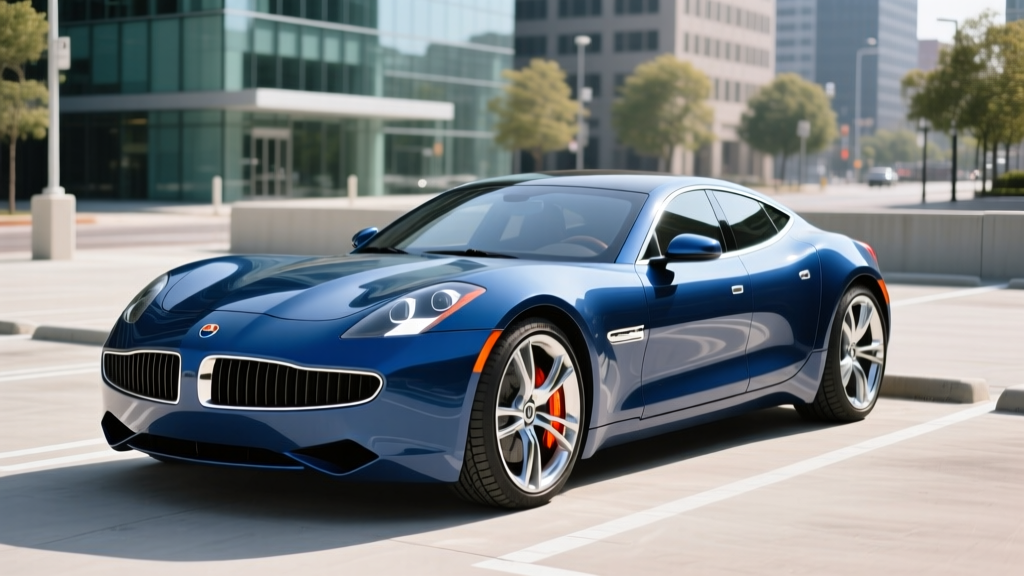
The Fisker Karma 2012 is one of the most polarizing vehicles in electric-vehicle history. Designed by Henrik Fisker and built by Valmet Automotive in Finland, this extended-range electric vehicle (EREV) promised exotic styling with plug-in efficiency. What it delivered was a complicated ownership experience that ultimately contributed to Fisker Automotive's bankruptcy in 2013. For collectors, bargain hunters, and EV historians considering one on the used market today, understanding the real numbers — range, charging, battery health, and ongoing costs — is essential before signing any paperwork.
This is not a conventional battery-electric vehicle (BEV). The Karma is a series-extended-range plug-in hybrid: it drives its rear wheels exclusively through two electric motors, while a 2.0-liter turbocharged GM Ecotec engine acts solely as a generator to recharge the battery on the go. That architecture gives it unique characteristics — and unique failure points — that every prospective buyer needs to understand.
Spec Sheet: Fisker Karma 2012 at a Glance
| Specification | Value |
|---|---|
| EPA Electric Range | 32 miles |
| EPA Total Range (Electric + Gas) | ~230 miles |
| Battery Capacity (Usable) | 20.1 kWh (A123 Systems, NMC Li-ion) |
| Battery Chemistry | NMC (Nickel Manganese Cobalt) |
| DC Fast Charging | Not supported |
| Level 2 Charge Rate | 3.3 kW (240V) |
| Level 2 Charge Time (0–Full) | ~6 hours |
| Level 1 Charge Rate | 1.4 kW (120V) |
| 0–60 mph (Electric Mode) | 6.3 seconds (Sport mode: 5.9 sec) |
| Horsepower (Electric) | 403 hp combined (201 hp × 2 rear motors) |
| Torque | 959 lb-ft (wheel torque) |
| Drivetrain | Rear-wheel drive (dual rear motors) |
| MPGe (Electric Mode) | 54 MPGe combined |
| MPG (Gas Generator Mode) | 20 MPG combined |
| Base MSRP (2012) | $96,850 |
| EcoStandard Trim | $96,850 |
| EcoSport Trim | $102,850 |
| EcoChic Trim | $109,850 |
| Battery Warranty (Original) | 5 years / 50,000 miles (expired) |
| Powertrain Warranty (Original) | 4 years / 50,000 miles (expired) |
| Seating | 4 passengers |
| Cargo Volume | 6.9 cu ft (trunk) |
Electric Range and Real-World Efficiency
The EPA rated the 2012 Fisker Karma at 32 miles of all-electric range. That figure was modest even for 2012 — the Chevrolet Volt delivered 35–38 miles on a smaller, lighter platform — and it remains the single biggest practical limitation for anyone considering this car as a daily driver today.
EPA Electric Range: 32 miles
Real-World Expectation: 22–28 miles in mixed driving. Highway speeds above 65 mph reduce this to approximately 18–22 miles due to the Karma's 5,300-lb curb weight and poor aerodynamic efficiency at speed. In cold weather (below 40°F), expect 15–20 miles of usable electric range before the gasoline generator engages.
Total Range (Gas Generator Active): EPA combined ~230 miles. Real-world highway touring with the 2.0L Ecotec generator running yields approximately 180–210 miles on a full tank and full charge, as the generator is notably thirsty at 20 MPG combined.
Once the battery depletes to its minimum state of charge, the GM-sourced 2.0L turbocharged four-cylinder engine fires up to act as a range-extending generator. It does not drive the wheels — this is a pure series-hybrid architecture. However, the generator's 20 MPG combined fuel economy is poor by modern PHEV standards. For context, a 2026 Toyota RAV4 Prime achieves 38 MPG in charge-sustaining mode while offering similar electric range.
Efficiency in electric mode is rated at 54 MPGe combined by the EPA on fueleconomy.gov, which translates to roughly 62 kWh per 100 miles — quite high for an EV, reflecting the Karma's substantial weight and the energy losses in its dual-motor rear-drive setup.
Charging: Level 2 Only, No DC Fast Charging
The 2012 Fisker Karma's charging capability is firmly rooted in early-2010s plug-in technology. There is no DC fast charging — no CCS, no CHAdeMO, and obviously no NACS port. The Karma charges exclusively via a J1772 Level 2 inlet on the driver's side front fender.
| Charging Level | Power (kW) | Voltage | Time to Full | Miles of Range per Hour |
|---|---|---|---|---|
| Level 1 (Standard Outlet) | 1.4 kW | 120V | ~14 hours | ~5 mi/hr |
| Level 2 (Home/Public) | 3.3 kW | 240V | ~6 hours | ~10 mi/hr |
| DC Fast Charge | Not supported — no DC inlet | |||
The 3.3 kW onboard charger means that even on a modern 48-amp Level 2 home station capable of delivering 11.5 kW, the Karma will only pull 3.3 kW. A full charge from empty takes approximately six hours. For a car with just 32 miles of electric range, this means most owners charge overnight and start each morning with a full battery — but any midday top-up is painfully slow by current standards.
There is no battery preconditioning system, no charge scheduling via app (Fisker's original app infrastructure was shut down years ago), and no way to monitor charge status remotely without aftermarket solutions. For home charging installation, a standard 240V/20A circuit is sufficient given the low draw, but always have a licensed electrician assess your panel capacity before installation.
Performance and Driving Dynamics
The Karma's dual rear electric motors produce a combined 403 horsepower and an eyebrow-raising 959 lb-ft of wheel torque. In Sport mode (which engages the gasoline generator for supplemental power), the car hits 0–60 mph in approximately 5.9 seconds. In Stealth (electric-only) mode, 0–60 takes about 6.3 seconds. Both figures were respectable for 2012, though the Karma's 5,300-pound curb weight is always felt through corners and under braking.
The driving experience is dominated by that weight and the car's long, low proportions. Steering is heavy and somewhat vague. The regenerative braking system provides moderate one-pedal driving capability but does not bring the car to a complete stop — you will still use the friction brakes frequently. The cabin is quiet in Stealth mode, with only a subtle electric whine, but the Ecotec generator is audibly intrusive when it engages, producing a droning sound that many owners find unpleasant at highway speeds.
Notably, the Karma lacks any modern driver-assistance features. There is no adaptive cruise control, no lane-keeping assist, no automatic emergency braking, and no blind-spot monitoring. This is a 2012 vehicle with 2012 safety technology — front and side airbags, stability control, and ABS. It was never crash-tested by the NHTSA or IIHS, which is a consideration for safety-conscious buyers.
Battery Health, Degradation, and the A123 Systems Problem
The Karma's 20.1 kWh usable battery pack was manufactured by A123 Systems, a company that itself filed for bankruptcy in October 2012 — the same year the Karma was in production. This is the single most critical ownership issue to understand.
A123's NMC lithium-ion cells were prone to manufacturing defects that led to battery failures, recalls, and fires. Fisker issued multiple recalls for the battery pack, and many original Karmas had their packs replaced under warranty. However, with all original warranties long expired (the battery warranty was 5 years/50,000 miles), any battery failure today is entirely the owner's financial responsibility.
A replacement battery pack, if one can be sourced, costs between $5,000 and $8,500 through specialty hybrid-EV shops. Availability is limited and declining as the supply of new-old-stock A123 packs dwindles. Some owners have pursued custom battery rebuilds using modern cells, but this is expensive ($10,000+) and requires specialized high-voltage expertise.
Battery degradation on surviving original packs is significant. Expect a 2012 Karma with its original battery to deliver 20–25 miles of electric range rather than the original 32, representing 20–35% capacity loss over 13+ years. Any prospective buyer should insist on a battery state-of-health (SoH) diagnostic from a qualified EV technician before purchase.
Interior, Cargo, and Technology
The Karma's interior is a study in contradictions. The cabin materials are genuinely premium — available with EcoChic recycled glass-infused fabric, EcoStandard synthetic suede, or EcoSport leather — and the hand-laid wood trim sourced from fallen California trees (on certain trims) is striking. However, the packaging is deeply compromised.
The battery tunnel runs the full length of the cabin's center, creating a massive structural hump that limits seating to four passengers in individual bucket seats. Rear legroom is tight at approximately 29.5 inches, and the roofline cuts into headroom for anyone over 5'10". The trunk offers just 6.9 cubic feet of cargo space — smaller than a Mazda MX-5 Miata's — because the gasoline engine and exhaust packaging consume the rear volume.
The infotainment system uses a 10.2-inch touchscreen that was advanced for 2012 but is painfully outdated by 2026 standards. There is no Apple CarPlay, no Android Auto, no Bluetooth audio streaming on early builds (later models added it), and no over-the-air updates. Navigation uses outdated map data that cannot be updated through any official channel. The digital instrument cluster is unique and attractive but provides limited trip-computer functionality compared to modern EVs.
Pricing, Used Market Value, and Tax Credit Reality
The 2012 Fisker Karma originally started at $96,850 for the EcoStandard trim, climbing to $109,850 for the EcoChic. A $7,500 federal tax credit was available to original buyers, bringing the effective starting price to roughly $89,350.
| Trim | 2012 MSRP | 2026 Used Market Range | Federal Tax Credit (Used EV, §25E) |
|---|---|---|---|
| EcoStandard | $96,850 | $18,000 – $28,000 | Potentially $4,000 (see below) |
| EcoSport | $102,850 | $22,000 – $35,000 | Potentially $4,000 |
| EcoChic | $109,850 | $25,000 – $42,000 | Potentially $4,000 |
On the used market, 2012 Karmas now trade between $18,000 and $42,000 depending on condition, mileage, battery health, and whether the car is a low-production EcoChic example. Project cars with dead batteries or generator issues can be found below $15,000, but repair costs often exceed the vehicle's value.
Federal tax credit eligibility for used buyers: Under the IRS §25E Previously Owned Clean Vehicle Credit, buyers may qualify for up to $4,000 (30% of the sale price, capped at $4,000) if all of the following are met:
- The vehicle is purchased from a licensed dealer (private-party sales do not qualify)
- The sale price is $25,000 or less
- The buyer's adjusted gross income is below $75,000 (single), $112,500 (head of household), or $150,000 (joint)
- The vehicle is at least two model years old (the 2012 qualifies)
- The vehicle has not been claimed for the used-EV credit in a prior sale after 2022
- The vehicle's battery capacity is at least 7 kWh (the Karma's 20.1 kWh qualifies)
This means only Karmas priced at or below $25,000 purchased from a dealer — typically higher-mileage EcoStandard examples — can qualify. Always verify eligibility with a tax professional before relying on the credit.
The original §30D new-vehicle credit is no longer applicable since the Karma has not been produced since 2012 and Fisker Automotive no longer exists as a manufacturer.
Known Reliability Issues and Ownership Risks
The 2012 Karma's reliability record is among the worst of any production vehicle from its era. Beyond the A123 battery failures, owners have documented:
- 12V electrical system failures: The Karma's complex high-voltage-to-12V converter is prone to failure, leaving the car completely dead — unable to start, shift, or even unlock doors.
- Generator (range extender) failures: The GM Ecotec engine and its coupling to the generator motor have experienced premature failures, with replacement costs exceeding $4,000.
- Coolant system leaks: The Karma has multiple cooling circuits for the battery, motors, and generator. Hose connections and pump failures are common and expensive to diagnose.
- Solar panel roof degradation: The optional solar roof panel (standard on EcoChic) was designed to trickle-charge the 12V battery and power ventilation. These panels degrade and their wiring harnesses develop faults.
- Parts scarcity: With Fisker Automotive defunct since 2013, OEM body panels, trim pieces, headlight assemblies, and proprietary electronics are increasingly difficult to source. The aftermarket support community is small but dedicated.
Insurance is expensive and increasingly difficult to obtain. Several major insurers will not write comprehensive coverage on the Karma due to parts availability concerns and the high likelihood of total-loss declarations from minor front-end damage.
Pros and Cons
- Stunning design that still turns heads in 2026 — one of the most distinctive four-door sedans ever produced
- Genuine exotic-car presence at a used-economy-car price point
- Electric-only commuting capability for short trips (20–30 miles real-world)
- 403 hp and instant electric torque provide entertaining straight-line performance
- Premium interior materials and unique sustainable trim options
- Strong collector and enthusiast community with growing knowledge base
- Hand-built rarity — approximately 2,450 units produced total
- A123 battery pack is a known failure point with limited replacement options
- No DC fast charging; 3.3 kW Level 2 is painfully slow by modern standards
- 20 MPG on the gasoline generator defeats the purpose of an "efficient" vehicle on longer trips
- 6.9 cu ft trunk is impractical for anything beyond a briefcase
- No modern ADAS, no CarPlay, no OTA updates, no functioning connected services
- Insurance is expensive and parts are scarce or unavailable
- Outstanding NHTSA recalls may never have been completed — verify VIN status before buying
- Depreciation has been severe; resale value is unpredictable
Who Should (and Shouldn't) Buy a 2012 Fisker Karma
The 2012 Fisker Karma is not a rational daily driver. It is a collector-grade curiosity that can serve as a weekend car, a show piece, or a conversation starter — but only for buyers who understand and accept its limitations.
Consider the Karma if: You want a rare, head-turning design statement for weekend drives and car shows; you have a short commute that fits within 20–25 miles of electric range and access to overnight Level 2 charging; you have a second reliable vehicle for daily use; you have a relationship with a specialist shop familiar with Fisker/A123 high-voltage systems; and you can absorb $2,000–$5,000 in annual maintenance and potential repair costs.
Look elsewhere if: You need a practical daily commuter, you want modern safety features or driver assists, you need cargo space or seating for more than two adults comfortably, you want reliable DC fast charging for road trips, or you are on a tight maintenance budget. For similar money in the used market, a 2018–2020 Chevrolet Bolt EV, a 2017–2019 BMW i3, or a 2018–2021 Nissan Leaf Plus will deliver dramatically more practicality, reliability, and range with modern charging support.
Frequently Asked Questions
What is the real-world range of the 2012 Fisker Karma?
Expect 22–28 miles of electric range in mixed driving, dropping to 15–20 miles in cold weather. With the gasoline generator running, total range is approximately 180–210 miles. The EPA rated it at 32 miles electric and ~230 miles total, but real-world results consistently fall short.
How fast does the Karma charge?
The Karma charges at a maximum of 3.3 kW on Level 2 (240V), taking about 6 hours for a full charge. There is no DC fast charging capability. Level 1 (120V) charging takes approximately 14 hours.
Does the 2012 Fisker Karma qualify for any federal tax credit?
Not the new-vehicle §30D credit. However, under the IRS §25E used-EV credit, a buyer purchasing a Karma priced at $25,000 or less from a licensed dealer may qualify for up to $4,000, subject to income limits and other requirements. Consult a tax professional for your specific situation.
Is the Fisker Karma a good buy vs. modern EVs?
As a practical EV, no. A used Tesla Model 3, Chevrolet Bolt, or Hyundai Kona Electric from 2019–2022 will offer more range, DC fast charging, modern safety features, and vastly better reliability for similar or less money. The Karma makes sense only as a collector piece or design statement for buyers who accept its compromises.
What happens if the A123 battery fails?
A replacement battery pack costs $5,000–$8,500 if one can be sourced. Custom rebuilds using modern cells can exceed $10,000. Without a functioning high-voltage battery, the car cannot move — even the gasoline generator requires the battery pack to operate. Factor battery replacement into your purchase budget if the car still has its original pack.
Can I still get the Karma serviced?
Fisker Automotive's dealer network dissolved with the company's 2013 bankruptcy. Service is now handled by independent hybrid/EV specialists and a small community of knowledgeable enthusiasts. OEM parts availability is limited and declining. Join owner forums (such as Fiskerati) before purchasing to assess the service landscape in your area.