The Fisker Company: From Ambition to Bankruptcy
If you've been searching for information about the Fisker company in 2026, you're likely encountering a confusing mix of old press releases, discontinued inventory listings, and automotive news from 2024. Here's the essential truth upfront: Fisker Inc. filed for Chapter 11 bankruptcy in June 2024, effectively ending production of its sole vehicle, the Fisker Ocean SUV. The company's assets were liquidated, and remaining inventory was sold off at steep discounts to fleet buyers and liquidators.
This isn't a traditional EV review because you cannot order a new Fisker Ocean from the Fisker company today. However, used Fisker Oceans have entered the secondary market, and understanding the vehicle's specs, limitations, and ownership realities is critical if you're considering one as a used EV purchase — or simply trying to understand what went wrong.
Fisker Ocean: Complete Spec Sheet
Before the company's collapse, Fisker produced approximately 11,000–12,000 Ocean units across the 2023–2024 model years. The vehicle was offered in three primary trims. Here are the final published specifications:
| Spec | Sport (FWD) | Ultra (AWD) | Extreme / One (AWD) |
|---|---|---|---|
| EPA Range | 250 mi | 340 mi | 360 mi |
| Battery (Usable) | ~80 kWh (LFP) | ~113 kWh (NMC) | ~113 kWh (NMC) |
| Horsepower | 275 hp | 540 hp | 550 hp |
| 0–60 mph | 6.9 sec | 3.9 sec | 3.7 sec |
| Drivetrain | Single-motor FWD | Dual-motor AWD | Dual-motor AWD |
| Max DC Fast Charge | ~150 kW | ~200 kW | ~200 kW |
| 10–80% DC Time | ~35 min | ~30 min | ~30 min |
| Level 2 Rate | 10.5 kW (~30 mi/hr) | 10.5 kW (~30 mi/hr) | 10.5 kW (~30 mi/hr) |
| MPGe (Combined) | ~97 MPGe | ~89 MPGe | ~85 MPGe |
| Original MSRP | $37,499 | $59,999 | $68,999 |
| Battery Warranty | Originally 10 yr / 100,000 mi — now void (no active company) | ||
Real-World Range: What Owners Actually Reported
EPA Sticker (Extreme): 360 miles
Real-World Highway (70 mph, moderate weather): ~280–310 miles
Cold Weather (below 32°F, mixed driving): ~220–260 miles
City / Stop-and-Go (regen-heavy): ~320–340 miles
The Fisker Ocean Extreme's 360-mile EPA rating was one of the highest of any production EV when it launched, thanks to its massive 113 kWh NMC battery pack supplied by CATL. However, real-world owners and independent testers consistently reported falling short of that number in highway driving, where aerodynamic drag dominates.
The Ocean is a large, boxy SUV with a relatively high coefficient of drag. At sustained highway speeds of 70–75 mph, energy consumption climbs significantly. Owners reported efficiency figures in the range of 2.8–3.2 kWh/mile on the highway, which translates to roughly 280–310 miles from the 113 kWh usable pack. In cold weather, the expected 20–30% lithium-ion capacity reduction applies, especially since Fisker's thermal management system, while functional, was not as widely praised as Tesla's or Hyundai's heat pump setups.
The Sport trim with its smaller LFP (lithium iron phosphate) battery offered less range but came with LFP's inherent advantages: better long-term cycle life, less degradation over time, and no concerns about charging to 100% regularly. For a used buyer, the LFP pack may actually age better — if you can find a Sport trim, which was the least-produced variant.
Charging: Speeds, Connectors, and Infrastructure
| Charging Level | Power (kW) | Miles Added Per Hour | Notes |
|---|---|---|---|
| Level 1 (120V) | ~1.4 kW | ~3–4 mi/hr | Emergency only; full charge takes 3+ days |
| Level 2 (240V) | 10.5 kW | ~28–32 mi/hr | Full charge overnight (~10–11 hours for 113 kWh pack) |
| DC Fast Charge | Peak ~200 kW (Ultra/Extreme) | N/A (time-based) | 10–80% in ~30 min; sustained rate drops above 60% SoC |
The Fisker Ocean uses a CCS1 connector for DC fast charging. With the industry's rapid shift toward NACS (Tesla's connector standard), CCS1 is now a legacy format — though Electrify America, EVgo, and other networks still support it, and CCS-to-NACS adapters are available.
The charging curve on the Ocean's 113 kWh pack was adequate but not class-leading. While Fisker advertised a peak rate of 200 kW, real-world DC sessions showed the peak was sustained only between roughly 10–40% State of Charge (SoC). Above 60%, the rate tapered significantly, dropping below 80 kW. This means a 10–80% session took approximately 30 minutes at a capable charger, but a 10–90% session could stretch past 50 minutes. The Sport trim's smaller LFP pack peaked around 150 kW and charged proportionally faster for its capacity.
For home charging, the 10.5 kW onboard charger was competitive for 2023 but has since been outpaced by vehicles like the Ford F-150 Lightning (19.2 kW capable) and Rivian R1S (11.5 kW). A full Level 2 charge of the 113 kWh pack requires roughly 11 hours, which is manageable with overnight charging but means you'll want a dedicated 48-amp Level 2 home charger on a 60-amp circuit.
Interior, Cargo, and Technology
The Fisker Ocean's interior was one of its strongest selling points at launch. The cabin offered generous space, sustainable materials, and a distinctive design language:
- Cargo volume: 32.5 cu ft behind rear seats; ~68 cu ft with rear seats folded (competitive with the Tesla Model Y and Hyundai Ioniq 5)
- Front legroom: ~41.5 inches
- Rear legroom: ~38.2 inches — adequate for adults on longer trips
- Frunk (front trunk): Small storage compartment, useful for charging cables
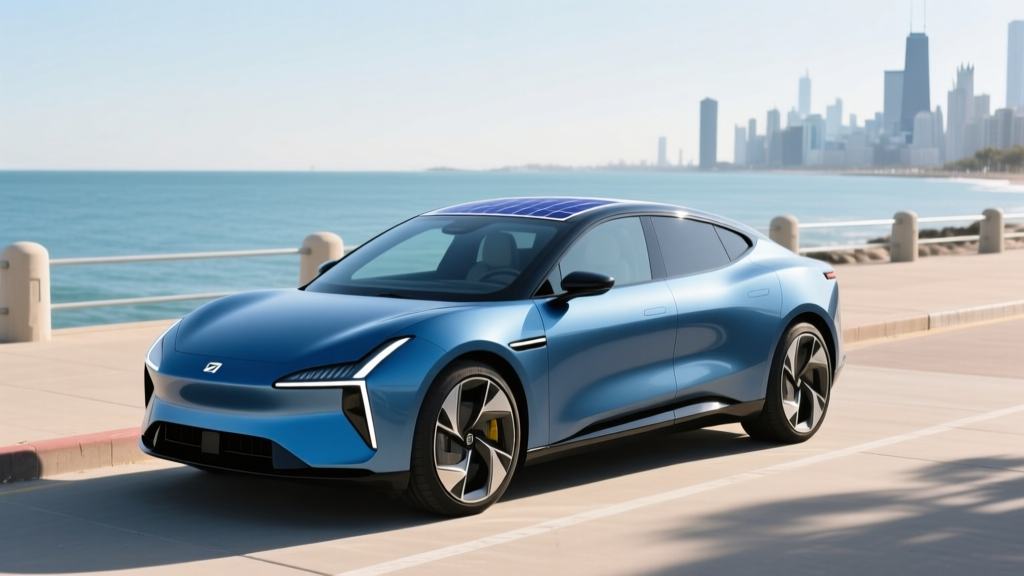
- Solar roof (California Mode on Extreme trim): Integrated solar panels on the roof could add roughly 1,500 miles of range per year under ideal conditions — a unique feature, though the real-world contribution was modest
The centerpiece of the cabin was a 17.1-inch rotating center touchscreen ("Revolve" screen on Ultra and Extreme trims) that could flip between a landscape "Control Mode" and a portrait "Hollywood Mode" for media consumption while parked. The infotainment system ran a custom Android-based OS, which received mixed reviews for responsiveness and app availability during the company's operational period.
Driver Assistance: The Ocean shipped with what Fisker called "Fisker Intelligent Pilot," a Level 2 driver-assistance suite including adaptive cruise control, lane-keeping assist, and automatic emergency braking. It was competent but not class-leading compared to Tesla Autopilot, GM Super Cruise, or Ford BlueCruise. Critically, Fisker had planned OTA (over-the-air) updates to improve the system — updates that will never arrive now that the company is defunct.
Pricing, Tax Credits, and Used Market Reality
When new, the Fisker Ocean was positioned aggressively on price, especially the Sport trim at $37,499. However, the pricing landscape has shifted dramatically:
| Trim | Original MSRP | Est. 2026 Used Price | Federal Tax Credit |
|---|---|---|---|
| Sport (FWD) | $37,499 | $18,000–$24,000 | Up to $4,000 (used EV credit, §25E) |
| Ultra (AWD) | $59,999 | $28,000–$36,000 | Up to $4,000 (used EV credit, §25E) |
| Extreme / One (AWD) | $68,999 | $32,000–$42,000 | Up to $4,000 (used EV credit, §25E) |
New-vehicle tax credit (§30D): The $7,500 federal new EV tax credit is no longer relevant since you cannot purchase a new Fisker Ocean. During its production run, eligibility was complicated by the Ocean's battery sourcing and the evolving IRS §30D rules around critical minerals and battery component manufacturing requirements.
Used EV tax credit (§25E): If you buy a used Fisker Ocean from a licensed dealer, you may qualify for the IRS §25E used clean vehicle credit — up to $4,000 or 30% of the sale price, whichever is less. Key eligibility requirements:
- Sale price must be $25,000 or less (this limits eligibility primarily to the Sport trim and higher-mileage Ultra examples)
- Buyer income caps: $75,000 single / $112,500 head of household / $150,000 joint filers
- Vehicle must be at least 2 model years old (2023 models qualify in 2025+; 2024 models qualify in 2026+)
- Must purchase from a licensed dealer (private-party sales don't qualify)
- Credit is non-refundable and can only be claimed once per vehicle (check VIN history)
The steep depreciation — some Oceans selling for 40–50% below original MSRP — reflects the market's assessment of orphan-vehicle risk: no manufacturer support, uncertain parts supply, and no future software updates.
Pros and Cons: The Honest Assessment
✅ Pros
- Class-leading EPA range on Extreme trim (360 mi)
- Spacious cabin with competitive cargo volume
- Distinctive design and sustainable interior materials
- Solar roof adds marginal but unique range contribution
- LFP battery on Sport trim offers excellent long-term degradation profile
- Steep used-market discounts make it a potential value play
❌ Cons
- Manufacturer is defunct — no warranty support, no OTA updates
- Proprietary parts supply is uncertain and may become scarce
- CCS1 connector is now legacy (NACS is the 2026 standard)
- DC fast charging is mid-pack; not competitive with 800V architectures
- Infotainment software may degrade as cloud services shut down
- Insurance may be difficult or expensive to obtain
- Resale value is highly uncertain and likely to continue declining
Should You Buy a Used Fisker Ocean in 2026?
The Fisker Ocean presents a classic orphan-vehicle dilemma. On paper, the specs are compelling — especially the Extreme trim's 360-mile range and 550-hp dual-motor powertrain. The used prices have fallen to levels that rival far less capable EVs. But the risks are substantial and unlike anything you'd face buying a used Tesla Model Y, Hyundai Ioniq 5, or Ford Mustang Mach-E.
Consider a used Fisker Ocean if:
- You're an EV-savvy buyer comfortable with orphan-vehicle risk
- You can find one at a steep discount (below $25K for the Sport, below $35K for Ultra/Extreme)
- You have access to a reliable independent EV mechanic
- You plan to drive it for 3–5 years and accept near-total depreciation
- You primarily need a spacious daily driver with excellent range
- You want warranty protection and manufacturer support
- You need guaranteed access to replacement parts
- You plan to keep the vehicle 8+ years
- You want the latest charging speeds (800V, 300+ kW) or NACS native compatibility
- You rely on active OTA updates and connected services
For most buyers, a comparably priced used Tesla Model Y, Hyundai Ioniq 5, or Kia EV6 offers better long-term ownership security, faster charging, native NACS compatibility (or Tesla Supercharger access), and active manufacturer support. The Fisker Ocean's value proposition only makes sense if you're specifically comfortable absorbing the orphan-vehicle risk in exchange for a heavily discounted, high-range electric SUV.
Frequently Asked Questions
Is the Fisker company still in business?
No. Fisker Inc. filed for Chapter 11 bankruptcy in June 2024 and subsequently liquidated its assets. The company is no longer operational, does not manufacture vehicles, and does not provide customer support, warranty service, or software updates. This is a different entity from Henrik Fisker's earlier venture, Fisker Automotive (which produced the Fisker Karma and went bankrupt in 2013).
Can I still buy a Fisker Ocean?
You cannot buy a new Fisker Ocean. Used examples are available through independent dealers, auction sites, and private sellers. Remaining new-old-stock inventory was largely liquidated in 2024–2025 through fleet sales and auction houses at significant discounts.
Does a used Fisker Ocean qualify for any tax credit?
It may qualify for the federal §25E used clean vehicle credit — up to $4,000 — if purchased from a licensed dealer for $25,000 or less, and if you meet the income requirements ($75K single / $150K joint). The new-vehicle §30D credit ($7,500) no longer applies. Check the specific VIN and consult a tax professional before relying on credit eligibility.
What happens if the battery needs replacement?
This is the single biggest risk of owning a used Fisker Ocean. The original 10-year/100,000-mile battery warranty is void because the company no longer exists. A replacement 113 kWh NMC battery pack could cost $15,000–$25,000+ if one can even be sourced. Third-party EV battery repair shops may eventually offer cell-level repairs, but the proprietary pack design makes this uncertain. The Sport trim's LFP battery is expected to degrade more slowly, reducing this risk somewhat.
How does the Fisker Ocean compare to a Tesla Model Y or Hyundai Ioniq 5?
The Ocean offered more EPA range than the Model Y Long Range (330 mi) and Ioniq 5 (303 mi) in its Extreme trim, and its cargo space was competitive. However, both the Model Y and Ioniq 5 offer faster DC charging (especially the Ioniq 5's 800V architecture at 240 kW), native or adapter-supported NACS/Supercharger access, active manufacturer support, ongoing OTA updates, and vastly better parts availability. For most buyers, these advantages far outweigh the Ocean's range advantage.
Will Fisker Ocean software and connected features keep working?
Cloud-connected features (remote app connectivity, OTA update servers, navigation map updates) are at risk of being permanently discontinued as Fisker's backend infrastructure is decommissioned. The vehicle's core driving functions — propulsion, braking, climate control, basic infotainment — will continue to work as they are controlled by onboard ECUs. However, any feature requiring a live server connection may eventually stop functioning.