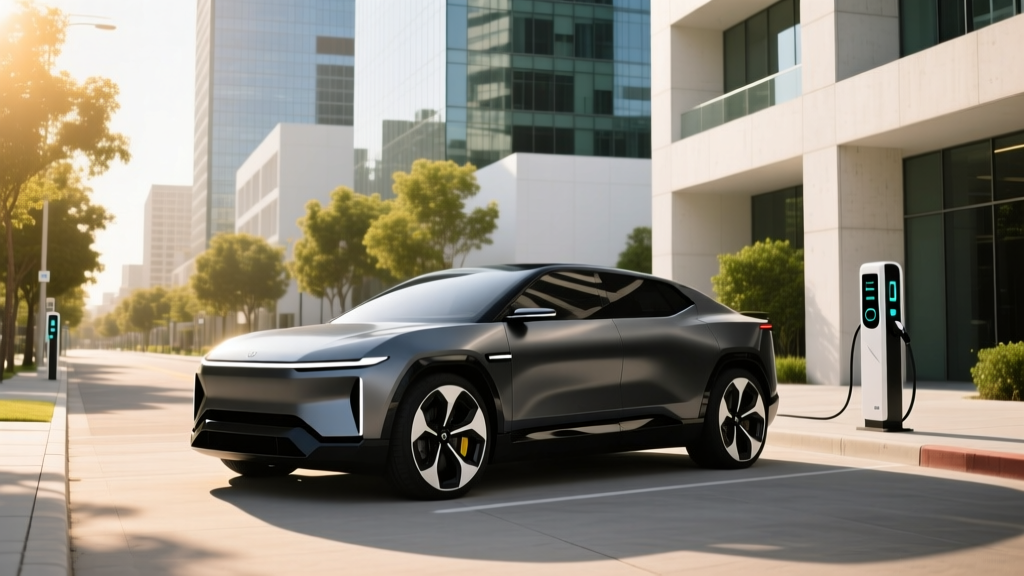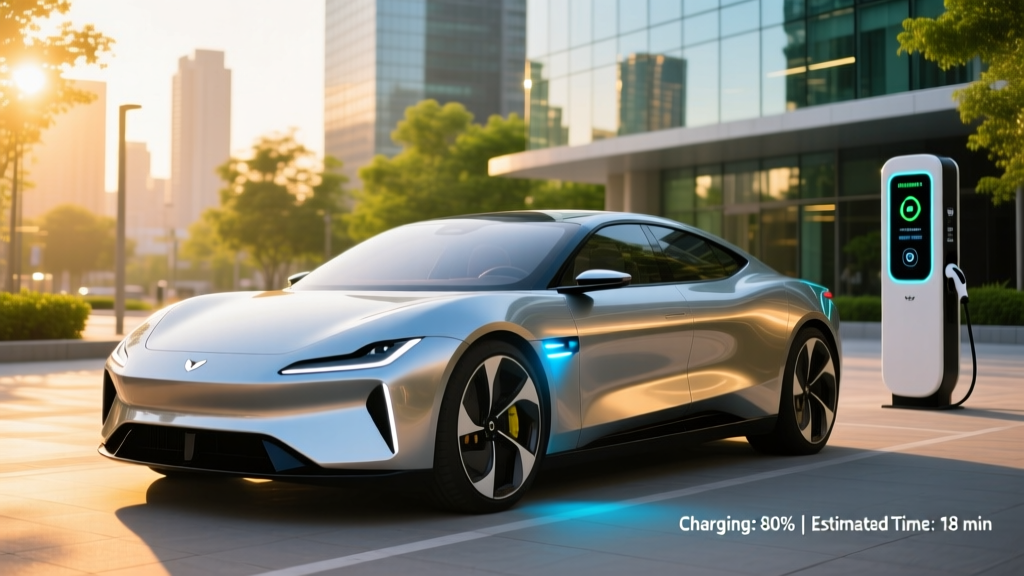
Update (2026): The Fisker Cara was announced as a future addition to the Fisker lineup, but as of early 2026 the vehicle has not entered production and is not currently available for purchase. Following Fisker Inc.'s financial restructuring and bankruptcy proceedings in 2024, the Cara's timeline, specifications, and availability remain uncertain. This article compiles the most recent announced specifications and industry context to help you understand what was promised, what remains unresolved, and which available alternatives deliver similar capabilities today.
What Is the Fisker Cara?
The Fisker Cara was conceived as a compact, premium electric crossover aimed at urban-oriented buyers seeking a smaller footprint than the Fisker Ocean. Henrik Fisker originally teased the Cara as part of a broader multi-vehicle strategy that included the Ocean SUV, the Pear (a more affordable compact EV developed with Magna), and the Alaska pickup. The Cara was positioned above the Pear in price and luxury content, targeting the segment occupied by vehicles like the Volvo EX30, Mini Countryman SE, and Smart #1.
Before the company's financial collapse, Fisker described the Cara as featuring a dual-motor all-wheel-drive powertrain, a mid-size battery pack targeting over 300 miles of EPA range, and a design emphasizing Scandinavian minimalism with sustainable interior materials. However, none of these specifications were validated by the EPA, NHTSA, or independent testing bodies.
Announced Specifications at a Glance
The table below reflects the most recent announced figures Fisker shared prior to its restructuring. These should be considered targets, not guarantees — especially given that the Fisker Ocean itself frequently fell short of its initial EPA and performance claims during its brief production run.
| Specification | Announced Figure | Status |
|---|---|---|
| EPA Range (target) | ~300+ miles | Unverified — no EPA certification |
| Battery Capacity | ~80 kWh (usable, estimated) | Preliminary |
| Battery Chemistry | NMC (nickel manganese cobalt) | Announced |
| Drivetrain | Dual-motor AWD | Announced |
| Horsepower | ~400 hp (target) | Preliminary |
| 0–60 mph | ~4.5 seconds (target) | Preliminary |
| Max DC Fast Charge | ~150–175 kW (target) | Unverified |
| 10–80% DC Charge Time | ~30 minutes (claimed) | Unverified |
| Level 2 Home Charging | ~11 kW onboard charger | Announced |
| Base MSRP (target) | ~$40,000–$45,000 | Pre-restructuring estimate |
| Federal Tax Credit (§30D) | Uncertain — see section below | Depends on production status |
Range, Battery, and Real-World Expectations
Fisker targeted approximately 300+ miles of EPA-estimated range for the Cara, likely on a usable battery capacity around 80 kWh with NMC chemistry. NMC cells offer higher energy density than LFP (lithium iron phosphate), which helps achieve longer range in a compact package — but they are more sensitive to sustained high state-of-charge and extreme temperatures, meaning long-term degradation management is critical.
For context, the Volvo EX30 (which is available) achieves an EPA-estimated 265 miles on a 69 kWh battery, while the Hyundai Kona Electric delivers 261 miles from a 64.8 kWh pack. A 300-mile target for the Cara would have been competitive but required aggressive efficiency tuning.
Charging Speed: DC Fast and Home Level 2
Fisker announced a target DC fast-charge capability in the 150–175 kW range, with a claimed 10–80% charge time of approximately 30 minutes. This would have placed the Cara in the mid-tier for charging speed — adequate for road trips but noticeably slower than 800V-architecture vehicles like the Hyundai Ioniq 5 (which peaks at ~240 kW and charges 10–80% in roughly 18 minutes).
| Vehicle | Max DC kW | 10–80% Time | Level 2 Rate | Miles/30 min (DC) |
|---|---|---|---|---|
| Fisker Cara (announced) | ~150–175 kW | ~30 min | ~11 kW | ~150 (est.) |
| Volvo EX30 | 153 kW | ~26 min | 11 kW | ~150 |
| Hyundai Ioniq 5 | ~240 kW | ~18 min | 10.9 kW | ~210 |
| Hyundai Kona Electric | 100 kW | ~43 min | 10.9 kW | ~110 |
| Mini Countryman SE | 130 kW | ~30 min | 11 kW | ~130 |
A critical nuance often overlooked in manufacturer claims: peak kW is not sustained kW. A vehicle may hit 175 kW briefly at a low state of charge (10–20%), then taper significantly as the battery fills past 50–60%. The "10–80% in 30 minutes" claim for the Cara, if it had been achieved, would represent an average charge rate closer to 100–120 kW across the entire session — typical for 400V architecture vehicles in this battery-size range.
For home Level 2 charging at 11 kW (48 amps on a 60-amp circuit), you would add roughly 35–40 miles of range per hour of charging, meaning a full overnight charge (8–10 hours) easily replenishes a depleted battery.
Performance and Drivetrain
The announced dual-motor AWD configuration targeting ~400 horsepower and a 0–60 mph time around 4.5 seconds would place the Cara firmly in the "quick but not a sports car" category — appropriate for a premium compact crossover. For comparison:
- Volvo EX30 Twin Motor Performance: 422 hp, 0–60 in 3.4 seconds
- Hyundai Ioniq 5 AWD: 320 hp, 0–60 in 4.5 seconds
- BMW iX xDrive50: 516 hp, 0–60 in 4.4 seconds (larger, heavier vehicle)
One concern worth noting: Fisker's only production vehicle, the Ocean, faced widespread criticism for software bugs, inconsistent build quality, and performance that did not always match claims. Any future Cara production would need to demonstrate significant quality improvement to earn buyer confidence.
Pricing, Tax Credits, and Ownership Economics
Fisker originally targeted a base MSRP in the $40,000–$45,000 range for the Cara. Given the company's financial situation, this pricing is entirely speculative and would likely increase if production were ever revived under new ownership or partnership.
| Vehicle | Base MSRP (2026) | Est. Federal Credit | Effective Price |
|---|---|---|---|
| Fisker Cara | ~$40,000–$45,000 (announced) | Uncertain | N/A — not in production |
| Volvo EX30 | $36,350 | Up to $7,500* | ~$28,850 |
| Hyundai Kona Electric | $32,975 | Up to $7,500* | ~$25,475 |
| Chevrolet Equinox EV | $33,600 | Up to $7,500* | ~$26,100 |
| Hyundai Ioniq 5 | $42,600 | Up to $7,500* | ~$35,100 |
*Federal tax credit eligibility under IRS §30D depends on multiple factors including buyer income caps ($150K single / $300K joint), vehicle MSRP caps ($55K for cars, $80K for SUVs/trucks), battery component sourcing requirements, and critical mineral sourcing rules. Eligibility changes frequently — consult a tax professional and verify current rules before purchasing.
- ✅ Buyer AGI below $150,000 (single) / $225,000 (head of household) / $300,000 (joint)
- ✅ Vehicle MSRP under $55,000 (sedans/wagons) or $80,000 (SUVs/trucks/vans)
- ✅ Battery components must meet North American manufacturing thresholds (increasing annually)
- ✅ Critical minerals must meet approved sourcing thresholds (increasing annually)
- ✅ Vehicle must be assembled in North America
- ✅ Point-of-sale transfer available — reduces purchase price at dealership
- ⚠️ Fisker Cara: Even if produced, North American assembly and battery sourcing compliance would need to be confirmed
Interior, Technology, and Cargo
Fisker promoted the Cara with a sustainability-forward interior using recycled and vegan materials, a minimalist dashboard dominated by a central touchscreen, and the company's signature "California Mode" (all windows lowering simultaneously for an open-air feel — though whether this would appear on the smaller Cara was never confirmed).
Expected technology features included:
- Central infotainment touchscreen (~12–14 inches)
- Digital instrument cluster
- Over-the-air (OTA) software updates
- Level 2 driver assistance (adaptive cruise, lane centering) — not autonomous driving
- Sustainable/recycled interior materials
Cargo capacity was never officially disclosed. Based on the vehicle's compact crossover positioning, expect approximately 18–22 cubic feet behind the rear seats and 40–50 cubic feet with rear seats folded — competitive with the Volvo EX30 (24.4 cu ft / 49.4 cu ft) and Mini Countryman SE.
Warranty Coverage
Fisker's original warranty plan for the Ocean included an 8-year/100,000-mile battery and powertrain warranty with a capacity retention threshold of 70%. The Cara would likely have carried similar terms. However, given that Fisker's warranty support became effectively non-functional after the company's financial collapse — leaving existing Ocean owners with limited recourse for defects — any future warranty promises would carry significant trust risk.
For comparison, available competitors offer:
- Hyundai/Kia: 10 years / 100,000 miles (battery & powertrain)
- Volvo: 8 years / 100,000 miles (battery)
- Chevrolet: 8 years / 100,000 miles (battery & powertrain)
- Tesla: 8 years / 120,000 miles (Model Y battery & drive unit)
Pros, Cons, and the Bottom Line
- Competitive range target (~300 mi)
- Premium compact crossover positioning
- Sustainability-focused materials
- Dual-motor AWD performance
- Distinctive design language
- Not in production — company bankrupt
- No EPA, NHTSA, or IIHS validation
- Fisker Ocean had severe quality/reliability issues
- Warranty support effectively void
- No dealer/service network
- Charging speed mid-tier vs. 800V rivals
- All specs unverified and subject to change
Do NOT wait if: You need a vehicle now, value warranty protection, want proven reliability, or require an established service network. The risk of Fisker reviving the Cara in any meaningful timeframe is extremely low.
Consider alternatives if: You want a premium compact EV with similar specs that you can actually buy, charge, service, and warranty today. The Volvo EX30, Hyundai Ioniq 5, and Chevrolet Equinox EV all deliver verified range, active warranty support, and access to established charging and service infrastructure.
Available Alternatives to Consider Instead
If the Fisker Cara's concept appealed to you, these vehicles deliver similar or better capabilities and are available for purchase in 2026:
- Volvo EX30 — Premium compact EV, 265 mi EPA range, strong build quality, from ~$36,350
- Hyundai Ioniq 5 — Mid-size crossover, up to 303 mi range, class-leading 800V charging, from ~$42,600
- Chevrolet Equinox EV — Practical compact SUV, up to 319 mi range, eligible for full $7,500 credit, from ~$33,600
- Hyundai Kona Electric — Budget-friendly, 261 mi range, strong warranty, from ~$32,975
- Mini Countryman SE ALL4 — Premium compact, 235 mi range, distinctive design, from ~$45,200
Frequently Asked Questions
Can I buy the Fisker Cara right now?
No. As of 2026, the Fisker Cara has never entered production. Fisker Inc. filed for bankruptcy in 2024, and there is no confirmed timeline, production partner, or path to market for the Cara. Any reservation or deposit previously made is subject to the bankruptcy proceedings.
What was the Fisker Cara's real-world range expected to be?
Fisker targeted approximately 300+ miles of EPA range. Based on comparable EVs, real-world highway driving would likely yield 240–270 miles, and cold-weather driving could drop to 200–230 miles. However, these are extrapolations — no independent testing was ever conducted.
Would the Fisker Cara have qualified for the $7,500 federal tax credit?
Uncertain. Even if the Cara had entered production, eligibility under IRS §30D would depend on where it was assembled (must be North America), battery component and critical mineral sourcing compliance, the buyer's income, and the vehicle's MSRP falling under the $55,000 car cap or $80,000 SUV cap. None of these factors were confirmed before Fisker's collapse.
How fast would the Fisker Cara charge?
Fisker announced a target of approximately 150–175 kW peak DC fast charging with a 10–80% time around 30 minutes. This is mid-tier by 2026 standards — vehicles with 800V architecture like the Hyundai Ioniq 5 and Kia EV6 charge significantly faster (10–80% in ~18 minutes at ~240 kW peak).
Is it worth waiting for Fisker to recover?
From a practical standpoint, no. Fisker's bankruptcy was comprehensive, its existing owners were left without reliable service or warranty support, and the automotive industry has moved forward with numerous compelling alternatives. The probability of the Cara reaching production in any recognizable form is very low.
What happened to Fisker Inc.?
Fisker Inc. ceased operations and filed for bankruptcy in 2024 after struggling with production quality issues on the Fisker Ocean, supply chain challenges, cash flow problems, and an inability to scale manufacturing. Existing Ocean owners faced significant challenges with software updates, parts availability, and warranty service.
Sources: EPA Fuel Economy, IRS §30D Clean Vehicle Credit, manufacturer announcements (archived). All Fisker Cara specifications cited are from pre-production announcements and have not been independently verified.