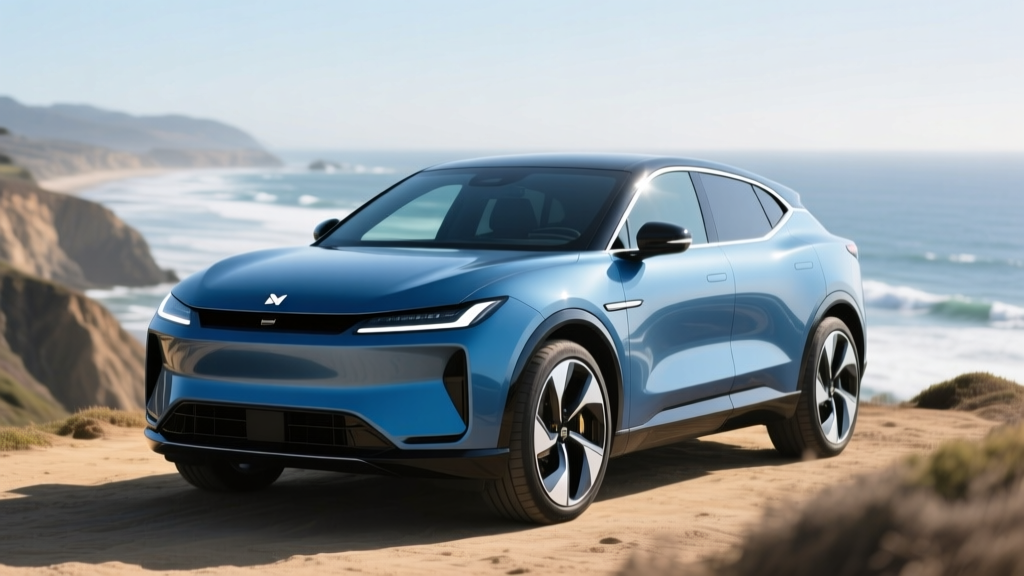
The Fisker Ocean was supposed to be a disruptor — a stylish, solar-roofed electric SUV priced to undercut the Tesla Model Y. Instead, Fisker Inc. filed for Chapter 11 bankruptcy in June 2024, leaving behind stranded owners, bricked software, and a fleet of heavily discounted SUVs flooding the used market. By early 2025, remaining inventory was liquidated at auction, and the company's assets were sold off. Now in 2026, the Fisker Ocean exists only as a used-EV proposition — one with serious caveats and one compelling argument: the price.
This review examines the Fisker Ocean's specifications as it was sold, evaluates what ownership looks like post-bankruptcy, and determines whether picking one up on the secondary market is a smart deal or a cautionary tale on wheels.
The Fisker Ocean at a Glance: Key Specs
| Specification | Ocean Sport (FWD) | Ocean Ultra / Extreme (AWD) |
|---|---|---|
| EPA Range | 250 miles | 360 miles (Ultra) / 360 miles (Extreme) |
| Battery Capacity | ~80 kWh usable (LFP) | ~113 kWh usable (NMC) |
| Battery Chemistry | LFP (CATL) | NMC (CATL) |
| Drivetrain | Single-motor FWD | Dual-motor AWD |
| Horsepower | 275 hp | 564 hp |
| 0–60 mph | 6.9 seconds | 3.7 seconds |
| Max DC Fast Charge | ~170 kW peak | ~250 kW peak |
| 10–80% DC Time | ~34 minutes | ~30 minutes |
| Level 2 Home Charging | 11 kW (onboard AC) | 11 kW (onboard AC) |
| MPGe (Combined) | 97 MPGe | 86 MPGe |
| EPA Efficiency | 35 kWh/100 mi | 39 kWh/100 mi |
| Original Base MSRP | $37,499 | $49,999 (Ultra) / $68,999 (Extreme) |
| Cargo Volume | 27.2 cu ft (rear seats up) / 56.0 cu ft (rear seats folded) | |
| Original Warranty | 6 yr / 60,000 mi bumper-to-bumper; 8 yr / 100,000 mi battery | |
Sources: EPA fueleconomy.gov, Fisker Inc. press specifications (2023–2024 model year).
Real-World Range: What the EPA Sticker Doesn't Tell You
EPA Estimate: 360 miles (Ultra/Extreme) | 250 miles (Sport FWD)
Real-World Highway Expectation: ~280–310 miles (Ultra/Extreme); ~200–220 miles (Sport)
Cold-Weather Impact (below 32°F): Expect a 20–30% reduction, bringing the Ultra/Extreme down to ~220–260 miles on a full charge.
The Fisker Ocean Ultra and Extreme's 360-mile EPA rating was among the highest of any production SUV when it launched. That number came from a massive 113 kWh usable NMC battery pack supplied by CATL. In mixed city/highway driving in moderate temperatures, owners reported achieving 300–330 miles before needing to charge — respectable for a vehicle this heavy.
However, the Ocean is a heavy vehicle at roughly 5,400 pounds (Ultra), and highway efficiency suffers accordingly. At sustained 75 mph speeds, expect consumption around 42–45 kWh/100 mi, which cuts effective range to roughly 280 miles. In freezing temperatures, the Ocean's heat pump (standard on Ultra and Extreme trims) helps mitigate cabin-heating losses, but battery chemistry still loses efficiency. Plan for 220–260 real-world miles in winter conditions on the dual-motor trims.
The Sport trim's LFP battery is smaller and less energy-dense, which explains the 250-mile EPA figure. LFP chemistry also tends to lose slightly more range in extreme cold compared to NMC, so winter commuters in northern states should budget for as little as 175–190 real-world miles.
Charging Speed & Infrastructure: The Post-Bankruptcy Reality
Charging the Fisker Ocean is where the bankruptcy's impact becomes most tangible. Here's what the hardware supports:
| Charging Level | Power / Rate | Miles Added per Hour | Notes |
|---|---|---|---|
| Level 1 (120V household) | ~1.4 kW | ~4–5 mi/hr | Emergency/trickle only |
| Level 2 (240V home) | 11 kW (48A) | ~30–35 mi/hr | Full charge overnight (~10–12 hrs for Ultra) |
| DC Fast Charge (Sport) | ~170 kW peak | N/A | 10–80% in ~34 min; tapers significantly above 80% |
| DC Fast Charge (Ultra/Extreme) | ~250 kW peak | N/A | 10–80% in ~30 min; peak sustained only to ~40% SoC |
Critical caveat — connector compatibility: The Fisker Ocean was built with a CCS1 (Combined Charging System) port. It does not natively support Tesla's NACS connector. As of 2026, most major charging networks (Electrify America, EVgo, ChargePoint) still operate CCS-equipped stations, but the industry-wide shift to NACS means CCS infrastructure investment is declining. Ocean owners may need a CCS-to-NACS adapter (once available and validated for third-party vehicles) to access Tesla Superchargers, though Fisker's bankruptcy means no official adapter program exists.
The DC fast-charging curve on the Ultra/Extreme peaks near 250 kW but only holds that rate briefly — typically between 10–40% State of Charge (SoC). From 40–80%, the rate tapers to 80–120 kW. This is normal for large NMC packs, but it means the advertised "30-minute 10–80%" time assumes ideal battery preconditioning and a capable 350 kW charger — conditions that aren't always met in the field.
For home charging, the 11 kW onboard AC charger is competitive. A full Level 2 installation on a 60-amp circuit (typical for a 48-amp continuous charger) will replenish the Ultra's 113 kWh battery in roughly 10–12 hours. The Sport's smaller pack charges fully in about 7–8 hours. Home installation costs vary widely — expect $800–$2,500 for a quality Level 2 unit plus electrician labor and permits, with potential panel upgrades adding $1,500–$3,000 if your home has a 100-amp service.
Performance, Interior & Tech: What Fisker Got Right
The dual-motor Ocean Ultra and Extreme deliver genuine performance-SUV acceleration. The 564 hp, 3.7-second 0–60 mph time puts it in the same territory as a BMW iX M60 or a fully loaded Tesla Model Y Performance. The torque delivery is instant and linear, as expected from a dual-motor EV, and the low center of gravity (battery pack under the floor) keeps body roll reasonably controlled through corners, though the 5,400-pound curb weight is always felt during direction changes.
The Sport's single-motor FWD setup at 275 hp is adequate for commuting but unremarkable — 6.9 seconds to 60 mph trails most competitors in this price range.
Interior and cargo: The Ocean offers 27.2 cubic feet of cargo space behind the second row and 56.0 cubic feet with the rear seats folded. That's competitive with a Model Y (30.2 / 76.2 cu ft) in the rear-up configuration but falls short with seats folded — a consequence of the Ocean's more SUV-like roofline versus the Model Y's hatchback design. Front legroom is generous at 41.5 inches; rear legroom at 38.2 inches is adequate for adults but tighter than a Hyundai Ioniq 5 or Kia EV6.
Standout features:
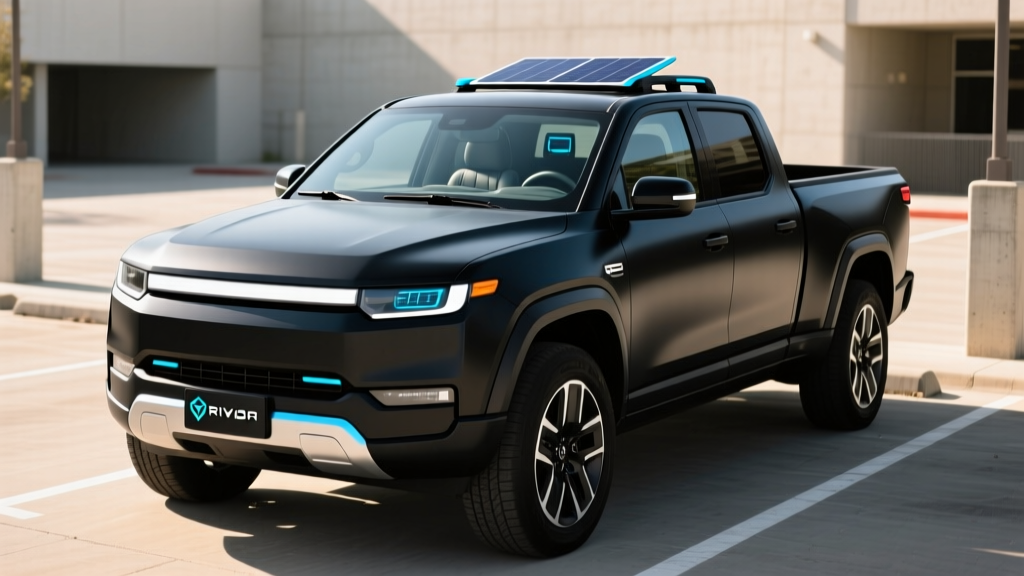
- Solar Roof (Extreme trim): Fisker's "California Mode" solar roof was designed to add up to 1,500 miles of range per year in ideal conditions — roughly 4 miles per day of parked solar gain. In practice, real-world solar contribution was modest (1–3 miles/day depending on latitude and parking habits).
- Revolving touchscreen: The Extreme trim featured a 17.1-inch center display that could rotate from landscape to portrait orientation — a gimmick that worked surprisingly well for navigation versus media.
- Vegan interior: All trims used fully vegan, recycled-material interiors, which resonated with Fisker's target demographic.
- ADAS: Fisker Intelligent Pilot offered adaptive cruise control, lane-keeping, and automatic emergency braking — a competent SAE Level 2 system, though it lacked the sophistication of Tesla Autopilot or GM Super Cruise. This is not self-driving; full driver attention is required at all times.
Notable drawbacks:
- Software was widely reported as buggy at launch, with infotainment freezes, phantom braking events, and OTA update failures.
- Build quality was inconsistent — panel gaps, rattles, and seal issues were common in early production units.
- No frunk (front trunk), despite the EV platform allowing one.
- Dealer/service network was extremely limited even before bankruptcy — now effectively nonexistent for warranty work.
Pricing, Tax Credits & Post-Bankruptcy Value
Here's where the Fisker bankruptcy creates a complicated value equation. At launch, the Ocean's pricing was aggressive:
| Trim | Original MSRP | Federal §30D Credit Eligibility | Effective Price (with credit) |
|---|---|---|---|
| Sport (FWD) | $37,499 | Eligible (below $80K MSRP cap; buyer must meet income limits) | ~$29,999 (if full $7,500 applied) |
| Ultra (AWD) | $49,999 | Eligible (below $80K MSRP cap) | ~$42,499 (if full $7,500 applied) |
| Extreme (AWD) | $68,999 | Eligible (below $80K MSRP cap) | ~$61,499 (if full $7,500 applied) |
Important §30D caveats (2026 IRS rules): The federal EV tax credit under IRS §30D requires meeting critical-mineral sourcing and battery-component manufacturing thresholds, buyer income caps ($150K single / $300K joint AGI), and MSRP limits ($80K for SUVs). Because the Fisker Ocean used CATL battery cells (a Chinese supplier), it faced scrutiny under the foreign-entity-of-concern (FEOC) rules that tightened in 2024–2025. Many Ocean buyers likely qualified for only a partial credit or none at all depending on the specific battery batch and purchase date. Always consult a tax professional and verify eligibility on irs.gov before assuming credit availability.
Post-bankruptcy used pricing (2026): Used Fisker Oceans are appearing on auction sites and secondary markets at steep discounts. Ultra trims with 10,000–25,000 miles are listing between $18,000–$28,000 depending on condition — a 50–65% discount from original MSRP. Sport trims can be found for $12,000–$18,000. The used-EV tax credit (up to $4,000 or 30% of sale price, whichever is lower, on vehicles priced at $25,000 or less) may apply to some of these purchases, further reducing effective cost.
The Bankruptcy's Impact: What Owners Actually Face
Buying a Fisker Ocean in 2026 means accepting risks that don't exist with a Toyota bZ4X or a Hyundai Ioniq 5. Here's the honest breakdown:
Pros
- Massive 360-mile EPA range (Ultra/Extreme) rivals the best in class
- Stunning design — still one of the best-looking electric SUVs on the road
- Steep used-market discounts make it a value proposition at $18K–$28K
- 564 hp dual-motor performance on Ultra/Extreme trims
- Solar roof (Extreme) provides modest but real passive range gain
- LFP option on Sport trim offers longer cycle life and lower degradation risk
Cons
- No warranty support: Fisker's bankruptcy voids practical warranty coverage — you're on your own for repairs
- Software is orphaned: OTA updates have ceased; known bugs will never be fixed
- Parts scarcity: Body panels, sensors, and proprietary components are increasingly difficult to source
- CCS1 connector in a shifting NACS world: Long-term charging access uncertainty
- Insurance complications: Some carriers have increased premiums or dropped coverage for bankrupt-manufacturer vehicles
- Resale value risk: Already steep depreciation may continue as parts become scarcer
- Limited service network: Independent EV shops may refuse work on proprietary systems
The warranty situation deserves emphasis. Fisker originally offered a 6-year/60,000-mile bumper-to-bumper warranty and an 8-year/100,000-mile battery and powertrain warranty. With the company dissolved, these warranties are effectively worthless — there is no entity to honor claims. If the 113 kWh NMC pack develops a fault or degrades below the 70% capacity threshold, replacement costs could exceed $15,000–$20,000 at an independent shop, assuming a compatible pack can even be sourced.
Fisker Ocean vs. Competitors: Is It Worth the Risk?
For buyers considering a used Fisker Ocean, the realistic alternatives are other used electric SUVs in the $20,000–$35,000 range:
| Vehicle (Used, ~2023–2024) | EPA Range | Approx. Used Price (2026) | Warranty Status | Charging Connector |
|---|---|---|---|---|
| Fisker Ocean Ultra | 360 mi | $18,000–$28,000 | Void (bankruptcy) | CCS1 |
| Tesla Model Y Long Range | 330 mi | $28,000–$38,000 | Likely remaining | NACS (native Supercharger) |
| Hyundai Ioniq 5 (AWD) | 266 mi | $25,000–$33,000 | Likely remaining | CCS1 (NACS adapter available) |
| Ford Mustang Mach-E (ER AWD) | 290 mi | $24,000–$32,000 | Likely remaining | CCS1 (NACS adapter available) |
| Volkswagen ID.4 (AWD Pro S) | 275 mi | $22,000–$30,000 | Likely remaining | CCS1 |
The Ocean wins on raw range and used-market price. It loses on nearly everything else: warranty coverage, software support, parts availability, charging-network trajectory, and long-term resale confidence.
Who the used Fisker Ocean suits: Mechanically inclined EV enthusiasts who want maximum range per dollar, have reliable home Level 2 charging, live in moderate climates, and can absorb the risk of out-of-pocket repairs. If you have a second vehicle as a backup and view the Ocean as a depreciated commuter with upside, it can work.
Who should avoid it: First-time EV buyers, families who need a reliable daily driver, anyone without home charging access, and buyers in cold climates who can't afford range uncertainty. The risk-adjusted cost of ownership is significantly higher than the sticker price suggests.
Frequently Asked Questions
What is the real-world range of the Fisker Ocean?
The Ultra and Extreme trims carry a 360-mile EPA estimate, but real-world highway driving typically yields 280–310 miles. In cold weather (below 32°F), expect 220–260 miles. The Sport FWD trim's 250-mile EPA rating translates to roughly 200–220 miles in mixed driving and as low as 175 miles in winter.
How fast does the Fisker Ocean charge?
The Ultra/Extreme peaks at approximately 250 kW on DC fast charging, achieving a 10–80% charge in about 30 minutes under ideal conditions (preconditioned battery, 350 kW-capable station). The Sport peaks around 170 kW with a 10–80% time of roughly 34 minutes. At home on a Level 2 (240V, 48A) charger, the Ocean adds about 30–35 miles of range per hour, with a full charge taking 10–12 hours for the Ultra.
Does the Fisker Ocean qualify for the federal EV tax credit?
When new, the Ocean's MSRP fell below the §30D SUV cap of $80,000, and buyer income limits applied ($150K single / $300K joint). However, the CATL battery's compliance with critical-mineral and FEOC sourcing rules was uncertain and may have disqualified some vehicles from the full $7,500 credit. For used Ocean purchases in 2026, the used-EV credit (up to $4,000 on vehicles priced at $25,000 or less) may apply — verify current eligibility on irs.gov and consult a tax professional.
Is it worth buying a Fisker Ocean after the bankruptcy?
It depends entirely on your risk tolerance. At $18,000–$28,000, the Ocean offers range and performance that competitors can't match at that price. But you're accepting zero warranty protection, frozen software, scarce parts, and uncertain long-term charging compatibility. For risk-tolerant buyers with home charging and a backup vehicle, it can be a compelling deal. For everyone else, a used Model Y, Ioniq 5, or Mach-E is a safer choice.
What are the biggest pros and cons of the Fisker Ocean?
Pros: class-leading 360-mile EPA range, striking design, powerful dual-motor performance (564 hp), steep used-market pricing, solar roof on Extreme trim. Cons: voided warranty due to bankruptcy, orphaned software with no future OTA updates, increasingly scarce replacement parts, CCS1 connector in an NACS-transitioning market, insurance complications, and no authorized service network.
Can I still get the Fisker Ocean serviced?
Fisker's authorized service network dissolved with the bankruptcy. Some independent EV repair shops and mobile technicians may handle basic maintenance (tire rotation, cabin air filter, brake fluid), but proprietary systems — battery management, powertrain electronics, infotainment — require specialized diagnostic tools and parts that are no longer in production. Before purchasing, identify a qualified independent EV shop in your area willing to work on the vehicle.