The Fisker Bankruptcy Date That Shook the EV Industry
On June 17, 2024, Fisker Inc. filed for Chapter 11 bankruptcy in the U.S. Bankruptcy Court for the District of Delaware, marking one of the most high-profile collapses in the modern electric-vehicle era. The Fisker bankruptcy date became a cautionary benchmark for EV shoppers and investors alike — a reminder that even well-designed, well-reviewed electric vehicles can be orphaned when the company behind them runs out of cash.
By late 2024, Fisker's remaining inventory of Ocean SUVs was liquidated at steep discounts, with some base models selling for under $25,000. For bargain hunters, those prices looked irresistible. But buying a Fisker Ocean in 2026 carries risks that every prospective owner needs to understand before signing any paperwork. This profile breaks down the Ocean's real specifications, ownership realities, and whether it's still a viable purchase years after the company folded.
The Fisker Ocean Extreme (113 kWh usable battery, NMC chemistry) carried an EPA-estimated range of 360 miles — one of the highest of any production SUV at launch. However, real-world highway driving at 70+ mph typically yields 280–310 miles, and cold-weather conditions (below 32°F) can reduce that further to 240–270 miles. The smaller Sport trim with its LFP battery was EPA-rated at 250 miles, with real-world highway figures closer to 200–220 miles.
Fisker Ocean Specifications: What Was Actually Built
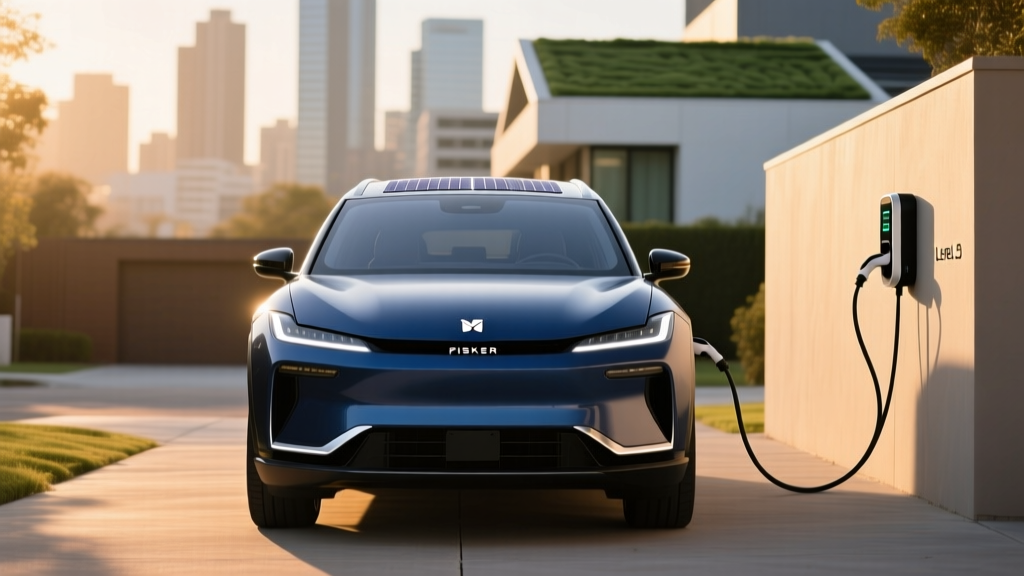
Before addressing the ownership landscape, here's what Fisker actually delivered to customers. The Ocean was produced in three primary trims, all built by Magna Steyr in Austria — a contract manufacturer known for quality assembly.
| Specification | Ocean Sport | Ocean Ultra | Ocean Extreme |
|---|---|---|---|
| EPA Range | 250 mi | 340 mi | 360 mi |
| Battery (usable) | ~65 kWh (LFP) | ~113 kWh (NMC) | ~113 kWh (NMC) |
| Drivetrain | FWD, single motor | AWD, dual motor | AWD, dual motor |
| Horsepower | 275 hp | 540 hp | 550 hp |
| 0–60 mph | 6.9 sec | 3.9 sec | 3.7 sec |
| Max DC Fast Charge | ~170 kW | ~250 kW | ~250 kW |
| 10–80% DCFC Time | ~33 min | ~29 min | ~29 min |
| Level 2 Home Charge | 11 kW (~30 mi/hr) | 11 kW (~36 mi/hr) | 11 kW (~36 mi/hr) |
| MPGe (combined) | 97 MPGe | 104 MPGe | 106 MPGe |
| Efficiency | 35 kWh/100mi | 32 kWh/100mi | 31 kWh/100mi |
| Original MSRP | $37,499 | $49,999 | $68,999 |
| Cargo (rear seats up) | 21.2 cu ft | ||
| Cargo (rear seats folded) | 56.7 cu ft | ||
| Rear Legroom | 37.4 in | ||
Sources: fueleconomy.gov, Fisker press materials (archived).
Charging Speed and Infrastructure Compatibility
The Fisker Ocean shipped with a CCS1 connector — the standard for non-Tesla EVs at the time of its production. In 2026, CCS remains widely supported across Electrify America, EVgo, and ChargePoint networks, though the industry's shift toward NACS (Tesla's connector) means CCS stations are no longer expanding. Ocean owners will not face charging deserts, but they may notice fewer new CCS-only installations going forward.
| Charging Level | Power / Rate | Miles Added Per Hour | Notes |
|---|---|---|---|
| Level 1 (120V) | ~1.4 kW | ~4 mi/hr | Emergency/trickle only |
| Level 2 (240V home) | 11 kW | 30–36 mi/hr | Full charge overnight (~10–12 hrs for Extreme) |
| DC Fast Charge (peak) | Up to 250 kW | ~600+ mi/hr (peak) | 10–80% in ~29 min; tapers sharply above 80% |
The Ocean's charge curve is typical of NMC packs: it sustains near-peak rates up to roughly 40% State of Charge, then progressively tapers. Expect a 10–80% session to average around 150–180 kW on a 350 kW-capable Electrify America station. Above 80%, speeds drop to under 50 kW — plan your road-trip stops accordingly and charge to 80%, not 100%, unless you have time to wait.
Fisker Ocean Pricing in 2026: Used Market and Tax Credit Reality
Because Fisker ceased operations, no new Oceans are available. The used market is the only path to ownership, and prices have settled into a range that reflects both the vehicle's genuine strengths and its orphaned-brand risks.
| Trim | Original MSRP | 2026 Used Market (typical) | Used EV Tax Credit (§25E) | Effective Price (if eligible) |
|---|---|---|---|---|
| Ocean Sport | $37,499 | $16,000–$21,000 | Up to $4,000 (30% of sale price, max $4,000) | $12,000–$17,000 |
| Ocean Ultra | $49,999 | $22,000–$30,000 | Up to $4,000 | $18,000–$26,000 |
| Ocean Extreme | $68,999 | $28,000–$38,000 | Up to $4,000 | $24,000–$34,000 |
Tax credit rules (IRS §25E for used EVs): The credit equals 30% of the sale price, capped at $4,000. The vehicle must sell for $25,000 or less to qualify. Buyer income caps apply: $75,000 single / $112,500 head of household / $150,000 joint. The sale must go through a licensed dealer. Always verify current rules at irs.gov and consult a tax professional.
Note: The original §30D new-vehicle credit of up to $7,500 no longer applies since Fisker is defunct and no new vehicles are sold. Early buyers who purchased in 2023–2024 may have claimed it at point of sale, but that window is closed.
Ownership After Bankruptcy: Warranty, Service, and Software
This is where the Fisker Ocean diverges sharply from buying a Tesla Model Y or Hyundai Ioniq 5. When Fisker filed for bankruptcy, the company's warranty obligations became unsecured claims in the proceedings.
Original warranty terms were:
- Basic vehicle: 6 years / 60,000 miles
- Battery & powertrain: 6 years / 60,000 miles (below the industry-standard 8yr/100,000mi)
- Corrosion: 10 years / unlimited miles
As of 2026, no entity has formally assumed Fisker's warranty obligations. Magna Steyr, the contract manufacturer, built the vehicles but does not provide consumer warranty service for a brand it was contracted to assemble. This means:
- Warranty repairs are at the owner's expense unless a third-party warranty was purchased separately.
- Over-the-air (OTA) software updates ceased when Fisker's cloud infrastructure was decommissioned. The infotainment system and driver-assist features are frozen at their final software version.
- The Fisker mobile app no longer functions — no remote preconditioning, no remote lock/unlock, no charge monitoring via phone.
- Parts availability is constrained. Body panels, proprietary trim pieces, and the Ocean's unique Solar Roof (Extreme trim) are increasingly difficult to source.
Independent EV shops can handle brake, suspension, and 12V battery work. The high-voltage battery and powertrain, however, require specialized diagnostics that were proprietary to Fisker's systems. Some third-party EV service networks are developing capabilities, but coverage is patchy.
Standout Tech and Notable Drawbacks
What made the Ocean compelling:
- Solar Roof (Extreme/One): Integrated photovoltaic cells in the roof added roughly 1,500–2,000 miles of range per year in sunny climates — a genuine differentiator, though modest in total impact.
- California Mode: All four windows plus the rear hatch glass could open simultaneously, creating an airy, near-convertible experience unique among SUVs.
- Rotating center screen: The 17.1-inch center display rotated from portrait (control mode) to landscape (theater/media mode) — a clever party trick with real utility for navigation.
- Recycled materials interior: Vegan leather, recycled plastics, and sustainably sourced materials throughout, appealing to eco-conscious buyers.
- Spacious cabin: 37.4 inches of rear legroom and a flat floor made it competitive with the Tesla Model Y and Ford Mustang Mach-E for family duty.
What held it back:
- Software quality: At launch and through its final updates, the Ocean's software was buggy. Owners reported phantom braking, infotainment freezes, and inconsistent regenerative braking behavior.
- No Apple CarPlay/Android Auto: Fisker chose a proprietary infotainment stack with no phone projection — a dealbreaker for many buyers.
- Driver assists were basic: The SAE Level 2 ADAS suite (adaptive cruise, lane centering) was competent but unremarkable compared to Tesla Autopilot or GM Super Cruise. No hands-free driving capability.
- Build inconsistencies: Early-production units had panel-gap issues and rattles, though later Magna-built units improved significantly.
- Class-leading 360-mile EPA range (Extreme)
- Premium, sustainable interior materials
- Solar Roof adds passive range
- Spacious cargo and passenger room
- Deep discounts on used market
- Strong straight-line performance (Ultra/Extreme)
- No active warranty — all repairs out of pocket
- OTA updates and app permanently dead
- No Apple CarPlay or Android Auto
- Proprietary parts increasingly scarce
- Software frozen with known bugs
- Resale value highly uncertain
- Limited service network for HV system
Who Should (and Shouldn't) Consider a Fisker Ocean in 2026
- You're an EV-savvy buyer comfortable with orphaned-brand risk and can self-manage maintenance.
- You want a 300+ mile range SUV at a used price that undercuts a new Hyundai Kona Electric.
- You have access to a knowledgeable independent EV mechanic in your area.
- You value the Solar Roof and California Mode as genuine lifestyle features.
- You plan to drive the car into the ground rather than resell it.
- You want warranty protection, reliable software updates, and dealer support.
- You depend on Apple CarPlay or Android Auto for daily navigation and media.
- You live in a region with no independent EV service options.
- You plan to finance the purchase — lenders may be wary of a bankrupt brand's collateral value.
- Resale value matters to your ownership math.
Key competitors to cross-shop: The Tesla Model Y Long Range (330 mi EPA, active Supercharger network, robust service), Hyundai Ioniq 5 (305 mi, 800V charging, 10yr/100k warranty), and Ford Mustang Mach-E Extended Range (320 mi, established dealer network) all offer strong alternatives with active manufacturer support.
Frequently Asked Questions
What was the exact Fisker bankruptcy date?
Fisker Inc. filed for Chapter 11 bankruptcy on June 17, 2024, in the U.S. Bankruptcy Court for the District of Delaware. The company subsequently liquidated its remaining inventory and wound down operations through late 2024.
Is the Fisker Ocean still a good car to buy in 2026?
The Ocean is a well-engineered vehicle with excellent range and a premium interior, but buying one means accepting zero warranty coverage, no software updates, a dead companion app, and uncertain parts availability. It suits risk-tolerant buyers who want maximum range per dollar and can handle repairs independently.
Does a used Fisker Ocean qualify for any tax credit?
It may qualify for the IRS §25E used clean vehicle credit: 30% of the sale price up to $4,000, provided the sale price is $25,000 or less and buyer income falls under the caps ($75K single / $150K joint). The sale must go through a licensed dealer. Verify details at irs.gov.
Can I still get a Fisker Ocean serviced?
Basic mechanical work (brakes, suspension, tires, 12V battery) can be done at most shops. High-voltage battery and powertrain diagnostics are problematic because Fisker's proprietary software tools are no longer distributed. Seek an independent EV specialist and confirm they can access the Ocean's systems before purchasing.
How does the Fisker Ocean's range compare to competitors?
The Ocean Extreme's 360-mile EPA rating exceeded the Tesla Model Y Long Range (330 mi), Hyundai Ioniq 5 Long Range (305 mi), and Ford Mustang Mach-E Extended Range (320 mi). Real-world highway range of 280–310 miles remains competitive, though the gap narrows when accounting for cold-weather losses.
Will Fisker ever come back?
As of 2026, no credible revival plan has emerged. The Fisker brand, intellectual property, and remaining assets were sold off during bankruptcy proceedings. Henrik Fisker, the founder, has not announced a successor venture. Treat the Ocean as a permanently orphaned vehicle.