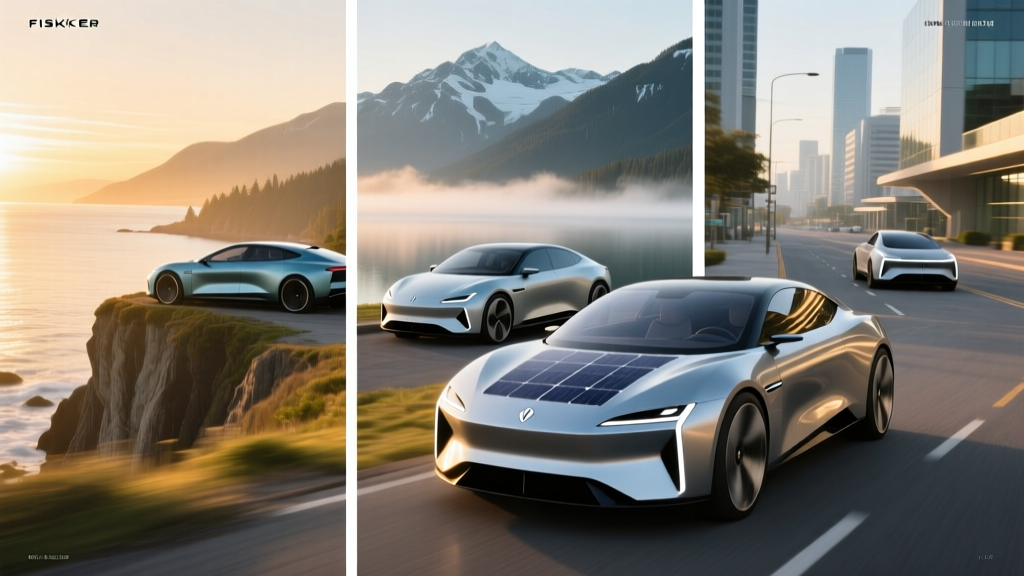
If you have been searching for Fisker Automotive in 2026, you are likely trying to untangle a complicated story. The brand that Henrik Fisker revived — first as Fisker Automotive with the plug-in hybrid Karma, then as Fisker Inc. with the all-electric Ocean SUV — has been through bankruptcy proceedings, production halts, and a scramble for parts and support. This profile is written to give you the hard numbers on the vehicles Fisker actually shipped, what it means to own one today, and what the future holds for any announced models.
The Fisker Ocean: Real Specs From a Discontinued SUV
The Fisker Ocean was the company's flagship — a midsize all-electric SUV built by Magna Steyr in Austria. Before Fisker Inc. filed for bankruptcy in late 2024, roughly 11,000–12,000 Oceans were delivered to customers in the U.S. and Europe. Those vehicles are still on the road, and their specs remain relevant to anyone considering one on the used market or trying to understand what Fisker actually delivered.
| Spec | Ocean Sport (FWD) | Ocean Ultra / Extreme (AWD) |
|---|---|---|
| EPA Range | 250 mi | 360 mi |
| Battery Capacity (Usable) | ~75 kWh (LFP) | ~113 kWh (NMC) |
| Battery Chemistry | LFP (Lithium Iron Phosphate) | NMC (Nickel Manganese Cobalt) |
| Drivetrain | Single Motor FWD | Dual Motor AWD |
| Horsepower | 275 hp | 564 hp |
| 0–60 mph | ~6.9 sec | ~3.9 sec |
| Max DC Fast Charge | ~170 kW | ~250 kW |
| 10–80% DCFC Time | ~33 min | ~30 min |
| Level 2 Charge Rate | 10.5 kW (~30 mi/hr) | 10.5 kW (~30 mi/hr) |
| Efficiency (MPGe) | ~97 MPGe combined | ~87 MPGe combined |
| Cargo (rear seats up) | 32.5 cu ft | 32.5 cu ft |
| Cargo (rear seats folded) | ~67 cu ft | ~67 cu ft |
| Original Base MSRP | $38,999 | $68,999 |
Sources: EPA / fueleconomy.gov, Fisker Inc. press materials (2023–2024).
Real-World Range: What the EPA Sticker Doesn't Tell You
Ocean Extreme (AWD, 360 mi EPA): In mixed highway driving at 70–75 mph, expect roughly 290–310 miles. In cold weather (below 32°F), that drops to 240–270 miles due to battery heating demands and cabin HVAC load. The 113 kWh NMC pack has the capacity, but efficiency suffers at sustained high speeds.
Ocean Sport (FWD, 250 mi EPA): Highway real-world is closer to 210–225 miles. Cold weather can push this below 190 miles. The smaller LFP pack is more tolerant of frequent 100% charges but offers less absolute buffer.
The Ocean's range was competitive when announced, but the real-world gap matters. The Ultra/Extreme trims with the NMC pack lose 15–20% on the highway compared to the EPA sticker — typical for a boxy SUV with a high drag coefficient. The LFP-equipped Sport trim is more efficient in city driving but has less total energy to work with.
Charging Speed and Infrastructure Reality
| Charging Level | Power | Ocean Sport | Ocean Ultra/Extreme |
|---|---|---|---|
| Level 1 (120V) | ~1.4 kW | ~4 mi/hr | ~4 mi/hr |
| Level 2 (240V, 48A) | 10.5 kW | ~30 mi/hr | ~30 mi/hr |
| DC Fast Charge (peak) | 170–250 kW | 10–80% in ~33 min | 10–80% in ~30 min |
The Ocean uses a CCS1 connector (the pre-NACS standard). In 2026, most Electrify America and EVgo stations support CCS natively, and Tesla Superchargers with Magic Dock adapters are also an option. However, the Ocean's charging curve is not class-leading: the Ultra/Extreme peaks near 250 kW but tapers significantly above 60% state of charge (SoC), meaning the 10–80% time is longer than competitors like the Hyundai Ioniq 5 or Kia EV6, which sustain higher rates longer due to 800V architectures.
Key owner note: Because Fisker Inc. is no longer manufacturing, OTA updates that might have optimized charge curves are unlikely. What you see is what you get.
Pricing, Depreciation, and Tax Credit Eligibility
Original MSRPs for the Fisker Ocean ranged from $38,999 (Sport) to $68,999 (Ultra), with the Extreme trim pushing past $69,000. Post-bankruptcy, used-market pricing has collapsed. As of early 2026, expect to find Ocean Sport models in the $18,000–$24,000 range and Ultra/Extreme trims between $28,000–$40,000, depending on mileage and condition.
| Trim | Original MSRP | Typical Used Price (2026) | Federal Used EV Credit (§25E) | Effective Price After Credit |
|---|---|---|---|---|
| Ocean Sport | $38,999 | $18,000–$24,000 | Up to $4,000 (if eligible) | $14,000–$20,000 |
| Ocean Ultra | $61,999 | $28,000–$35,000 | Up to $4,000 (if eligible) | $24,000–$31,000 |
| Ocean Extreme | $68,999 | $32,000–$40,000 | Up to $4,000 (if eligible) | $28,000–$36,000 |
Federal tax credit note: The Ocean no longer qualifies for the §30D new EV credit since it is not in production. However, buyers purchasing from a dealer may qualify for the §25E used clean vehicle credit (up to $4,000 or 30% of sale price, whichever is less). Eligibility requires the vehicle to be at least two model years old, priced under $25,000, and the buyer must meet income caps ($75,000 single / $150,000 joint). Always verify current rules at IRS.gov and consult a tax professional.
Warranty, Parts, and Ownership Risk
Fisker originally offered a 6-year/60,000-mile basic warranty and a 6-year/60,000-mile battery warranty (guaranteeing 70% capacity retention). These were below the industry standard of 8 years/100,000 miles for batteries.
Post-bankruptcy, warranty support is effectively void unless a successor entity or third-party warranty administrator has assumed obligations. This is the single biggest risk for 2026 buyers:
- Parts availability is constrained. Body panels, proprietary trim, and electronic modules are scarce.
- Software updates have stopped. Known bugs in the infotainment system and driver-assist features remain unpatched.
- Service network is limited to independent shops willing to work on an orphaned platform. No dealer network supports the Ocean.
For buyers comfortable with this risk, the low used prices can represent a value play. For risk-averse buyers, the lack of warranty and support is a dealbreaker.
Technology, Interior, and Standout Features
The Ocean had some genuinely innovative features when it launched:
- California Mode: A one-touch setting that opens all windows and the rear hatch glass for open-air driving — a party trick that owners love.
- Solar roof (Extreme trim): Integrated photovoltaic panels that Fisker claimed could add up to 1,500 miles of range per year in ideal conditions. Real-world gains are closer to 3–5 miles per day of parked charging.
- 17.1-inch rotating touchscreen: The "Revolve" screen rotates from landscape (control mode) to portrait (movie/theater mode).
- Recycled materials interior: Vegan leather, recycled plastics, and sustainable textiles throughout.
The drawbacks are equally notable: the infotainment system was buggy at launch, the driver-assist features (branded "Fisker Intelligent Pilot") are basic Level 2 adaptive cruise and lane-keeping, and the build quality on early-production units had panel-gap and trim-fit issues.
Who Should Buy a Fisker Ocean in 2026?
- You want a distinctive, head-turning EV at a steep discount to its original price.
- You have access to reliable independent EV service in your area.
- You prioritize range (the Ultra/Extreme's 360-mile EPA is still competitive).
- You accept the risk of no warranty, limited parts, and no OTA updates.
- You need a reliable daily driver with dealer support and warranty coverage.
- You want the latest ADAS features (the Ocean's Level 2 system is dated).
- You plan to keep the vehicle 5+ years and want predictable long-term costs.
- You live in an area with limited EV service infrastructure.
Fisker's Announced Models: What Never Made Production
Fisker Inc. had announced several additional models before its collapse:
- Fisker Pear: A compact, affordable EV targeting a ~$29,900 price point. Planned for production with Foxconn. Status: Cancelled.
- Fisker Ronin: A convertible GT with a claimed 600-mile range. Status: Prototype only, never entered production.
- Fisker Alaska: An electric pickup truck. Status: Concept only, never entered production.
None of these vehicles are available for purchase. Any remaining prototypes are in the hands of creditors or collectors.
Frequently Asked Questions
What is the real-world range of the Fisker Ocean?
The Ocean Extreme (AWD, 113 kWh NMC) has an EPA rating of 360 miles, but real-world highway driving yields 290–310 miles. Cold weather reduces this to 240–270 miles. The Ocean Sport (FWD, 75 kWh LFP) is EPA-rated at 250 miles, with real-world highway range around 210–225 miles.
How fast does the Fisker Ocean charge?
The Ocean Ultra/Extreme peaks at ~250 kW DC fast charging, achieving 10–80% in roughly 30 minutes. The Sport peaks at ~170 kW, taking ~33 minutes for 10–80%. Level 2 home charging is 10.5 kW, adding about 30 miles per hour.
Does the Fisker Ocean qualify for the federal EV tax credit?
No. The §30D new vehicle credit is unavailable because Fisker is no longer in production. However, the §25E used EV credit (up to $4,000) may apply if the vehicle is at least two model years old, priced under $25,000, and the buyer meets income caps. Verify eligibility at IRS.gov.
Is it worth buying a Fisker Ocean vs. competitors?
The Ocean's used prices are attractive, but the lack of warranty, parts scarcity, and discontinued software support are significant risks. If you prioritize reliability and long-term support, the Hyundai Ioniq 5, Kia EV6, or Tesla Model Y are safer choices. If you accept the risk for a lower price and distinctive styling, the Ocean can be a compelling value.
What are the biggest pros and cons?
Pros: Competitive range (Ultra/Extreme), unique California Mode and solar roof, sustainable interior materials, steep used-market discount.
Cons: No warranty support, limited parts, buggy infotainment, dated driver-assist features, uncertain long-term serviceability.
The Fisker Ocean is a cautionary tale about EV startup risk — but for the right buyer, the combination of low used prices and solid specs makes it worth considering. Just go in with eyes open about the support reality.