The Short Answer: Is an EV Right for You?
If you can charge at home, drive under 300 miles per day, and live in a moderate climate, a modern EV will likely save you $4,000–$9,000 over five years compared to a comparable gas car — even accounting for higher insurance and upfront cost. The 2026 EV market offers multiple models with 250–340 miles of EPA range starting under $40,000, and federal tax credits up to $7,500 (subject to income, MSRP caps, and battery-sourcing rules) can significantly reduce your net price. However, if you lack home charging access, regularly drive in sub-20°F weather, or tow heavy loads, a plug-in hybrid (PHEV) may serve you better. The decision comes down to your specific driving pattern, not marketing claims.
What You Actually Need to Know Before Buying an EV
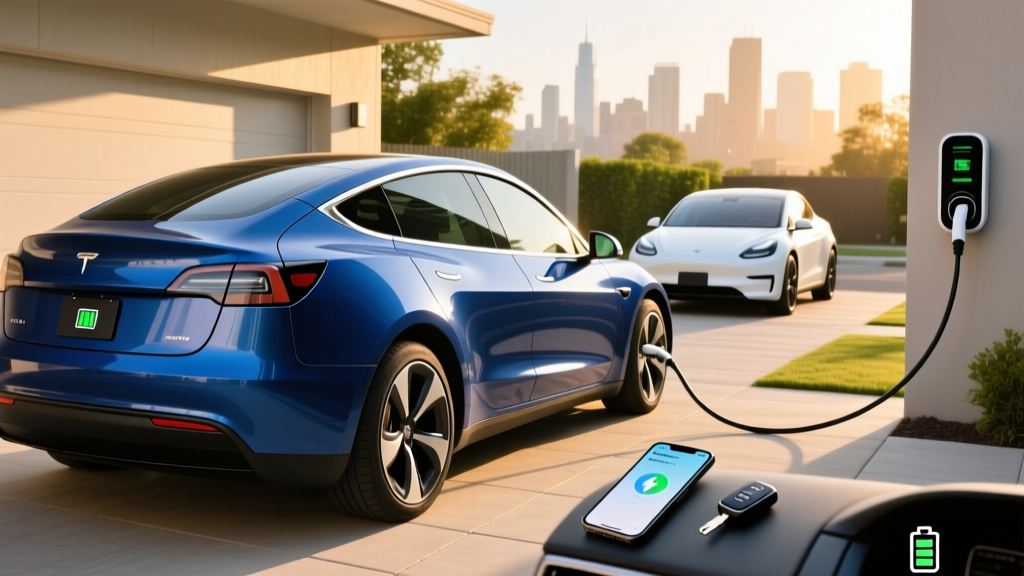
Most first-time EV buyers focus on range, but the more consequential question is charging logistics. An EV is fundamentally a different ownership model: instead of visiting a gas station weekly, you plug in at home nightly — like charging a phone. This works brilliantly if you have a garage or driveway with electrical access. It becomes complicated if you rely on street parking or apartment living without charging infrastructure.
Here are the core concepts every buyer must understand before stepping into a dealership:
- kWh (kilowatt-hour) measures battery energy capacity — think of it as the "gallons" in your tank. A 75 kWh battery holds more energy than a 60 kWh battery.
- kW (kilowatt) measures power flow rate — the speed at which energy moves. A 150 kW DC fast charger delivers energy faster than a 50 kW charger.
- EPA range is a laboratory estimate. Real-world highway driving at 75 mph typically yields 85–90% of the EPA sticker. Cold weather (below 30°F) can reduce range by 20–35% depending on whether the vehicle has a heat pump.
- Level 1 charging (standard 120V outlet) adds roughly 3–5 miles of range per hour — adequate for PHEVs with small batteries, but painfully slow for a full EV.
- Level 2 charging (240V, like a dryer outlet) adds 20–44 miles per hour depending on the vehicle's onboard charger and circuit amperage. This is the practical standard for home charging.
- DC fast charging (public stations) can add 100–250 miles in 15–30 minutes, but charge speed tapers significantly above 80% state of charge to protect battery health.
EV vs. Gas vs. Hybrid: The Numbers That Matter
The purchase decision rarely comes down to a single factor. Let's compare three realistic 2026 options across the metrics that affect your wallet and daily life: the Hyundai Ioniq 6 SE (EV), the Toyota Camry LE (gas), and the Toyota Prius Prime (PHEV).
| Metric | Hyundai Ioniq 6 SE (EV) | Toyota Camry LE (Gas) | Toyota Prius Prime SE (PHEV) |
|---|---|---|---|
| Base MSRP | $37,850 | $28,495 | $33,445 |
| Est. Federal Tax Credit | Up to $7,500* | $0 | Up to $7,500* |
| Net Price After Credit | ~$30,350 | $28,495 | ~$25,945 |
| EPA Range / Efficiency | 361 mi / 140 MPGe | 572 mi / 32 MPG combined | 44 mi electric + 476 mi gas / 127 MPGe |
| Fuel/Energy Cost per Mile | $0.042 (home charging) | $0.109 (gas at $3.50/gal) | $0.038 (electric) / $0.109 (gas) |
| Annual "Fuel" Cost (12,000 mi) | $504 | $1,308 | $456 (if mostly electric) |
| 5-Year Fuel/Energy Cost | $2,520 | $6,540 | $2,280 |
| 5-Year Maintenance (est.) | $1,800 | $3,200 | $2,600 |
| Battery/Powertrain Warranty | 10 yr / 100,000 mi | 5 yr / 60,000 mi | 10 yr / 100,000 mi (hybrid battery) |
*Federal §30D tax credit eligibility depends on buyer income limits (AGI ≤$150K single / $300K joint), vehicle MSRP caps ($55K cars / $80K SUVs/trucks), and battery critical-mineral and component sourcing requirements. Credit can be transferred to the dealer as a point-of-sale discount. Verify current-year rules at irs.gov.
The EV's higher sticker price is substantially offset by the tax credit, and the fuel savings compound every year. Over five years, the Ioniq 6 owner saves roughly $4,800 in fuel and $1,400 in maintenance compared to the Camry — totaling about $6,200 in operational savings. Insurance premiums for EVs run 15–25% higher on average, which typically costs an extra $1,200–$2,000 over five years, narrowing but not eliminating the advantage.
The Real Costs of EV Ownership: A Complete Breakdown
Marketing materials highlight fuel savings, but a genuine ownership calculation requires examining every cost category. Here's what a five-year ownership period actually looks like for a typical EV buyer driving 12,000 miles annually.
| Cost Category | EV (e.g., Ioniq 6 SE) | Gas (e.g., Camry LE) | Difference |
|---|---|---|---|
| Purchase Price (after credit) | $30,350 | $28,495 | +$1,855 (EV) |
| Home Charger Installation (Level 2) | $800–$2,200 | $0 | +$800–$2,200 (EV) |
| 5-Year Fuel/Energy | $2,520 | $6,540 | −$4,020 (EV saves) |
| 5-Year Maintenance | $1,800 | $3,200 | −$1,400 (EV saves) |
| 5-Year Insurance (avg.) | $9,500 | $7,800 | +$1,700 (EV) |
| 5-Year Depreciation (est.) | $15,200 | $12,400 | +$2,800 (EV) |
| 5-Year Net Cost | $60,770–$62,170 | $58,435 | +$2,335 to +$3,735 (EV) |
This breakdown reveals a nuanced picture: the EV is more expensive to own over five years when you include the higher depreciation (EVs have depreciated faster than gas cars in the 2024–2026 period due to aggressive price cuts and rapid model turnover) and insurance premiums. However, this calculation excludes several factors that tilt the balance back:
- State incentives: Many states offer additional rebates ($1,000–$4,000) that further reduce the EV's net price.
- HOV lane access: In congested metro areas, EV HOV-lane stickers have tangible time and fuel value.
- Utility off-peak rates: Charging overnight at time-of-use rates as low as $0.06/kWh drops the per-mile energy cost to under $0.02, widening the fuel savings.
- Resale variability: Depreciation figures are averages; specific models like the Tesla Model Y and Hyundai Ioniq 5 have held value better than the EV average.
For buyers who keep vehicles 8–10 years, the EV math improves dramatically: the fuel and maintenance savings continue accumulating while the depreciation hit is already absorbed, typically resulting in $6,000–$12,000 in net savings over a decade.
Home Charging: The Make-or-Break Factor
Home charging access is the single most important variable in EV satisfaction. Owners with reliable home charging consistently report 90%+ satisfaction rates; those relying entirely on public charging report significantly lower satisfaction due to cost, time, and reliability friction.
Level 2 Home Charger Installation: What to Expect
A Level 2 home charger (240V, 32–48 amps) is the practical minimum for daily EV ownership. Here's the cost reality:
- Charger hardware: $300–$700 for a quality Level 2 unit (e.g., ChargePoint Home Flex, Emporia Vue, Tesla Wall Connector).
- Electrician labor: $500–$1,500 depending on the distance from your electrical panel to the charging location, whether conduit must be run, and local labor rates.
- Panel upgrade (if needed): $1,500–$3,500 if your home has a 100-amp panel that must be upgraded to 200 amps to support EV charging alongside existing loads. Homes built after 2000 typically have 200-amp panels and skip this step.
- Permits: $50–$250 depending on your municipality.
- Total typical installation: $800–$2,200 for most homes without a panel upgrade; $2,500–$5,000 if a panel upgrade is required.
A 48-amp Level 2 circuit delivers approximately 11.5 kW of power to the vehicle, adding roughly 35–44 miles of range per hour of charging for most EVs. An overnight charge (8 hours) replenishes 280–350 miles — more than enough for any daily driving need. Always consult a licensed electrician for a site-specific assessment before purchasing equipment.
What If You Can't Charge at Home?
Roughly 30% of US households lack access to dedicated home parking with electrical access. If this describes you, consider:
- Workplace charging: Some employers offer free or subsidized Level 2 charging. If your workplace provides this, it can functionally replace home charging for a commuter vehicle.
- Public Level 2 networks: ChargePoint, EVgo, and Electrify America operate public Level 2 stations in urban areas, but costs ($0.12–$0.25/kWh) and availability vary.
- PHEV as a bridge: A plug-in hybrid like the Prius Prime (44 miles electric range) can be charged at any standard 120V outlet overnight, covering most daily commutes on electricity while the gas engine eliminates range anxiety for longer trips. This is often the pragmatic choice for apartment dwellers.
Common EV Misconceptions: Fact vs. Fiction
Misinformation about EVs persists on both sides — from "they're perfect for everyone" to "they'll strand you on the highway." Here's what the data actually shows:
| Myth | Fact (with data) |
|---|---|
| "EV batteries need replacing every few years and cost $20,000." | Modern EV batteries are warrantied for 8 years/100,000 miles (10 years in CARB states) to retain at least 70% capacity. Real-world fueleconomy.gov data and fleet studies show average degradation of 1.5–2.5% per year. A 2020 Tesla Model 3 at 100,000 miles typically retains 88–92% of original capacity. Full battery replacement is rare and costs $8,000–$18,000 depending on the model, but is almost never needed within the vehicle's practical lifespan. |
| "You'll be stranded — charging stations are too scarce." | As of 2026, the US has over 70,000 public charging ports. The Tesla Supercharger network (now open to NACS-equipped non-Tesla EVs) and Electrify America cover all major interstate corridors with stations every 50–80 miles. However, rural routes in the Mountain West and parts of the Great Plains remain sparse. Plan road trips with apps like A Better Routeplanner. |
| "EVs don't work in cold weather." | EVs work in cold weather, but range drops 20–35% in sub-30°F conditions due to battery chemistry limitations and cabin heating demands. Vehicles with heat pumps (standard on most 2025+ EVs) recover 10–15% of that loss. A 300-mile EPA EV may deliver 210–240 miles in 10°F weather — still adequate for most daily needs, but critical to plan for on long winter road trips. Preconditioning the battery while plugged in mitigates both range loss and slow charging. |
| "EVs are worse for the environment because of battery mining." | Lifecycle analyses by the ICCT and Argonne National Laboratory consistently show that even on coal-heavy grids, EVs produce 30–50% fewer lifecycle emissions than gas cars over 150,000 miles. On cleaner grids (California, Pacific Northwest, nuclear-heavy regions), the advantage exceeds 60–70%. Battery recycling infrastructure is scaling, with companies like Redwood Materials recovering 95%+ of critical minerals. |
| "Charging takes forever." | Home Level 2 charging happens while you sleep — zero active time cost. For road trips, a 2026 EV with 200+ kW DC fast charging capability (e.g., Ioniq 5/6, Tesla Model 3/Y, Kia EV6) adds 150–200 miles in 15–18 minutes (10–80% charge). This is slower than a 5-minute gas fill-up, but most drivers use the time for rest stops, food, or restroom breaks. |
Decision Framework: Which Electrified Vehicle Is Right for You?
Use this if/then guide to find your match:
Choose a full EV (BEV) if:
- You have access to home or workplace Level 2 charging
- Your daily driving is under 250 miles (round trip)
- You want the lowest per-mile operating cost and minimal maintenance
- You qualify for the federal tax credit (check income and MSRP caps at irs.gov)
- You're comfortable planning road-trip charging stops 1–2 times per 300 miles
Choose a plug-in hybrid (PHEV) if:
- You lack reliable home Level 2 charging (PHEV small batteries charge on standard 120V)
- You frequently drive 400+ miles in a single day or through rural charging deserts
- You want electric commuting with zero range anxiety for road trips
- You live in extreme cold (below 0°F regularly) where EV range loss is most severe
- You tow a trailer regularly (towing can cut EV range by 40–50%)
Stick with a conventional hybrid (HEV) if:
- You have no access to any charging (apartment with no workplace charging)
- Your budget is under $28,000 and you need maximum vehicle for the dollar
- You want EV-like fuel economy (45–57 MPG) without changing your fueling habits at all
Wait on EVs if:
- You live in a charging desert with no planned infrastructure (check the DOE Alternative Fuels Station Locator)
- You're buying a second vehicle for occasional long-distance use only
- Your current vehicle is paid off, efficient, and meets your needs — the best financial decision is often keeping what you have
What First-Time EV Buyers Should Do Before Signing
If you've decided an EV fits your situation, follow this checklist before committing:
- Get an electrician quote for Level 2 installation before purchasing the car. Know your total cost including any panel upgrade.
- Verify tax credit eligibility for the specific model and trim you want. Battery sourcing requirements vary by model year and manufacturing date. The dealer should provide a clean vehicle report, but confirm independently via the IRS portal.
- Test-drive in conditions that match your commute — if you drive highway, test on the highway. EV efficiency drops at sustained 75+ mph speeds compared to city driving, where regenerative braking recaptures energy.
- Check the charge curve, not just peak kW. A vehicle that peaks at 250 kW but tapers to 50 kW above 60% SoC may charge slower overall than one that sustains 180 kW to 80%. Look for published 10–80% charge times as the meaningful metric.
- Compare insurance quotes before buying. EV insurance varies wildly by model — a Tesla Model Y may cost 20–30% more to insure than a Hyundai Ioniq 5 in the same zip code due to repair-cost differences.
- Understand the warranty. Federal law mandates 8 years/100,000 miles for battery and powertrain (10 years/150,000 miles in CARB states). This covers capacity loss below 70% of original — not normal gradual degradation above that threshold.
Frequently Asked Questions
How long do EV batteries actually last?
Based on fleet data from vehicles now exceeding 150,000 miles, modern NMC and LFP batteries typically retain 85–92% of original capacity at 100,000 miles and 78–88% at 200,000 miles. LFP (lithium iron phosphate) chemistry, used in standard-range Tesla Model 3/Y and some other models, shows even slower degradation and can tolerate regular 100% charging without harm. Most EV batteries will outlast the vehicle's economic life.
Is a used EV a good idea?
Yes, with caveats. A used EV under the $25,000 price cap may qualify for a 30% federal credit (up to $4,000) if purchased from a dealer and income limits are met. Request a battery state-of-health (SoH) report from the dealer or use an OBD-II scanner to check capacity retention. Avoid used EVs with less than 75% SoH unless the price reflects an imminent battery replacement.
What happens if the power goes out?
Your EV won't charge during an outage, but a full battery holds 60–100 kWh of stored energy — enough to power essential home circuits for 2–4 days via a vehicle-to-home (V2H) system like the Ford F-150 Lightning's Pro Power Onboard or Hyundai's upcoming V2H adapter. This is a genuine advantage over gas cars, which cannot power a home without a separate generator.
Do EVs need oil changes or transmission service?
No. EVs have no engine oil, no multi-speed transmission fluid, no spark plugs, no timing belts, and no exhaust systems. Maintenance is limited to tire rotations (EVs are heavier and wear tires 20–30% faster), cabin air filters, brake fluid checks (regenerative braking reduces brake pad wear to 80,000+ mile intervals), and coolant top-offs for the battery thermal management system.
Are EVs safe in a crash?
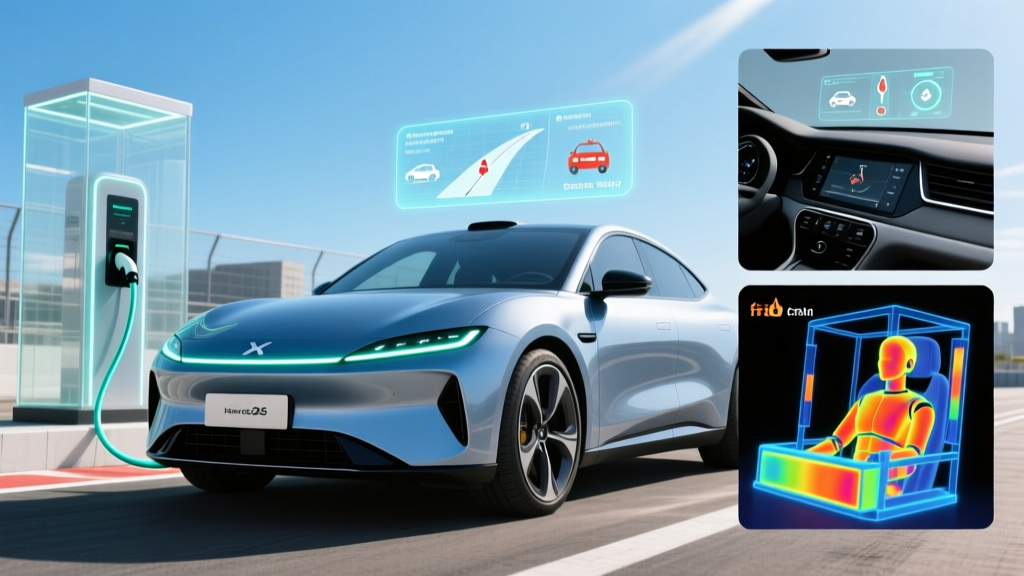
EVs consistently earn top ratings from IIHS and NHTSA. The battery pack's low floor placement creates a lower center of gravity (reducing rollover risk) and a massive front crumple zone (no engine block to intrude into the cabin). Post-crash fire risk in EVs is statistically lower than in gas vehicles, according to NTSB data.