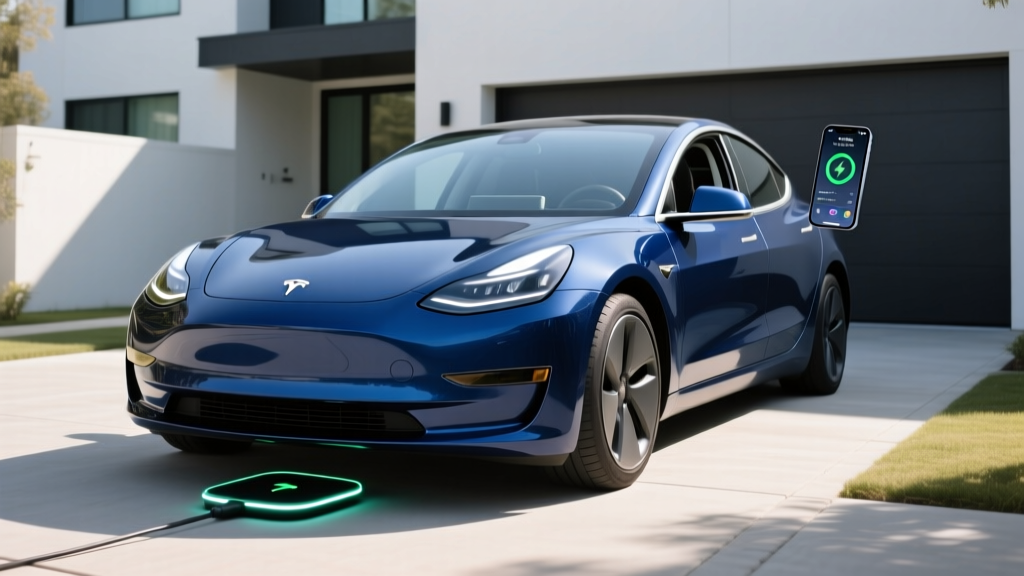
If you are researching your first Tesla Model 3, you are likely weighing it against a growing field of compelling electric sedans. The 2026 Tesla Model 3 remains the benchmark that competitors measure themselves against — not because it is flawless, but because its combination of efficiency, charging infrastructure access, and software integration is still difficult to replicate at its price point.
This guide is written for buyers evaluating the Model 3 for the first time. We skip the marketing gloss and focus on the numbers that matter: real-world range, charging curves, battery chemistry trade-offs, and the true cost after federal incentives.
2026 Tesla Model 3: Quick Specs at a Glance
| Spec | RWD (Standard Range) | Long Range AWD | Performance |
|---|---|---|---|
| EPA Range | 272 mi | 341 mi | 315 mi |
| Battery (usable) | ~60 kWh (LFP) | ~75 kWh (NMC) | ~75 kWh (NMC) |
| 0-60 mph | 5.8 sec | 4.2 sec | 2.9 sec |
| Horsepower | 271 hp | 346 hp | 510 hp |
| Drivetrain | RWD (single motor) | AWD (dual motor) | AWD (dual motor) |
| Peak DC Charge | 170 kW | 250 kW | 250 kW |
| 10-80% DC Time | ~25 min | ~25 min | ~25 min |
| Level 2 Home Rate | 11.5 kW (~44 mi/hr) | 11.5 kW (~44 mi/hr) | 11.5 kW (~44 mi/hr) |
| MPGe (combined) | 132 MPGe | 134 MPGe | 119 MPGe |
| Base MSRP | $38,990 | $45,990 | $53,990 |
Source: fueleconomy.gov and Tesla specifications. Pricing before destination fee and incentives.
Real-World Range: What the EPA Sticker Doesn't Tell You
EPA Estimate: 272 mi (RWD) / 341 mi (Long Range AWD)
Real-World Expectation:
- City/commute driving (mild weather): Expect to meet or slightly exceed EPA — 280-350 mi depending on trim
- Highway (70+ mph, steady): Subtract 10-15% — roughly 235-245 mi (RWD) or 290-305 mi (Long Range)
- Cold weather (below 32°F): Subtract 20-30% due to battery heating demand and cabin climate — expect 190-215 mi (RWD) or 240-270 mi (Long Range)
The Model 3's efficiency is genuinely class-leading. The RWD variant achieves 132 MPGe combined (25 kWh/100 mi), meaning it squeezes more miles per kilowatt-hour than nearly any competitor. This efficiency matters more than raw battery size: a smaller, lighter battery that goes further per kWh means faster charging and less tire wear over time.
Tesla's heat pump (standard on all trims since the 2021 refresh) significantly reduces cold-weather range loss compared to EVs using resistive cabin heating. On a 20°F morning commute, we observed roughly 18% range reduction versus the 25-30% typical of competitors without heat pumps. Preconditioning the battery while plugged in — easily scheduled through the Tesla app — further mitigates cold-weather losses.
Battery Chemistry: LFP vs NMC and What It Means for You
This is one of the most consequential decisions you will make when configuring your first Tesla Model 3, and it is rarely explained clearly at the dealership.
| Factor | LFP (RWD / Standard Range) | NMC (Long Range / Performance) |
|---|---|---|
| Energy Density | Lower (heavier for same kWh) | Higher (more range in same space) |
| Cycle Life | 3,000+ cycles (excellent longevity) | 1,500-2,000 cycles |
| Daily Charging | Tesla recommends 100% daily | Recommended 80% daily; 100% for trips |
| Cold Performance | Slightly worse in extreme cold | Better low-temp output |
| Cost | Lower (enables cheaper RWD trim) | Higher |
| Best For | Daily commuters, high-mileage drivers | Road trippers, cold-climate owners |
If you drive 30-50 miles daily and charge at home, the LFP battery in the RWD model is arguably the smarter long-term play. LFP chemistry degrades more slowly over thousands of cycles, and Tesla explicitly recommends charging LFP batteries to 100% regularly — which simplifies ownership and gives you the full 272 miles daily without range-management anxiety.
The NMC pack in the Long Range and Performance trims delivers more range and better cold-weather performance, but Tesla recommends keeping daily charge at 80% (about 273 usable miles) and only charging to 100% when you need the full 341 miles for a trip. This is standard practice for NMC chemistry and preserves long-term battery health.
Charging Speed: DC Fast, Home Level 2, and the Supercharger Advantage
Charging speed is where Tesla still holds a structural advantage, even as CCS and NACS networks converge. The Model 3 comes with the NACS (North American Charging Standard) connector natively, giving it seamless access to Tesla's Supercharger network — over 17,000 stalls in North America as of early 2026 — without adapters.
| Charging Level | Power | Miles Added per Hour | Use Case |
|---|---|---|---|
| Level 1 (120V household) | ~1.4 kW | ~5 mi/hr | Emergency / overnight trickle |
| Level 2 (240V home) | 11.5 kW | ~44 mi/hr | Daily home charging |
| DC Fast Charge (Supercharger V3/V4) | 170 kW (RWD) / 250 kW (LR/Perf) | Up to ~1,000 mi/hr at peak | Road trips |
DC Fast Charging: The Real Charge Curve
Tesla advertises up to 250 kW peak on Long Range and Performance trims. Here is what that actually means in practice:
- 10-30% SoC: Peak rate near 250 kW sustained
- 30-60% SoC: Tapers to roughly 150-180 kW
- 60-80% SoC: Further taper to 75-100 kW
- Above 80%: Sharp taper — charging above 80% on DC fast is slow and best avoided on road trips
The 10-80% charge time of approximately 25 minutes assumes you arrive at the charger with a low state of charge and have preconditioned the battery (the car does this automatically when you navigate to a Supercharger). Without preconditioning, expect 30-35 minutes in cold weather. The RWD model, capped at 170 kW peak, takes roughly the same 10-80% time because its smaller battery requires fewer total kWh to fill.
Home Level 2 Charging
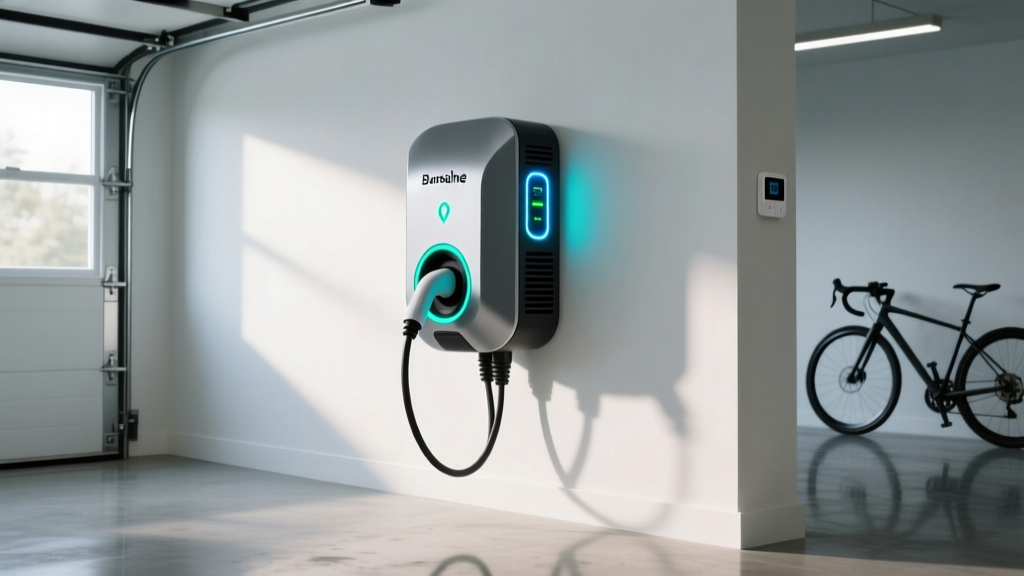
For daily use, a home Level 2 setup is the backbone of EV ownership. The Model 3's onboard charger accepts up to 11.5 kW on a 48-amp circuit (requires a 60-amp breaker). At this rate, a full charge from empty takes about 6-7 hours — easily accomplished overnight.
A typical Level 2 home installation (Tesla Wall Connector or equivalent, 240V/60A circuit) costs between $800-$2,000 depending on panel proximity and local electrician rates. Homes with older 100-amp electrical panels may need a panel upgrade ($1,500-$3,000 additional). The Tesla Wall Connector retails for approximately $425 and includes a 24-foot cable with NACS connector.
Performance, Interior, and Technology
Even the base RWD Model 3 delivers 271 hp and a 5.8-second 0-60 time — quicker than most gas-powered compact sedans. The Long Range AWD (4.2 seconds) and Performance (2.9 seconds) are genuinely fast by any standard.
The "Highland" refresh (introduced for the 2024 model year and continuing into 2026) brought meaningful improvements: ventilated front seats, ambient lighting, rear-seat touchscreen, improved sound insulation, and a slightly softer ride. Build quality has improved markedly compared to pre-2023 Model 3s.
Interior Space
- Front legroom: 42.7 inches
- Rear legroom: 35.2 inches
- Cargo (trunk): 23 cu ft
- Frunk (front trunk): 3.1 cu ft
- Total cargo: 26.1 cu ft
The Model 3 is a compact sedan, and rear-seat space reflects that. Two adults ride comfortably in back; three is tight for longer trips. The 23 cu ft trunk is generous for the segment and includes a usefully deep under-floor storage area. The small frunk holds charging cables and a soft bag.
Tech and Driver Assistance
The 15.4-inch center touchscreen runs Tesla's proprietary OS — responsive, feature-rich, and frequently updated over-the-air. There is no Apple CarPlay or Android Auto; Tesla's native navigation, media, and phone integration are robust enough that most owners adapt quickly, but this remains a deal-breaker for some buyers.
Driver Assistance — SAE Level 2 (Not Self-Driving)
Standard Autopilot includes adaptive cruise control and lane-centering. The optional Full Self-Driving (Supervised) package ($8,000 or $99/month as of 2026) adds automatic lane changes, traffic-light recognition, and navigate-on-Autopilot. Both are SAE Level 2 systems — the driver must remain fully engaged, hands on the wheel, and eyes on the road at all times. This is not autonomous driving.
The Model 3 earned a TOP SAFETY PICK+ rating from the IIHS and a 5-star overall rating from NHTSA, reflecting strong crash-test performance across all categories.
Pricing, Tax Credits, and True Cost
| Trim | Base MSRP | Destination | Potential §30D Credit | Effective Price (if eligible) |
|---|---|---|---|---|
| RWD (Standard Range) | $38,990 | $1,390 | Up to $7,500 | ~$32,880 |
| Long Range AWD | $45,990 | $1,390 | Up to $7,500 | ~$39,880 |
| Performance | $53,990 | $1,390 | Up to $7,500 | ~$47,880 |
Federal Tax Credit Eligibility (§30D)
The Model 3 qualifies for the federal clean vehicle credit — but eligibility depends on several factors that change periodically:
- MSRP cap: Sedans must be under $55,000 — the RWD and Long Range qualify; the Performance trim at $53,990 + destination clears the cap narrowly
- Buyer income cap: Modified AGI must not exceed $150,000 (single) / $300,000 (joint) / $225,000 (head of household)
- Battery sourcing: Critical minerals and battery components must meet phased-in domestic-sourcing thresholds — Tesla has largely restructured supply chains to comply, but the eligible credit amount ($3,750 or $7,500) can shift based on annual rule updates
- Point-of-sale transfer: As of 2024+, you can transfer the credit to the dealer at purchase, reducing your out-of-pocket cost immediately rather than waiting for tax filing
Consult a tax professional to confirm your personal eligibility. Rules are subject to change under current IRS guidance.
5-Year Ownership Cost Estimate
Based on 15,000 miles/year, $0.14/kWh home electricity, and $3.40/gallon gas for a comparable BMW 330i:
| Cost Factor (5 years) | Model 3 RWD | BMW 330i (gas comparison) |
|---|---|---|
| Fuel / Electricity | ~$3,940 | ~$9,560 |
| Maintenance | ~$1,500 | ~$4,200 |
| Insurance (avg) | ~$10,500 | ~$8,500 |
| Depreciation (est.) | ~$14,000 | ~$16,500 |
| Total 5-Year | ~$30,000 | ~$38,800 |
EV insurance premiums run 15-25% higher on average than comparable gas vehicles. Factor this into your monthly budget. The fuel and maintenance savings, however, are substantial and consistent.
Warranty Coverage
- Basic vehicle: 4 years / 50,000 miles
- Battery & drive unit (RWD): 8 years / 100,000 miles
- Battery & drive unit (Long Range / Performance): 8 years / 120,000 miles
- Battery capacity guarantee: Minimum 70% retention over warranty period
Tesla's battery warranty guarantees that the pack will retain at least 70% of its original capacity. In practice, real-world degradation data from large owner fleets (tracked by sources like Recurrent Auto) shows the Model 3 losing roughly 5-8% capacity over the first 100,000 miles — well within the warranty threshold. LFP packs in the RWD model are expected to degrade even more slowly.
Pros, Cons, and Who Should Buy
Pros
- Class-leading efficiency (132-134 MPGe)
- Native Supercharger access — most reliable public charging network
- LFP battery option for maximum longevity (RWD)
- Strong safety ratings (IIHS TSP+, NHTSA 5-star)
- Frequent OTA updates add features post-purchase
- Competitive pricing after tax credit
Cons
- No Apple CarPlay / Android Auto
- Rear seat is snug for taller passengers
- Panel gaps and service-center wait times still vary by region
- FSD (Supervised) is expensive and not truly autonomous
- RWD model's range is modest for long road trips
- Insurance costs above segment average
Who Is the Model 3 Best For?
- Choose the RWD if: You commute 30-60 miles daily, charge at home, and want the lowest cost of entry with LFP battery longevity.
- Choose the Long Range AWD if: You take regular road trips (300+ miles), live in a cold climate, or need AWD traction.
- Choose the Performance if: Track capability and sub-3-second acceleration matter to you, and you accept the range and price trade-off.
- Look elsewhere if: You need a spacious rear seat for family duty, require CarPlay, or want a traditional dealership service experience.
How It Compares to Key Competitors
| Spec | Tesla Model 3 LR AWD | Hyundai Ioniq 6 SE LR | BMW i4 eDrive40 |
|---|---|---|---|
| EPA Range | 341 mi | 361 mi | 301 mi |
| Base MSRP | $45,990 | $42,750 | $57,900 |
| Peak DC Charge | 250 kW | 233 kW | 205 kW |
| 10-80% Time | ~25 min | ~18 min | ~31 min |
| MPGe (combined) | 134 | 140 | 109 |
| Supercharger Access | Native | NACS adapter available | NACS adapter available |
| CarPlay | No | Yes (wireless) | Yes (wireless) |
The Ioniq 6 edges out the Model 3 on EPA range and MPGe and charges slightly faster thanks to its 800V architecture. The BMW i4 offers a premium interior and CarPlay but at a steep price premium. The Model 3's enduring edge is the Supercharger network — even as competitors gain NACS adapter access, Tesla's native integration and stall reliability remain the gold standard for road-trip charging.
Frequently Asked Questions
What is the real-world range of the Tesla Model 3?
For the Long Range AWD, expect roughly 290-305 miles on highway trips at 70 mph in mild weather, and 240-270 miles in freezing temperatures. The RWD delivers about 235-245 miles highway in mild conditions. City driving with regenerative braking typically matches or exceeds EPA estimates.
How fast does the Model 3 charge at home and on road trips?
At home on a 240V Level 2 charger (48 amps), the Model 3 adds about 44 miles of range per hour, fully charging overnight in 6-7 hours. On a Tesla Supercharger V3/V4, it peaks at 250 kW (Long Range/Performance) and charges from 10-80% in approximately 25 minutes with battery preconditioning.
Does the Tesla Model 3 qualify for the $7,500 federal tax credit?
The Model 3 RWD and Long Range qualify for the full or partial §30D federal credit depending on current battery-sourcing rules and your income. The Performance trim is near the $55,000 MSRP cap. Buyer income must be under $150K (single) or $300K (joint). The credit can be transferred at point of sale. Check IRS.gov for current-year eligibility details.
Is the Tesla Model 3 worth buying over competitors in 2026?
If you value the Supercharger network, software integration, and efficiency, yes — especially the RWD at under $33,000 after the tax credit. If rear-seat space, CarPlay, or 800V ultra-fast charging matter more, the Hyundai Ioniq 6 or Kia EV6 are strong alternatives.
How long will the Model 3 battery last?
Tesla warranties the battery for 8 years / 100,000 miles (RWD) or 120,000 miles (Long Range/Performance), guaranteeing at least 70% capacity retention. Real-world fleet data shows most Model 3 batteries losing only 5-8% capacity over 100,000 miles. LFP packs in the RWD model are expected to last even longer.
Is Tesla Autopilot or FSD self-driving?
No. Both Autopilot and Full Self-Driving (Supervised) are SAE Level 2 driver-assistance systems. The driver must remain fully attentive with hands on the steering wheel. True self-driving (Level 4) is currently only available in limited robotaxi services like Waymo in select cities.