Quick Answer: Is an EV Right for Your First Electric Car?
If you can install a Level 2 home charger, drive under 250 miles daily, and live in a moderate climate, a battery-electric vehicle (BEV) will likely save you $3,000–$6,000 over five years compared to a comparable gas car. If you lack home charging access, regularly drive in sub-20°F winters, or take frequent 400+ mile road trips through rural areas, a plug-in hybrid (PHEV) or hybrid (HEV) may serve you better as a first electrified vehicle. Start by confirming your electrical panel can support a 240V/48A circuit (~$500–$2,000 installation), then match battery size to your actual commute — not the longest trip you take once a year.
What to Expect From Your First EV Car: Range, Charging, and Daily Reality
The EPA range sticker on a new EV tells you part of the story. The real-world number depends heavily on speed, temperature, and terrain. A vehicle rated at 310 miles EPA might deliver 250–270 miles at sustained 75 mph highway speeds, and as little as 200–220 miles in 20°F weather without a heat pump. This isn't a defect — it's battery chemistry. Lithium-ion cells experience higher internal resistance in cold temperatures, and cabin heating draws directly from the traction battery.
For a first-time EV buyer, here's the practical math: if your round-trip commute is 60 miles and you have home charging, you'll plug in every night or every other night and start each morning with a full "tank." You'll almost never visit a public charger for daily driving. The U.S. Department of Energy confirms that over 80% of EV charging happens at home.
Charging speed matters when you do leave town. Modern EVs on DC fast chargers vary widely: a Hyundai Ioniq 5 peaks at roughly 240 kW and charges 10–80% in about 18 minutes, while a base-model Chevy Equinox EV peaks around 150 kW and takes roughly 30 minutes for the same 10–80% window. Note that kW (kilowatts) measures power — how fast energy flows into the battery — while kWh (kilowatt-hours) measures energy capacity, like the size of the fuel tank. Peak kW is never sustained across the full charge; above 80% State of Charge, speeds taper significantly to protect battery health.
EV vs Gas vs Hybrid: The Numbers Side by Side
Let's compare three realistic 2026 options for a first-time buyer: a battery-electric crossover, a conventional hybrid, and a gasoline compact SUV — all in the $35,000–$45,000 range.
| Metric | BEV (e.g., Hyundai Ioniq 5 SEL) | HEV (e.g., Toyota RAV4 Hybrid) | Gas (e.g., Mazda CX-5) |
|---|---|---|---|
| Base MSRP | $42,600 | $33,500 | $30,500 |
| EPA Range / Tank Range | 303 mi (EPA) | 580 mi (14.5 gal × 40 MPG) | 380 mi (15.3 gal × 25 MPG) |
| Real-World Highway Range | ~250–270 mi | ~540 mi | ~350 mi |
| Fuel / Energy Cost per Mile | $0.04–$0.06 (home charging) | $0.09 (at $3.50/gal) | $0.14 (at $3.50/gal) |
| Annual Fuel/Energy (12,000 mi) | $480–$720 | $1,050 | $1,680 |
| Estimated §30D Federal Tax Credit | Up to $7,500 (if eligible) | $0 | $0 |
| Effective Price After Credit | ~$35,100 | $33,500 | $30,500 |
| Maintenance Cost / Year | ~$300 | ~$600 | ~$900 |
| 0–60 mph | 5.1 sec (AWD) | 7.4 sec | 8.0 sec |
The BEV's higher sticker price is partially offset by the federal tax credit (if you qualify — more on that below) and dramatically lower running costs. Over five years and 60,000 miles, the BEV saves roughly $4,500–$6,000 in fuel and $2,500–$3,000 in maintenance compared to the gas vehicle. The hybrid sits in between: lower upfront cost than the EV, no charging infrastructure needed, but still burning fuel.
The Real Cost of EV Ownership: A 5-Year Breakdown
First-time buyers often focus on purchase price and miss the total cost of ownership (TCO). Here's a realistic five-year projection for a mid-range BEV driven 12,000 miles annually.
| Cost Category | BEV (5-Year Total) | Gas Car (5-Year Total) |
|---|---|---|
| Purchase Price (after credit) | $35,100 | $30,500 |
| Fuel / Electricity | $3,000 | $8,400 |
| Maintenance (tires, fluid, brakes) | $1,500 | $4,500 |
| Insurance (average premium surcharge) | $7,500 (+$1,200 vs gas) | $6,300 |
| Home Charger Install (one-time) | $1,200 | $0 |
| Depreciation (estimated 5-yr) | -$17,500 | -$14,000 |
| Total 5-Year Cost | $30,800 | $35,700 |
Key takeaways: EV insurance premiums run 10–20% higher on average due to repair costs and battery replacement risk. Depreciation on EVs has been steeper than gas cars in recent years, partly due to aggressive price cuts by manufacturers and rapid technology advancement. However, the fuel and maintenance savings are substantial and recurring. The net result is typically a $3,000–$6,000 five-year savings for the EV owner who charges at home.
Federal Tax Credit Rules for 2026: Do You Qualify?
The IRS §30D Clean Vehicle Credit can reduce your effective purchase price by up to $7,500 — but eligibility is layered, and many popular models do not qualify. Here's the checklist for 2026:
- MSRP cap: Vans, SUVs, and pickups must be under $80,000; sedans and other vehicles under $55,000.
- Buyer income cap: Modified AGI must not exceed $150,000 (single), $225,000 (head of household), or $300,000 (joint).
- Battery sourcing: Increasing percentages of battery minerals must be sourced from the U.S. or free-trade-agreement countries, and battery components cannot contain materials from "foreign entities of concern" (primarily China).
- Point-of-sale transfer: You can transfer the credit to the dealer at purchase for an immediate price reduction — but you must still meet all income and sourcing requirements when you file taxes.
- Final assembly: Vehicle must undergo final assembly in North America.
Critical warning: if you take the point-of-sale credit but your income exceeds the cap when you file, the IRS will recapture the credit as additional tax owed. Verify your eligibility with a tax professional before relying on the credit in your budget. The DOE's fueleconomy.gov maintains a current list of qualifying models.
Home Charging: The Make-or-Break Factor for First-Time EV Owners
Home charging access is the single most important variable in EV satisfaction. Without it, you're dependent on public infrastructure that varies wildly in reliability, pricing, and availability.
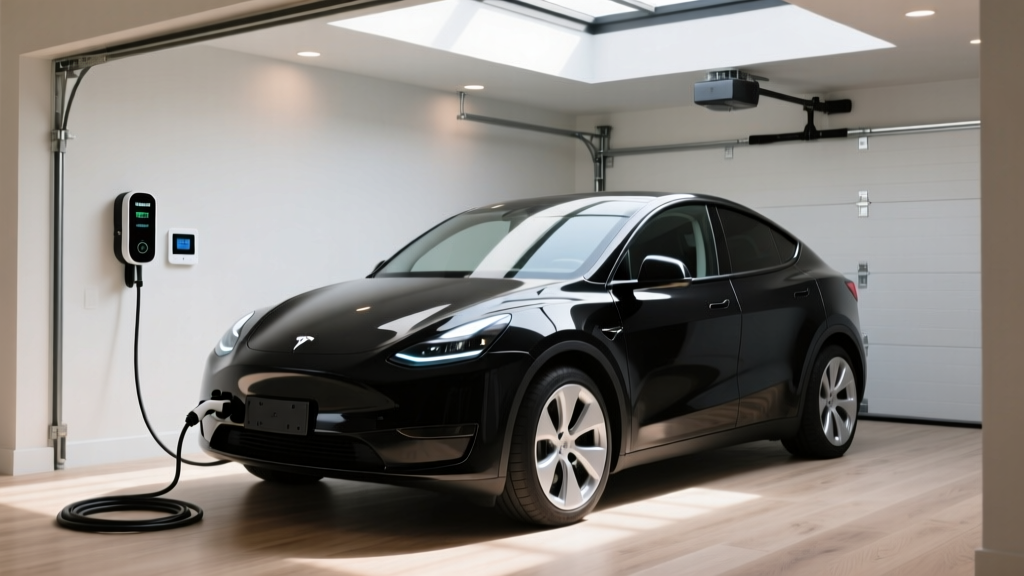
If you have a garage or dedicated parking spot with electrical access: A Level 2 home charger (240V, 40–48 amps) delivers roughly 25–35 miles of range per hour of charging. A full overnight charge (8–10 hours) replenishes even the largest consumer EV batteries. Expect to pay $400–$700 for a quality Level 2 unit (ChargePoint Home Flex, Emporia Level 2, or Tesla Wall Connector) plus $500–$2,000 for professional electrical installation. If your home's electrical panel is at capacity, a panel upgrade can add $1,500–$3,000.
If you live in an apartment or lack dedicated parking: Your options narrow. Some municipalities offer curbside Level 2 chargers, and workplace charging is increasingly common. But relying solely on public DC fast charging is both expensive ($0.30–$0.60/kWh vs $0.10–$0.18/kWh at home) and harder on long-term battery health due to sustained high-heat charging. A PHEV with 30–40 miles of electric range — covering most daily commutes on electricity while retaining a gas engine for longer trips — may be the pragmatic first step.
| Charging Level | Voltage / Power | Miles of Range per Hour | Typical Use Case |
|---|---|---|---|
| Level 1 | 120V / 1.4 kW | 3–5 mi/hr | Overnight top-up, PHEVs, emergencies |
| Level 2 (Home) | 240V / 7.7–11.5 kW | 25–40 mi/hr | Daily home charging, BEVs and PHEVs |
| DC Fast Charge | 400V–800V / 50–350 kW | 150–300+ mi/hr (peak) | Road trips, public charging stations |
Common EV Myths vs Facts for First-Time Buyers
| Myth | Fact |
|---|---|
| "EV batteries need replacing every few years and cost $20,000." | Federal law mandates battery warranties of at least 8 years/100,000 miles. Real-world degradation data shows most EV batteries retain 85–92% capacity after 100,000 miles. Full replacement is rare and typically covered under warranty during that period. |
| "The electrical grid can't handle everyone driving EVs." | Most EV charging occurs overnight during off-peak hours when grid demand is low. A single EV adds roughly the same load as a central air conditioner. Utilities are upgrading distribution infrastructure incrementally as adoption grows. |
| "EVs are worse for the environment because of battery manufacturing." | Lifecycle analyses from the EPA and Argonne National Laboratory confirm that even accounting for battery production, a BEV produces fewer lifetime emissions than a comparable gas car in every U.S. grid region — and the grid is getting cleaner each year. |
| "I'll be stranded with a dead battery." | Modern EVs provide accurate range estimates, and navigation systems route through available chargers. AAA and other roadside services now offer mobile EV charging in major metro areas. The real risk is in rural charging deserts — plan long trips accordingly. |
| "Public chargers are always broken." | Reliability varies by network. Tesla Superchargers consistently report 99%+ uptime. Electrify America and EVgo have improved significantly, but non-Tesla networks still see 10–20% failure rates at some locations. The adoption of the NACS connector standard across all major automakers by 2025–2026 is improving interoperability. |
Decision Framework: Which Electrified Vehicle Fits Your Life?
Choose a BEV (full electric) if:
- You have access to Level 2 home or workplace charging
- Your daily driving is under 200 miles round-trip
- You want the lowest per-mile operating cost and minimal maintenance
- You qualify for the §30D tax credit (reducing effective price)
- You're comfortable planning road trips around DC fast-charger locations
Choose a PHEV (plug-in hybrid) if:
- You can charge at home but also take regular 300+ mile trips
- You want 30–45 miles of daily electric commuting with gas-engine backup
- You live in an area with sparse public charging infrastructure
- You're not ready to fully commit to battery-only driving
Choose a HEV (conventional hybrid) if:
- You cannot charge at home or work
- You want better fuel economy without any plug-in behavior change
- You drive in extreme cold climates regularly (below 0°F) where BEV range loss is significant
- Your budget is tighter and you want a lower purchase price
Wait or reconsider if:
- You live in an apartment with no charging options and no workplace charging
- Your typical road trips pass through known charging deserts (rural stretches of I-10, I-70, or I-80)
- You need a vehicle for heavy towing (EV towing range drops 40–60%)
Frequently Asked Questions
How long do EV batteries actually last?
Most manufacturers warranty their traction batteries for 8 years or 100,000 miles (10 years/150,000 miles in CARB states like California), guaranteeing at least 70% capacity retention. Real-world data from fleet operators and long-term owners shows NMC batteries typically retain 85–92% capacity at 100,000 miles, while LFP (lithium iron phosphate) batteries — used in base-trim Teslas and some others — show even less degradation due to their more stable chemistry, though they sacrifice some energy density and cold-weather performance.
Will my EV lose range in winter?
Yes. Expect 15–30% range reduction at 20°F, and up to 40% at 0°F or below, depending on whether the vehicle has a heat pump. A heat pump (standard on many 2025–2026 models including Hyundai, Tesla, and BMW) recovers waste heat from the drivetrain to warm the cabin, reducing the energy penalty. Preconditioning the battery and cabin while still plugged in at home mitigates much of this loss.
Can I use a regular household outlet to charge?
Yes — that's Level 1 charging (120V), which adds about 3–5 miles of range per hour. For a PHEV with a small battery (10–18 kWh), overnight Level 1 charging is sufficient. For a BEV with a 60–100 kWh battery, Level 1 is impractical as a daily solution — a full charge could take 30–60 hours. Budget for a Level 2 installation.
How much does public DC fast charging cost compared to home?
Public DC fast charging typically costs $0.30–$0.60 per kWh, depending on the network, location, and time of day. Home charging on a standard residential rate averages $0.10–$0.18 per kWh. That means a 75 kWh battery fill costs roughly $8–$14 at home but $23–$45 at a public fast charger. Frequent road-trippers should factor this into their TCO calculation.
What's the difference between NACS and CCS connectors?
NACS (North American Charging Standard) is Tesla's connector design, now adopted by Ford, GM, Hyundai, Rivian, and most major automakers for 2025–2026 models. CCS1 (Combined Charging System) was the previous standard and is still found on many vehicles sold before 2025. Adapters are available, and the industry is consolidating around NACS. When buying, check which connector your chosen model uses and verify compatibility with your preferred charging networks.
Is insurance really more expensive for EVs?
On average, yes — EV insurance premiums run 10–20% higher than comparable gas vehicles, according to industry data. This reflects higher repair costs (specialized labor, battery safety protocols) and the potential cost of battery replacement after a collision. Shop quotes from multiple carriers; some insurers now offer EV-specific policies with competitive rates.