Quick Answer: Finity Communications Inc EVs at a Glance
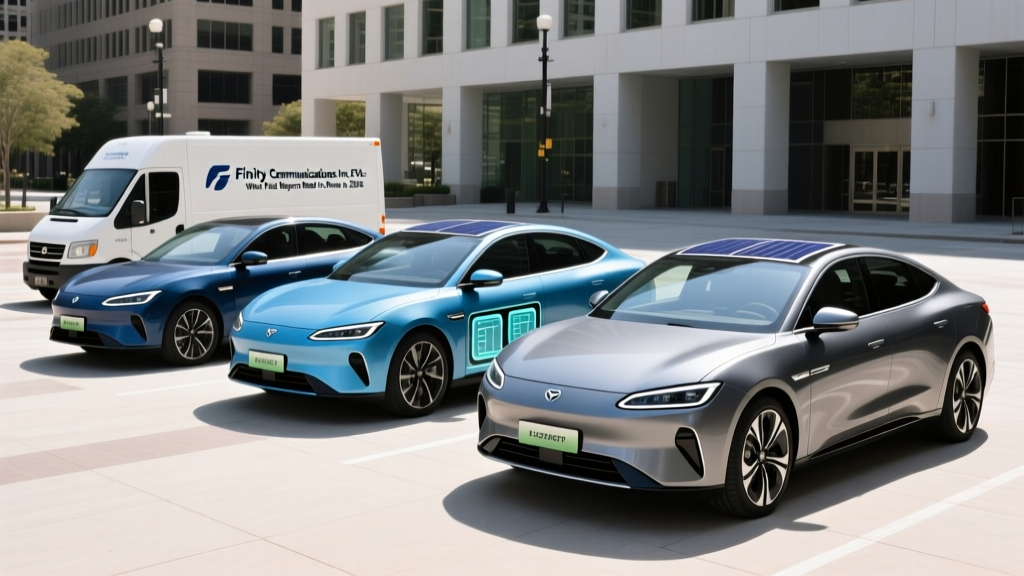
Finity Communications Inc operates primarily as a telecommunications and infrastructure services company, not an automaker. If you've encountered "Finity Communications Inc EVs" in procurement documents, fleet bid sheets, or industry discussions, it most likely refers to the company's internal fleet electrification — transitioning service vans and work trucks to battery-electric vehicles — or its role in EV charging infrastructure deployment for commercial clients. As of 2026, telecom and utility fleet operators are among the fastest-growing segments for commercial EV adoption, driven by predictable daily routes, depot-based charging, and federal tax incentives under IRS §30D and the commercial clean vehicle credit (§45W).
Why Telecom Fleet Operators Are Going Electric
Telecommunications companies like Finity Communications run service fleets with highly predictable duty cycles: technicians drive 60–120 miles per day on metro routes, return to a central depot nightly, and carry moderate tool loads. This profile is nearly ideal for battery-electric commercial vans.
Consider the numbers. A typical telecom service van (think Ford E-Transit or BrightDrop Zevo 400) covers a daily route well within the EPA-rated range of these vehicles:
| Vehicle | EPA Range | Real-World Fleet Range* | Battery (usable kWh) | Peak DC Charge (kW) | 10–80% Time |
|---|---|---|---|---|---|
| Ford E-Transit (2026, 131-kWh pack) | 159 mi | ~125–140 mi (loaded, mixed) | 131 kWh, NMC | 115 kW | ~45 min |
| BrightDrop Zevo 400 | 250 mi | ~200–220 mi (loaded) | 165 kWh, NMC | 120 kW | ~50 min |
| Mercedes-Benz eSprinter (250 kWh) | ~200 mi (est.) | ~165–180 mi | 250 kWh, NMC | 115 kW | ~42 min |
| Ram ProMaster EV | 162 mi | ~130–145 mi | 110 kWh, NMC | 150 kW | ~35 min |
*Real-world fleet range assumes 500–800 lbs of tools/equipment, HVAC use, and mixed city/highway driving. Cold climates (below 32°F) reduce range by 15–30%. Source: fueleconomy.gov and manufacturer fleet data.
Cost Breakdown: Electric Fleet Van vs. Gas Equivalent
The upfront cost of a commercial EV van is higher than its gas counterpart, but the total cost of ownership (TCO) over 5 years often favors electric — especially for depot-charged fleets with predictable routes.
| Cost Category | Ford E-Transit (EV) | Ford Transit 250 (Gas) |
|---|---|---|
| Base MSRP (2026) | $55,000 | $44,500 |
| Federal tax credit (§45W commercial) | Up to $7,500 | $0 |
| Effective purchase price | ~$47,500 | $44,500 |
| Fuel/energy cost per mile | $0.06–$0.09 (depot L2, $0.12/kWh) | $0.18–$0.22 (gas, $3.40/gal, 16 MPG) |
| Annual energy/fuel (22,000 mi/yr) | $1,320–$1,980 | $3,960–$4,840 |
| Maintenance per year | ~$600 (no oil, fewer brakes w/ regen) | ~$1,800 (oil, filters, brakes, trans) |
| 5-year fuel + maintenance total | $9,600–$13,800 | $28,800–$33,200 |
| 5-year TCO (purchase + fuel + maint.) | ~$57,100–$61,300 | ~$73,300–$77,700 |
Key takeaway: Even with a higher sticker price, the E-Transit saves a fleet operator roughly $12,000–$16,000 over 5 years per vehicle, assuming depot charging at commercial electricity rates. Savings scale with mileage — high-use routes amplify the per-mile energy advantage.
§45W Commercial Clean Vehicle Credit — What Fleets Need to Know
For commercial buyers (including companies like Finity Communications that operate fleets), the §45W credit — not the consumer §30D credit — applies. Per IRS guidelines:
- Up to $7,500 for vehicles under 14,000 lbs GVWR
- Up to $40,000 for heavier commercial vehicles
- No MSRP cap or buyer income cap (unlike §30D)
- Vehicle must meet battery-component and critical-minerals sourcing requirements
- Credit is claimed on the business's tax return — not transferred at point of sale
Always consult a tax professional to confirm eligibility for your specific fleet configuration and tax situation.
Charging Infrastructure: The Depot Advantage
Telecom fleets have a structural advantage for electrification: vehicles return to the same depot every night. This eliminates the public-charging reliability problem entirely.
Typical Depot Charging Setup
For a fleet of 10–20 vans, a commercial depot would typically install:
- Level 2 chargers (19.2 kW): One per vehicle, adding ~55–60 miles of range per hour. A full overnight charge (8–10 hours) restores 100% of any commercial van's battery.
- Electrical service: A 10-van depot at 19.2 kW per stall requires roughly 192 kW of continuous load — typically a 480V three-phase service with a dedicated transformer. Panel upgrades can cost $15,000–$60,000 depending on existing infrastructure.
- Installation cost per stall: $3,500–$8,000 (equipment + electrician + conduit + permitting), scaling down per unit at volume.
- Smart charging software: Load management systems stagger charging to avoid demand-charge spikes from the utility, potentially saving thousands per month on commercial electric bills.
| Myth | Fact |
|---|---|
| "EVs can't handle a full workday route." | Most telecom routes are 60–120 mi/day. A 159-mi EPA van with ~130 mi real-world range covers this with margin, especially with opportunity charging at the depot during lunch. |
| "Cold weather kills range — unusable in winter." | Cold reduces range 15–30%. A 130-mi real-world van drops to ~95–110 mi at 20°F. For routes under 90 mi, this still works. Preconditioning while plugged in recovers significant efficiency. |
| "Batteries will need replacing in 5 years." | Commercial van batteries (NMC chemistry) carry 8-year/100,000-mile warranties with a 70% capacity-retention threshold. Fleet data from early E-Transit deployments shows ~5–8% degradation at 100,000 miles. |
| "Charging takes too long for commercial use." | Depot charging happens overnight while vehicles are parked. DC fast charging (10–80% in ~45 min) handles mid-day top-ups if needed. Fleet vehicles don't need the 15-minute gas-station experience. |
| "Electricity costs more than gas." | At $0.12/kWh (commercial depot rate), an E-Transit costs ~$0.07/mile. At $3.40/gal and 16 MPG combined, a gas Transit costs ~$0.21/mile. Electricity is roughly one-third the per-mile fuel cost. |
Real-World Ownership Considerations for Fleet Buyers
Before electrifying a fleet — whether you're Finity Communications or any telecom/utility operator — evaluate these practical factors:
Route Predictability
EVs thrive on consistent, known-mileage routes. If your technicians regularly drive 200+ miles on rural call-outs with no mid-day charging opportunity, a PHEV (like the Ford Escape PHEV for lighter-duty roles) or a conventional van may still be the right fit for those specific vehicles.
Depot Electrical Capacity
The single biggest barrier isn't the vehicles — it's the electrical service. Many commercial depots have 200A or 400A panels that can't support 10+ Level 2 chargers simultaneously. Budget for a utility service upgrade and engage your local utility early; some offer commercial EV infrastructure rebates or demand-charge management programs.
Climate and Seasonality
Fleets in Phoenix face different challenges than fleets in Minneapolis. In hot climates, battery thermal management is critical — liquid-cooled packs (standard on E-Transit, Zevo, eSprinter) handle this well. In cold climates, range loss is real but manageable with route planning and preconditioning.
Insurance and Repair
Commercial EV insurance premiums run 10–20% higher than gas equivalents, reflecting higher repair costs for battery-adjacent damage. However, collision-claim frequency is often lower (EVs have more standard ADAS features). Factor the insurance delta into your TCO model.
Driver Training
Technicians accustomed to gas vans need orientation on regen braking (one-pedal driving), charge-port operation, preconditioning routines, and range-aware route planning. Budget 2–4 hours of hands-on training per driver.
Decision Framework: Should Your Fleet Go Electric?
Choose Electric Vans If:
- Daily routes are under 130 miles (accounting for load and climate derating)
- Vehicles return to a depot nightly for 8+ hours
- Your depot has — or can be upgraded to — adequate electrical service
- You plan to hold vehicles 5+ years (to capture fuel/maintenance savings)
- Your company can utilize the §45W commercial tax credit
Stick With Gas or Consider PHEV If:
- Daily routes regularly exceed 150 miles with no mid-day charging
- Vehicles are deployed to remote areas without reliable charging access
- Your depot electrical upgrade would cost $100,000+ with no utility support
- You turn over vehicles every 2–3 years (insufficient time to recoup higher purchase cost)
- Heavy towing (>5,000 lbs) is a regular requirement — current EV vans have lower tow ratings than gas equivalents
Finity Communications and the Broader EV Infrastructure Opportunity
Telecom infrastructure companies are positioned not only as EV fleet adopters but as potential charging network builders. The same fiber-conduit expertise and right-of-way access that telecom firms manage daily is directly applicable to deploying EV charging stations — trenching, conduit, fiber backhaul for networked chargers, and site management.
If Finity Communications is expanding into EV charging infrastructure services, the commercial opportunity is significant: the U.S. has roughly 200,000 public charging ports as of early 2026, and federal targets call for 500,000 by 2030. The installation, maintenance, and networking of these stations requires exactly the kind of field-technician workforce that telecom infrastructure companies already employ.
Frequently Asked Questions
Does Finity Communications Inc manufacture electric vehicles?
No. Finity Communications Inc is a telecommunications infrastructure and services company. References to "Finity Communications Inc EVs" relate to the company's fleet operations or potential involvement in EV charging infrastructure deployment — not vehicle manufacturing.
What's the best electric van for a telecom service fleet in 2026?
The Ford E-Transit leads in dealer support and upfitter compatibility. The BrightDrop Zevo 400 offers superior range (250 mi EPA). The Ram ProMaster EV charges fastest (150 kW peak). The right choice depends on your daily mileage, payload, and charging infrastructure. Request fleet-demo vehicles from each manufacturer before committing.
How long do commercial EV van batteries last?
Manufacturer warranties cover 8 years or 100,000 miles with a 70% capacity-retention threshold. Real-world fleet data from early deployments shows 5–8% degradation at 100,000 miles with Level 2 depot charging and proper thermal management. Batteries rarely need full replacement — individual module service is increasingly available.
Can we claim the $7,500 tax credit on a fleet of 20 vans?
Under §45W, each qualifying vehicle generates its own credit — so 20 qualifying vans could yield $150,000 in total credits. However, the vehicle must meet battery-sourcing and critical-minerals requirements, and your business must have sufficient tax liability to absorb the credit. Consult a tax professional and review current IRS §45W guidance.
What about NACS vs CCS for commercial vans?
As of 2026, most commercial vans (E-Transit, eSprinter) still use CCS1 connectors. Ford has announced NACS adoption for future model years, and CCS-to-NACS adapters are available. For depot charging with your own Level 2 equipment, the connector standard matters less — you specify the cable. For public DC fast charging, CCS availability remains strong on commercial corridors.
How do I calculate the real cost-per-mile for an electric fleet van?
Take your commercial electricity rate per kWh (e.g., $0.12), multiply by the vehicle's consumption rate (e.g., 2.0 kWh/mile for a loaded E-Transit), and that's your energy cost per mile ($0.06/mile in this example). Add maintenance (~$0.03/mile) and insurance (~$0.04/mile) for a total operating cost of roughly $0.13/mile — compared to $0.25–$0.30/mile for the gas equivalent.