Quick Answer: Should You Buy the Fiat Panda Electric Car?
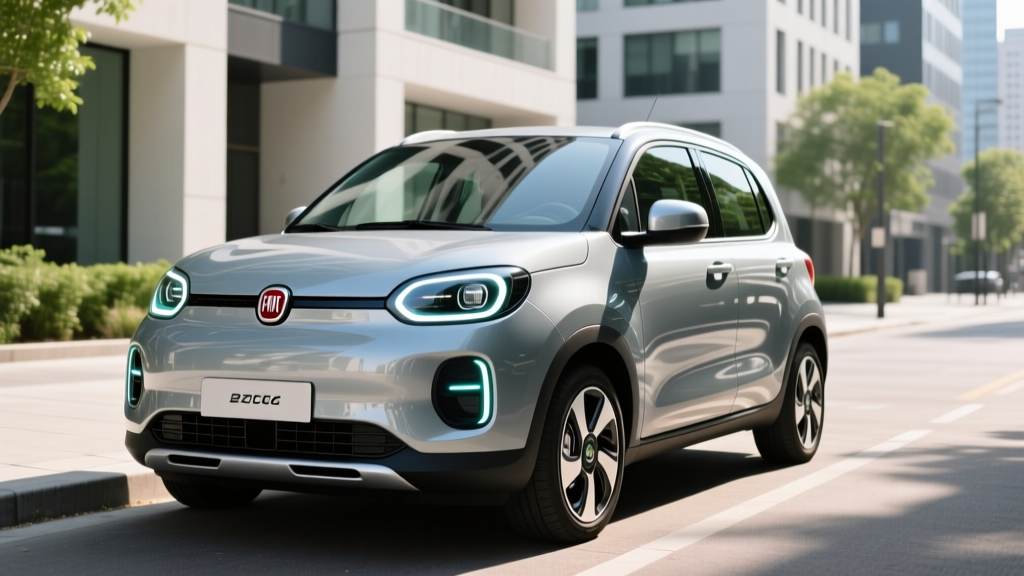
The Fiat Panda electric (officially the Fiat Grande Panda) is a compact, budget-oriented EV designed for European and emerging-market urban driving. As of early 2026, it is not sold in the United States and there is no announced U.S. launch date. For buyers in markets where it is available, the Grande Panda offers approximately 199 miles (320 km) of WLTP range from a 44 kWh LFP battery, DC fast charging up to ~100 kW, and a starting price around €24,900 (~$27,000 USD) in Europe. It is not eligible for the U.S. federal §30D tax credit because it is not sold here. If you're a U.S. buyer researching this vehicle, the closest domestic alternatives in spirit and price are the Chevrolet Equinox EV and the Nissan Leaf.
What Is the Fiat Panda Electric Car?
Stellantis unveiled the Fiat Grande Panda in mid-2024 as part of Fiat's global expansion strategy, with the all-electric variant leading the lineup. The nameplate revives the iconic Panda brand — a staple of Italian city driving since 1980 — but the Grande Panda is substantially larger than its predecessor, sitting on Stellantis's Smart Car platform (also underpinning the Citroën C3 and upcoming Lancia Ypsilon). The electric version is a front-wheel-drive hatchback aimed squarely at cost-conscious urban commuters who want zero tailpipe emissions without paying premium EV prices.
The combustion-engine Grande Panda launched first in select markets, with the electric variant following. For U.S. readers: Fiat currently sells only the Fiat 500e in America, and Stellantis has not confirmed any plans to import the Grande Panda stateside. This guide covers the EV variant's known specifications and ownership economics for informational and comparison purposes.
Range, Battery, and Charging: The Numbers
The Grande Panda electric uses a 44 kWh usable lithium iron phosphate (LFP) battery pack. LFP chemistry trades some energy density for lower cost, longer cycle life, and better thermal stability — a smart choice for a budget city car that most owners will charge to 100% regularly.
| Specification | Value |
|---|---|
| Battery Capacity (usable) | 44 kWh (LFP) |
| WLTP Range | ~199 miles (320 km) |
| Estimated EPA-Equivalent Range | ~165–175 miles |
| Motor Output | 115 hp (83 kW) |
| 0–62 mph (0–100 km/h) | ~11.5 seconds |
| Top Speed | ~84 mph (135 km/h) |
| Max DC Fast Charge Rate | ~100 kW (peak) |
| 10–80% DC Fast Charge Time | ~28–30 minutes |
| AC Level 2 Charge Rate | 7.4 kW (single-phase) / 11 kW (three-phase) |
| AC 0–100% Charge Time | ~6 hours (7.4 kW) / ~4.5 hours (11 kW) |
| Connector (Europe) | CCS2 / Type 2 |
Real-World Range Expectations
The WLTP test cycle tends to be more generous than the U.S. EPA cycle. Based on comparable Stellantis-platform EVs (like the Citroën ë-C3), a realistic EPA-equivalent estimate for the Grande Panda is 165–175 miles. In real-world driving, expect:
- City/urban: ~180–195 miles (regen braking helps in stop-and-go)
- Highway (70 mph+): ~130–150 miles (aerodynamic drag dominates at speed)
- Cold weather (below 32°F / 0°C): ~120–145 miles (LFP loses more capacity in cold than NMC; cabin heating draws significant power)
The Grande Panda does not appear to offer a standard heat pump in all trims, which can exacerbate cold-weather range loss. Buyers in colder climates should budget 25–35% range reduction in winter.
Understanding the Charging Curve
The 100 kW peak DC charge rate applies only at low states of charge (typically 10–30% SoC). Like most EVs, the Grande Panda's charge rate tapers significantly above 50% SoC and drops sharply past 80% to protect the LFP cells. A 10–80% session takes roughly 28–30 minutes, but pushing from 80–100% at a DC fast charger can add another 20+ minutes. For daily use, Level 2 home charging is the practical default — a full 0–100% charge overnight at 7.4 kW takes about 6 hours, which is more than adequate for a 44 kWh battery.
EV vs Gas: How Does the Panda Electric Compare?
For buyers in markets where both the electric and mild-hybrid Grande Panda are available, here's how the economics stack up over a typical 5-year ownership period at 10,000 miles (16,000 km) per year:
| Category | Grande Panda Electric | Grande Panda Mild-Hybrid |
|---|---|---|
| Approximate Purchase Price | €24,900 | €18,900 |
| Fuel/Energy Cost (5 yrs, 50k mi) | ~€2,500 (home charging avg) | ~€5,800 (petrol at €1.80/L) |
| Maintenance (5 yrs) | ~€800 | ~€2,200 |
| Insurance (5 yrs, avg) | ~€3,500 | ~€3,000 |
| Estimated 5-Year Total Cost | ~€31,700 | ~€29,900 |
| CO₂ Tailpipe Emissions (5 yrs) | 0 g/km | ~110 g/km |
The electric variant carries a ~€6,000 purchase premium but saves roughly €4,700 in fuel and maintenance over five years. The break-even point depends heavily on local electricity prices, annual mileage, and whether government purchase incentives are available. In countries offering EV subsidies (e.g., France's bonus écologique of up to €4,000 for qualifying buyers, or Italy's ecobonus when funded), the electric Panda can reach cost parity within 2–3 years. In markets without incentives, the mild-hybrid remains cheaper on a pure total-cost basis for low-mileage drivers.
U.S. Buyer Context: What Would the Equivalent Cost?
If the Grande Panda were sold in the U.S. at an estimated $27,000 MSRP, it would fall below the IRS §30D tax credit MSRP cap of $55,000 for cars. However, eligibility for the up-to-$7,500 credit depends on battery component and critical mineral sourcing requirements, which change annually under the Inflation Reduction Act rules. LFP batteries sourced from Chinese supply chains (CATL, BYD) would likely not qualify for the full credit under 2026 foreign-entity-of-concern (FEOC) restrictions. Always verify current eligibility on fueleconomy.gov before purchasing.
Real-World Ownership Considerations
Before committing to any compact EV — the Grande Panda included — evaluate your specific situation honestly:
Home Charging Access
The Grande Panda's 44 kWh battery is small enough that even a standard 120V household outlet (Level 1, ~1.4 kW) can add roughly 5–6 miles of range per hour — enough to fully recharge overnight for a 40-mile daily commute. However, a Level 2 home charger (240V, 7.4 kW) is strongly recommended for convenience and battery health. U.S. installation costs for a Level 2 circuit typically range from $500 to $2,500 depending on panel capacity and wiring distance. If you live in an apartment without charging access, the Grande Panda's limited DC fast-charge network compatibility (CCS2 in Europe; CCS1 or NACS would be required in the U.S.) makes public-only charging impractical for daily use.
Climate and Driving Patterns
The 44 kWh battery and estimated 165–175 EPA-equivalent miles make the Grande Panda a strictly urban and suburban vehicle. It works well for:
- Daily commutes under 50 miles round-trip
- City errands and school runs
- Flat or mildly hilly terrain
It is poorly suited for:
- Regular highway trips over 100 miles
- Cold climates where range loss of 25–35% is routine
- Towing (not rated for towing)
- Mountain driving with sustained high-power demand
Insurance and Depreciation
Compact EVs generally carry slightly higher insurance premiums than their combustion counterparts due to battery replacement costs and specialized repair requirements. Expect 10–20% higher annual premiums in most markets. Depreciation data for the Grande Panda is not yet available given its recent launch, but budget EVs in Europe have historically retained value less predictably than premium models. LFP batteries may offer a long-term advantage: their longer cycle life (typically 3,000+ cycles before significant degradation vs ~1,500 for NMC) could support stronger resale values as used-EV buyers become more battery-savvy.
Common Misconceptions: Myth vs Fact
| Myth | Fact |
|---|---|
| "The Panda Electric has 200 miles of range." | That's the WLTP figure. Real-world EPA-equivalent range is closer to 165–175 miles, and highway or cold-weather driving can drop it to 120–150 miles. |
| "LFP batteries are inferior to NMC." | LFP offers longer cycle life, better thermal safety, and lower cost. The trade-off is lower energy density (heavier pack for the same kWh) and worse cold-weather performance. For a budget city car, LFP is the rational choice. |
| "You can buy the Fiat Panda EV in the United States." | As of 2026, Fiat sells only the 500e in the U.S. The Grande Panda is not available and has no confirmed U.S. launch date. |
| "It charges to full in 30 minutes." | The 28–30 minute figure is for 10–80% on a DC fast charger. A full 0–100% charge at a fast charger takes 50+ minutes. Home Level 2 charging takes ~6 hours. |
| "Electric cars always save money." | EVs save on fuel and maintenance but carry higher purchase prices, potentially higher insurance, and home charger installation costs. Total savings depend on local electricity rates, annual mileage, available incentives, and ownership duration. |
Decision Framework: Is the Fiat Panda Electric Right for You?
Choose the Fiat Grande Panda Electric If:
- You live in a market where it is sold (Europe, Latin America, select Asian markets)
- Your daily driving is under 60 miles round-trip, primarily urban
- You have access to home charging (garage, driveway, or dedicated outlet)
- You qualify for a local EV purchase subsidy that narrows the price gap with the hybrid
- You value zero tailpipe emissions and want the lowest running costs per mile
- You want a practical 4-door hatchback with a tight turning radius for city parking
Look Elsewhere If:
- You live in the United States (it's not available; consider the Chevy Equinox EV, Nissan Leaf, or Hyundai Kona Electric)
- You regularly drive more than 100 miles in a single trip
- You lack reliable home or workplace charging
- You live in a cold climate where winter range loss would push you below your minimum daily needs
- You need highway-capable performance (the 84 mph top speed and 11.5-second 0–62 time are adequate for city merging but limiting on motorways)
Consider the Mild-Hybrid Panda Instead If:
- Your budget is strictly under €20,000
- You drive fewer than 5,000 miles per year (the fuel savings won't offset the EV premium)
- You frequently take long road trips and don't want to plan around charging
- You live in a region with sparse public charging infrastructure
U.S. Alternatives in the Same Spirit
Since the Grande Panda isn't available stateside, here are the closest U.S.-market equivalents for budget-conscious EV shoppers in 2026:
| Vehicle | EPA Range | Battery | Starting MSRP | Max DC Charge |
|---|---|---|---|---|
| Chevrolet Equinox EV (LT) | 319 mi | 85 kWh (NMC) | $33,600 | 150 kW |
| Nissan Leaf (SV Plus) | 212 mi | 60 kWh (NMC) | $30,190 | 100 kW (CHAdeMO) |
| Hyundai Kona Electric (SE) | 261 mi | 65 kWh (NMC) | $32,975 | 100 kW |
| Fiat 500e (U.S.) | 149 mi | 42 kWh (NMC) | $32,500 | 85 kW |
The Equinox EV offers the best range-per-dollar ratio in this group and qualifies for partial or full §30D credits depending on trim and sourcing. The Leaf uses the aging CHAdeMO connector (not NACS or CCS), limiting future fast-charging network access. The Kona Electric is the most well-rounded compact option. The Fiat 500e is the only Fiat EV currently sold in the U.S., but its 149-mile range is limiting even for city use. See fueleconomy.gov's EV comparison tool for detailed side-by-side efficiency data.
Frequently Asked Questions
Will the Fiat Panda electric car be sold in the United States?
As of early 2026, Stellantis has not announced any plans to sell the Fiat Grande Panda (electric or combustion) in the U.S. market. Fiat's American lineup is limited to the 500e. The Grande Panda is available in Europe, Latin America, and select other markets.
How long does the LFP battery in the Grande Panda last?
LFP batteries typically endure 3,000+ full charge cycles before degrading to 80% of original capacity. At 165 miles per charge and one full cycle per day, that translates to roughly 495,000 miles — far more than most owners will accumulate. Fiat typically offers an 8-year/100,000-mile (8-year/160,000 km) battery warranty in European markets, guaranteeing at least 70% capacity retention.
Is the Fiat Panda EV eligible for any U.S. tax credits?
No. Because the vehicle is not sold in the United States, it cannot qualify for the federal §30D clean vehicle credit. Even if it were imported, its LFP battery (likely sourced from Chinese supply chains) would face significant hurdles meeting the IRA's critical mineral and battery component requirements. Consult IRS guidance for current credit rules on vehicles that are available.
Can I charge the Grande Panda at a Tesla Supercharger?
In Europe, the Grande Panda uses the CCS2 connector. Tesla has opened some European Superchargers to non-Tesla vehicles via the CCS2 standard, so compatibility depends on the specific station. In the U.S., Tesla's NACS connector is becoming the standard, and adapters will be needed for CCS1-equipped vehicles — but this is moot since the Grande Panda is not sold in the U.S.
What is the real cost to charge the Panda Electric at home?
At a U.S. average residential electricity rate of ~$0.16/kWh (European rates vary widely, from €0.12/kWh in France to €0.40/kWh in Germany), fully charging the 44 kWh battery costs roughly $7.04 in the U.S. or €5.28–€17.60 in Europe. That equates to approximately $0.04–0.05 per mile in the U.S. — roughly one-third the per-mile fuel cost of a comparable gasoline car at current prices.
How does cold weather affect the Panda's range?
LFP batteries experience greater capacity loss in cold temperatures than NMC cells. Expect a 25–35% range reduction in sustained below-freezing conditions, bringing real-world winter range down to approximately 120–145 miles. Preconditioning the battery while plugged in (if supported) and using heated seats instead of cabin heating can partially mitigate this loss.