The Short Answer: Is the Fiat Grande Panda Electric Worth It?
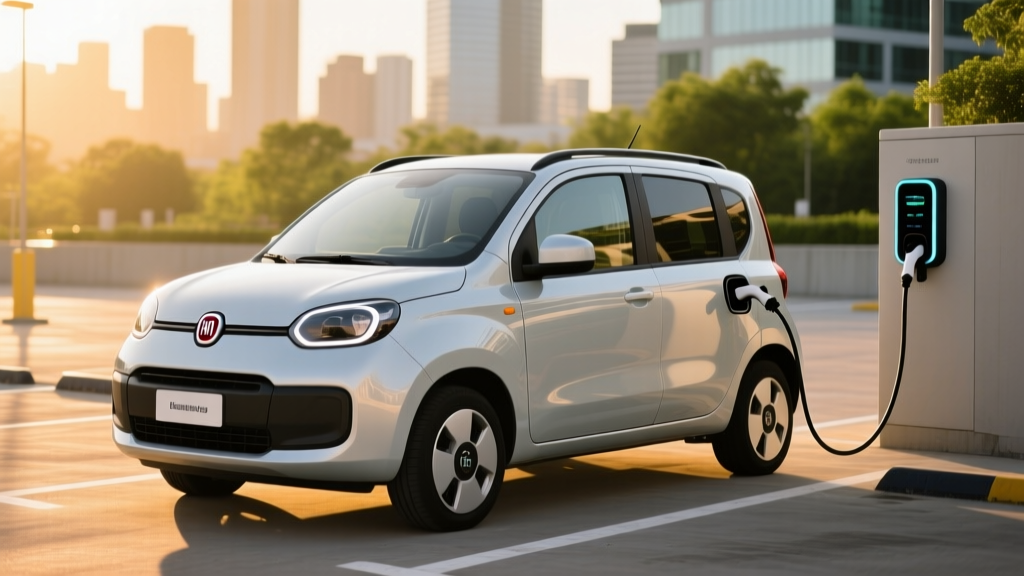
The Fiat Grande Panda Electric is a subcompact city EV built on Stellantis' e-CMP platform, offering a 44 kWh usable battery, up to 199 miles of WLTP range (expect roughly 160–175 miles in real-world mixed driving), and DC fast charging up to 100 kW. It targets urban European buyers who need an affordable, compact, easy-to-park electric runabout. However, the Grande Panda is not currently sold in the United States, and Stellantis has not announced U.S. availability. This guide covers confirmed European specs, real-world ownership economics, and what U.S.-based buyers should consider if Fiat ever brings it stateside.
Fiat Grande Panda Electric: Key Specs at a Glance
| Spec | Value |
|---|---|
| Battery (usable) | 44 kWh, NMC chemistry |
| WLTP Range | Up to 199 mi (320 km) |
| Estimated Real-World Range | 155–175 mi (mixed); 120–140 mi (highway/cold) |
| Motor Output | 115 hp (83 kW) / 192 lb-ft torque |
| 0–62 mph (0–100 km/h) | ~11.5 seconds |
| DC Fast Charge (peak) | 100 kW (10–80% in ~30 min) |
| AC Level 2 Charge | 11 kW onboard (~4.5 hr 0–100%) |
| Connector | CCS2 (Europe) |
| Length | ~158 in (4,016 mm) |
| Cargo Volume | ~12.7 cu ft (360 L) rear seats up |
| Starting Price (EU) | €24,900 (~$27,000 USD) |
| Battery Warranty | 8 years / 100,000 mi (160,000 km), 70% capacity retention |
Real-World Range: What the WLTP Number Doesn't Tell You
The 199-mile WLTP figure looks competitive for a subcompact EV, but WLTP testing is more generous than the EPA cycle used in the U.S. If the Grande Panda were EPA-rated, expect a sticker closer to 165–175 miles. In practice:
- City driving (mild weather): 170–185 miles — regenerative braking in stop-and-go traffic maximizes efficiency, yielding roughly 3.8–4.0 mi/kWh.
- Mixed suburban/highway: 150–165 miles — sustained speeds above 65 mph increase drag significantly on a tall, boxy vehicle.
- Cold weather (below 35°F / 2°C): 120–140 miles — NMC chemistry loses 15–25% range in freezing temps, and the Grande Panda's modest battery leaves little buffer. Cabin heating draws heavily from the 44 kWh pack.
- Highway-only at 75+ mph: 125–140 miles — aerodynamic drag dominates; efficiency drops to roughly 3.0–3.2 mi/kWh.
For context, the Chevrolet Equinox EV (available in the U.S.) offers 319 miles EPA from an 85 kWh battery, and the Hyundai Kona Electric delivers 261 miles EPA from a 64.8 kWh pack. The Grande Panda's range is strictly city-commuter territory.
Charging Speeds: Adequate for City Life, Slow for Road Trips
The 100 kW peak DC fast-charge rate is functional but unremarkable by 2026 standards. Here's what that means in practice:
| Charging Level | Power | Time (10–80%) | Miles Added per Hour |
|---|---|---|---|
| Level 1 (120V household) | ~1.4 kW | N/A (overnight only) | ~4–5 mi/hr |
| Level 2 (240V, 11 kW wallbox) | 11 kW | ~4.5 hr (full) | ~40–44 mi/hr |
| DC Fast Charge | 100 kW peak | ~30 min (10–80%) | ~180 mi/hr (peak) |
The charge curve matters more than peak rate. On a 100 kW-capable charger, the Grande Panda will likely sustain 85–100 kW between 10–50% SoC, then taper to 60–70 kW through 80%, and drop sharply above 80%. A 10–80% session in ~30 minutes is realistic if the battery is preconditioned — but the Grande Panda does not feature active battery preconditioning for DC charging, meaning cold-soak arrivals at fast chargers will extend that time to 35–45 minutes.
For daily use, most owners will rely on Level 2 home charging, topping up overnight. At 11 kW, a full charge takes about 4.5 hours — easily done during evening hours. Public DC charging is best reserved for occasional longer trips.
EV vs. Gas: How the Grande Panda Compares to Its ICE Sibling
Fiat also sells the Grande Panda with a mild-hybrid gasoline powertrain. Here's how the economics stack up over 5 years of ownership, assuming European pricing and energy costs:
| Cost Factor | Grande Panda Electric | Grande Panda Hybrid (gas) |
|---|---|---|
| Purchase Price | €24,900 | €18,500 |
| Annual Fuel/Energy (9,000 mi/yr) | ~€450/yr (home charging) | ~€1,200/yr (gasoline) |
| 5-Year Fuel/Energy Total | ~€2,250 | ~€6,000 |
| Maintenance (5 yr) | ~€600 (no oil, fewer brakes) | ~€1,800 (oil, filters, brakes) |
| Insurance (avg annual) | ~€650/yr | ~€500/yr |
| 5-Year Total Cost of Ownership | ~€30,500 | ~€29,800 |
The EV's higher purchase price is nearly offset by fuel and maintenance savings, but the hybrid edges ahead on pure economics over 5 years — especially because EV insurance premiums tend to run 15–30% higher. The EV wins decisively at higher annual mileage (12,000+ miles/year) or if you have access to cheap overnight electricity tariffs. Below 6,000 miles per year, the gas hybrid is the smarter financial choice.
U.S. Availability and the Tax Credit Question
As of 2026, Fiat does not sell vehicles in the United States, and the Grande Panda Electric is not available for American buyers. If Stellantis were to import it, several hurdles would apply:
- §30D Federal Tax Credit: The IRS requires vehicles to undergo final assembly in North America, meet critical-mineral and battery-component sourcing thresholds, and fall under MSRP caps ($55,000 for sedans/hatchbacks). Given the Grande Panda's European production, it would almost certainly not qualify for the up-to-$7,500 credit. See IRS §30D rules for current eligibility details.
- EPA Certification: The vehicle would need EPA range and efficiency testing, adding time and cost before U.S. sales could begin.
- Charging Connector: U.S. models would need NACS or CCS1 rather than Europe's CCS2, requiring hardware changes.
For U.S. buyers wanting a similar subcompact EV, the closest alternatives are the Hyundai Kona Electric (261 mi EPA, ~$33,000), the Nissan Leaf (up to 212 mi EPA, ~$29,000), or the Chevrolet Equinox EV (319 mi EPA, ~$33,600) — all of which may qualify for partial or full federal credits depending on sourcing and your income.
Common Misconceptions About Subcompact EVs Like the Grande Panda
| Myth | Fact |
|---|---|
| "199 miles of range means I can drive 199 miles any day." | WLTP is optimistic. Expect 155–175 mi real-world, and 120–140 mi in winter or at highway speeds. |
| "DC fast charging is always 30 minutes." | Peak 100 kW only holds for a portion of the curve. Cold batteries, high SoC arrivals, and charger congestion can push 10–80% to 40+ minutes. |
| "Small battery = short battery life." | Battery degradation depends more on chemistry, thermal management, and charging habits than raw capacity. NMC packs routinely retain 85–90% capacity after 5 years of normal use. Fiat's warranty guarantees 70% at 8 years/100,000 mi. |
| "EVs are always cheaper to own." | At low annual mileage or without cheap home electricity, the EV price premium may not be recouped. Run the numbers for your specific commute and energy rate. |
| "I don't need home charging — public chargers are everywhere." | Public DC charging costs 2–4x more per kWh than home charging, and reliability varies. Relying solely on public charging erases most of the EV's cost advantage and adds weekly inconvenience. |
Who Should Buy the Fiat Grande Panda Electric?
Choose the Grande Panda Electric if:
- You live in a European city with narrow streets and tight parking
- Your daily commute is under 40 miles round-trip
- You have access to home or workplace Level 2 charging
- You want a low running-cost commuter with zero tailpipe emissions in urban zones
- You value compact dimensions and easy maneuverability over range and performance
Look elsewhere if:
- You regularly drive 100+ miles per day or take frequent highway trips
- You live in a region with harsh winters and no garage (cold-weather range loss is significant on a 44 kWh pack)
- You lack access to reliable home or workplace charging
- You need more than 12.7 cu ft of cargo space
- You're in the U.S. — the vehicle is simply not available, and alternatives offer far more range for similar or lower effective pricing
Frequently Asked Questions
Will the Fiat Grande Panda Electric come to the United States?
There is no confirmed plan for U.S. availability as of 2026. Fiat withdrew from the U.S. market several years ago, and Stellantis has focused its American EV strategy on Jeep, Chrysler, Dodge, and Ram. If Fiat returns, the Grande Panda would need EPA certification, NACS/CCS1 hardware, and likely North American assembly to be competitive.
How long does the 44 kWh battery last?
Stellantis warranties the battery for 8 years or 100,000 miles (160,000 km) with a minimum 70% state-of-health threshold. Based on degradation data from similar e-CMP platform vehicles (Peugeot e-208, Opel Corsa-e), expect roughly 8–12% capacity loss over 5 years with normal charging habits — meaning ~155 miles of real-world range dropping to ~140 miles by year 5. Avoiding frequent 100% charges and DC fast-charging in extreme heat will slow degradation.
Is 100 kW DC charging fast enough?
For a 44 kWh battery, 100 kW represents a ~2.3C charge rate, which is respectable. A 10–80% session in ~30 minutes is adequate for occasional road trips. However, competitors like the Hyundai Kona Electric and MG4 offer similar or faster rates with larger batteries, giving them more absolute range per charging stop. For pure city use, most owners will rarely need DC charging.
How much does it cost to charge at home?
At the European average residential electricity rate of €0.25/kWh, a full 44 kWh charge costs approximately €11 (~$12 USD), yielding roughly 160 real-world miles. That works out to about €0.07 per mile — compared to €0.13 per mile for the hybrid variant at current European fuel prices. U.S. buyers (if the car were available) would see even lower per-mile costs in states with cheap electricity (e.g., $0.12/kWh in parts of the Southeast and Midwest).
Does the Grande Panda have a heat pump?
The Grande Panda Electric uses a resistance heater (PTC) for cabin heating, not a heat pump. This is a notable omission — a heat pump can reduce winter range loss by 30–40% compared to PTC heating. In cold climates, expect the already-modest range to suffer more than it would in a vehicle equipped with a heat pump, such as the Hyundai Kona Electric or Tesla Model Y.