The Quick Answer: Is a Fiat EV Right for You?
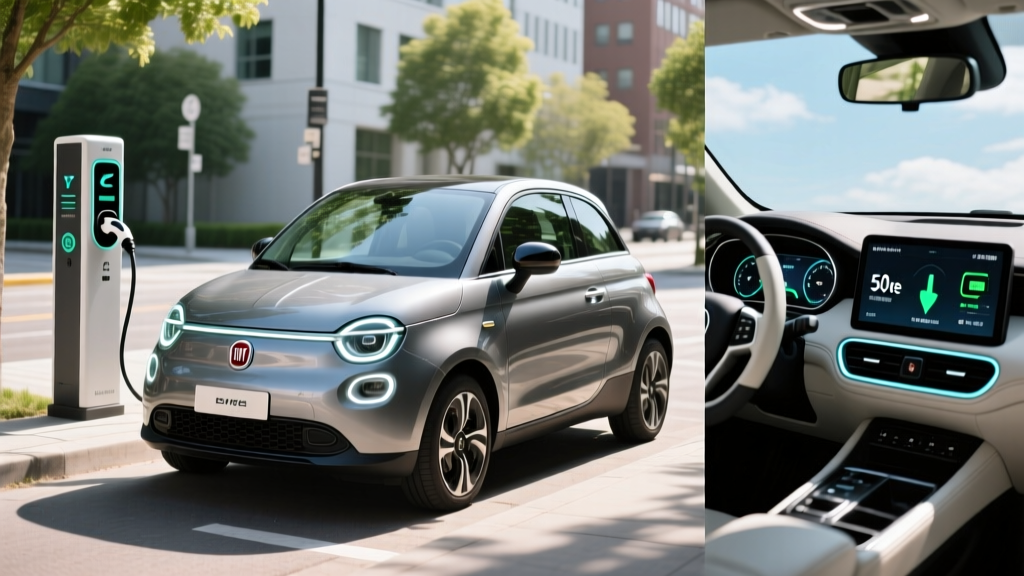
The 2026 Fiat 500e is a compact urban EV with an EPA-estimated 149 miles of range, a 42 kWh usable battery, and peak DC fast charging at 85 kW (10–80% in roughly 30 minutes). Starting around $32,495 before incentives, it targets city dwellers with home Level 2 charging access who want a stylish, easy-to-park commuter. It is not a road-trip EV. If your daily driving stays under 60 miles and you can charge at home overnight, the 500e delivers low running costs and zero tailpipe emissions. If you regularly drive highway distances, tow, or lack reliable home charging, you will be better served by a larger EV or a plug-in hybrid.
Fiat 500e: The Only Fiat EV Sold in the U.S.
Fiat's global EV portfolio includes the 500e, the larger 600e, and the Topolino quadricycle, but as of the 2026 model year, only the Fiat 500e is officially sold in the United States. Stellantis reintroduced the 500e to the U.S. market for the 2024 model year after a hiatus, positioning it as an affordable, design-forward city car rather than a long-range cruiser.
The 500e rides on Fiat's dedicated EV platform (not a converted gas car), which gives it a flat floor, a modest frunk, and packaging optimized for its battery. For 2026, Fiat offers the 500e in two main trims: the well-equipped (RED) edition and the higher-spec La Prima, both sharing the same powertrain and battery.
| Spec | Value |
|---|---|
| EPA Range | 149 miles |
| Battery (usable) | 42 kWh, NMC chemistry |
| Motor Output | 118 hp / 162 lb-ft torque |
| 0–60 mph | ~8.5 seconds |
| DC Fast Charge (peak) | 85 kW (CCS1) |
| 10–80% DC Fast Charge | ~30 minutes |
| Level 2 AC Charge | 11 kW onboard charger |
| Level 2 0–100% Time | ~4 hours 15 minutes |
| EPA Efficiency | 116 MPGe combined (29 kWh/100 mi) |
| Battery/Powertrain Warranty | 8 years / 100,000 miles |
| Base MSRP (RED) | $32,495 |
| La Prima MSRP | $35,495 |
Real-World Range vs. the EPA Sticker
EPA Estimate: 149 miles
Real-World Expectation: 120–140 miles in mixed driving; 100–115 miles sustained highway at 70+ mph; 95–110 miles in freezing temperatures with cabin heat.
The 500e's 149-mile EPA figure is achievable in mild weather with city-heavy driving, where regenerative braking recovers energy and speeds stay low. On the highway, the car's small frontal area helps, but aerodynamic drag still cuts range significantly at speeds above 65 mph. Expect roughly 120–130 miles of real highway range at 70 mph in moderate temperatures.
Cold weather is the bigger concern. Lithium-ion batteries lose efficiency below 40°F, and cabin heating in an EV draws directly from the traction battery. The 500e uses a resistance heater rather than a heat pump (a notable omission at this price point), which means winter range loss can reach 25–35%. In a 25°F climate with highway driving, plan for roughly 100 miles of usable range before needing to charge.
For a commuter driving 30–40 miles round trip, even winter-degraded range leaves a comfortable buffer. But if you live in a cold climate and need 100+ miles of range on a single charge in January, the 500e's battery is simply too small to guarantee that margin.
Charging: What You Need to Know Before You Buy
The Fiat 500e uses the CCS1 connector standard for DC fast charging and the J1772 connector for Level 1 and Level 2 AC charging. It does not natively support Tesla's NACS connector, though CCS-to-NACS adapters are increasingly available from third parties and may be offered through Stellantis in the future.
| Level | Power | Miles of Range Added per Hour | Typical Use Case |
|---|---|---|---|
| Level 1 (120V) | ~1.4 kW | ~4–5 miles/hour | Emergency / overnight trickle |
| Level 2 (240V, 48A) | 11 kW (onboard limit) | ~35–38 miles/hour | Home / workplace daily charging |
| DC Fast Charge | 85 kW peak | ~180 miles/hour (at peak) | Public fast charging on trips |
Home charging is essential for 500e ownership. Level 1 charging from a standard 120V outlet adds roughly 4–5 miles of range per hour — meaning a full charge from near-empty takes over 30 hours. That is impractical as a primary charging strategy. A Level 2 home charger (240V, hardwired at 48 amps) fully replenishes the 42 kWh battery in about 4 hours and 15 minutes, making overnight charging effortless.
Home Level 2 installation costs vary widely. Expect to spend $600–$1,200 for the charger hardware (e.g., ChargePoint Home Flex, Emporia Vue) and $800–$2,500 for professional electrician installation, depending on panel capacity and run length. If your home's electrical panel needs an upgrade from 100A to 200A service, add $1,500–$3,000. Always get a quote from a licensed electrician before committing to a vehicle purchase.
On DC fast chargers, the 500e peaks at 85 kW. That is modest compared to rivals like the Hyundai Kona Electric (peak ~100 kW) or the Chevrolet Equinox EV (peak ~150 kW). The charge curve tapers noticeably above 80% state of charge, which is standard for NMC batteries to protect cell longevity. A 10–80% session takes approximately 30 minutes at a capable 150+ kW station. Plan road-trip stops accordingly — this is a car that prefers 20-minute top-ups rather than full charges.
Fiat 500e vs. Gas and Hybrid City Cars: Cost Comparison
The 500e competes less with other EVs and more with affordable gas-powered city cars and hybrids. Here is how the numbers stack up over five years of ownership, assuming 12,000 miles driven annually, $3.50/gallon regular unleaded, and $0.14/kWh home electricity.
| Cost Category | 2026 Fiat 500e (EV) | 2026 Honda Civic (Gas) | 2026 Toyota Prius (Hybrid) |
|---|---|---|---|
| Base MSRP | $32,495 | $25,345 | $28,545 |
| Fuel/Energy (5 yr) | $2,520 | $7,500 | $4,140 |
| Maintenance (5 yr) | $900 | $2,800 | $2,400 |
| Insurance (5 yr est.) | $8,500 | $6,800 | $7,100 |
| Federal Tax Credit | Up to $7,500* | $0 | $0 |
| Estimated 5-Year Total | ~$36,915 | ~$42,445 | ~$42,185 |
*Federal §30D tax credit eligibility depends on buyer income, vehicle MSRP caps, battery critical-mineral sourcing, and point-of-sale transfer rules. Verify current-year requirements at IRS.gov. The 500e's Italian manufacturing origin may limit credit eligibility — check the latest sourcing requirements before purchasing.
The 500e's energy cost advantage is substantial. At 29 kWh/100 miles and $0.14/kWh, the 500e costs roughly $0.04 per mile to fuel at home. The Civic, at an EPA combined 35 MPG, costs roughly $0.10 per mile at $3.50/gallon. Over 60,000 miles, that is a $3,600 fuel savings for the Fiat.
Maintenance savings are also real. The 500e has no oil changes, no spark plugs, no transmission fluid, and brake pads last significantly longer thanks to regenerative braking. Budget roughly $900 over five years for tire rotations, cabin air filter, brake fluid checks, and wiper blades.
The catch: EV insurance premiums tend to run 15–25% higher than comparable gas cars, and the 500e's higher starting MSRP means you pay more upfront even before the tax credit. If the 500e does not qualify for the full §30D credit due to battery sourcing rules, the cost equation shifts less favorably. Always confirm credit eligibility in the purchase year.
Tax Credit and Incentive Reality for the Fiat 500e
Federal §30D Clean Vehicle Credit — Key Requirements (2026)
- MSRP Cap: Vehicle must be under $55,000 (sedans/hatchbacks) — the 500e qualifies at ~$32,495–$35,495.
- Buyer Income Cap: Modified AGI must not exceed $150,000 (single), $225,000 (head of household), or $300,000 (joint).
- Battery Sourcing: Critical minerals and battery components must meet phased-in percentage thresholds from U.S. or FTA-partner countries. The 500e's European supply chain may not meet all requirements — verify at purchase.
- Final Assembly: Must be assembled in North America. The 500e is assembled in Tychy, Poland — this likely disqualifies it from the §30D new-vehicle credit.
- Point-of-Sale Transfer: If eligible, the credit can be transferred to the dealer at purchase, reducing the out-of-pocket price immediately.
This is a critical point for Fiat 500e shoppers: because the 500e is manufactured in Poland, it likely does not qualify for the $7,500 federal new-vehicle tax credit under §30D's North American final assembly requirement. Some buyers may be able to benefit from a used clean vehicle credit (up to $4,000 or 30% of sale price, whichever is less) if purchasing a qualifying pre-owned 500e from a dealer, subject to income caps and a sale price under $25,000.
State and local incentives may partially offset the lack of federal credit. States like California, Colorado, and Massachusetts offer their own rebates, but amounts and eligibility vary by jurisdiction. Check your state's energy office or AFDC incentive database for current programs.
First-Time EV Buyer Checklist: What to Know Before Buying a Fiat 500e
| Myth | Fact |
|---|---|
| "The 500e has 149 miles of range, so I can drive 149 miles anytime." | Real-world range is 120–140 miles in moderate weather, 100–115 miles on the highway or in cold. Always plan with a 20% buffer. |
| "I can charge it from any regular outlet overnight." | Level 1 (120V) adds only ~4–5 miles/hour. A full charge takes 30+ hours. A Level 2 home charger is practically required. |
| "It qualifies for the $7,500 federal tax credit." | The 500e is assembled in Poland and likely does not meet the §30D North American assembly requirement. Verify before purchase. |
| "EV batteries need replacing every few years." | The 500e's battery is warrantied for 8 years/100,000 miles at minimum 70% capacity retention. Most EV batteries outlast the car itself. |
| "I can use Tesla Superchargers." | The 500e uses CCS1, not NACS. Tesla Superchargers with Magic Dock (CCS adapter built in) are compatible, but most Superchargers require a NACS connector. |
Home Charging Access
Before buying, confirm you can install a 240V Level 2 charger. If you rent, live in a condo without charging access, or rely on street parking, the 500e's small battery makes public-charging-only ownership impractical and expensive. DC fast charging at $0.35–$0.50/kWh costs more per mile than gasoline in many markets.
Climate Considerations
If you live in a region with sustained sub-30°F winters, the 500e's lack of a heat pump and small battery mean real range drops to roughly 100 miles. That is workable for short commutes but leaves little margin for detours or unexpected trips. Buyers in the Sun Belt and moderate climates get the most from this car.
Driving Patterns
The 500e excels as a city and suburban commuter. Its 162 lb-ft of instant torque makes it surprisingly quick off the line, and its 10.5-foot turning circle is ideal for tight parking. It is not designed for towing, long highway stretches, or carrying four adults comfortably (rear seats are best for children or cargo overflow).
Decision Framework: Should You Buy the Fiat 500e?
Choose the Fiat 500e if:
- Your daily round-trip commute is under 60 miles
- You have access to Level 2 home charging (garage or driveway with 240V outlet)
- You live in a moderate or warm climate
- You want a stylish, easy-to-park city car and already have a larger vehicle for road trips
- You value low running costs and zero tailpipe emissions in urban driving
Look elsewhere if:
- You regularly drive more than 100 miles in a day
- You lack home charging access and would rely on public DC fast chargers
- You live in a cold-winter climate and need reliable 150+ mile range year-round
- You need to carry four adults or significant cargo
- Federal tax credit eligibility is a dealbreaker for your budget
Consider a plug-in hybrid (e.g., Toyota Prius Prime, 44 miles electric + gas backup) if:
- You want electric commuting but need gas flexibility for longer trips
- You cannot install a home charger but can charge at work
- You live in a cold climate where EV range loss is a real concern
Ownership Costs and Long-Term Outlook
The 500e's 8-year/100,000-mile battery and powertrain warranty provides solid long-term protection. Fiat guarantees the battery will retain at least 70% of its original capacity during the warranty period. Based on data from similar NMC battery packs in the Stellantis family, annual degradation typically runs 1.5–2.5% per year in moderate climates, meaning a 5-year-old 500e should still deliver roughly 130–140 miles of EPA-equivalent range.
Out-of-warranty battery replacement, should it ever be needed, currently runs $8,000–$12,000 for a pack of this size — a significant cost relative to the vehicle's value. However, industry data from NHTSA and independent testing shows that most modern EV batteries do not require full replacement within the typical ownership cycle.
Tire wear is the maintenance item that surprises some first-time EV buyers. The 500e's instant torque and slightly higher curb weight (roughly 2,950 lbs) compared to the gas Fiat 500 mean tires may wear 10–20% faster. Budget for a tire replacement every 30,000–40,000 miles, at roughly $500–$700 for a set of four all-season tires in the 500e's size.
Frequently Asked Questions
Is the Fiat 500e a good first EV?
Yes, for the right buyer. If you have home charging, a short commute, and want an affordable, easy-to-drive city car, the 500e is a solid entry point. Its small battery means low charging costs and quick Level 2 top-ups. But if you need versatility for road trips or lack home charging, start with a larger EV or a PHEV instead.
Can the Fiat 500e use Tesla Superchargers?
Only at Tesla Supercharger stations equipped with the Magic Dock (a built-in CCS adapter). Most Supercharger stalls still use the NACS connector exclusively, which is not compatible with the 500e's CCS1 port. For reliable fast charging, rely on Electrify America, EVgo, and ChargePoint DC networks.
How long does it take to charge the Fiat 500e at home?
On a Level 2 home charger (240V, 11 kW), a full 0–100% charge takes approximately 4 hours and 15 minutes. Most owners plug in overnight and wake to a full battery every morning. On a standard 120V outlet (Level 1), expect 30+ hours for a full charge — impractical as a daily strategy.
Does the Fiat 500e qualify for any tax credits?
The 500e likely does not qualify for the $7,500 federal new-vehicle credit because it is assembled in Poland, not North America. A used 500e purchased from a dealer for under $25,000 may qualify for the up-to-$4,000 used clean vehicle credit, subject to income limits. State incentives may also apply — check your local programs.
What is the real-world range of the Fiat 500e in winter?
In temperatures below 32°F, expect 95–115 miles of range depending on driving speed and cabin heat usage. The 500e uses a resistance heater rather than a heat pump, which draws more energy from the battery. Preconditioning the cabin while plugged in can help preserve range.
How does the Fiat 500e compare to the Mini Cooper SE?
The 500e offers slightly more range (149 vs. ~114 miles EPA for the previous-gen Mini Cooper SE), similar pricing, and comparable city-car dynamics. The newer Mini Cooper Electric (2025+) offers up to 200+ miles of range on a larger battery, making it a stronger competitor if range is your priority. Both share the same limitation: small batteries best suited to urban commuting with home charging.