Quick Verdict: Urban Charm With a Range Ceiling
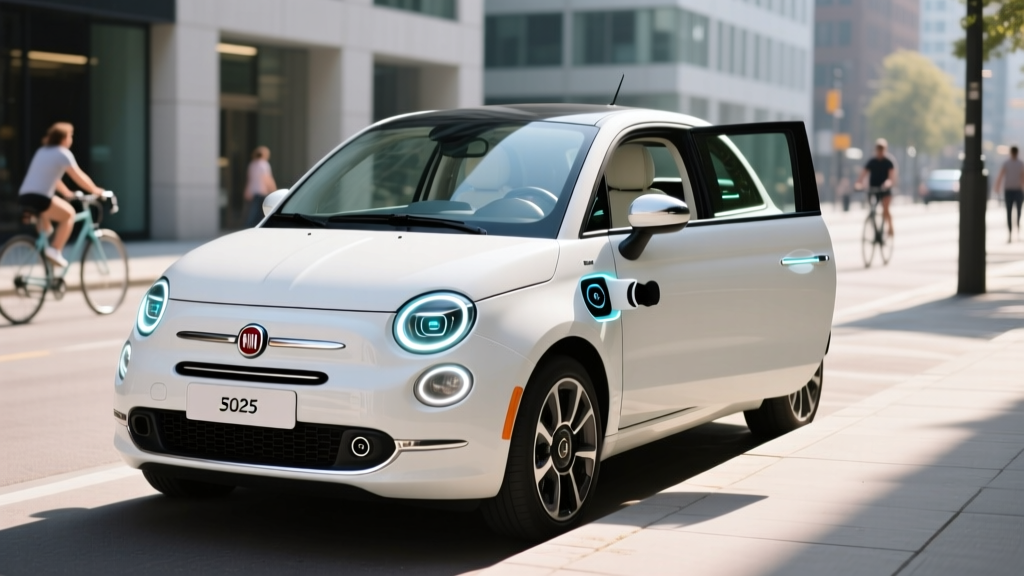
The 2025 Fiat 500e electric car is a stylish, compact city runabout that leans hard into its Italian heritage. It delivers peppy acceleration, surprisingly engaging handling for a subcompact, and one of the most charming interior designs in the EV segment. But with an EPA-estimated range of just 149 miles and relatively modest DC fast-charging speeds, it demands a specific kind of owner: someone with reliable home charging, a short-to-moderate commute, and zero pretense about road-tripping cross-country.
If that describes you, the 500e rewards with low operating costs, easy parking, and genuine personality in a segment dominated by utilitarian crossovers. If you need highway range or family space, look at the Hyundai Kona Electric or Chevrolet Bolt EV instead.
Range, Battery, and Efficiency
Real-World Expectation: 120–140 miles on mixed highway/city driving; expect 95–115 miles in cold weather (below 30°F) or sustained 70+ mph highway use.
Usable Battery Capacity: 42 kWh (NMC lithium-ion)
The 2025 Fiat 500e packs a 42 kWh lithium-ion battery using NMC (nickel manganese cobalt) chemistry — the energy-dense formulation favored in most Western-market EVs. Fiat quotes a 42 kWh gross capacity, with approximately 37.3 kWh usable after the top and bottom buffers that protect long-term battery health.
The EPA rates the 500e at 149 miles of combined range. On the fueleconomy.gov listing, the 500e achieves 116 MPGe combined (121 city / 110 highway), translating to roughly 29 kWh per 100 miles of consumption.
In practice, expect closer to 130 miles in temperate city driving with regenerative braking engaged. Highway speeds of 70–75 mph push consumption higher, cutting real-world range to approximately 115–125 miles. Cold weather is the 500e's biggest vulnerability — without a heat pump (Fiat uses a conventional resistance heater), winter range loss can reach 30–35%, dropping effective range below 110 miles on frigid days. For a 20-mile round-trip commuter, this still leaves comfortable margin. For anyone exceeding 80 miles one-way, range planning becomes mandatory.
| Spec | Value |
|---|---|
| EPA Range (combined) | 149 miles |
| MPGe (city / hwy / combined) | 121 / 110 / 116 |
| Energy Consumption | 29 kWh / 100 mi |
| Battery Capacity (gross / usable) | 42 kWh / ~37.3 kWh |
| Battery Chemistry | NMC (Nickel Manganese Cobalt) |
| Thermal Management | Liquid-cooled, no heat pump |
Charging Speeds: DC Fast, Level 2, and Level 1
The 500e charges at a peak DC fast-charging rate of 85 kW via its CCS1 connector. That's modest by 2025 standards — many competitors now pull 150 kW or higher — but the small battery means the 10–80% session still completes in a reasonable timeframe.
At a DC fast charger, Fiat rates the 500e for a 10–80% charge in approximately 35 minutes. In real-world testing at Electrify America and similar networks, expect the peak 85 kW rate to sustain from roughly 10–40% State of Charge, then taper to 50–60 kW through 60%, and further to 25–35 kW above 70%. The charge curve is the reason that last 20% (60–80%) takes nearly as long as the first 30% (10–40%).
For home Level 2 charging, the 500e's onboard charger accepts up to 11 kW (single-phase AC at 48 amps). At this rate, a full 0–100% charge takes roughly 4.5 hours. Practically, most owners plugging in after a day of commuting will see a complete overnight refill in 3–4 hours. On a standard 240V / 32A Level 2 home charger (7.7 kW), expect approximately 25 miles of range per hour of charging — more than adequate for daily replenishment.
Level 1 charging from a standard 120V household outlet delivers about 3–4 miles of range per hour (1.4 kW). This is suitable only for emergency trickle-charging or owners who drive fewer than 25 miles daily and can leave the car plugged in for 10+ hours.
| Charging Level | Power | Speed / Time |
|---|---|---|
| Level 1 (120V household) | ~1.4 kW | ~3–4 miles per hour |
| Level 2 (240V home, 48A) | 11 kW | ~38 miles per hour; 0–100% in ~4.5 hrs |
| DC Fast Charge (CCS1) | 85 kW peak | 10–80% in ~35 min |
Performance and Drivetrain
The 2025 Fiat 500e sends 118 horsepower and 162 lb-ft of torque to the front wheels through a single-speed reduction gear. The 0–60 mph sprint takes approximately 8.5 seconds — not fast by performance-EV standards, but perfectly adequate for urban merging and passing. The instant torque delivery makes the 500e feel quicker in stoplight-to-stoplight city driving than the 0–60 figure suggests.
Front-wheel drive is the only drivetrain configuration; all-wheel drive is not available. The FWD layout, combined with the 500e's short wheelbase (91.4 inches) and 2,952-pound curb weight, gives it a tossable, go-kart character that's genuinely fun on winding urban streets. Body roll is well-controlled, and the steering is quick if somewhat light on feedback.
Regenerative braking offers two modes: a coasting "D" mode with mild regen, and a stronger "B" mode that enables near one-pedal driving in city traffic. The 500e does not come to a complete stop under regen alone — you'll still need the friction brake pedal for final stops — but the B mode significantly reduces brake wear in stop-and-go commuting.
Interior Space, Cargo, and Technology
The 500e's interior is where Fiat's Italian design DNA shines. The dashboard features a fabric-wrapped upper panel, body-color accent trim, and a 10.25-inch central touchscreen running Fiat's Uconnect 5 infotainment system. Wireless Apple CarPlay and Android Auto are standard. A 7-inch digital instrument cluster sits behind the steering wheel, and the overall cabin aesthetic feels premium and distinctive compared to the plasticky interiors of similarly priced competitors.
Space, however, is the 500e's most significant compromise. Front legroom measures 41.8 inches — adequate for most adults — but rear legroom shrinks to just 30.5 inches, making the back seat suitable only for small children or very short trips. Rear headroom is tight for anyone over 5'8". Cargo volume behind the rear seats is a mere 7.0 cubic feet — enough for a few grocery bags or a weekend duffel. Folding the 50/50 rear seatbacks opens up approximately 16 cubic feet, but the load floor is high and the opening narrow.
There is no front trunk (frunk). The space under the hood houses the electric motor, power electronics, and the 12V auxiliary battery.
Driver-Assistance Tech: The 500e comes equipped with Fiat's ADAS suite, which includes:
- Adaptive cruise control with stop-and-go
- Lane-keeping assist and lane-departure warning
- Automatic emergency braking with pedestrian detection
- Blind-spot monitoring (available on higher trims)
- 360-degree parking camera (available)
These features constitute an SAE Level 2 driver-assistance system. The driver must remain fully engaged with hands on the wheel and eyes on the road at all times. This is not autonomous or "self-driving" capability — it is a convenience and safety augmentation.
Pricing, Trims, and Federal Tax Credit
The 2025 Fiat 500e is offered in two trims for the US market:
| Trim | Base MSRP | Key Features |
|---|---|---|
| (RED) Edition | $32,500 | 16" wheels, 10.25" infotainment, wireless CarPlay/AA, adaptive cruise, lane-keep assist |
| La Prima | $35,500 | 17" wheels, leatherette seats, blind-spot monitoring, 360° camera, panoramic glass roof, premium audio |
The destination charge adds approximately $1,595 to both trims. Options are limited — Fiat keeps the configuration simple, with only exterior color and wheel choices as variables.
Federal Tax Credit Eligibility: The Fiat 500e's eligibility for the IRS §30D clean vehicle credit (up to $7,500) depends on several factors that change periodically and are subject to battery-component and critical-mineral sourcing requirements. As of 2025, the 500e's battery is manufactured at Stellantis facilities, and the vehicle is assembled in Mirafiori, Italy. Because the 500e is imported (not assembled in North America), it does not qualify for the new-vehicle §30D credit under current rules requiring North American final assembly.
However, buyers should explore:
- Point-of-sale dealer discounts and Fiat's own incentive programs, which have periodically offered up to $7,500 in manufacturer rebates to offset the credit gap
- The used-EV tax credit (§25E): once the 500e enters the used market, it may qualify for up to $4,000 (30% of sale price, capped) for eligible buyers purchasing from a dealer, subject to income caps ($75K single / $150K joint)
- State and local incentives — many states offer rebates that are independent of federal assembly requirements. Check your state's energy office or AFDC incentive database for specifics.
- Vehicle must undergo final assembly in North America (500e: assembled in Italy — does not qualify)
- MSRP cap: $55,000 for sedans/hatchbacks (500e: passes at $32,500–$35,500)
- Buyer income cap: $150K single / $225K head of household / $300K joint
- Battery component and critical mineral sourcing thresholds (phased annually)
- Point-of-sale transfer available for qualifying vehicles at participating dealers
Always verify current eligibility at IRS.gov and consult a tax professional before purchasing.
Warranty and Long-Term Battery Outlook
Fiat backs the 2025 500e with the following warranty coverage:
- Basic vehicle warranty: 4 years / 50,000 miles
- Powertrain warranty: 5 years / 60,000 miles
- High-voltage battery warranty: 8 years / 100,000 miles (capacity retention guaranteed above 70% of original capacity)
The battery warranty's 70% retention threshold is standard for the industry, matching what most competitors offer. NMC chemistry typically degrades 1.5–2.5% per year under normal use, meaning a 500e owner might expect approximately 85–90% battery capacity after 5 years and 70–80% after 8 years, depending on charging habits, climate, and DC fast-charging frequency.
To maximize battery longevity, Fiat recommends:
- Setting daily charge limits to 80% for routine commuting
- Avoiding repeated DC fast-charging sessions above 90% SoC
- Using preconditioning (available via the Fiat app) to warm or cool the battery before charging in extreme temperatures
Pros, Cons, and Who Should Buy
- Distinctive Italian design inside and out — stands out in a sea of anonymous crossovers
- Engaging, go-kart handling ideal for city driving
- Low operating cost: ~$0.04–0.05/mile on home electricity vs ~$0.14/mile for a 30 MPG gas car
- Quick urban acceleration from instant electric torque
- Wireless CarPlay/Android Auto and solid infotainment UX
- Easy to park — 142.8-inch overall length fits anywhere
- 149-mile EPA range is among the lowest in the current EV market
- No heat pump — significant winter range loss (30%+)
- Rear seat and cargo space are severely limited
- 85 kW DC fast charging is slow by 2025 standards
- Does not qualify for the federal §30D new-vehicle tax credit (Italian assembly)
- No frunk for additional cargo
Who this EV suits best:
- Ideal buyer: Urban or suburban commuter with home Level 2 charging, a daily round-trip under 60 miles, no regular passenger or cargo needs, and a desire for style and personality over utility.
- Consider alternatives if: You regularly drive more than 100 miles in a day, need rear-seat passenger space, live in a cold climate without garage parking, or depend on DC fast-charging for daily needs.
How It Compares to Key Rivals
| Spec | Fiat 500e | Hyundai Kona Electric | Mini Cooper SE | Nissan LEAF S |
|---|---|---|---|---|
| EPA Range | 149 mi | 261 mi | 114 mi | 212 mi |
| Battery (kWh) | 42 | 65.4 | 32.6 | 60 |
| DC Fast Charge (kW) | 85 | 100+ | 50 | 100 (CHAdeMO) |
| 0–60 mph | 8.5 sec | 7.5 sec | 7.0 sec | 7.4 sec |
| Base MSRP | $32,500 | $34,975 | $30,900 | $28,140 |
| Cargo (cu ft) | 7.0 | 25.8 | 8.7 | 23.6 |
| Federal Credit (§30D) | No (Italy) | Partial/Varies | No (UK/Germany) | Yes (TN assembly) |
The Kona Electric dominates on range, space, and practicality. The LEAF offers the best value if you can accept CHAdeMO charging (a shrinking network). The Mini Cooper SE matches the 500e's fun factor with even less range but a lower price. The 500e wins on design distinctiveness and urban character, but buyers prioritizing range-per-dollar will find better options.
Frequently Asked Questions
What is the real-world range of the 2025 Fiat 500e?
Expect 120–140 miles in mild weather with mixed city/highway driving. Highway speeds above 70 mph reduce this to roughly 115–125 miles. In cold weather (below 30°F), plan for 95–115 miles due to battery chemistry and the lack of a heat pump.
How fast does the Fiat 500e charge at home and on the road?
At home on a 240V Level 2 charger (11 kW capable), a full charge takes about 4.5 hours, adding roughly 38 miles of range per hour. On DC fast chargers, it peaks at 85 kW and reaches 10–80% in approximately 35 minutes.
Does the Fiat 500e qualify for the federal EV tax credit?
No — under current IRS §30D rules, the 500e does not qualify for the new-vehicle federal credit because it is assembled in Italy, not in North America. Fiat has periodically offered manufacturer rebates to compensate. State incentives may still apply.
Is the Fiat 500e worth buying over the Hyundai Kona Electric or Nissan LEAF?
If your priority is style, city maneuverability, and Italian design flair, the 500e is a compelling choice. If range, cargo space, and federal tax-credit eligibility matter more, the Kona Electric or LEAF offers significantly more utility for similar money.
How long will the 500e battery last?
Fiat warranties the battery for 8 years / 100,000 miles with guaranteed retention above 70% of original capacity. With proper charging habits (daily limits at 80%, moderate DC fast-charge use), NMC batteries of this type typically retain 75–85% capacity at the 8-year mark.
Does the 500e have a heat pump?
No. The 500e uses a conventional resistance heater for cabin heating, which draws significantly more energy from the battery in cold weather compared to a heat pump system. This contributes to the 30%+ winter range loss.
Sources: fueleconomy.gov (EPA), IRS §30D Clean Vehicle Credit, Stellantis / Fiat