Quick Answer: Is the Ferrari Elettrica EV Available to Buy?
No — not yet. As of early 2026, the Ferrari Elettrica EV remains an announced vehicle. Ferrari CEO Benedetto Vigna has confirmed the brand's first fully electric supercar will be revealed in spring 2026, with customer deliveries expected to begin in late 2026 or early 2027. No official EPA range, battery capacity, or MSRP has been published. Pricing is widely expected to exceed $500,000, placing it well beyond the reach of the federal §30D EV tax credit (which caps eligible vehicles at $80,000 MSRP for sedans/sports cars). Everything below is based on confirmed statements, patent filings, supply-chain reporting, and informed estimates — clearly labeled as such.
What We Actually Know About the Ferrari Elettrica
Ferrari has been deliberately opaque about its first battery-electric vehicle, but several facts have been confirmed through official channels and reliable industry reporting:
- Platform: The Elettrica will ride on a dedicated EV architecture, not a modified version of the SF90 or 296 GTB platform. Ferrari has invested in a new "e-building" at its Maranello factory specifically for electric powertrain assembly.
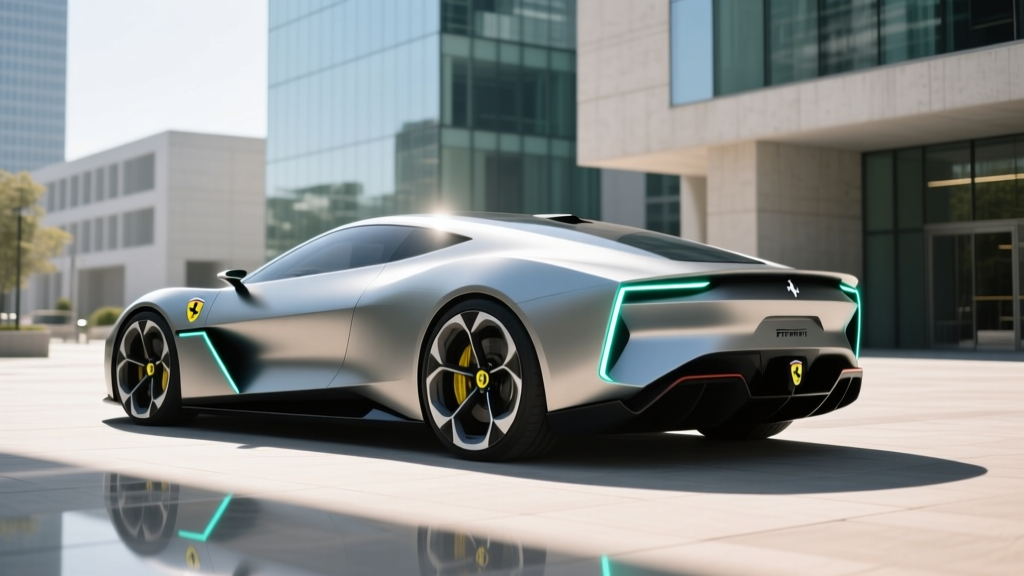
- Vehicle class: Ferrari has repeatedly stated this will not be an SUV or a four-door sedan in the traditional sense. Expect a grand-touring or sports-car silhouette — likely a 2+2 configuration.
- Sound strategy: Ferrari has patented an active sound-generation system and has confirmed the Elettrica will not simulate a V12 exhaust note. The brand has stated it will develop a unique acoustic identity for its EVs.
- Performance target: While no official figures exist, the Elettrica is expected to match or exceed the SF90 Stradale's 986 combined horsepower and 2.5-second 0–60 mph time.
- Production volume: Ferrari limits all production to maintain exclusivity. Expect annual volumes well under 5,000 units globally.
For the latest confirmed updates, refer to Ferrari's corporate site and filings with Italian regulatory authorities.
Estimated Specs: Range, Battery, and Charging
Because Ferrari has not released official specifications, the table below presents estimated ranges based on supply-chain reporting, competitor benchmarking (Lotus Eletre, Porsche Taycan Turbo GT, Rimac Nevera), and Ferrari's stated engineering priorities.
| Spec | Estimate | Confidence |
|---|---|---|
| Battery capacity (usable) | ~110–130 kWh | Medium — based on supplier reporting |
| Battery chemistry | NMC (nickel manganese cobalt) | High — performance priority over LFP |
| EPA range (est.) | ~280–330 miles | Low — no official EPA test yet |
| Real-world highway range | ~220–270 miles | Estimated at 75 mph, moderate climate |
| Peak DC fast-charge rate | ~270–350 kW | Medium — 800V architecture likely |
| 10–80% DC charge time | ~18–25 minutes | Estimated; taper above 80% SoC expected |
| Level 2 AC charge rate | ~11–22 kW | Standard for this segment |
| 0–60 mph | <2.5 seconds | High — must match SF90 at minimum |
| Horsepower | ~1,000+ hp (quad-motor possible) | Medium — multi-motor layout rumored |
| Base MSRP (est.) | $500,000+ | High — consistent with Ferrari positioning |
Real-World Range Reality Check
Even if the Elettrica achieves a 320-mile EPA estimate, expect significant range reduction under real supercar driving conditions. Aggressive throttle use, high-speed Autobahn-style driving, and cold weather (below 40°F) can reduce effective range by 30–45%. A spirited canyon run could deplete the battery in under 100 miles. This is physics, not a Ferrari flaw — the Rimac Nevera (120 kWh, 1,914 hp) sees a similar delta between its 340-mile WLTP rating and real-world track use.
Cost of Ownership: Purchase, Charging, Insurance, and Maintenance
Buying a Ferrari — electric or otherwise — is an exercise in six-figure economics. Here is a realistic five-year ownership projection based on estimated pricing and comparable supercar ownership data.
| Cost Category | Elettrica EV (Est.) | 296 GTB (PHEV) |
|---|---|---|
| Purchase price (MSRP) | $550,000 | $350,000 |
| Federal §30D tax credit | $0 (MSRP exceeds $80K cap) | $0 (MSRP exceeds cap) |
| Energy/fuel (5 yrs, 30K mi) | $3,500–$5,000 | $8,000–$12,000 |
| Insurance (5 yrs) | $40,000–$60,000 | $35,000–$55,000 |
| Maintenance (5 yrs) | $5,000–$8,000 | $12,000–$18,000 |
| Tires (5 yrs) | $8,000–$12,000 | $8,000–$12,000 |
| Estimated 5-yr total | $606,500–$635,000 | $413,000–$447,000 |
Key takeaway: The Elettrica will save money on energy and maintenance (no oil changes, fewer moving parts, regenerative braking extends pad life). But the purchase price premium and potentially higher insurance costs (due to expensive battery replacement risk) mean the EV does not "pay for itself" versus a Ferrari PHEV. Buyers in this segment are not optimizing for cost-per-mile.
For current §30D tax credit rules — which cap eligible vehicle MSRP at $80,000 for sedans and sports cars and impose buyer income limits — consult the IRS clean vehicle credit page. The Elettrica will not qualify under any scenario.
Ferrari Elettrica vs. Gas and Hybrid Supercars: The Comparison
| Metric | Elettrica (Est.) | SF90 Stradale (PHEV) | 296 GTB (PHEV) | 12Cilindri (V12 Gas) |
|---|---|---|---|---|
| Powertrain | BEV (est. tri/quad motor) | 4.0L Twin-Turbo V8 + 3 e-motors | 3.0L Twin-Turbo V6 + 1 e-motor | 6.5L NA V12 |
| Total HP | ~1,000+ | 986 | 819 | 819 |
| 0–60 mph | <2.5s | 2.5s | 2.9s | 2.9s |
| Electric-only range | N/A (full EV) | 16 mi (EPA) | 16 mi (EPA) | N/A |
| Total range | ~280–330 mi (est.) | ~390 mi (gas + elec) | ~430 mi (gas + elec) | ~370 mi |
| MSRP | $500,000+ | $524,815 | $350,901 | $441,000 |
| Fuel/energy cost per mile | ~$0.12–$0.16 | ~$0.25–$0.35 | ~$0.22–$0.30 | ~$0.40–$0.55 |
The SF90 Stradale remains the closest analog to what the Elettrica may become — a high-performance Ferrari with electric propulsion. The critical difference: the SF90's electric mode is a 16-mile compliance feature, while the Elettrica's battery will be its sole energy source for every mile driven.
First-Time Ferrari EV Buyer: What You Need to Know
If you have owned Ferraris before but never a battery-electric vehicle, several ownership realities will be new:
Home Charging Is Non-Negotiable at This Price Point
Relying on public DC fast charging for a $500,000+ vehicle is impractical and unnecessary. Plan for a dedicated Level 2 home charger (240V, 48A minimum, ideally 80A on a dedicated 100A circuit). Installation by a licensed electrician typically runs $1,200–$3,500 for the charger and labor, plus $2,000–$5,000+ if your home's electrical panel needs an upgrade to 200A or 400A service. At 11–22 kW AC, a full overnight charge from 10% to 100% SoC will take 6–12 hours depending on battery size and charger amperage.
Public Fast Charging: The Supercar Problem
Even at peak rates of 300+ kW, DC fast charging a 120 kWh battery from 10–80% takes roughly 20 minutes. But charging curves taper significantly above 80% SoC — the final 20% can take as long as the first 80%. On road trips, plan stops around 150–200 miles apart to stay in the optimal charge-curve window and avoid waiting for slow top-offs.
Battery Degradation and Warranty
NMC batteries in high-performance applications typically lose 8–15% capacity over the first 5 years / 60,000 miles, depending on thermal management quality and charging habits. Ferrari will almost certainly offer a battery warranty of at least 8 years / 100,000 miles with a capacity-retention threshold of 70% (the industry standard). Out-of-warranty battery replacement for a pack this size could cost $30,000–$50,000 based on current NMC cell pricing and labor.
Preconditioning Matters
If the Elettrica supports battery preconditioning (heating the pack to optimal temperature before a DC fast-charge session), using it is essential. Cold-soaked batteries charge dramatically slower — a 300 kW-capable pack may accept only 50–80 kW when the cells are below 50°F. Navigation-based preconditioning (automatically warming the pack when you route to a charger) is standard on most premium EVs and should be expected here.
Common Misconceptions About the Ferrari Elettrica
| Myth | Fact |
|---|---|
| "The Elettrica will qualify for the $7,500 federal EV tax credit." | No. The §30D credit caps eligible vehicle MSRP at $80,000 for non-SUVs. The Elettrica will cost 5–7× that amount. See IRS rules. |
| "It will have 500+ miles of range." | Extremely unlikely. Even the Lucid Air Grand Touring (112 kWh, the current EPA range leader at 516 mi) achieves that figure through efficiency-focused engineering, not supercar performance. Ferrari will prioritize power and dynamics over maximum range. |
| "Ferrari will fake a V12 engine sound." | Ferrari has explicitly stated the Elettrica will have its own unique acoustic identity, not a synthetic V12 simulation. Expect a proprietary soundscape, possibly tied to drivetrain harmonics. |
| "It's just a rebadged Rimac or shared platform." | Ferrari has confirmed a bespoke, in-house-developed EV platform. While they may source cells from major suppliers (Samsung SDI, CATL, or SK On are plausible), the architecture is proprietary. |
| "Electric means lower performance." | Electric motors deliver instant torque with zero lag. The Elettrica will almost certainly be the quickest-accelerating Ferrari ever produced in a straight line. |
Decision Framework: Should You Wait for the Elettrica or Buy Now?
Choose Your Path
Wait for the Ferrari Elettrica if:
- You want the first fully electric Ferrari and exclusivity matters to you (early adoption prestige).
- You have reliable home Level 2 charging and drive primarily in urban or grand-touring contexts.
- Your budget comfortably accommodates a $500K+ vehicle with potential first-year production quirks.
- You value instant torque and silent high-speed cruising over traditional exhaust drama.
Buy a Ferrari SF90 or 296 GTB now if:
- You need proven, track-tested performance with no first-year-production risk.
- You regularly drive 300+ miles in a single trip and cannot plan around DC fast-charging stops.
- The sound, feel, and mechanical engagement of a combustion engine are central to your Ferrari experience.
- You want a vehicle with established depreciation curves and service infrastructure.
Consider a Lotus Eletre R or Porsche Taycan Turbo GT if:
- You want a high-performance electric vehicle you can actually order and take delivery of in 2026.
- Your budget is in the $150K–$250K range rather than $500K+.
- Practicality (four doors, cargo space, daily usability) is a factor.
Frequently Asked Questions
When will the Ferrari Elettrica EV officially be revealed?
Ferrari has confirmed a reveal event in spring 2026 (likely April–June), with the first customer deliveries expected in late 2026 or early 2027. Exact dates have not been announced as of this writing.
How much will the Ferrari Elettrica cost?
No official MSRP has been published. Industry estimates place the starting price at $500,000 to $600,000, with limited-edition variants potentially exceeding $750,000. For context, the SF90 XX Stradale starts at approximately $850,000, and the LaFerrari originally stickered at $1.4 million.
Will the Elettrica be an SUV?
Ferrari has strongly suggested it will not be a traditional SUV. The brand's first EV is expected to be a sports car or grand tourer, possibly with a raised ride height or crossover-adjacent styling cues, but not a boxy utility vehicle. Ferrari's Purosangue fills the SUV-adjacent role in the current lineup.
Can I charge a Ferrari Elettrica at a Tesla Supercharger?
This depends on the connector Ferrari selects for the North American market. As of 2025–2026, most new EVs sold in the US are adopting the NACS (North American Charging Standard) connector, which provides native access to Tesla's Supercharger network. If Ferrari equips the Elettrica with NACS, Supercharger access will be seamless. If it ships with CCS1, an adapter will be required. Ferrari has not confirmed its connector choice.
What is the kW vs. kWh difference, and why does it matter for the Elettrica?
kW (kilowatts) measures power — how fast energy flows. A 300 kW DC fast charger can deliver energy very quickly. kWh (kilowatt-hours) measures energy capacity — how much the battery holds. A 120 kWh battery stores enough energy for roughly 280–330 miles of driving. Confusing the two is the most common EV mistake: a car with a 350 kW charge rate (power) and a 120 kWh battery (capacity) charges fast but carries a fixed amount of energy.
Will the Elettrica hold its value like other limited-production Ferraris?
This is the biggest unknown. Traditional limited-production Ferraris (LaFerrari, F40, Enzo) appreciate because of scarcity, combustion-engine heritage, and collector demand. The Elettrica's long-term value will depend on production volume, how collectors view electric Ferraris, battery longevity, and whether Ferrari limits production enough to maintain exclusivity. First-year EVs from any brand carry depreciation risk that established models do not.
What battery warranty should I expect?
Industry standard for luxury/performance EVs is 8 years / 100,000 miles with a minimum 70% capacity retention guarantee. Porsche, BMW, and Mercedes-Benz all use similar terms. Ferrari is expected to match or exceed this benchmark. Always confirm the exact terms before purchase — the capacity-retention threshold (70% vs. 75% vs. 80%) significantly affects long-term ownership cost.