Buying an electric vehicle in 2026 means navigating a maze of incentives, higher insurance premiums, cheaper fuel, and evolving battery-sourcing rules. The federal electric vehicle rebate — officially the IRS §30D Clean Vehicle Credit — can knock up to $7,500 off your purchase price at the point of sale. But eligibility hinges on your income, the vehicle's MSRP, and where its battery minerals come from. This guide breaks down exactly who qualifies, what the math looks like over five years of ownership, and where EVs quietly cost more than their gas counterparts.
How the Federal Electric Vehicle Rebate Works in 2026
The §30D credit provides up to $7,500 for qualifying new battery-electric and plug-in hybrid vehicles. Since 2024, buyers can transfer the credit to the dealer at the point of sale, turning a tax credit into an instant price reduction — no waiting until April tax filing. However, the credit is not universal. Multiple overlapping rules determine whether a specific car and buyer qualify.
§30D Eligibility Checklist (2026 Tax Year)
- Buyer income cap: Modified adjusted gross income (MAGI) must not exceed $300,000 (married filing jointly), $225,000 (head of household), or $150,000 (single/other filers). The lower of your current-year or prior-year MAGI applies.
- MSRP cap: Vans, SUVs, and pickup trucks must have a base MSRP ≤ $80,000. Sedans and other vehicles must have a base MSRP ≤ $55,000. The classification follows IRS definitions, which differ from EPA size classes.
- Battery sourcing: The $7,500 credit splits into two halves — $3,750 for critical-mineral sourcing and $3,750 for battery-component manufacturing. Both must be met for the full amount. Vehicles with battery components from a "foreign entity of concern" (FEOC) are disqualified entirely.
- Vehicle assembly: Final assembly must occur in North America.
- Transfer option: You may elect to transfer the credit to the dealer for an immediate price reduction, even if your tax liability is below the credit amount (the credit becomes refundable through the transfer mechanism).
- Vehicle count: The credit is per-vehicle, but there is no annual cap on the number of vehicles a buyer can claim — though the per-buyer MAGI cap still applies each year.
Source: IRS §30D Clean Vehicle Credit. Rules are subject to legislative change; always verify current requirements at irs.gov or with a tax professional.
Which 2026 EVs Qualify for the Full $7,500?
Battery-sourcing requirements have tightened significantly since the Inflation Reduction Act phased in FEOC restrictions. As of 2026, the critical-minerals threshold requires that an increasing percentage of minerals be extracted or processed in the U.S. or a free-trade-agreement country, and battery components must be manufactured or assembled in North America at rising percentages.
Vehicles that have consistently met both halves of the credit in recent model years include the Tesla Model Y (Long Range and Performance), Ford F-150 Lightning, Chevrolet Equinox EV, Cadillac Lyriq, and the Chrysler Pacifica PHEV. Several Hyundai and Kia models assembled in Georgia (the Ioniq 5, EV6, and EV9) now qualify after U.S. production came online. Japanese and European-built models like the Toyota bZ4X and most BMW EVs typically do not meet the North American assembly requirement.
The critical-minerals half is the harder target. Automakers have restructured supply chains aggressively, but some trims or model years may qualify for only $3,750 if they fall short on one component. Always check the fueleconomy.gov credit lookup tool for the exact credit amount on a specific trim.
5-Year Total Cost of Ownership: EV vs. Gas
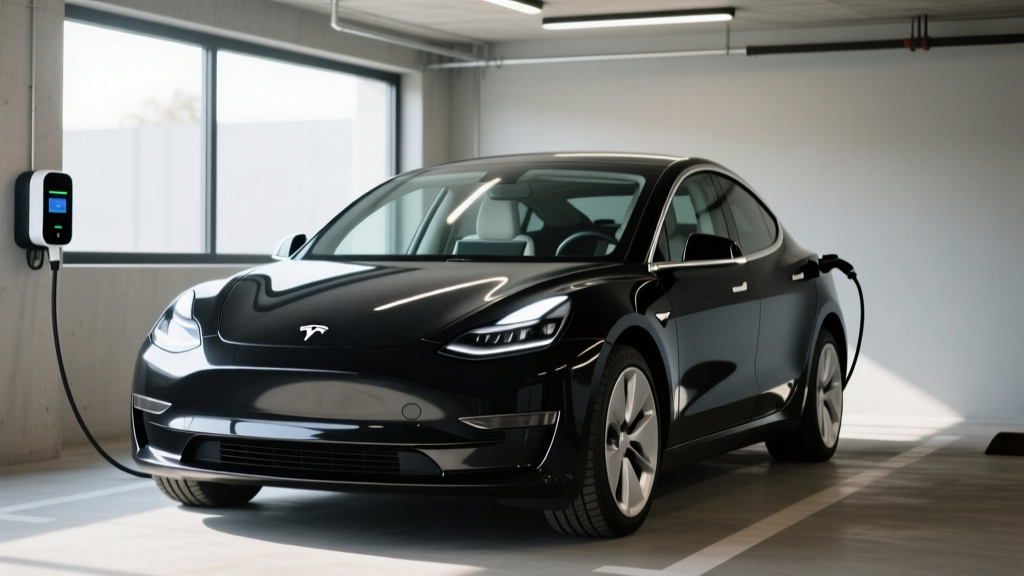
To understand whether the federal electric vehicle rebate actually tips the economics in your favor, we need a full 5-year / 75,000-mile ownership comparison. Below, we compare a representative 2026 compact electric SUV (the Tesla Model Y Long Range AWD, base MSRP ~$44,990) against a comparable gas-powered compact SUV (the Toyota RAV4 AWD, base MSRP ~$31,500).
| Cost Category | 2026 Tesla Model Y LR AWD | 2026 Toyota RAV4 AWD (Gas) |
|---|---|---|
| Purchase price (MSRP) | $44,990 | $31,500 |
| Federal tax credit (§30D) | −$7,500 | $0 |
| Effective purchase price | $37,490 | $31,500 |
| Fuel / charging (75,000 mi) | $3,750 (home L2 @ $0.14/kWh) | $10,714 (27 MPG avg @ $3.50/gal) |
| Maintenance (5 years) | $1,200 | $3,500 |
| Insurance (5 years) | $12,500 | $8,750 |
| Depreciation (est. resale) | −$18,745 (50% retained) | −$17,325 (55% retained) |
| Total 5-year cost | $36,195 | $37,139 |
Assumptions: 15,000 miles/year; electricity at national average $0.14/kWh (home Level 2); Model Y efficiency 3.5 mi/kWh (286 Wh/mi); RAV4 real-world combined 27 MPG; gas at $3.50/gal. Insurance based on national average EV premiums ~70% higher than equivalent ICE. Depreciation reflects current EV resale trends. Actual costs vary by state, driving habits, and utility rates.
Charging vs. Gas: The Real Cost Per Mile
The single biggest ownership advantage of an EV is fuel cost — but only if you charge at home. Here's how the math breaks down across different charging scenarios.
| Fueling Method | Cost per Mile | Annual Cost (15k mi) |
|---|---|---|
| Home Level 2 ($0.14/kWh, 3.5 mi/kWh) | $0.040 | $600 |
| Home Level 2 ($0.22/kWh, high-cost state) | $0.063 | $943 |
| Public DC fast charging ($0.40/kWh avg) | $0.114 | $1,714 |
| Gas vehicle (27 MPG @ $3.50/gal) | $0.130 | $1,944 |
| Gas vehicle (27 MPG @ $4.25/gal) | $0.157 | $2,361 |
Home charging delivers a 3-4x cost advantage over gas. But if you rely exclusively on public DC fast charging at $0.35-$0.48/kWh (common on Electrify America and EVgo networks), the per-mile cost nearly converges with a fuel-efficient gas car. The economics of EV ownership are fundamentally tied to home charging access. Apartment dwellers without Level 2 access should factor in public-charging premiums before purchasing.
Maintenance Savings: Where EVs Quietly Win
Electric vehicles have roughly 20 moving parts in their drivetrain versus 2,000+ in an internal combustion engine. That mechanical simplicity translates into real savings.
| Maintenance Item | EV (5-year cost) | Gas Vehicle (5-year cost) |
|---|---|---|
| Oil changes | $0 | $400–$600 |
| Transmission fluid | $0 | $150–$250 |
| Brake pads | $100–$200 (regen extends life) | $400–$800 |
| Air filters (engine) | $0 | $100–$150 |
| Cabin air filter | $100–$150 | $100–$150 |
| Coolant flush | $100–$150 (battery thermal) | $100–$200 |
| Tire rotation/replacement | $800–$1,200 (heavier vehicle, more wear) | $600–$900 |
| Spark plugs, belts, exhaust | $0 | $300–$500 |
| Total (estimated) | $1,100–$1,700 | $2,150–$3,550 |
Net maintenance savings over five years: $1,000–$2,000. The one area where EVs cost more is tires — EVs are heavier and deliver instant torque, accelerating tire wear by roughly 20%. Budget for a mid-life tire replacement if you drive aggressively.
Insurance: The Cost EV Owners Don't See Coming
EV insurance premiums run 20–70% higher than equivalent gas vehicles, depending on the model and insurer. The Tesla Model Y, for example, averages roughly $2,500/year nationally for full coverage, while a Toyota RAV4 averages around $1,750/year.
Why the gap? Several structural reasons:
- Higher repair costs: EV battery packs are expensive to replace after collision damage, and many body shops lack EV-certified technicians. Insurers price this risk into premiums.
- Higher vehicle values: A $45,000 EV costs more to insure than a $31,500 gas SUV, even after the tax credit reduces your out-of-pocket.
- Total-loss frequency: Some insurers total EVs after minor battery-adjacent damage rather than repair, driving up claim payouts.
- Specialized parts: Proprietary components (Tesla structural battery packs, proprietary sensors) carry longer lead times and higher costs.
How to reduce EV insurance costs: Shop at least 4–5 quotes. Insurers like Geico, Progressive, and Tesla's own insurance program (available in select states, using real-time driving data) can vary by $1,000+/year for the same vehicle. Bundling home and auto, maintaining a clean record, and choosing higher deductibles all help.
Depreciation and Resale Value: The Shifting EV Landscape
EV depreciation has been volatile. In 2023, aggressive Tesla price cuts triggered a used-EV market correction that saw some models lose 40–50% of value in under two years. The market has since stabilized, but EVs still depreciate faster than top-selling gas vehicles on average.
Key factors shaping 2026 EV resale values:
- Battery health anxiety: Buyers of used EVs worry about degradation. Vehicles with accessible State of Health (SoH) reports command higher resale prices.
- Charging-standard transitions: The industry-wide shift to NACS (Tesla's connector, now the North American standard) means older CCS-equipped vehicles may face a resale discount as CCS infrastructure gets deprioritized.
- Price competition: New EVs keep getting cheaper. A $35,000 new EV with a full warranty depresses used prices for older, more expensive models.
- Lease dominance: Roughly 50%+ of EVs are leased, flooding the used market with 3-year-old vehicles every cycle, keeping supply high and prices soft.
Expect 5-year depreciation of 45–55% for mainstream EVs, versus 40–50% for popular gas vehicles. The gap is narrowing as EV adoption matures, but it remains a real ownership cost that partially offsets fuel savings.
State, Local, and Utility Incentives Beyond the Federal Credit
Your location matters enormously. The federal electric vehicle rebate is just one layer. State and utility incentives can add $1,000–$7,500+ on top, but they vary dramatically by jurisdiction and change frequently.
Representative state-level incentives (always verify current availability):
- California: Clean Fuel Rebate up to $1,000 (income-dependent); additional CVRP rebates up to $7,000 for low-income buyers trading in older vehicles.
- Colorado: Up to $5,000 state tax credit for new EVs (income-capped), stackable with federal credit.
- New York: Drive Clean Rebate up to $2,000 at point of sale for qualifying EVs.
- Massachusetts: MOR-EV rebate up to $3,500, with additional $1,500 for low-income buyers.
Utility rebates are often overlooked. Many electric cooperatives and municipal utilities offer:
- $300–$1,000 rebates for purchasing a new or used EV
- $250–$500 rebates for installing a Level 2 home charger
- Time-of-use (TOU) rate plans that cut charging costs by 30–50% if you charge overnight
Check AFDC's state incentive database and your local utility's EV programs page for current offers in your ZIP code.
Putting It All Together: Who Should Buy an EV in 2026?
Choose an EV if:
- You qualify for the full $7,500 federal credit (income, MSRP, and sourcing all met)
- You can install a Level 2 charger at home (garage or driveway with 240V access)
- Your daily commute is under 80 miles round-trip (eliminates range anxiety entirely)
- You drive 12,000+ miles/year (higher mileage = greater fuel savings to offset insurance premiums)
- You live in a state with additional incentives that stack with the federal credit
Stick with gas or hybrid if:
- You rent an apartment with no charging access and rely on public infrastructure
- Your income exceeds the §30D MAGI cap and your state offers no alternative incentives
- You drive under 8,000 miles/year (fuel savings won't offset the higher purchase price and insurance)
- You need a vehicle for frequent long-distance towing in cold climates (range drops 30–40%)
- You plan to keep the vehicle 10+ years and worry about out-of-warranty battery replacement ($10,000–$20,000)
Frequently Asked Questions
How much does it really cost to own an EV over 5 years?
For a mainstream electric SUV like the Tesla Model Y, expect roughly $36,000–$40,000 in total 5-year cost (purchase after credit, fuel, insurance, maintenance, and depreciation) for 75,000 miles. That's comparable to or slightly cheaper than a gas equivalent — but the savings depend heavily on home charging access and qualifying for the full $7,500 federal credit.
Do I qualify for the federal electric vehicle rebate?
You qualify if your modified AGI is under $150,000 (single) or $300,000 (joint), the vehicle's base MSRP is under $55,000 (cars) or $80,000 (SUVs/trucks/vans), final assembly is in North America, and the battery meets critical-mineral and component-sourcing thresholds. Use the fueleconomy.gov tool to verify a specific vehicle's credit amount.
How much do I save on fuel and maintenance?
Typical savings: $1,200–$1,500/year on fuel (home charging vs. gas) and $300–$500/year on maintenance. Over five years, combined savings of $7,500–$10,000 are realistic for a driver covering 15,000 miles annually at national-average electricity and gas prices.
Are EVs more expensive to insure?
Yes, typically 20–70% more than equivalent gas vehicles. The Model Y averages ~$2,500/year nationally vs. ~$1,750 for the RAV4. Higher repair costs, battery replacement risk, and elevated vehicle values drive the premium. Shopping multiple insurers can reduce the gap significantly.
How well do EVs hold their value?
EVs currently retain roughly 45–55% of their value after five years, compared to 50–60% for popular gas vehicles. Battery health uncertainty, rapid new-EV price declines, and the NACS connector transition all put downward pressure on used EV prices. The gap is narrowing but remains a real cost factor.
Can I get the credit on a used EV?
Yes — a separate credit (§25E) offers up to $4,000 or 30% of the sale price (whichever is less) on qualifying used EVs. Income caps are lower: $75,000 (single) / $150,000 (joint). The vehicle must be at least two model years old, have a sale price under $25,000, and be purchased from a licensed dealer.
Does the point-of-sale transfer affect my taxes?
When you transfer the credit to the dealer, the amount reduces your purchase price at closing. You still report the transfer on your tax return (Form 8936). If your income ends up exceeding the cap for that tax year, you may have to repay the credit — so verify your projected MAGI carefully before transferring.