Quick Answer: The fastest children's electric ride-on cars in 2026 reach 6–12 mph using dual 12V or 24V battery systems (typically 12Ah–18Ah SLA or lithium packs). Expect 45–90 minutes of run time per charge, 8–12 hours to recharge, and prices from $180 for a basic 6V model to $600+ for a licensed 24V replica with EVA foam tires and parental remote override. For context: a 12V/12Ah battery stores roughly 0.14 kWh of energy — about 1/500th of a full-size EV battery.
What Powers Kids' Electric Cars — and How Fast Do They Really Go?
Children's electric cars (sometimes called ride-on cars or power wheels) use small electric motors paired with sealed lead-acid (SLA) or, increasingly, lithium iron phosphate (LFP) batteries. The voltage of the system determines the speed envelope and torque available:
| System Voltage | Typical Motor | Top Speed | Run Time | Battery Capacity |
|---|---|---|---|---|
| 6V | Single 25W | 2–3 mph | 40–60 min | 6V / 4.5–7Ah |
| 12V | Dual 30–45W | 4–6 mph | 45–75 min | 12V / 7–12Ah |
| 24V | Dual 50–80W | 8–12 mph | 50–90 min | 24V / 12–18Ah |
The "fast" category that most parents search for begins at 24V. A 24V ride-on pushing 10–12 mph feels genuinely quick for a 5-year-old — roughly the speed of an adult jogging at full effort. Some aftermarket 36V and 48V conversions push 15+ mph, but these exceed the design limits of plastic chassis components and are not recommended for children under 8.
For comparison, a Tesla Model Y Long Range produces roughly 384 hp and does 0–60 mph in 4.8 seconds. A 24V kids' ride-on produces about 0.1–0.2 hp equivalent and takes 3–5 seconds to reach its 10 mph top speed. The physics are identical — electric motors deliver instant torque — just at radically different scales.
Kids' Electric Cars vs. Gas-Powered Ride-Ons: A Real Comparison
Gas-powered kids' vehicles (typically 40cc–110cc mini bikes, go-karts, and pocket bikes) still exist, but they serve a different use case. Here is how they stack up on the metrics parents actually care about:
| Factor | 24V Electric Ride-On | Gas Mini Bike / Go-Kart (49cc–110cc) |
|---|---|---|
| Purchase Price | $250–$600 | $600–$2,500 |
| Top Speed | 8–12 mph | 25–45 mph |
| Fuel / Energy Cost per Hour | ~$0.02 (electricity) | ~$1.50–$3.00 (gasoline) |
| Maintenance | Near zero (battery replacement every 2–4 years, ~$30–$60) | Oil changes, spark plugs, air filter, carburetor tuning ($100–$300/yr) |
| Noise Level | ~55 dB (conversation level) | 85–100 dB (hearing protection recommended) |
| Indoor / Garage Use | Yes (zero tailpipe emissions) | No (carbon monoxide risk) |
| Age Range | 3–8 years (with parental remote) | 7–14+ years |
| Refuel / Recharge Time | 8–12 hours (overnight) | 2 minutes (gas fill-up) |
The takeaway: electric ride-ons win on cost, noise, maintenance, and age accessibility. Gas-powered options win on raw speed and refueling convenience — but they're a different product category aimed at older kids with more supervision. For the 3–8 age bracket, electric is the only practical choice.
Real Costs of Ownership: Purchase, Charging, and Battery Replacement
Here is a realistic 5-year cost breakdown for a mid-range 24V children's electric car used approximately 3 hours per week (roughly 150 hours per year):
| Cost Category | Year 1 | Year 2 | Year 3 | Year 4 | Year 5 | 5-Year Total |
|---|---|---|---|---|---|---|
| Purchase (24V licensed SUV replica) | $400 | — | — | — | — | $400 |
| Electricity (~150 hrs × 80W × $0.16/kWh) | $1.92 | $1.92 | $1.92 | $1.92 | $1.92 | $9.60 |
| Battery Replacement (SLA, Year 3) | — | — | $55 | — | — | $55 |
| Tire / Gearbox Wear Parts | — | $15 | — | $20 | — | $35 |
| Total | $402 | $17 | $57 | $22 | $2 | $500 |
At $500 over five years — or roughly $100 per year — the operating economics are remarkably favorable. The electricity cost is negligible: charging a 24V/14Ah battery from empty stores about 0.34 kWh, costing roughly 5 cents at the US average residential rate of $0.16/kWh (EIA).
The single largest ongoing cost is battery replacement. Sealed lead-acid batteries degrade with each charge cycle — expect 200–400 cycles before capacity drops below 70%. If you use the vehicle 3 times per week, that's roughly 2.5 to 3 years before a replacement is needed. LFP (lithium iron phosphate) aftermarket batteries are now available for popular models and offer 1,500–2,000 cycles with lighter weight, but they cost $80–$150 versus $30–$55 for SLA.
Safety Features and Real-World Ownership Considerations
Before purchasing, parents should evaluate several practical factors that spec sheets don't always highlight:
Parental Remote Control
Most 24V models in the $300+ range include a 2.4 GHz parental remote that overrides the child's pedal input. This is the single most important safety feature — it lets you stop the vehicle instantly or steer it away from streets, pools, or stairs. Test the remote's range (typically 50–100 feet) and response latency before relying on it near hazards.
Speed Limiting and Seat Belts
Look for models with a physical speed-limit switch (restricts top speed to 3–5 mph for beginners) and a 3-point or lap belt. The belt's primary function isn't crash protection — it prevents the child from standing up or falling out during turns at 8–12 mph.
Surface and Terrain Limitations
Children's electric cars are designed for flat, paved, or hard-packed surfaces. Grass, gravel, and inclines over 5–8 degrees will dramatically reduce run time and may stall the motors. A 24V model rated for 90 minutes on pavement may deliver only 30–40 minutes on thick grass. EVA foam tires handle rough surfaces better than hard plastic but add rolling resistance.
Weather and Temperature
SLA batteries lose 20–30% of their capacity below 40°F (4°C). If you live in a cold climate, expect noticeably shorter run times in early spring and late fall. Store the battery indoors during winter months — a fully discharged SLA battery that freezes will be permanently damaged. LFP batteries handle cold somewhat better but still lose 10–15% capacity near freezing.
Charging Access
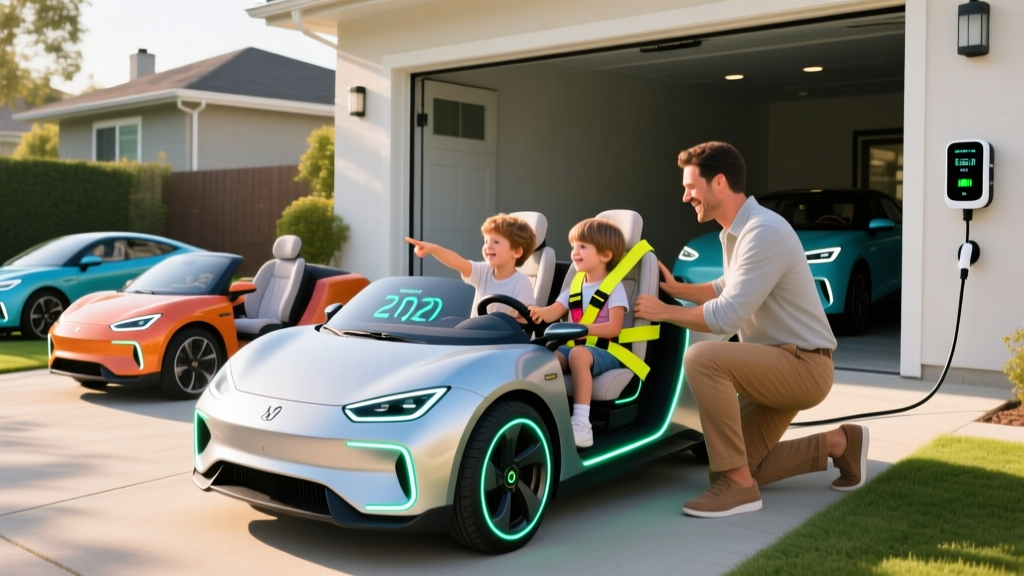
Unlike full-size EVs, children's ride-ons charge from a standard 120V household outlet using the included wall-wart charger (typically 0.5A–1A output). No special electrical installation is required. However, you need a dry, indoor or covered outlet near where you store the vehicle. Charging a 24V/14Ah battery at 1A takes approximately 14 hours from empty — plan to plug in overnight after each use.
Common Misconceptions About Kids' Electric Cars
| Myth | Fact |
|---|---|
| "Higher voltage always means faster." | Voltage determines the potential speed, but actual top speed depends on motor wattage, gear ratio, vehicle weight, and electronic speed limiters. A poorly geared 24V car can be slower than a well-designed 12V model. |
| "The battery lasts forever if I don't use it." | SLA batteries self-discharge at ~5% per month and sulfate if left below 50% state of charge for extended periods. Store at full charge and top off every 4–6 weeks during off-seasons. |
| "These toys are street-legal for short distances." | Children's electric cars are classified as toys, not motor vehicles. They are not street-legal on any public road, sidewalk, or bike path in virtually all US jurisdictions. Use only on private property. |
| "A 24V car is safe for a 2-year-old." | Most 24V models are rated for ages 3–8 and up to 66–88 lbs. The speed (up to 12 mph) and vehicle weight (60–90 lbs) can cause injury to toddlers. Stick with 6V or 12V models for children under 4. |
| "I can upgrade the battery to make it faster." | Overvolting (e.g., putting a 36V battery in a 24V system) will fry the motor controller, melt wiring, and void all safety certifications. Aftermarket speed upgrades require matched motor, controller, and wiring upgrades. |
Decision Framework: Which Kids' Electric Car Is Right for Your Child?
Choose a 6V model (2–3 mph, $120–$200) if:
- Your child is 1.5–3 years old
- You only need indoor or flat-driveway use
- Budget is the primary concern
Choose a 12V model (4–6 mph, $180–$350) if:
- Your child is 3–5 years old
- You want a balance of speed and safety
- You'll use it on paved surfaces and short grass
Choose a 24V model (8–12 mph, $300–$650) if:
- Your child is 5–8 years old and has outgrown 12V models
- You want licensed vehicle replicas (Mercedes, Range Rover, Lamborghini)
- You need parental remote override and speed limiting
- You have a large, flat yard or long driveway
Consider a gas-powered mini bike or kart ($600–$2,500) instead if:
- Your child is 8+ years old with prior riding experience
- Speeds above 15 mph and off-road capability are priorities
- You're comfortable with engine maintenance and noise
- You have a supervised, controlled environment (private track, rural property)
Top Specs to Check Before You Buy
When comparing specific models, verify these data points — many Amazon and marketplace listings are vague or inaccurate:
- Battery voltage and Ah rating: A "24V" car with a 7Ah battery will run half as long as one with a 14Ah battery. Ah (amp-hours) determines run time; voltage determines speed potential.
- Motor wattage: Dual 50W+ motors are needed to reliably reach 10+ mph with a 50-lb child. Underpowered motors will bog down on slight inclines.
- Weight capacity: Exceeding the rated capacity (typically 66–88 lbs for 24V models) stresses gearboxes and shortens motor life.
- Charge time: Budget models often ship with low-amperage chargers that take 14–18 hours. A 2A charger cuts this to 7–9 hours.
- Safety certifications: Look for ASTM F963 (US toy safety) and CPSIA compliance markings. Avoid unbranded imports with no certification documentation.
- Warranty: Reputable brands offer 6–12 months on the vehicle and 30–90 days on the battery. Anything less suggests low confidence in component quality.
Frequently Asked Questions
Can I make my child's electric car go faster?
The safest upgrade path is replacing the stock SLA battery with an LFP (lithium iron phosphate) pack of the same voltage. This reduces weight by 40–50% and can add 1–2 mph of top speed plus 20–30% more run time due to LFP's flatter voltage curve. Do not increase the system voltage without upgrading the motor, controller, and wiring — this creates a fire and component-failure risk.
How long do kids' electric car batteries last before needing replacement?
Sealed lead-acid batteries typically deliver 200–400 full charge cycles before dropping below 70% of original capacity. At 3 uses per week, expect 2–3 years of service. LFP batteries last 1,500–2,000 cycles (5+ years) but cost 2–3× more upfront.
Are 24V kids' electric cars safe on hills?
Most 24V ride-ons handle inclines up to 5–8 degrees. Steeper hills will cause the motors to overheat and the electronic controller to cut power as a safety measure. If your property has significant slopes, look for models with thermal overload protection and avoid sustained hill climbs.
What's the difference between kids' electric cars and full-size EVs like a Tesla?
The underlying physics are identical — both use battery-stored DC energy to spin electric motors that drive wheels. The difference is scale. A Tesla Model Y's 75 kWh battery stores roughly 500× more energy than a 24V/14Ah kids' car battery (0.34 kWh). A Tesla charges at up to 250 kW on a DC fast charger; a kids' car charges at about 0.03 kW from a wall outlet. The engineering principles — regenerative braking, battery management systems, thermal limits — apply at both scales, which makes these toys a surprisingly good introduction to EV concepts.
Do I need to register or insure a children's electric car?
No. Children's electric ride-on cars are classified as toys under CPSC regulations, not motor vehicles. They require no registration, license, or insurance. However, your homeowner's or renter's insurance may cover liability if your child injures someone while operating the vehicle on your property — check with your insurer.