The Short Answer on the Faraday Future FF 91
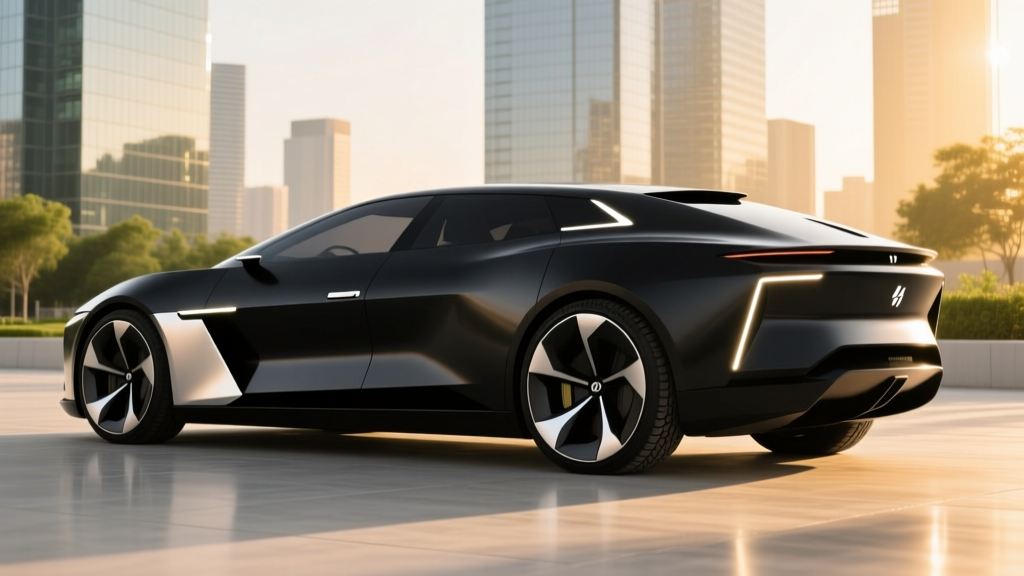
The Faraday Future FF 91 2.0 Futurist Alliance is a limited-production luxury electric crossover with a 119 kWh NMC battery, 381 miles of EPA-estimated range, and 1,050 horsepower from a tri-motor AWD setup. Priced around $199,000 (before any adjustments), it targets ultra-premium buyers who want exclusivity over mass-market practicality. However, Faraday Future's extremely limited production volumes, sparse service network, and uncertain long-term support make it a high-risk ownership proposition compared to established luxury EVs like the Lucid Air, Tesla Model X, or Mercedes EQS SUV. If you are searching for a "Faraday electric vehicle" to buy in 2026, understand that availability remains severely restricted and the company's financial stability is an ongoing concern.
FF 91 2.0 Specifications at a Glance
Before we get into real-world ownership, here are the hard numbers Faraday Future publishes for the FF 91 2.0 Futurist Alliance. Keep in mind: these are manufacturer claims and EPA filings — actual results vary with driving style, climate, and terrain.
| Specification | FF 91 2.0 Futurist Alliance |
|---|---|
| EPA Range (est.) | 381 miles |
| Battery Capacity | 119 kWh (usable), NMC chemistry |
| Powertrain | Tri-motor AWD |
| Horsepower | 1,050 hp |
| 0-60 mph | ~2.27 seconds (manufacturer claim) |
| Peak DC Fast Charge | ~200 kW (estimated) |
| 10-80% DC Charge Time | ~30-35 minutes (estimated) |
| Level 2 AC Charging | ~11.5 kW onboard charger |
| Connector | CCS1 (J1772 combo) |
| Cargo Volume | ~28 cu ft (rear seats up, est.) |
| Base MSRP | ~$199,000 |
| Federal Tax Credit (§30D) | Not eligible — exceeds MSRP cap |
| Battery/Powertrain Warranty | 8 years / 100,000 miles (stated) |
Real-World Range vs. the EPA Sticker
The EPA's 381-mile estimate assumes a mix of city and highway driving at moderate temperatures. In practice, several factors compress that number:
EPA Sticker: 381 miles
Real-World Expectations:
- Mixed driving (55-70 mph, 65°F): ~320-340 miles
- Sustained highway (75+ mph): ~270-300 miles
- Cold weather (30°F, heater on): ~240-280 miles (NMC chemistry typically loses 20-30% in freezing temps without a heat pump; FF has not confirmed heat pump standard)
- Mountain/towing: ~220-260 miles depending on grade and load
The 119 kWh battery pack is among the largest in any production EV, which provides a substantial buffer. But a heavy vehicle with over 1,050 hp will consume energy rapidly under hard acceleration or sustained high-speed cruising. Expect efficiency around 31-33 kWh/100mi in mixed conditions — comparable to other large luxury EVs like the Mercedes EQS SUV or BMW iX, but less efficient than lighter sedans like the Lucid Air Grand Touring (~26 kWh/100mi).
Charging: What to Expect at Home and on the Road
Faraday Future has published limited independent charging-test data. Based on the battery size and estimated peak charge rate, here is what owners should realistically plan for:
| Charging Level | Power | Miles Added per Hour | Full Charge Time |
|---|---|---|---|
| Level 1 (120V household) | ~1.4 kW | ~3-4 mi/hr | ~85+ hours (impractical) |
| Level 2 (240V home/public) | ~11.5 kW | ~30-34 mi/hr | ~10-12 hours (10-100%) |
| DC Fast Charge | ~200 kW peak | ~180-220 mi/hr (peak) | ~30-35 min (10-80%) |
Key distinction: kW (kilowatts) measures charging power — how fast energy flows into the battery. kWh (kilowatt-hours) measures battery capacity — how much energy the battery stores. A 200 kW charger does not deliver 200 kWh in one hour; it delivers energy at a rate of 200 kW, tapering as the battery fills.
Charging curve reality: Like all large NMC packs, the FF 91's charge rate will peak near 200 kW at low state of charge (10-30%), then taper progressively. Expect sustained rates of 120-150 kW through the 50-70% range, dropping to under 60 kW above 85%. This is physics, not a flaw — lithium-ion cells must slow charging at high SoC to prevent lithium plating and thermal stress.
Home charging setup: A Level 2 home charger (like a ChargePoint Home Flex or Emporia Vue) on a 60A circuit delivering ~11.5 kW will fully replenish the 119 kWh pack overnight. Installation typically costs $800-$2,500 depending on panel capacity, conduit run length, and local permitting. For a vehicle at this price point, buyers should budget for a dedicated 60A or 80A circuit with a hardwired wall connector.
FF 91 vs. Established Luxury EVs: How It Compares
The Faraday electric vehicle doesn't exist in a vacuum. At $199,000, it competes — at least on paper — with several proven luxury EVs. Here is how it stacks up:
| Metric | FF 91 2.0 Futurist | Lucid Air Grand Touring | Tesla Model X Plaid | Mercedes EQS 580 SUV |
|---|---|---|---|---|
| EPA Range | 381 mi | 516 mi | 333 mi | 305 mi |
| Battery (kWh) | 119 | 112 | 100 | 108.4 |
| Horsepower | 1,050 | 819 | 1,020 | 536 |
| 0-60 mph | ~2.27s | 3.0s | 2.5s | 4.4s |
| Peak DC Charge | ~200 kW | 300+ kW | 250 kW | 200 kW |
| Price | ~$199,000 | ~$138,000 | ~$108,000 | ~$127,000 |
| Service Network | Minimal | Growing | Extensive | Extensive |
| Production Status | Extremely limited | In production | In production | In production |
The Lucid Air Grand Touring delivers 135 more miles of EPA range for $60,000 less. The Model X Plaid offers comparable acceleration with a vastly superior service and Supercharger network. The FF 91's value proposition rests entirely on exclusivity, rear-seat luxury amenities (Faraday touts a "third internet living space" concept), and the novelty factor of owning a vehicle from a boutique manufacturer.
Total Cost of Ownership: 5-Year Breakdown
At this price tier, buyers are less likely to optimize for cost savings — but the numbers still matter for resale and budgeting. Here is a realistic 5-year/75,000-mile ownership estimate:
| Cost Category | FF 91 2.0 (~$199K) | Tesla Model X Plaid (~$108K) | Gas Equivalent (BMW X7 M60i ~$110K) |
|---|---|---|---|
| Purchase Price | $199,000 | $108,490 | $110,000 |
| Federal Tax Credit | $0 (exceeds MSRP cap) | $0 (exceeds MSRP cap) | $0 |
| Fuel/Energy (75K mi) | ~$3,750 (home L2 @ $0.13/kWh) | ~$3,200 | ~$11,250 (premium @ $4.50/gal, 17 MPG) |
| Maintenance (5 yr) | ~$2,500 (est., limited service options) | ~$2,000 | ~$6,500 |
| Insurance (5 yr avg) | ~$25,000+ (boutique, high-value) | ~$15,000 | ~$12,000 |
| Estimated Depreciation | Very high risk (60-70%+) | ~50% | ~45% |
| 5-Year Total Cost | ~$350,000+ | ~$183,000 | ~$184,750 |
The FF 91's depreciation is the wildcard. Boutique EVs from financially uncertain manufacturers historically lose value rapidly — consider the Fisker Ocean, which saw steep depreciation after the company's financial troubles. The Model X Plaid and a gas BMW X7 end up remarkably close on 5-year total cost, while the FF 91's financial risk is substantially higher.
Common Misconceptions About Faraday Future
| Myth | Fact |
|---|---|
| "The FF 91 qualifies for the $7,500 federal tax credit." | False. The IRS §30D credit has an MSRP cap of $80,000 for SUVs and $55,000 for sedans. At ~$199,000, the FF 91 far exceeds this limit. Income caps and battery-sourcing rules further restrict eligibility. Always verify current rules at IRS.gov. |
| "Faraday Future is a major EV manufacturer." | Misleading. FF has delivered a very small number of vehicles (fewer than 20 units reported in multiple filings). It is a micro-volume startup, not a mass producer like Tesla, Rivian, or Lucid. |
| "381 miles of range means I'll always get 381 miles." | False. Highway driving at 75+ mph, cold weather, and aggressive acceleration reduce range by 20-35%. Plan for 270-320 miles in most real-world scenarios. |
| "The tri-motor 1,050 hp means it's the fastest SUV ever." | Partially true on paper. The claimed 2.27-second 0-60 is extraordinary, but independent testing (MotorTrend, Car and Driver) has not widely validated this figure. The Model X Plaid has been independently verified at 2.5 seconds. |
| "I can get it serviced anywhere." | False. Faraday Future has minimal service infrastructure. Owners in most US regions will have no authorized service center nearby. This is a critical ownership risk. |
Decision Framework: Should You Buy a Faraday Electric Vehicle?
Consider the FF 91 if:
- You want an ultra-exclusive vehicle and accept the financial risk of a micro-volume manufacturer
- You have access to reliable Level 2 home charging (essential for a 119 kWh pack)
- You live near one of FF's few service locations or can arrange mobile service
- Performance and rear-seat luxury are higher priorities than proven reliability or resale value
- You view the purchase as a collector/novelty item rather than a primary vehicle
Choose an established luxury EV instead if:
- You need dependable service access across the US (Tesla, Mercedes, BMW)
- Maximizing range per dollar matters (Lucid Air Grand Touring: 516 mi EPA at $138K)
- You want validated charging infrastructure access (Tesla Supercharger network, Electrify America compatibility)
- Resale value and long-term support are priorities
- This will be your primary daily vehicle
What First-Time EV Buyers Should Know
If the FF 91 is your introduction to electric vehicles, understand these fundamentals:
Home charging is non-negotiable for large-battery EVs. A 119 kWh pack on Level 1 (standard 120V outlet) would take over 80 hours to fill. You need a professionally installed Level 2 charger (240V, 48-60A circuit). Budget $1,200-$2,500 for equipment and electrician labor, plus a possible $500-$2,000 electrical panel upgrade if your home has a 100A service panel.
DC fast charging is for road trips, not daily use. Routine charging to 100% on DC fast chargers accelerates battery degradation. For daily driving, charge to 80-90% on Level 2 at home. Reserve DC fast charging for long-distance travel.
Cold weather reduces range — plan accordingly. NMC batteries lose 20-30% of usable capacity in sustained freezing temperatures. The FF 91's large pack provides a buffer, but a 381-mile EPA range becomes roughly 260-300 miles in winter. Preconditioning the battery before fast charging (if the vehicle supports it) is critical for achieving advertised charge speeds.
Insurance costs are higher for boutique EVs. Limited parts availability, specialized repair requirements, and high vehicle values drive premiums. Get insurance quotes before purchasing — expect $4,000-$6,000+ annually depending on your profile and location.
Frequently Asked Questions
Is Faraday Future still in business in 2026?
Faraday Future has continued limited operations and has delivered a small number of FF 91 vehicles. However, the company has faced repeated financial challenges, NASDAQ listing compliance issues, and production delays. Prospective buyers should research FF's most recent SEC filings and financial disclosures before committing to a purchase. The company's long-term viability remains uncertain.
Can I test drive a Faraday Future FF 91?
FF has hosted limited private events and experiences for potential buyers, primarily in Southern California. There is no traditional dealership network. Contact Faraday Future directly through their official channels to inquire about availability. Do not expect the walk-in test-drive experience of a Tesla, Lucid, or Mercedes showroom.
Does the FF 91 support Tesla Superchargers?
As of current information, the FF 91 uses a CCS1 connector. It does not natively support Tesla's NACS connector or the Supercharger network without an adapter, and FF has not confirmed Supercharger compatibility. This limits DC fast-charging options compared to NACS-equipped vehicles from Tesla, Ford, Rivian, and others that now access Superchargers directly. Check with FF for the latest adapter availability.
What happens if Faraday Future goes out of business?
This is the single largest risk. Without a manufacturer to provide parts, software updates, or warranty service, owners would face significant challenges. Third-party EV repair shops exist but may lack proprietary diagnostic tools and replacement components specific to the FF 91. This risk is why established brands with strong balance sheets and dealer networks are safer choices for most buyers.
How does the FF 91's battery warranty compare?
Faraday Future has stated an 8-year/100,000-mile battery and powertrain warranty, which aligns with industry norms (Tesla offers 8 years/150,000 miles on Model X). However, a warranty is only as reliable as the company backing it. If FF ceases operations, warranty coverage becomes effectively void. This is a material consideration that buyers of vehicles from established manufacturers do not face to the same degree.
Sources: EPA range and efficiency data referenced via fueleconomy.gov; IRS §30D tax credit rules at IRS.gov; Faraday Future manufacturer specifications via official FF press materials and SEC filings.