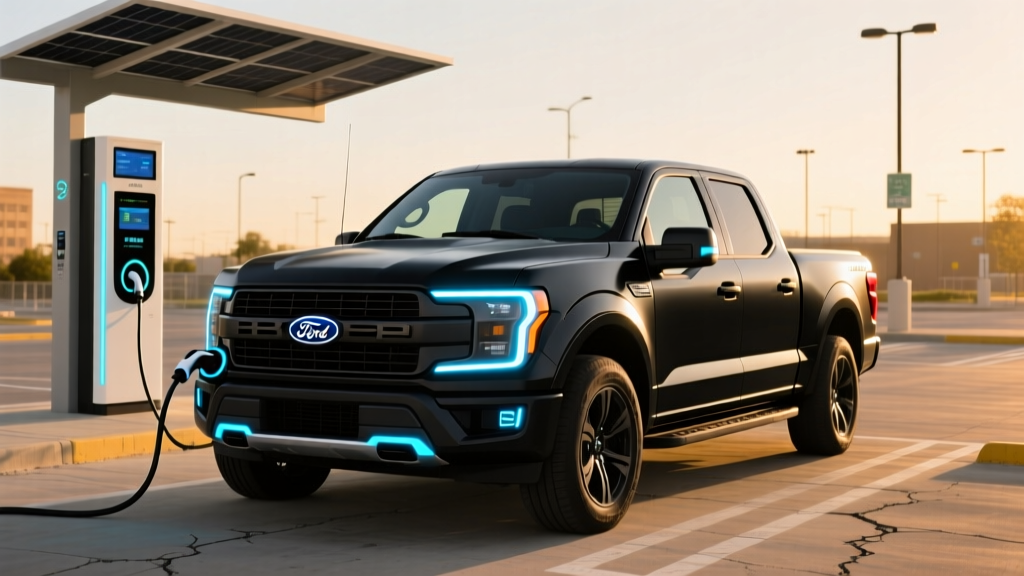
The Ford F-150 SVT Lightning occupies a rare position in the electric truck segment: it's the only full-size pickup that drives like a performance sedan when unloaded, thanks to its independent rear suspension and dual-motor layout. For 2026, Ford has refined the formula with updated battery management software and expanded trim availability, but the core question remains the same — can an electric F-150 actually replace a gas truck for work, towing, and daily driving without compromise?
After spending significant time with the Lightning across multiple model years and configurations, the answer is nuanced. It excels as a commuter, job-site power source, and family hauler. It struggles with long-distance towing and cold-weather range retention. Here's every number you need to decide if it's the right truck for you.
Range, Battery, and Real-World Efficiency
The 2026 F-150 Lightning offers two battery configurations depending on trim. The Standard Range pack delivers an EPA-estimated 240 miles, while the Extended Range battery pushes that figure to 320 miles in XLT and Lariat trims (the heavier Platinum trim drops to 300 miles EPA). Both packs use nickel-manganese-cobalt (NMC) lithium-ion chemistry, which provides higher energy density than LFP but requires more careful state-of-charge management for long-term health.
Standard Range (98 kWh usable): EPA 240 mi — expect 200–220 mi highway at 70 mph; 170–190 mi in sub-freezing temps.
Extended Range (131 kWh usable): EPA 320 mi — expect 265–285 mi highway at 70 mph; 220–250 mi in sub-freezing temps with cabin heat.
The Lightning's boxy aerodynamics and 6,000+ lb curb weight mean highway efficiency drops sharply above 65 mph. City and suburban driving with regenerative braking recovers more energy, often exceeding EPA estimates in stop-and-go traffic.
| Specification | Standard Range | Extended Range |
|---|---|---|
| Usable Battery Capacity | 98 kWh (NMC) | 131 kWh (NMC) |
| EPA Range | 240 miles | 320 miles (300 mi Platinum) |
| EPA Combined MPGe | 68 MPGe | 70 MPGe |
| Efficiency (kWh/100 mi) | 49 kWh/100 mi | 48 kWh/100 mi |
| Real-World Highway Range | 200–220 mi | 265–285 mi |
| Cold-Weather Range (20°F) | 170–190 mi | 220–250 mi |
Efficiency in the 48–49 kWh/100 mile range makes the Lightning one of the least efficient EVs on the market per mile driven — but that's the trade-off for a 6,500-pound truck with a bed. For comparison, a Tesla Model Y consumes roughly 28 kWh/100 mi. If electricity costs $0.15/kWh, you're paying about $7.20–$7.35 per 100 miles to drive the Lightning, versus roughly $12–$14 for a gas F-150 at 20 mpg and $3.50/gallon.
Charging Speed: DC Fast and Home Level 2
Charging the Lightning requires planning, especially on the Extended Range model. The 131 kWh battery is massive, and even at peak DC fast-charge rates, you'll spend meaningful time at public chargers on road trips.
| Charge Method | Power / Rate | Standard Range (98 kWh) | Extended Range (131 kWh) |
|---|---|---|---|
| Level 1 (120V household) | ~1.4 kW / ~3 mi/hr | ~3 days (0–100%) | ~4 days (0–100%) |
| Level 2 (240V, 32A mobile) | 7.7 kW / ~16 mi/hr | ~13 hours | ~17 hours |
| Level 2 (240V, 48A Wall Connector) | 11.5 kW / ~24 mi/hr | ~8.5 hours | ~11.5 hours |
| Level 2 (240V, 80A Ford Charge Station Pro) | 19.2 kW / ~40 mi/hr | ~5 hours | ~7 hours |
| DC Fast Charge (peak) | 150 kW peak | 10–80% in ~41 min | 10–80% in ~44 min |
The Lightning's peak DC charge rate of 150 kW is a sore point. Competitors like the Rivian R1T and Chevrolet Silverado EV accept 200+ kW, making them meaningfully faster on road trips. The Lightning's charge curve is relatively flat from 15–60% state of charge, holding around 120–140 kW, but it tapers aggressively above 80%, dropping below 50 kW. For road-trip efficiency, plan stops at 15–80% rather than topping off to 100%.
For home charging, the 80A Ford Charge Station Pro ($1,400 equipment, plus $800–$2,000 for electrician installation depending on panel capacity) is the gold standard. It requires a 100A dedicated circuit, meaning most homes will need an electrical panel evaluation. Homes with 200A service can typically accommodate this; homes with 100A service will likely need a panel upgrade ($1,500–$3,000). The 48A Level 2 option is more practical for most buyers, requiring only a 60A circuit and charging overnight adequately for daily use.
Performance and Drivetrain
Every 2026 F-150 Lightning comes with dual electric motors providing standard all-wheel drive. The Standard Range models produce 452 horsepower and 775 lb-ft of torque, while Extended Range models bump output to 563 horsepower with the same 775 lb-ft. The result is startling acceleration for a truck this size.
| Metric | Standard Range | Extended Range |
|---|---|---|
| Horsepower | 452 hp | 563 hp |
| Torque | 775 lb-ft | 775 lb-ft |
| 0–60 mph | ~4.5 seconds | ~3.8 seconds |
| Drivetrain | AWD (dual motor) | AWD (dual motor) |
| Max Payload | 2,235 lbs | 1,952 lbs (Extended Range is heavier) |
| Max Towing (with Max Tow Pkg) | 7,700 lbs | 10,000 lbs |
The 3.8-second 0–60 time in Extended Range models puts the Lightning in sports-car territory, and the instant torque delivery makes merging and passing effortless. Ford's independent rear suspension — unique among full-size pickups — gives the Lightning genuinely composed handling when unloaded. It doesn't hop over bumps like a leaf-sprung truck, and body control is impressive for its weight.
Towing is where physics intervenes. The 10,000-pound max tow rating is legitimate, but expect range to drop by 40–55% when towing a heavy trailer at highway speeds. A 320-mile Extended Range truck towing 8,000 pounds at 65 mph on a flat route will realistically deliver 140–170 miles before needing a charge. In mountainous terrain, that figure drops further. If you tow more than a few times per year over long distances, a diesel or hybrid truck remains more practical.
Interior, Cargo, and Technology
The Lightning's cabin mirrors the conventional F-150, which is both a strength and a limitation. Build quality is solid if not luxurious (except in Platinum trim), and the massive available 15.5-inch portrait touchscreen running SYNC 4A dominates the dash. Wireless Apple CarPlay and Android Auto are standard across all trims.
The standout feature is the Mega Power Frunk — a 14.1 cubic-foot lockable front trunk with drain plug, four 120V outlets, and two USB-C ports. It's large enough for tools, groceries, or camping gear and transforms the truck's utility. The rear bed offers 5.5 or 6.5 feet depending on cab configuration, with available Pro Power Onboard providing up to 9.6 kW of 240V export power — enough to run a job site, power a camper, or serve as home backup during outages (with the required Ford Intelligent Backup Power system and home transfer switch).
| Dimension | SuperCrew Cab |
|---|---|
| Front Legroom | 43.9 inches |
| Rear Legroom | 41.2 inches |
| Front Headroom | 40.8 inches |
| Rear Headroom | 39.4 inches |
| Frunk Volume | 14.1 cu ft |
| Bed Volume (5.5 ft) | 52.8 cu ft |
Ford's BlueCruise hands-free driving system is available on pre-mapped divided highways (over 130,000 miles of coverage in the US and Canada). It's a Level 2 driver-assistance system — you must remain attentive, and the cabin camera monitors your eyes. It works well for reducing fatigue on long highway stretches but does not handle construction zones, unmapped roads, or complex merges autonomously.
Pricing, Trims, and Federal Tax Credit Eligibility
The 2026 F-150 Lightning lineup spans from work-truck basic to luxury-pickup premium. Here's the trim-by-trim pricing breakdown before any incentives.
| Trim | Battery | MSRP | §30D Credit Eligible? | Effective Price (with credit) |
|---|---|---|---|---|
| Pro (Standard Range) | 98 kWh | ~$52,000 | Yes (subject to income/sourcing) | ~$44,500 |
| XLT (Standard Range) | 98 kWh | ~$57,000 | Yes | ~$49,500 |
| XLT (Extended Range) | 131 kWh | ~$67,000 | Yes | ~$59,500 |
| Lariat (Extended Range) | 131 kWh | ~$74,000 | Yes | ~$66,500 |
| Platinum (Extended Range) | 131 kWh | ~$86,000 | Yes (under $80k truck cap) | ~$78,500 |
Federal tax credit rules (IRS §30D, 2026): The F-150 Lightning qualifies for up to $7,500 in federal EV tax credits, but eligibility depends on several factors you must verify:
- MSRP Cap: Trucks/vans/SUVs must have an MSRP at or below $80,000. All Lightning trims except a fully optioned Platinum may qualify — confirm exact MSRP on the window sticker.
- Income Cap: Modified adjusted gross income must not exceed $300,000 (married filing jointly), $225,000 (head of household), or $150,000 (single). Check IRS §30D guidelines for current-year thresholds.
- Battery Sourcing: The credit splits into two halves — $3,750 for critical minerals and $3,750 for battery component assembly, both requiring North American sourcing thresholds that tighten annually. Ford has worked to qualify the Lightning, but verify current-year sourcing compliance at fueleconomy.gov.
- Point-of-Sale Transfer: As of 2024, you can transfer the credit to the dealer at purchase, reducing your out-of-pocket cost immediately rather than waiting for tax filing. This requires dealer participation.
Always confirm eligibility with your tax professional before purchase. Credit rules change, and individual circumstances vary.
Warranty and Long-Term Ownership
Ford backs the Lightning with a competitive warranty package, though it falls slightly short of Hyundai/Kia's 10-year coverage.
| Component | Coverage |
|---|---|
| Basic (bumper-to-bumper) | 3 years / 36,000 miles |
| Powertrain | 5 years / 60,000 miles |
| Battery (EV components) | 8 years / 100,000 miles (retains ≥70% capacity) |
| Corrosion perforation | 5 years / unlimited miles |
The battery warranty guarantees the pack will retain at least 70% of original capacity over 8 years or 100,000 miles. NMC chemistry typically shows 8–12% degradation over the first 100,000 miles based on fleet data from earlier Lightning model years, meaning most owners will retain 88–92% capacity and never approach the warranty threshold. For long-term ownership beyond the warranty period, a full battery replacement (if ever needed) is estimated at $20,000–$30,000 based on current pack pricing — though module-level repairs may be possible at lower cost.
Insurance costs for the Lightning run 15–25% higher than a comparable gas F-150, averaging $2,200–$3,000 annually depending on trim, location, and driving record. Get quotes before purchasing.
Lightning vs. the Competition
The electric truck segment has grown, and the Lightning faces serious rivals. Here's how it stacks up against key competitors on the metrics that matter.
| Spec | F-150 Lightning (ER) | Rivian R1T (Dual Max) | Silverado EV (4WT) |
|---|---|---|---|
| EPA Range | 320 mi | 352 mi | 380 mi |
| Battery (usable) | 131 kWh (NMC) | 128 kWh (NMC) | 200 kWh (NMC) |
| Peak DC Charge | 150 kW | 200+ kW | 350 kW |
| 10–80% DC Time | ~44 min | ~30 min | ~20 min |
| 0–60 mph | 3.8 sec | 3.5 sec | ~4.5 sec |
| Max Towing | 10,000 lbs | 11,000 lbs | 10,000 lbs |
| Base MSRP | ~$52,000 | ~$75,000 | ~$55,000 (work truck) |
| Frunk | 14.1 cu ft | 11 cu ft | 10.7 cu ft |
Choose the F-150 Lightning if: You want the lowest entry price, need Pro Power Onboard for job-site or backup power, prefer a traditional truck feel with familiar F-150 controls, and primarily drive under 250 miles per day without heavy towing.
Choose the Rivian R1T if: You prioritize adventure features (gear tunnel, camp kitchen), want faster DC charging for road trips, and budget allows a $75k+ starting point.
Choose the Silverado EV if: Maximum range and fastest charging are non-negotiable, and you're willing to wait for broader retail availability of consumer trims.
Pros, Cons, and Final Verdict
- Lowest starting MSRP in the electric full-size truck segment
- Mega Power Frunk (14.1 cu ft) is the largest in the segment
- Pro Power Onboard (up to 9.6 kW) turns the truck into a mobile generator
- Independent rear suspension delivers car-like ride quality unloaded
- 563 hp / 3.8-sec 0–60 in Extended Range is genuinely thrilling
- Familiar F-150 interior layout with minimal learning curve
- BlueCruise reduces fatigue on long highway drives
- 150 kW peak DC charging is slowest in its class — road trips require patience
- Highway and cold-weather range drops 25–45% from EPA sticker
- Towing heavy trailers cuts range nearly in half
- Extended Range models add $10,000–$15,000 to the price
- Insurance premiums run 15–25% higher than gas F-150
- 80A home charger requires 100A circuit; panel upgrade may be needed
- Platinum trim pushes past $80k MSRP cap for tax credit
The 2026 F-150 Lightning is the best electric truck for buyers who need a truck first and an EV second. Its combination of work capability, frunk utility, onboard power generation, and accessible pricing makes it the most practical electric pickup for the widest range of use cases. Its weaknesses — slow DC charging, significant range loss when towing, and cold-weather sensitivity — are real but manageable for owners who charge at home overnight and rarely tow over long distances.
Frequently Asked Questions
What is the real-world range of the F-150 Lightning?
The Extended Range Lightning is EPA-rated at 320 miles, but real-world highway driving at 70 mph typically yields 265–285 miles. In cold weather (below freezing), expect 220–250 miles with cabin heating active. City driving with regenerative braking can match or slightly exceed the EPA figure.
How fast does the F-150 Lightning charge?
On a DC fast charger, the Lightning peaks at 150 kW, achieving a 10–80% charge in approximately 41–44 minutes depending on battery size. At home on a 48A Level 2 charger (11.5 kW), a full charge takes 8.5–11.5 hours. The 80A Ford Charge Station Pro (19.2 kW) cuts that to 5–7 hours but requires a 100A electrical circuit.
Does the F-150 Lightning qualify for the $7,500 federal EV tax credit?
Most Lightning trims qualify for up to $7,500 under IRS §30D, subject to buyer income limits ($150k single / $300k joint), the $80,000 MSRP cap for trucks, and North American battery-sourcing requirements. The credit can be transferred to the dealer at point of sale. Verify current-year eligibility at irs.gov and with your tax professional.
Can the F-150 Lightning power my house during an outage?
Yes, with the available Ford Intelligent Backup Power system (includes a home transfer switch installed by a licensed electrician). The Lightning's battery can supply up to 9.6 kW continuously through the Pro Power Onboard system, enough to run essential circuits (refrigerator, lights, HVAC blower, outlets) for 3–7 days depending on usage. The hardware and installation typically cost $3,000–$5,000 total.
Is the F-150 Lightning worth buying over a gas F-150?
Financially, the Lightning wins on fuel and maintenance costs if you charge at home (electricity at $0.15/kWh costs roughly half of gas per mile). The tax credit narrows the upfront price gap. The Lightning also delivers superior acceleration, a frunk, and onboard power generation. However, if you regularly tow heavy trailers over long distances or lack home charging access, a gas or hybrid F-150 remains more practical.
How long will the Lightning's battery last?
Ford warranties the battery for 8 years/100,000 miles at ≥70% capacity retention. Real-world fleet data suggests NMC packs in the Lightning lose roughly 8–12% capacity over 100,000 miles with normal charging habits. To maximize longevity, Ford recommends setting daily charge limits to 80–90% and only charging to 100% before long trips.