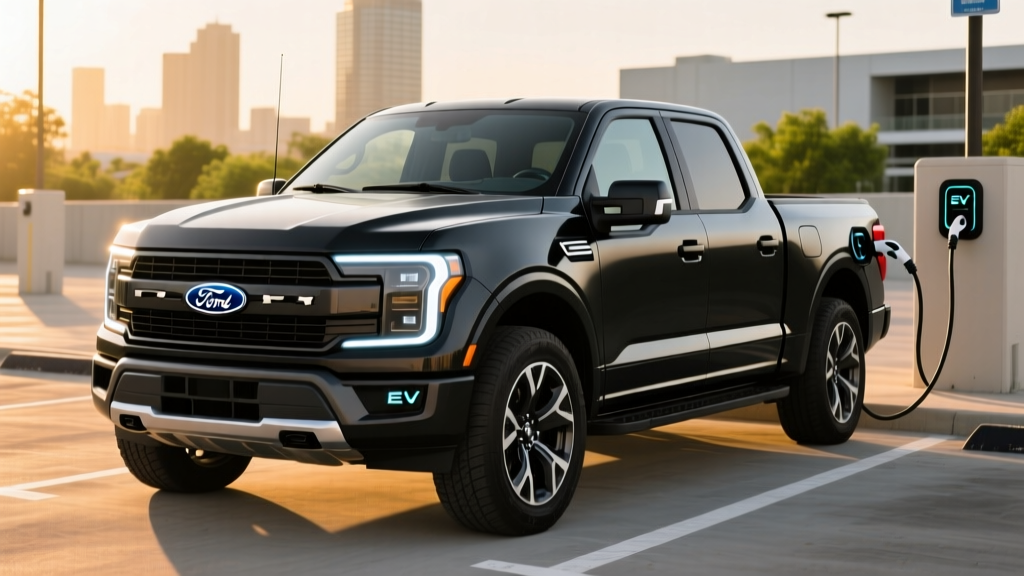
Quick Verdict: The F-150 Lightning XLT in 2025
The Ford F-150 Lightning XLT sits in the middle of Ford's electric truck lineup — above the base Pro trim but below the Lariat and Platinum. It's the trim most buyers actually consider: it balances creature comforts with a price point that can still clear the federal tax credit threshold. For 2025, the XLT starts at $54,995 for the Standard Range battery and $64,995 for the Extended Range, making it one of the most accessible full-size electric pickups on the market — provided you navigate the §30D tax credit rules carefully.
After spending time with the Lightning platform across multiple model years, the XLT delivers where it counts: a usable bed, real towing capability, and a ride quality that embarrasses the gas F-150 on rough pavement. Its compromises are equally clear — highway range falls well short of the EPA sticker, and DC fast charging isn't class-leading. If you need a daily-driver truck that can handle weekend hauling without burning fuel, the XLT is the sweet spot. If you regularly tow over 200 miles one-way, you'll want to read the range section closely.
Range and Efficiency: EPA Sticker vs. Reality
The F-150 Lightning XLT offers two battery configurations, and the range difference is substantial:
| Configuration | Usable Battery (kWh) | Chemistry | EPA Range (mi) | MPGe (City/Hwy/Combined) | kWh/100 mi |
|---|---|---|---|---|---|
| XLT Standard Range | 98 kWh | NMC (Nickel Manganese Cobalt) | 230 mi | 78 / 63 / 70 | 48 |
| XLT Extended Range | 131 kWh | NMC (Nickel Manganese Cobalt) | 320 mi | 85 / 68 / 77 | 44 |
The 320-mile EPA figure on the Extended Range model is achieved in mixed city/suburban driving at moderate temperatures. Expect ~250–275 miles on the highway at 70–75 mph, where the Lightning's aerodynamic profile (it's a brick) and 6,500+ lb curb weight punish efficiency. In cold weather (below 30°F), plan for 20–30% range loss, dropping the Extended Range to roughly 220–250 real-world miles. The Standard Range model, with its 230 EPA miles, realistically delivers 175–195 miles highway and can dip to 150–165 miles in winter conditions.
Source: EPA fueleconomy.gov
The Extended Range battery's 131 kWh of usable capacity is enormous — one of the largest packs in any production light-duty vehicle. That mass contributes to the Lightning's planted ride but also explains why efficiency lags behind lighter electric crossovers. For context, the Rivian R1T with its ~129 kWh Max pack achieves a similar EPA range but weighs roughly 300 lbs less and has a more aerodynamic shape.
Charging Speed: Home and DC Fast Charging
Charging a truck-sized battery is a patience game. Here's what to expect across all charging levels:
| Charging Level | Power (kW) | Connector | Standard Range (98 kWh) | Extended Range (131 kWh) |
|---|---|---|---|---|
| Level 1 (120V household) | ~1.4 kW | NACS (native, 2025+) | ~2 mi/hr | ~2 mi/hr |
| Level 2 (240V, 48A) | 11.5 kW | NACS | ~14 mi/hr (7 hrs 10–100%) | ~18 mi/hr (8.5 hrs 10–100%) |
| Level 2 (240V, 80A — optional) | 19.2 kW | NACS | ~22 mi/hr (4.5 hrs 10–100%) | ~28 mi/hr (5.5 hrs 10–100%) |
| DC Fast Charge (peak) | 150 kW (Std) / 150 kW (Ext) | NACS (CCS via adapter at EA/ChargePoint) | 10–80% in ~44 min | 10–80% in ~41 min |
Ford transitioned the F-150 Lightning to the NACS (North American Charging Standard) port for the 2025 model year, giving native access to the Tesla Supercharger network — a major advantage for road-trip charging reliability. For Electrify America and other CCS-only networks, Ford provides an adapter.
Charging curve reality: The Lightning peaks near 150 kW only between roughly 15–40% state of charge. Above 60%, the rate tapers significantly — often dropping below 75 kW. This is typical of large NMC packs with conservative thermal management, but it means your 10–80% session will spend the back third charging noticeably slower than the peak rate suggests. On a road trip, plan your stops around 15–75% SoC for the best time efficiency.
For home charging, the XLT comes with a Ford Mobile Power Cord that handles Level 1 and basic Level 2 (30A / 7.2 kW). Most XLT buyers should budget $500–$1,500 for a dedicated 48A Level 2 wall connector and professional installation. If you want the available 19.2 kW onboard charger (80A), you'll need a 100A circuit, which may require a panel upgrade in older homes — factor in $1,000–$3,000 for electrical work.
Performance and Drivetrain
| Spec | XLT Standard Range | XLT Extended Range |
|---|---|---|
| Drivetrain | Dual-motor AWD | Dual-motor AWD |
| Horsepower | 452 hp | 580 hp |
| Torque | 775 lb-ft | 775 lb-ft |
| 0–60 mph | ~4.5 sec | ~3.8 sec |
| Max Towing | 7,700 lbs | 10,000 lbs |
| Max Payload | 2,235 lbs | 1,952 lbs |
| Curb Weight | ~6,170 lbs | ~6,770 lbs |
Every Lightning XLT comes with dual-motor all-wheel drive. The Extended Range's 580 hp makes it the quickest F-150 Ford has ever built — 3.8 seconds to 60 mph in a truck with a 5.5-foot bed. The instant torque delivery is transformative for merging and passing, and the independent rear suspension gives the Lightning a ride quality that no solid-axle gas F-150 can match when unloaded.
Towing reality: The Extended Range's 10,000-lb max towing rating is legitimate, but towing at or near that limit will slash range by 40–50%. Expect roughly 140–170 miles of range when pulling a 7,000-lb trailer at highway speeds. Ford's onboard scales and range estimator (which factors in trailer weight and route topography) are genuinely useful here — among the best in the segment.
Pricing, Trims, and Federal Tax Credit Eligibility
| Trim / Config | Base MSRP | Est. As-Tested (w/ options) |
|---|---|---|
| XLT Standard Range | $54,995 | $57,000–$60,000 |
| XLT Extended Range | $64,995 | $67,000–$72,000 |
The F-150 Lightning XLT is available in two battery configurations. Key options that move the needle include the Max Trailer Tow Package, the 19.2 kW onboard charger, and the Ford BlueCruise hands-free driving subscription (included free for 90 days, then ~$75/month or $800/year).
The F-150 Lightning is assembled in Dearborn, Michigan, and Ford has worked to source battery components and critical minerals from compliant supply chains. As of the 2025 tax year, the Lightning XLT Standard Range ($54,995 MSRP) qualifies for the full $7,500 credit for eligible buyers. The Extended Range XLT ($64,995) also sits under the $80,000 MSRP cap for trucks.
Buyer eligibility requirements (IRS §30D):
- Adjusted gross income ≤ $150,000 (single) / $225,000 (head of household) / $300,000 (joint)
- Vehicle MSRP ≤ $80,000 (trucks)
- Battery components and critical minerals must meet phased sourcing thresholds (increasing yearly)
- Credit can now be transferred to the dealer at point of sale as an immediate price reduction
Effective price after credit: XLT Standard Range ~$47,495 / XLT Extended Range ~$57,495.
Always verify current eligibility on IRS.gov and confirm with your dealer and tax professional before purchase. Sourcing rules tighten annually.
Cargo, Interior Space, and Practical Utility
| Dimension | Measurement |
|---|---|
| Bed Length | 67.1 in (5.5 ft) |
| Bed Volume | 52.8 cu ft |
| Mega Power Frunk (front trunk) | 14.1 cu ft / 400 lbs max |
| Rear Legroom (SuperCrew) | 43.6 in |
| Front Headroom | 40.8 in |
| Max Pro Power Onboard Output | 9.6 kW (available) |
The Lightning's Mega Power Frunk remains its signature party trick — a lockable, drainable, front-mounted cargo area with 14.1 cubic feet of space and 400 lbs of capacity. It's genuinely useful for groceries, tools, or gear you'd rather not leave in an open bed. The available Pro Power Onboard (2.4 kW standard, 9.6 kW available) turns the Lightning into a mobile generator capable of powering a job site, tailgate, or home essentials during an outage via the available V2H (vehicle-to-home) system.
Inside, the XLT gets a 12-inch touchscreen running SYNC 4A (15.5-inch on higher trims or with option packages), wireless Apple CarPlay and Android Auto, and a practical cloth/vinyl interior that's easy to clean. Rear seat space is generous — the SuperCrew cab fits adults comfortably for long trips.
Technology and Driver Assistance
The XLT comes well-equipped with Ford's driver-assist suite:
- Ford Co-Pilot360 2.0: Automatic emergency braking, blind-spot monitoring with trailer coverage, lane-keeping assist, rear cross-traffic alert
- Ford BlueCruise (available): SAE Level 2 hands-free highway driving on 130,000+ miles of qualified divided highways. Driver must remain attentive (eye-monitoring camera enforces this). This is not self-driving — it's a supervised system.
- Onboard Scales: Real-time payload measurement with range estimation that accounts for load weight
- Intelligent Range: Factors in weather, terrain, payload, and driving style for more accurate range predictions
Ford BlueCruise is an SAE Level 2 system. The driver must remain engaged, hands may be off the wheel on qualified roads, but eyes must remain on the road. You are legally and operationally responsible for the vehicle at all times. This is fundamentally different from Level 4 robotaxi services like Waymo.
The 12-inch SYNC 4A infotainment screen in the XLT is responsive and well-organized, with native EV-specific features like charging station navigation, preconditioning scheduling, and over-the-air updates. One drawback: Ford has moved many climate and vehicle settings into the touchscreen, which some owners find distracting while driving.
Battery Warranty and Longevity
| Coverage | Term |
|---|---|
| Battery (capacity retention) | 8 years / 100,000 miles |
| Electric Powertrain Components | 8 years / 100,000 miles |
| Bumper-to-Bumper | 3 years / 36,000 miles |
| Corrosion Perforation | 5 years / unlimited miles |
Ford warrants the Lightning's battery to retain at least 70% of original capacity over 8 years or 100,000 miles. Real-world data from early 2022–2023 Lightning owners suggests NMC degradation is tracking at approximately 3–5% over the first 30,000 miles, which is within expectations for a liquid-cooled pack of this size. The 131 kWh Extended Range pack has a larger buffer, meaning even with 10% long-term degradation, usable range remains substantial.
Longevity tip: For daily driving, charge to 80–90% and avoid routinely sitting at 100% SoC. Use DC fast charging for road trips, not daily top-ups. The Lightning's thermal management system is robust, but minimizing heat exposure (fast charging in hot weather) extends pack life.
Who the F-150 Lightning XLT Suits Best
- You need a full-size truck bed and real towing capacity but your daily commute is under 80 miles round-trip
- You have access to Level 2 home charging (garage or driveway with 240V outlet)
- You value Pro Power Onboard for job-site, camping, or backup-power use
- You want the quickest, most refined F-150 in the lineup without paying Platinum prices
- You want native Tesla Supercharger access (2025+ NACS port)
- You regularly tow heavy loads over 200+ miles between charging stops
- You lack home charging access and rely entirely on public infrastructure
- You need a 6.5- or 8-foot bed — the Lightning only comes in 5.5 ft
- You want the fastest DC charging in the segment (Rivian R1T and Hyundai Ioniq 5 outpace it)
Pros and Cons
- Class-leading ride quality (independent rear suspension)
- Massive frunk with 14.1 cu ft of lockable, drainable storage
- Pro Power Onboard (up to 9.6 kW) for job-site or home backup
- Extended Range delivers 320 EPA mi — best-in-class for electric trucks
- Native NACS / Supercharger access (2025+)
- 580 hp Extended Range is the quickest F-150 ever
- Generous SuperCrew rear-seat legroom (43.6 in)
- Ford BlueCruise hands-free highway driving available
- Highway range falls 15–20% below EPA sticker at 70+ mph
- Cold-weather range loss is significant (20–30%)
- DC fast charging peaks at 150 kW — slower than Rivian R1T or GM Silverado EV
- Only available with 5.5-foot bed (no long-bed option)
- Curb weight exceeds 6,700 lbs (Extended Range) — tire wear and efficiency penalty
- Extended Range price pushes past $65K before options
- SYNC 4A buries some climate/vehicle controls in touchscreen menus
- Towing at max capacity cuts range by 40–50%
How It Stacks Up Against Key Competitors
| Spec | F-150 Lightning XLT Ext. Range | Rivian R1T Dual-Motor (Std) | Chevy Silverado EV 4WT |
|---|---|---|---|
| Base MSRP | $64,995 | $69,900 | $55,000 (est.) |
| EPA Range | 320 mi | 270 mi (Std) / 352 mi (Max) | ~400 mi (est.) |
| DC Fast Charge (peak) | 150 kW | 200+ kW | ~200 kW |
| 0–60 mph | 3.8 sec | 4.5 sec | ~4.5 sec |
| Max Towing | 10,000 lbs | 11,000 lbs | 10,000 lbs |
| Bed Length | 5.5 ft | 4.5 ft (+ Gear Tunnel) | 5.5 ft (w/ midgate) |
| §30D Tax Credit | $7,500 (eligible) | $0 (assembled in IL but battery sourcing issues) | $7,500 (eligible) |
The Lightning XLT's primary advantage is price after tax credit — at ~$57,495 for the Extended Range, it undercuts the Rivian R1T significantly. The R1T offers faster charging, a more adventurous design, and the clever Gear Tunnel, but starts nearly $10K higher and may not qualify for the federal credit. The Silverado EV promises more range and a clever midgate but was still ramping production as of early 2025.
Frequently Asked Questions
What is the real-world range of the F-150 Lightning XLT?
The Extended Range XLT has a 320-mile EPA estimate, but real-world highway driving at 70–75 mph yields approximately 250–275 miles. In cold weather (below 30°F), expect 200–240 miles. The Standard Range XLT delivers roughly 175–195 miles highway and 150–165 in winter.
How fast does the F-150 Lightning XLT charge?
On a DC fast charger, the Lightning peaks at 150 kW and charges from 10–80% in approximately 41–44 minutes. At home on a 48A Level 2 charger (11.5 kW), a full charge takes 7–8.5 hours depending on battery size. The available 80A onboard charger (19.2 kW) cuts that to 4.5–5.5 hours.
How much does the F-150 Lightning XLT cost after tax credits?
The XLT Standard Range starts at $54,995 and drops to approximately $47,495 after the $7,500 federal credit. The Extended Range starts at $64,995 and drops to roughly $57,495. Eligibility depends on buyer income, MSRP caps, and battery sourcing rules per IRS §30D.
Does the F-150 Lightning XLT qualify for the federal EV tax credit?
Yes — as of the 2025 tax year, both Standard and Extended Range Lightning XLT models qualify for the full $7,500 credit, assuming the buyer meets income thresholds ($150K single / $300K joint) and the vehicle is purchased new. The credit can be transferred to the dealer at point of sale for an immediate price reduction. Verify current eligibility on IRS.gov, as battery sourcing requirements tighten annually.
Is the F-150 Lightning XLT worth buying vs. the Rivian R1T or Silverado EV?
The Lightning XLT wins on value, especially after the tax credit — it's the most affordable way to get 320 EPA miles of range in a full-size electric truck. The Rivian R1T is more capable off-road, charges faster, and has a more innovative design, but costs significantly more. The Chevy Silverado EV promises class-leading range but availability has been limited. For most buyers who need a daily-driver truck with real utility, the Lightning XLT is the strongest value proposition.
Can the F-150 Lightning power my home during an outage?
Yes, with the available Ford Intelligent Backup Power system (V2H), the Lightning can supply up to 9.6 kW of continuous power to your home through a compatible Charge Station Pro and home integration system. A fully charged Extended Range Lightning can power an average home for approximately 3 days. The V2H setup requires professional installation of a compatible transfer switch and Charge Station Pro ($3,000–$5,000 installed).