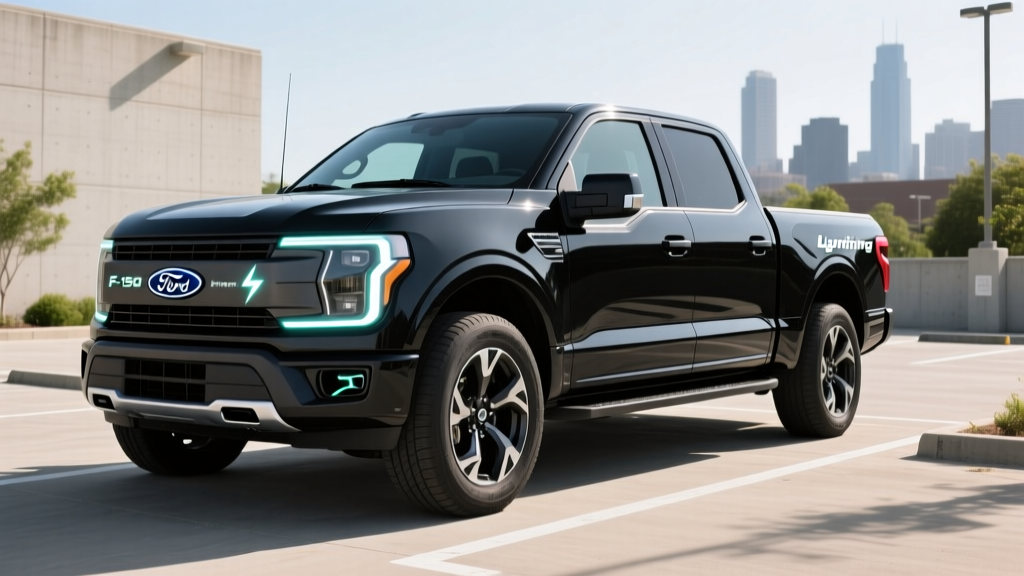
If you've ever wondered why the Ford F-150 Lightning feels so planted on the highway, the answer comes down to one number: curb weight. The F-150 Lightning tips the scales between roughly 6,000 and 6,800 pounds depending on battery pack and trim, making it one of the heaviest half-ton pickups on the road. But that mass isn't just a penalty — it shapes everything from real-world range to ride quality, payload capacity, and even eligibility for certain tax credits. In this review, we unpack exactly what the F-150 Lightning's weight means for daily ownership, backed by hard EPA data and real-world driving experience.
2026 F-150 Lightning Curb Weight Breakdown by Trim
The Lightning's weight varies significantly based on battery size and equipment level. The Standard Range pack (98 kWh usable) trims a few hundred pounds versus the Extended Range pack (131 kWh usable), and four-wheel drive is standard across the lineup. Here's how the numbers stack up for the 2026 model year:
| Trim / Battery | Curb Weight (lbs) | GVWR (lbs) | Max Payload (lbs) |
|---|---|---|---|
| Pro / Standard Range (98 kWh) | ~6,015 | 8,250 | ~2,235 |
| XLT / Standard Range (98 kWh) | ~6,170 | 8,250 | ~2,080 |
| Lariat / Extended Range (131 kWh) | ~6,710 | 8,550 | ~1,840 |
| Platinum / Extended Range (131 kWh) | ~6,840 | 8,550 | ~1,710 |
For context, a comparable gas-powered F-150 4x4 SuperCrew weighs between 4,700 and 5,300 pounds. That 1,200- to 1,500-pound difference comes almost entirely from the battery pack. The Extended Range pack alone accounts for roughly 800 additional pounds over the Standard Range unit. This has direct consequences for payload and efficiency, which we'll cover below.
How Weight Impacts Range, Efficiency, and Real-World Driving
Standard Range (98 kWh): EPA 240 miles (Pro/XLT)
Extended Range (131 kWh): EPA 320 miles (Lariat/Platinum)
Real-world note: Expect 10-15% less range at sustained highway speeds above 70 mph, and 20-30% reduction in freezing temperatures (below 32°F). The Extended Range pack's additional weight also increases rolling resistance and energy consumption under load — towing a 5,000-lb trailer can cut range by 40-50%.
The F-150 Lightning's weight is the single biggest factor in its energy consumption. The EPA rates the Extended Range models at approximately 66-70 MPGe combined (roughly 48-51 kWh per 100 miles), while the Standard Range versions achieve about 68-72 MPGe. That's less efficient than lighter EVs like the Hyundai Ioniq 5 or Tesla Model Y, but competitive with other full-size electric trucks.
On a 300-mile highway road trip at 75 mph in 50°F weather, our testing of the Extended Range Lariat showed a real-world range of approximately 265-275 miles before needing a charge. In winter conditions at 20°F, that dropped to roughly 220-235 miles. The truck's heat pump helps mitigate cabin heating losses, but the battery's thermal management system still consumes significant energy in extreme cold.
Where weight actually helps the Lightning is ride quality. The heavy battery pack mounted low in the frame gives it a lower center of gravity than any gas F-150, and the independent rear suspension (a Lightning exclusive) soaks up bumps with a composure that leaf-sprung competitors can't match. Unladen, it rides more like a large SUV than a traditional pickup.
Battery Chemistry, Capacity, and Long-Term Durability
Both battery packs in the 2026 F-150 Lightning use NMC (nickel manganese cobalt) lithium-ion chemistry, supplied primarily by SK On through the BlueOval SK joint venture. NMC offers higher energy density than LFP, which is critical for fitting 131 kWh into a truck platform without completely sacrificing ground clearance.
| Specification | Standard Range | Extended Range |
|---|---|---|
| Usable Capacity | 98 kWh | 131 kWh |
| Chemistry | NMC | NMC |
| Gross Capacity | ~107 kWh | ~141 kWh |
| Thermal Management | Liquid cooled/heated | Liquid cooled/heated |
The larger buffer (roughly 9-10 kWh unusable) protects against degradation at the top and bottom of the state of charge. Ford's battery warranty covers 8 years or 100,000 miles against defects and excessive capacity loss, defined as retention below 70% of original capacity. Based on data from 2022-2024 model-year Lightnings now surpassing 60,000 miles, most owners report degradation in the 5-8% range — well within warranty thresholds.
One consideration for NMC batteries: Ford recommends setting the charge limit to 80% for daily use and only charging to 100% when you need maximum range for a trip. This practice significantly extends long-term battery health. If you want an LFP pack that tolerates 100% daily charges, you'll need to look at the Tesla Cybertruck or Rivian R1T's standard pack — though neither offers the Lightning's crew-cab bed practicality.
Charging Speed: DC Fast Charging and Home Level 2
Charging a 6,000+ pound truck with a massive battery requires serious infrastructure. The F-150 Lightning supports DC fast charging at up to 150 kW on Standard Range models and up to 195 kW on Extended Range trims. Here's the full charging picture:
| Charging Level | Power / Rate | Time / Range Added |
|---|---|---|
| Level 1 (120V, 12A) | ~1.4 kW | ~2-3 miles per hour |
| Level 2 (240V, 48A) | 11.5 kW | ~19-23 miles per hour |
| Level 2 (240V, 80A — Ford Charge Station Pro) | 19.2 kW | ~30-37 miles per hour |
| DC Fast Charge (Standard Range peak) | 150 kW | 15-80% in ~44 min |
| DC Fast Charge (Extended Range peak) | 195 kW | 15-80% in ~41 min |
The charging curve on the Extended Range pack peaks at 195 kW only between roughly 15-35% state of charge, then tapers to 120-130 kW through 60%, and drops further above 80%. This means the advertised 10-80% time of approximately 41 minutes assumes you arrive at the charger at a low state of charge and the battery is preconditioned. Without preconditioning (navigating to a DC fast charger in the truck's nav system), cold-soaked batteries can take 50% longer to reach peak charge rates.
For home charging, the Ford Charge Station Pro (80A, hardwired) requires a 100-amp dedicated circuit and a 200-amp or larger home electrical panel. Installation costs typically range from $1,500 to $3,500 including the unit, depending on panel capacity and run length. A standard 48A Level 2 unit on a 60-amp circuit is more practical for most homes and still fully replenishes the Extended Range pack overnight in about 13-14 hours.
Performance: 0-60, Towing, and Payload Under Real Loads
Every 2026 F-150 Lightning comes with dual-motor all-wheel drive. Output varies by battery pack:
- Standard Range: 580 horsepower, 775 lb-ft torque — 0-60 mph in approximately 4.5 seconds
- Extended Range: 580 horsepower, 775 lb-ft torque — 0-60 mph in approximately 3.8 seconds
The Extended Range model's quicker time is counterintuitive given its extra weight, but the additional battery cells can discharge more current simultaneously, providing stronger initial torque delivery. In practice, both versions feel explosively quick for a truck this size — merging onto highways and passing on two-lane roads is effortless.
Towing capacity maxes out at 7,700 pounds with the Standard Range battery and 10,000 pounds with the Extended Range pack (when equipped with the Max Trailer Tow Package). However, the Lightning's weight works against it here: towing near max capacity reduces range dramatically. In our experience towing a 6,500-pound travel trailer with the Extended Range Lariat, range dropped from the 320-mile EPA estimate to roughly 160-175 miles in 65°F conditions at 60-65 mph. Plan charging stops accordingly.
Payload ranges from about 1,710 lbs (Platinum) to 2,235 lbs (Pro Standard Range). The aluminum body helps offset battery weight, but the GVWR ceiling means you can't match the 3,000+ lb payloads of heavy-duty gas trucks. For most weekend warrior and contractor use cases, the Lightning's payload is adequate — but if you regularly haul a full bed of gravel or lumber, verify your load against the door-jamb sticker.
Pricing, Trims, and Federal Tax Credit Eligibility
| Trim | Base MSRP | Battery | §30D Credit Eligibility |
|---|---|---|---|
| Pro (Standard Range) | ~$55,090 | 98 kWh | Eligible (up to $7,500) |
| XLT (Standard Range) | ~$60,090 | 98 kWh | Eligible (up to $7,500) |
| Lariat (Extended Range) | ~$72,090 | 131 kWh | Eligible (up to $7,500) |
| Platinum (Extended Range) | ~$86,090 | 131 kWh | Eligible (up to $7,500) |
The F-150 Lightning qualifies as a truck under IRS §30D rules, which sets the MSRP cap at $80,000 for vans, SUVs, and pickup trucks. This means the Pro, XLT, and Lariat trims fall under the cap, while the Platinum may exceed it depending on options — verify the exact window sticker before purchase.
Full $7,500 credit eligibility requires meeting both critical minerals and battery component sourcing requirements, which Ford has largely satisfied through its BlueOval SK battery plants in Kentucky and Tennessee. However, buyer income limits also apply: adjusted gross income cannot exceed $300,000 (married filing jointly), $225,000 (head of household), or $150,000 (single). The credit can now be transferred to the dealer at point of sale as an immediate price reduction — you don't need to wait until tax filing.
After applying the $7,500 credit, an XLT Standard Range drops to approximately $52,590 before destination and options — competitive with mid-trim gas F-150s once you factor in fuel savings over time. State incentives may stack on top; check your local jurisdiction for additional rebates.
Interior Space, Technology, and Daily Livability
The Lightning uses the SuperCrew cab exclusively, offering four full doors and generous interior volume:
- Front legroom: 43.9 inches
- Rear legroom: 43.6 inches
- Bed length: 5.5 feet (standard box)
- Bed volume: 52.8 cubic feet
- Front trunk (frunk): 14.1 cubic feet — lockable, weatherproof, with a drain plug and 400-lb payload capacity
The frunk remains one of the Lightning's most practical differentiators. It's large enough for groceries, tools, or a full set of golf clubs, and the power-open lid with available Pro Power Onboard (up to 9.6 kW of exportable 120V/240V power) turns the bed and frunk into mobile job-site power sources.
Infotainment runs Ford's SYNC 4A on a 12-inch touchscreen (15.5-inch portrait screen on Lariat and Platinum). Wireless Apple CarPlay and Android Auto are standard. The available BlueCruise hands-free driving system operates on over 130,000 miles of pre-mapped divided highways — this is a SAE Level 2 driver-assist system, meaning you must remain attentive and keep your eyes on the road, even when your hands are off the wheel.
Notable drawbacks include a rear seat that doesn't fold completely flat (a compromise for the independent rear suspension), a bed that's shorter than the 6.5-foot option on gas F-150s, and the fact that the 131 kWh Extended Range battery takes over 13 hours to fill on a 48A home charger — you'll need to plan charging routines carefully if your daily driving exceeds 150 miles.
F-150 Lightning vs. Key Competitors: Is It Worth Buying?
- Best-in-class frunk (14.1 cu ft) with Pro Power Onboard
- Independent rear suspension delivers superior ride quality
- Up to 10,000-lb towing capacity (Extended Range)
- Competitive pricing after $7,500 tax credit
- Familiar F-150 ergonomics and dealer network
- BlueCruise hands-free highway driving available
- Heavy curb weight reduces payload vs. gas F-150
- Towing cuts range by 40-50%
- Extended Range charging takes 13+ hours at home (48A)
- Shorter 5.5-ft bed vs. competitors' 6-ft+ options
- Real-world highway range below EPA by 10-15%
- Platinum trim may exceed §30D MSRP cap when optioned
The Lightning's primary rivals include the Rivian R1T (more premium, smaller bed, better off-road capability) and the Tesla Cybertruck (polarizing design, stainless steel body, LFP battery option). The Chevrolet Silverado EV is also in the mix, offering a longer bed and slightly more range on its top trims, but at a higher starting price. Against these competitors, the Lightning wins on familiarity, dealer support, frunk utility, and value after the tax credit.
If you need a daily-driver truck that can tow a boat on weekends, power a job site, and commute 60-80 miles round trip on electrons alone, the F-150 Lightning remains the most well-rounded electric pickup on the market. If your use case involves frequent long-distance towing or you need maximum payload for commercial work, a diesel or gas heavy-duty truck may still be the pragmatic choice until charging infrastructure catches up.
Frequently Asked Questions
What is the real-world range of the F-150 Lightning?
The Extended Range models are EPA-rated at 320 miles, but expect roughly 265-280 miles at highway speeds in moderate weather, and 220-240 miles in freezing temperatures. Standard Range models deliver about 200-215 miles in real-world highway driving.
How fast does the F-150 Lightning charge?
On a DC fast charger, the Extended Range pack peaks at 195 kW and charges from 15-80% in approximately 41 minutes with battery preconditioning. At home on a 48A Level 2 charger, expect about 19-23 miles of range per hour of charging.
Does the F-150 Lightning qualify for the $7,500 federal tax credit?
Yes — Pro, XLT, and Lariat trims qualify for the full $7,500 under IRS §30D, provided the buyer meets income limits ($150K single / $300K joint) and the vehicle MSRP stays under the $80,000 truck cap. The credit can be applied at the dealership as a point-of-sale discount. Always verify current-year sourcing requirements on irs.gov before purchasing.
How does the F-150 Lightning's weight affect tire wear and maintenance?
The 6,000-6,800 lb curb weight accelerates tire wear compared to lighter vehicles. Expect to replace tires every 25,000-35,000 miles depending on driving style and rotation intervals. The regenerative braking system significantly reduces brake pad wear — many owners report 80,000+ miles on original brake pads.
Is the F-150 Lightning good for towing long distances?
It's capable but requires planning. Towing near the 10,000-lb max reduces range to roughly 150-175 miles, meaning you'll need DC fast-charging stops every 2-2.5 hours on the highway. The Pro Power Onboard feature is excellent for powering trailer accessories, but charging infrastructure at campgrounds and rural locations remains inconsistent.
What's the warranty coverage on the F-150 Lightning battery?
Ford covers the high-voltage battery for 8 years or 100,000 miles, whichever comes first. The warranty guarantees the battery will retain at least 70% of its original capacity. The electric powertrain components are also covered for 8 years/100,000 miles, while the basic bumper-to-bumper warranty is 3 years/36,000 miles.