Does the Ford F-150 Lightning Rust? Separating Fact from Forum Panic
If you've spent any time in F-150 Lightning owner forums or YouTube comment sections, you've likely encountered the phrase "F-150 Lightning rust" alongside alarming photos of corroded undercarriages and suspension components. As a publication that has tracked Lightning ownership since the 2022 launch, we've dug into what's real, what's exaggerated, and what every current or prospective Lightning owner needs to know about corrosion resistance, body materials, and long-term durability of Ford's electric pickup.
The short answer: the Lightning's aluminum body panels are inherently rust-proof, but its steel frame and undercarriage components are subject to the same corrosion risks as any modern vehicle — with a few EV-specific nuances worth understanding before you buy or commit to long-term ownership.
Body Construction: Aluminum Panels on a Modified Steel Frame
The F-150 Lightning shares its fundamental architecture with the internal-combustion F-150, which means it inherits a body-on-frame design with a critical material split:
- Body panels: Military-grade aluminum alloy (same as ICE F-150 since the 2015 redesign). Aluminum does not rust — it can oxidize superficially, but this is a surface-level patina, not the structural corrosion associated with iron oxide on steel.
- Frame: High-strength steel, fully boxed. This is where traditional rust concerns apply, though Ford applies extensive e-coating and anti-corrosion treatments at the factory.
- Undercarriage components: Suspension arms, brake rotors, subframe mounts, and fasteners are predominantly steel or cast iron — all susceptible to surface corrosion, especially in road-salt regions.
- Battery enclosure: Sealed aluminum and steel housing with IP67-rated ingress protection. This is one of the most heavily protected areas of the vehicle.
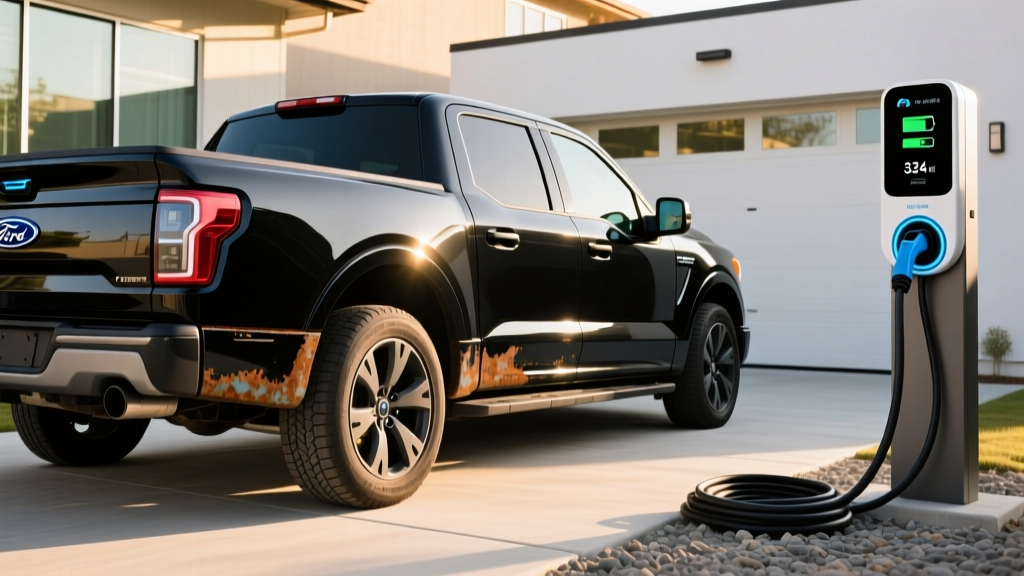
The concern that surfaces in online discussions typically involves surface rust on untreated steel components underneath the truck — control arms, brake backing plates, exhaust-delete plates, and exposed fasteners. This is cosmetically unappealing but generally not structurally concerning within the first several years of ownership. However, buyers in the Rust Belt and coastal regions should be aware of the accelerated timeline.
EV-Specific Corrosion Factors: Weight, Aero Shields, and Regenerative Braking
The Lightning introduces a few variables that differentiate its corrosion profile from the gas F-150:
Increased curb weight. At 6,015–6,893 lbs depending on trim and battery pack, the Lightning is substantially heavier than its ICE counterpart. This puts additional stress on suspension bushings, ball joints, and mounting hardware. Corroded components under higher load may fatigue faster than they would on a lighter vehicle.
Extensive underbody shielding. The Lightning features aerodynamic belly pans and battery-protective skid plates that cover much of the undercarriage. This is a double-edged sword: shielding keeps road salt and debris off critical components, but it can also trap moisture and salt residue against steel surfaces if not periodically cleaned.
Reduced heat cycling. A gas F-150's undercarriage is regularly heated by the exhaust system, which helps dry moisture after rain or snow. The Lightning has no exhaust — meaning the underside stays damp longer in humid or wet conditions, theoretically extending the window for corrosion to initiate on unprotected steel.
Regenerative braking. Because regen handles most deceleration, the Lightning's physical brake rotors see less use. This can actually accelerate rotor surface rust because the rotors aren't regularly "wiped clean" by friction pad contact — a common complaint among EV owners in humid climates.
Ford's Corrosion Warranty and Factory Protection
Ford provides the following corrosion-related coverage on the F-150 Lightning:
- Corrosion Perforation Warranty: 5 years / unlimited miles against body-sheet-metal rust-through (perforation). Surface rust is not covered.
- Battery/Powertrain Warranty: 8 years / 100,000 miles on the high-voltage battery and electric drive components, with a capacity retention threshold of 70%.
- Bumper-to-Bumper: 3 years / 36,000 miles, which covers premature component failure but not cosmetic surface corrosion.
The key distinction: Ford covers perforation (rust that eats completely through a body panel), not surface rust on structural or mechanical components underneath the truck. This is industry-standard but often misunderstood by owners who see orange discoloration on suspension parts and assume a warranty claim is warranted.
F-150 Lightning 2026 Specs: Range, Charging, and Performance
Rust considerations aside, the Lightning remains one of the most capable electric trucks on the market. Here's the complete spec breakdown for the current model year:
| Specification | Standard Range (Pro/XLT) | Extended Range (Lariat/Platinum) |
|---|---|---|
| EPA Range | 240 miles | 320 miles |
| Battery Capacity | 98 kWh (usable), NMC | 131 kWh (usable), NMC |
| Drivetrain | Dual-motor AWD | Dual-motor AWD |
| Horsepower | 452 hp | 580 hp |
| Torque | 775 lb-ft | 775 lb-ft |
| 0–60 mph | ~3.8 sec | |
| Max DC Fast Charge | 150 kW | 150 kW |
| 10–80% DC Time | ~36 min | ~41 min |
| Level 2 Home Charge Rate | 11.5 kW (30 mi/hr) | 11.5 kW (30 mi/hr) |
| MPGe (Combined) | 78 MPGe | 73 MPGe |
| Towing Capacity | 7,700 lbs | 10,000 lbs (w/ Max Tow) |
| Payload Capacity | 2,235 lbs | 1,952 lbs |
| Base MSRP | $54,995 | $76,995 (Lariat) |
Charging the Lightning: Home Setup and DC Fast-Charging Reality
The Lightning's charging profile is one of its most debated attributes. Ford uses the CCS1 connector on earlier models (2022–2024) and has transitioned to the NACS (Tesla-style) connector on 2025+ models, granting native access to the Tesla Supercharger network with an adapter for CCS-equipped public chargers.
| Charge Level | Power | Miles Added per Hour | Typical Use Case |
|---|---|---|---|
| Level 1 (120V) | 1.4 kW | ~3 mi/hr | Emergency / overnight trickle |
| Level 2 (240V, 48A) | 11.5 kW | ~30 mi/hr | Daily home charging (full overnight refill) |
| DC Fast Charge | Peak 150 kW | ~190 mi/hr (at peak) | Road trips; 10–80% in ~36–41 min |
The Lightning's peak 150 kW DC fast-charge rate is modest compared to rivals like the Rivian R1T (peak ~200 kW on the updated pack) or the Chevrolet Silverado EV (peak 350 kW on certain trims). The charge curve also tapers significantly above 80% state of charge — plan for 50+ minutes if you need a full 10–100% fill on a road trip.
For home charging, the Ford Mobile PowerFlex cord (included) supports both 120V and 240V outlets. For the full 11.5 kW Level 2 rate, you'll need a hardwired wall connector or a NEMA 14-50 outlet on a 60-amp circuit. Professional installation typically runs $800–$2,000 depending on panel proximity and whether a service upgrade (to 200A) is needed — a common requirement in older homes. Always get a quote from a licensed electrician before purchasing equipment.
Interior, Cargo, and Standout Technology
The Lightning's cabin mirrors the ICE F-150's layout, which means generous space and a practical, if not luxurious, environment in lower trims.
- Front legroom: 43.9 inches
- Rear legroom: 43.6 inches (SuperCrew cab)
- Bed length: 5.5 ft (standard) with integrated LED lighting
- Bed cargo volume: 52.8 cu ft
- Front trunk (frunk): 14.1 cu ft — lockable, drainable, with 400 lbs payload capacity and built-in LED lighting. One of the largest frunks in any production vehicle.
- Pro Power Onboard: Up to 9.6 kW of exportable power via bed-mounted 120V and 240V outlets (standard 2.4 kW on base Pro trim). Capable of running job-site tools, camping appliances, or serving as a backup home generator during outages.
Tech highlights include the available 15.5-inch portrait touchscreen with SYNC 4A, wireless Apple CarPlay/Android Auto, Ford Co-Pilot360 driver-assistance suite (SAE Level 2 — driver must remain engaged), and the available BlueCruise hands-free highway driving system on mapped divided highways. The digital gauge cluster and over-the-air update capability keep the Lightning current, though some owners report occasional SYNC glitches that resolve with soft resets.
Notable drawbacks: the ride quality is firm when unloaded (the solid rear axle and leaf springs are tuned for payload), rear-seat comfort trails the Rivian R1T, and the available towing range remains impractical for long hauls without frequent charging stops.
Pricing, Tax Credits, and Ownership Economics
| Trim | Base MSRP | §30D Credit Eligible? | Effective Price (w/ credit) |
|---|---|---|---|
| Pro (Standard Range) | $54,995 | Yes — up to $7,500* | ~$47,495 |
| XLT (Standard Range) | $59,995 | Yes — up to $7,500* | ~$52,495 |
| Lariat (Extended Range) | $76,995 | Yes — up to $7,500* | ~$69,495 |
| Platinum (Extended Range) | $86,995 | Yes — up to $7,500* | ~$79,495 |
*Federal §30D tax credit eligibility requires the buyer to meet IRS income caps ($150K single / $300K joint MAGI), the vehicle MSRP must not exceed $80,000 for trucks (all Lightning trims qualify), and battery critical-mineral and component sourcing thresholds must be met. The credit can now be transferred to the dealer as a point-of-sale discount. Rules are subject to change — verify current-year requirements at IRS.gov and consult a tax professional.
Operating costs favor the Lightning significantly over the gas F-150. At a national average electricity rate of $0.16/kWh and the Standard Range pack's efficiency of roughly 43 kWh/100 mi (per fueleconomy.gov), charging costs approximately $0.069 per mile. A comparable gas F-150 at 20 MPG combined and $3.40/gallon costs $0.17 per mile — a savings of roughly $1,500 per year at 15,000 miles driven.
F-150 Lightning vs. Competitors: Is It Still the Right Electric Truck?
The electric truck landscape has matured since the Lightning's 2022 debut. Here's how it stacks up on the factors that matter:
Choose the F-150 Lightning If:
- You need a full-size truck bed and proven F-150 parts/service network
- Pro Power Onboard is essential for work or recreation
- You want the lowest entry price among full-size electric trucks
- Frunk storage is a priority (14.1 cu ft is unmatched)
- You prefer a traditional truck driving position and layout
Look at Competitors If:
- DC fast-charge speed is critical (Rivian R1T and Silverado EV charge faster)
- You want independent rear suspension for better unloaded ride (Rivian R1T)
- You need a 350+ mile range (Silverado EV 4WT offers up to 440 mi EPA)
- Off-road capability is a priority (Rivian R1T Quad-Motor, Silverado EV Trail Boss)
- You want a mid-size footprint (Rivian R1T is smaller and more maneuverable)
Rust Prevention Checklist for Lightning Owners
Whether you own a Lightning or are evaluating a used model, here's a practical corrosion-management protocol:
- Biannual undercarriage wash: Use a high-pressure wand to flush the underbody, wheel wells, and behind the aero shields — especially after winter salt season.
- Annual fluid-film treatment: Apply an oil-based corrosion inhibitor to exposed steel components (suspension, subframe bolts, brake hardware). Cost: $150–$300 at a shop, or ~$50 DIY.
- Inspect battery tray seals: During routine service, have the technician verify the battery enclosure seals are intact. Road debris damage to the underbody shielding should be addressed promptly.
- Brake rotor maintenance: Periodically use friction brakes aggressively (in a safe, legal manner) to wipe surface rust from rotors. Some owners set their drive mode to reduce regen occasionally for this purpose.
- Touch up rock chips: Any chip through to bare steel on the frame or rocker panels should be dabbed with touch-up paint or a rust-inhibiting primer to prevent initiation.
Frequently Asked Questions
Is the F-150 Lightning body made of aluminum or steel?
The body panels are aluminum alloy, which does not rust. The frame is high-strength steel with factory anti-corrosion coatings. Undercarriage components (suspension, brakes, fasteners) are predominantly steel and can develop surface rust, particularly in salt-exposure regions.
Does surface rust on the Lightning's undercarriage affect safety?
Light surface rust on suspension arms, brake rotors, and subframe components is cosmetic and does not compromise structural integrity in the first several years. However, heavy scaling or flaking rust on load-bearing components should be inspected by a qualified technician, especially given the Lightning's higher curb weight.
Does the F-150 Lightning qualify for the $7,500 federal tax credit?
All current Lightning trims fall under the $80,000 MSRP cap for trucks under IRS §30D rules. However, buyer eligibility depends on income limits ($150K single / $300K joint MAGI), and the vehicle's battery must meet critical-mineral and component sourcing requirements that are updated annually. Verify current-year rules at IRS.gov before relying on the credit.
How does the Lightning's charging speed compare to rivals?
The Lightning peaks at 150 kW on DC fast chargers, achieving 10–80% in approximately 36–41 minutes depending on pack size. The Rivian R1T (updated pack) peaks around 200 kW, and the Chevrolet Silverado EV reaches up to 350 kW on compatible chargers. For daily home charging, the Lightning's 11.5 kW Level 2 rate refills either pack overnight, which is where most charging occurs.
Should I get an undercoating on my Lightning?
If you live in a region that uses road salt or near a coast with salt air, an annual oil-based undercoating (such as Fluid Film or Woolwax) is a prudent $150–$300 investment. Avoid rubberized or asphalt-based coatings, which can trap moisture against steel surfaces and accelerate corrosion underneath the coating. Always have the undercarriage thoroughly cleaned before application.
What is the real-world range of the F-150 Lightning when towing?
Towing a 5,000–7,000 lb trailer reduces range by approximately 40–50%. A Standard Range Lightning towing near its max capacity may see as little as 100–120 miles before needing a charge. The Extended Range pack improves this to roughly 140–170 miles under load. Plan charging stops conservatively and use the truck's built-in range estimator, which accounts for trailer weight once the system calibrates over the first few miles of towing.