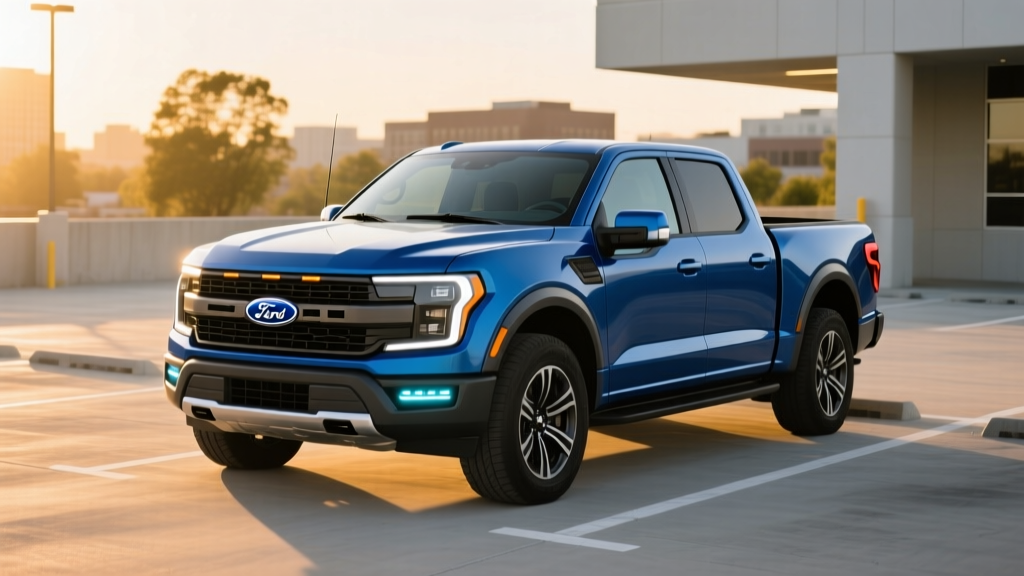
The Ford F-150 Lightning remains one of the most practical electric trucks on the market, but navigating its pricing structure requires careful attention. With multiple trims, two battery options, and evolving federal tax credit rules, the F-150 Lightning MSRP you see on the window sticker is rarely what you actually pay. This guide breaks down every trim, the real-world range you can expect, charging speeds, and whether this electric workhorse qualifies for the full $7,500 federal credit in 2026.
2026 F-150 Lightning MSRP by Trim Level
Ford has streamlined the Lightning lineup for 2026, offering four core trims with two battery pack options. The base Pro trim targets fleet and commercial buyers, while the Platinum sits at the luxury end. Here is the complete MSRP breakdown before any incentives or destination charges:
| Trim | Standard Range (98 kWh) | Extended Range (131 kWh) | Drivetrain |
|---|---|---|---|
| Pro | $54,995 | $64,995 | Dual-Motor AWD |
| XLT | $62,995 | $72,995 | Dual-Motor AWD |
| Lariat | $72,995 | $82,995 | Dual-Motor AWD |
| Platinum | N/A | $96,874 | Dual-Motor AWD |
All trims come standard with dual-motor all-wheel drive. The $10,000 gap between Standard Range and Extended Range battery packs is consistent across trims. Destination and delivery adds approximately $2,095 to every configuration.
Estimated Price After Federal Tax Credit (§30D)
| Trim / Battery | MSRP + Destination | After Max $7,500 Credit | Credit Eligibility |
|---|---|---|---|
| Pro Standard Range | $57,090 | $49,590 | Eligible (MSRP under $80K cap) |
| XLT Extended Range | $75,090 | $67,590 | Eligible (MSRP under $80K cap) |
| Lariat Extended Range | $85,090 | $85,090 | Exceeds $80K truck MSRP cap |
| Platinum Extended Range | $98,969 | $98,969 | Exceeds $80K truck MSRP cap |
The IRS classifies the F-150 Lightning as a light truck, which means the §30D MSRP cap is $80,000 (versus $55,000 for sedans). According to IRS qualified vehicle lists, the Pro and XLT trims generally qualify, while Lariat and Platinum configurations exceeding $80,000 do not. Buyer income caps also apply: $300,000 for joint filers, $225,000 for heads of household, and $150,000 for single filers. Battery component and critical mineral sourcing requirements must also be met — always confirm with your dealer and a tax professional before purchase, as these rules are subject to change.
Range, Battery, and Real-World Efficiency
The F-150 Lightning offers two battery packs, both using NMC (nickel manganese cobalt) chemistry in pouch cells manufactured by SK On at Ford's BlueOvalSK joint venture facilities.
| Specification | Standard Range | Extended Range |
|---|---|---|
| Usable Capacity | 98 kWh | 131 kWh |
| Chemistry | NMC (pouch cells) | NMC (pouch cells) |
| EPA Range | 240 miles | 320 miles (XLT/Lariat) |
| EPA MPGe (Combined) | 76 MPGe | 70 MPGe |
| Efficiency | 44 kWh/100 mi | 48 kWh/100 mi |
| Horsepower | 452 hp | 580 hp |
| Torque | 775 lb-ft | 775 lb-ft |
| 0-60 mph | ~5.0 seconds | ~3.8 seconds |
Real-World Range Expectations
EPA Sticker: 320 miles (Extended Range) / 240 miles (Standard Range)
Real-World Highway (70 mph, moderate weather): Expect approximately 260–280 miles from the Extended Range pack, and 195–215 miles from the Standard Range. The Lightning's boxy aerodynamics hit efficiency hard at sustained highway speeds.
Cold Weather (below 32°F): Range drops 20–30% without preconditioning. An Extended Range Lightning may deliver only 220–250 miles in freezing conditions. The truck includes a heat pump on higher trims to mitigate cabin heating losses, but battery chemistry still loses efficiency in cold.
Towing: Ford rates the Lightning up to 10,000 lbs (with Max Trailer Tow package on XLT/Lariat). When towing near max capacity, expect range to drop by 40–50%. A 320-mile truck towing 8,000 lbs may see only 160–180 miles before needing a charge.
For context on EPA figures, see the DOE's Fueleconomy.gov EV listings, where the Lightning's combined efficiency reflects its substantial 6,500+ lb curb weight.
Charging Speed: DC Fast Charge and Home Level 2
Charging speed is critical for truck buyers planning road trips or job-site use. The Lightning uses a CCS1 connector (with NACS adapter available for Tesla Supercharger access). Here is what to expect at each charging level:
| Charging Level | Power / Rate | Speed | Notes |
|---|---|---|---|
| Level 1 (120V) | ~1.4 kW | ~3 miles per hour | Emergency/top-up only; full charge in days |
| Level 2 (240V, 48A) | 11.5 kW | ~26 miles per hour | Standard home charger; full charge ~9–12 hours |
| Level 2 (240V, 80A) | 19.2 kW | ~43 miles per hour | Ford Charge Station Pro; full charge ~5.5–8 hours |
| DC Fast Charge (Standard Range) | Peak 150 kW | 10–80% in ~44 minutes | Curve tapers significantly above 80% SoC |
| DC Fast Charge (Extended Range) | Peak 150 kW | 10–80% in ~41 minutes | Larger pack sustains peak rate slightly longer |
A critical detail for Lightning buyers: Ford includes the 80-amp Charge Station Pro with Extended Range trims, which can add up to 30 miles of range per hour of charging when paired with a properly installed 100-amp circuit. Standard Range trims come with a 32-amp mobile charger. Home installation of a 240V/48A+ circuit typically costs $1,200–$3,500 depending on panel capacity and run length — budget for a licensed electrician and any necessary panel upgrade.
On public DC fast chargers, the Lightning's 150 kW peak rate is respectable but not class-leading. Competitors like the Rivian R1T and Chevrolet Silverado EV accept higher peak rates. Expect the Lightning to taper from 150 kW down to roughly 50–60 kW once you pass 80% State of Charge. For road trips, plan stops at 20–25% remaining to maximize time in the peak charging window.
Interior Space, Cargo, and Utility
The F-150 Lightning leverages its electric skateboard platform to offer packaging advantages no gas F-150 can match. The most notable is the Mega Power Frunk — a 14.1 cubic-foot front trunk with 400 lbs of payload capacity, four 120V outlets, two USB ports, and a drain plug. It's large enough for toolboxes, coolers, or carry-on luggage for a family trip.
| Dimension | SuperCrew (all trims) |
|---|---|
| Front Legroom | 43.9 inches |
| Rear Legroom | 43.6 inches |
| Front Headroom | 40.8 inches |
| Rear Headroom | 40.4 inches |
| Bed Length | 5.5 ft (67.1 inches) |
| Bed Volume | 52.8 cu ft |
| Frunk Volume | 14.1 cu ft |
| Max Payload | 2,235 lbs (Standard Range) |
| Max Towing | 10,000 lbs (w/ Max Tow Pkg) |
The Lightning only comes in SuperCrew configuration with a 5.5-foot bed. If you need a 6.5- or 8-foot bed, you'll need to look at the gas F-150 or a competitor. Payload capacity drops to approximately 1,800 lbs on Extended Range models due to the heavier battery pack.
Technology and Driver Assistance
Ford equips the Lightning with its SYNC 4A infotainment system on a 12-inch touchscreen (15.5-inch portrait screen on Lariat and Platinum). Wireless Apple CarPlay and Android Auto are standard. The truck receives over-the-air updates via Ford Power-Up, which has added features like BlueCruise hands-free driving capability post-launch.
BlueCruise: Level 2, Not Self-Driving
Ford BlueCruise is a SAE Level 2 driver-assistance system. It allows hands-free driving on pre-qualified divided highways (over 130,000 miles mapped in the US), but the driver must remain attentive and ready to take over at any moment. A driver-facing camera monitors eye gaze. This is not autonomous driving — it is an advanced cruise control and lane centering system. Only Level 4 services like Waymo operate without a driver.
Standard driver assists include automatic emergency braking with pedestrian detection, blind-spot monitoring with trailer coverage, rear cross-traffic alert, lane-keeping assist, and adaptive cruise control with stop-and-go. The Pro Power Onboard system (2.4 kW standard, 9.6 kW available on XLT and above) turns the Lightning into a mobile generator — capable of powering job-site tools, tailgate setups, or even essential home circuits during an outage when paired with the Ford Home Integration System.
Warranty and Long-Term Ownership
| Coverage | Term |
|---|---|
| Basic (Bumper-to-Bumper) | 3 years / 36,000 miles |
| Powertrain | 5 years / 60,000 miles |
| EV Battery Components | 8 years / 100,000 miles |
| Battery Capacity Retention | Minimum 70% over 8 yr / 100,000 mi |
| Corrosion Perforation | 5 years / unlimited miles |
| Roadside Assistance | 5 years / 60,000 miles |
Ford guarantees the Lightning's high-voltage battery will retain at least 70% of its original capacity over 8 years or 100,000 miles. If degradation falls below this threshold, Ford will repair or replace the battery at no cost. In practice, NMC pouch cells in liquid-cooled packs like the Lightning's typically degrade 10–15% over the first 100,000 miles based on industry data from similar platforms. Replacing the full battery pack out of warranty would cost an estimated $20,000–$30,000, though individual module repairs may be less.
F-150 Lightning vs. Key Competitors
| Spec | Ford F-150 Lightning (XLT ER) | Rivian R1T (Dual Standard) | Chevy Silverado EV (4WT) |
|---|---|---|---|
| Starting MSRP | $62,995 | $69,900 | $57,900 (fleet-oriented) |
| EPA Range | 320 mi | 270 mi | 390 mi (4WT) |
| Peak DC Charge | 150 kW | 200 kW | 350 kW |
| 0-60 mph | ~3.8 sec | ~4.5 sec | ~4.5 sec |
| Max Towing | 10,000 lbs | 11,000 lbs | 10,000 lbs |
| Frunk | 14.1 cu ft | 11.0 cu ft | 10.2 cu ft |
| Tax Credit (§30D) | Yes (under $80K trims) | Yes (under $80K trims) | Yes (under $80K trims) |
The Lightning's core advantage is familiarity: it drives, looks, and works like a conventional F-150, which matters for fleet buyers and traditional truck owners transitioning to electric. The Rivian R1T is more adventurous and tech-forward but costs more and has a smaller bed. The Silverado EV offers superior range and faster charging but launched primarily in fleet trim with limited retail availability.
Pros
- Massive 14.1 cu-ft frunk with integrated power outlets
- Pro Power Onboard turns the truck into a 9.6 kW mobile generator
- Competitive MSRP for a full-size electric truck, especially Pro and XLT trims
- Strong 10,000-lb towing capacity with integrated trailer tech
- Familiar F-150 ergonomics and dealer network for service
- BlueCruise hands-free highway driving available via subscription
Cons
- 150 kW peak DC charging is slower than Silverado EV (350 kW) and R1T (200 kW)
- Only available in SuperCrew / 5.5-ft bed — no regular cab or long bed option
- Highway efficiency drops sharply above 70 mph; real-world range falls well below EPA sticker
- Towing cuts range by 40–50%, making long-distance trailer trips impractical without careful planning
- Lariat and Platinum trims exceed the $80K §30D MSRP cap, eliminating tax credit eligibility
- Heavy curb weight (~6,500+ lbs) increases tire wear and reduces payload on Extended Range models
Who Should Buy the F-150 Lightning?
The F-150 Lightning is best suited for truck buyers who need utility and daily drivability but rarely tow long distances. If your use case includes a mix of job-site hauling, weekend projects, and a daily commute under 100 miles round-trip, the Lightning's frunk, Pro Power Onboard, and home charging convenience make it an outstanding choice. Fleet operators benefit from lower per-mile fueling costs and reduced maintenance versus gas F-150s.
If you regularly tow a large trailer over 200 miles, the Lightning's range reduction under load will force frequent charging stops at DC fast chargers — many of which lack pull-through lanes for trailers. In that scenario, a diesel F-250 or a PHEV may be more practical. Road trippers who don't tow will find the Lightning comfortable, though the 150 kW charging peak means slightly longer stops than the fastest-charging competitors.
Choose the F-150 Lightning If:
- You want an electric truck that feels like a conventional F-150
- You value the frunk and onboard power for work or recreation
- Your daily driving is under 150 miles and you can charge at home
- You want to stay under $80K MSRP to capture the §30D tax credit (Pro/XLT trims)
Look Elsewhere If:
- You need a long bed (6.5 ft or 8 ft) — the Lightning only offers 5.5 ft
- You tow heavy trailers over long distances regularly
- You want the fastest possible DC charging — consider the Silverado EV
- You prefer a more adventure-oriented platform — consider the Rivian R1T
Frequently Asked Questions
What is the real-world range of the F-150 Lightning?
The EPA rates the Extended Range Lightning at 320 miles (XLT/Lariat), but real-world highway driving at 70 mph typically yields 260–280 miles. In cold weather below freezing, expect 220–250 miles. The Standard Range pack delivers an EPA 240 miles, with real-world highway use closer to 195–215 miles. Towing near max capacity cuts range roughly in half.
How fast does the F-150 Lightning charge?
On a DC fast charger, the Lightning peaks at 150 kW and charges from 10–80% in approximately 41–44 minutes. At home on a 240V/80A Ford Charge Station Pro (19.2 kW), you gain about 43 miles per hour, fully recharging the Extended Range pack in roughly 6–8 hours. On a standard 240V/48A home charger (11.5 kW), expect about 26 miles per hour.
How much does the F-150 Lightning cost after tax credits?
The Pro Standard Range starts at $54,995 MSRP plus destination, dropping to approximately $49,590 after the maximum $7,500 §30D federal credit (if you meet income and sourcing requirements). The XLT Extended Range at $72,995 + destination qualifies at approximately $67,590 after credit. Lariat and Platinum trims exceeding $80,000 MSRP do not qualify for the federal credit due to the truck MSRP cap.
Does the F-150 Lightning qualify for the federal EV tax credit?
Yes — but only trims with an MSRP (including destination) at or below $80,000, since the IRS classifies the Lightning as a light truck. As of 2026, the Pro and XLT trims qualify. You must also meet income limits ($300K joint / $150K single) and the vehicle must satisfy battery component and critical mineral sourcing requirements per IRS §30D rules. Confirm eligibility at IRS.gov and with your tax professional before purchasing.
Is the F-150 Lightning worth buying vs. the competition?
For buyers who prioritize a familiar truck experience, strong dealer support, and the best frunk in the segment, the Lightning at XLT trim is arguably the best value in electric trucks. If you need faster DC charging for road trips, the Silverado EV charges at up to 350 kW. If you want a more premium adventure truck with a gear tunnel and quad-motor option, the Rivian R1T is compelling but pricier. The Lightning's sweet spot is the XLT Extended Range with the §30D credit applied.
What is the biggest drawback of the F-150 Lightning?
The Lightning's 150 kW peak DC charging rate is its most significant competitive weakness, particularly as newer trucks like the Silverado EV and Hyundai Ioniq 5-based platforms accept 350 kW. For road trips, this means 10–80% stops take roughly 41–44 minutes versus 18–20 minutes in the fastest-charging competitors. The 5.5-foot bed limitation and significant range loss while towing are also practical concerns for heavy-duty truck users.