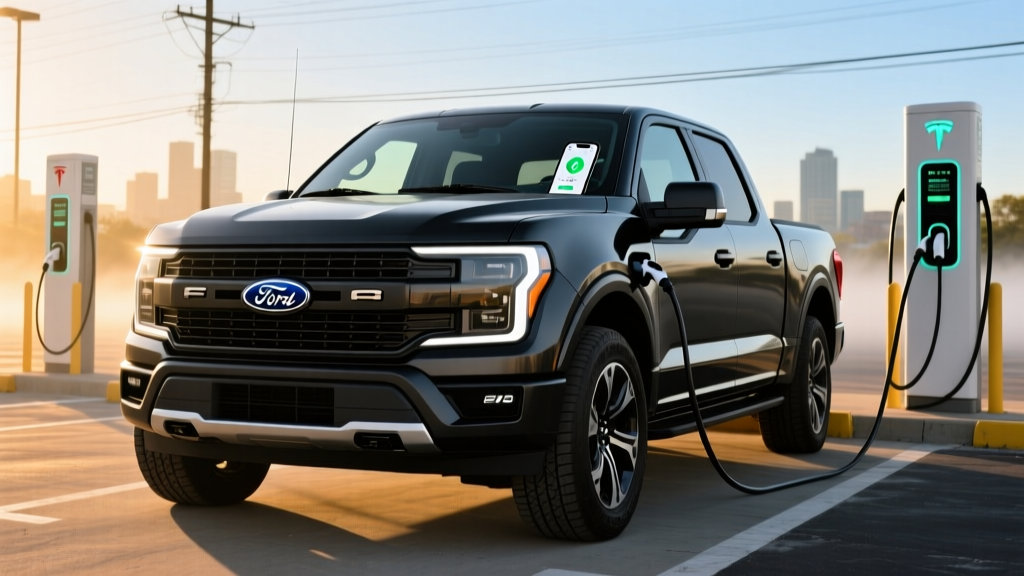
The Ford F-150 Lightning Flash occupies a specific niche in the electric truck market: it's the trim that bundles the Extended Range battery with Ford's most usable tech suite, without pushing into the luxury pricing of the Platinum or the bare-bones territory of the XLT. For 2026, the Flash continues as a mid-tier option that pairs serious utility with the longest range Ford offers in the Lightning lineup.
We've spent time analyzing the Lightning Flash's spec sheet, cross-referencing EPA data with real-world driving reports, and mapping its charging behavior against the broader DC fast-charging network. Here's what buyers actually need to know before signing a purchase order.
2026 F-150 Lightning Flash: Core Specifications
| Spec | Value |
|---|---|
| EPA Range (Extended Range) | 320 miles |
| Battery Capacity (Usable) | 131 kWh (NMC chemistry) |
| Drivetrain | Dual-motor AWD |
| Horsepower | 580 hp |
| Torque | 775 lb-ft |
| 0-60 mph | ~3.8 seconds |
| Max DC Fast Charge | 130 kW (peak) |
| 10-80% DC Charge Time | ~41 minutes |
| Level 2 Home Charge Rate | 11.5 kW (~25 miles/hr) |
| MPGe (Combined) | 70 MPGe |
| Efficiency | 48 kWh/100 mi |
| Max Towing Capacity | 10,000 lbs (w/ Max Trailer Tow Pkg) |
| Max Payload | 1,803 lbs |
| Base MSRP (Flash) | $54,995 |
| Battery Warranty | 8 years / 100,000 miles |
Range and Efficiency: EPA vs. Reality
Real-World Expectation: Plan for 250-280 miles in mixed highway driving at 70+ mph. In cold weather (below 32°F), expect a 20-30% reduction, bringing usable range to roughly 220-260 miles depending on cabin heating demands and terrain. City driving with regenerative braking engaged can approach or slightly exceed the EPA figure.
The 131 kWh usable battery pack uses nickel-manganese-cobalt (NMC) chemistry, which offers higher energy density than LFP alternatives but comes with different long-term degradation characteristics. Ford quotes the 320-mile EPA figure for the dual-motor AWD configuration that the Flash exclusively ships with.
Efficiency lands at 48 kWh per 100 miles combined, which translates to 70 MPGe on the EPA's fueleconomy.gov scale. That's typical for a full-size electric truck — the Rivian R1T Dual-Motor and Chevrolet Silverado EV 4WT land in a similar efficiency band. The Lightning's boxy aerodynamics and 6,000+ pound curb weight work against highway efficiency, so sustained 75-80 mph cruising will consume noticeably more energy than the combined figure suggests.
For context on what 320 miles means in practice: a round-trip commute of 60 miles leaves you roughly five days of driving before needing a charge, with buffer. Road trips require DC fast-charging stops roughly every 230-250 miles in warm weather to keep state of charge in a comfortable zone.
Charging Speed: DC Fast Charge and Home Level 2
| Charging Level | Power / Rate | Miles Added per Hour | Notes |
|---|---|---|---|
| Level 1 (120V, 12A) | ~1.4 kW | ~3 mi/hr | Emergency/trickle only |
| Level 2 (240V, 48A) | 11.5 kW | ~25 mi/hr | Ford Mobile Power Cord or wall connector; full charge ~11 hrs |
| Level 2 (240V, 80A — Ford Charge Station Pro) | 19.2 kW | ~41 mi/hr | Requires hardwired install; full charge ~7 hrs |
| DC Fast Charge (CCS) | 130 kW peak | ~150 mi in 20 min | 10-80% in ~41 min; tapers significantly above 85% |
The Lightning Flash's peak DC fast-charge rate of 130 kW is the most honest limitation of this truck. While competitors like the Hyundai Ioniq 5 (peaking at 240 kW on 800V architecture) or the GMC Sierra EV (up to 350 kW) can refill far more quickly, the Lightning's 400V electrical system caps its charging speed. On a 150 kW or 350 kW Electrify America or EVgo station, the Lightning will peak near 130 kW and hold that rate roughly from 15% to 55% state of charge before tapering.
The charge curve matters: that 41-minute 10-80% time assumes you arrive at a functioning charger with the battery preconditioned (the truck does this automatically when a charger is set as your navigation destination). Without preconditioning, or at a charger limited to 50 kW, expect significantly longer stops.
For home charging, the included Ford Mobile Power Cord delivers 11.5 kW on a 240V/48A NEMA 14-50 outlet — sufficient for overnight replenishment of a daily commute's worth of miles. The optional Ford Charge Station Pro at 80A/19.2 kW cuts a full 0-100% charge to roughly seven hours but requires a hardwired installation by a licensed electrician, potentially including a panel upgrade to 200A service if your home doesn't already have it.
Performance, Payload, and Towing
With 580 horsepower and 775 lb-ft of torque from its dual-motor AWD system, the Lightning Flash hits 60 mph in approximately 3.8 seconds. That's sports-car acceleration in a truck that weighs over three tons, and it never stops being surprising on an entrance ramp.
The dual-motor all-wheel-drive system provides torque to both axles independently, which helps in low-traction conditions and when towing. Maximum towing capacity reaches 10,000 pounds with the Max Trailer Tow Package — though buyers should know that towing anywhere near that maximum will cut range roughly in half. In Ford's own testing and independent reviews, towing a 7,000-pound trailer on the highway reduces effective range to 130-170 miles depending on speed and terrain.
Payload capacity of 1,803 pounds is competitive with the Lightning's gas-powered F-150 siblings and exceeds what many mid-size electric trucks offer. The front trunk (frunk) adds 14.1 cubic feet of lockable, weatherproof storage with a 400-pound capacity — a genuinely useful feature that gas trucks can't replicate.
Interior, Tech, and Driver Assistance
The Flash trim includes Ford's 15.5-inch vertical touchscreen running SYNC 4A, wireless Apple CarPlay and Android Auto, a 12-inch digital instrument cluster, and Ford's Intelligent Range system that factors in weather, terrain, and driving habits into its range predictions.
Standard driver-assistance features include Ford Co-Pilot360 2.0: automatic emergency braking with pedestrian detection, blind-spot monitoring with trailer coverage, rear cross-traffic alert, lane-keeping assist, and adaptive cruise control with stop-and-go. The available BlueCruise hands-free driving system (subscription-based after a trial period) operates on pre-mapped divided highways and represents SAE Level 2 automation — the driver must remain attentive and ready to take over at all times. This is not autonomous driving.
Notable tech drawbacks: the Lightning's massive touchscreen consolidates nearly all climate and vehicle controls, which some drivers find distracting. There's no physical volume knob. The bed camera and Pro Power Onboard (which turns the truck into a mobile generator with up to 9.6 kW of exportable power) are standout utility features that work well in practice.
Pricing, Tax Credits, and Ownership Cost
| Trim / Configuration | MSRP | Est. Price After §30D Credit* |
|---|---|---|
| F-150 Lightning Flash (Extended Range) | $54,995 | $47,495 (if eligible) |
| Flash + Equipment Group 312A | ~$58,500 | ~$51,000 |
| Flash + BlueCruise + Tow Pkg | ~$61,000 | ~$53,500 |
*Federal §30D tax credit eligibility depends on multiple factors that change periodically. As of the current tax year, key requirements include:
- MSRP Cap: Trucks/vans/SUVs must have an MSRP at or below $80,000 — the Lightning Flash qualifies.
- Buyer Income Cap: Modified adjusted gross income must not exceed $150,000 (single), $225,000 (head of household), or $300,000 (joint). Check current thresholds at IRS.gov.
- Battery Sourcing: Critical minerals and battery component sourcing requirements apply and are subject to change based on trade agreements and DOE guidance. Ford's North American assembly (Rouge Electric Vehicle Center, Dearborn, MI) helps, but specific battery-cell sourcing determines whether the full $7,500, a partial $3,750, or no credit applies.
- Point-of-Sale Transfer: Eligible buyers can transfer the credit to the dealer at purchase, reducing the purchase price directly rather than waiting for a tax refund.
Consult a tax professional for your specific situation — incentive rules are subject to change and individual eligibility varies. Some states offer additional rebates or incentives on top of the federal credit.
The battery and electric powertrain carry an 8-year/100,000-mile warranty, with Ford guaranteeing the battery will retain at least 70% of its original capacity during that period. Bumper-to-bumper coverage runs 3 years/36,000 miles.
How the Lightning Flash Compares
The Flash competes primarily with the Rivian R1T (Dual-Motor, Standard+ battery), the Chevrolet Silverado EV (4WT and LT trims), and the Tesla Cybertruck (Long Range AWD). Each has trade-offs:
- Rivian R1T: More refined ride quality and off-road capability, faster DC charging (~200 kW peak), but higher starting price and a smaller cargo bed.
- Chevrolet Silverado EV: Available with up to 400+ miles of range (4WT with largest pack), faster 350 kW charging architecture, but limited availability and a less intuitive infotainment system.
- Tesla Cybertruck: Stainless-steel exoskeleton and distinctive design, but polarizing styling, limited towing range, and a production ramp that has constrained availability.
Pros
- 320-mile EPA range is practical for most use cases
- Pro Power Onboard (9.6 kW) is a genuine worksite tool
- 14.1 cu-ft frunk adds secure, weatherproof storage
- Strong acceleration and smooth AWD delivery
- Ford dealer network for service is vast
- Comfortable ride quality for a solid-rear-axle truck
Cons
- 130 kW peak DC charging is slow for a 131 kWh pack
- 41-minute 10-80% charge time lengthens road trips
- Towing significantly reduces range (expect ~50% loss)
- Touchscreen-only climate controls are distracting
- Price climbs quickly with option packages
- No physical knobs for audio or climate
Who the F-150 Lightning Flash Is For
Look elsewhere if: You frequently tow trailers over long distances (range loss is severe), you take regular road trips of 400+ miles where 41-minute charging stops become frustrating, or you lack access to reliable home or workplace Level 2 charging. For apartment dwellers without charging access, a PHEV like the F-150 PowerBoost hybrid may be more practical.
Frequently Asked Questions
What is the real-world range of the F-150 Lightning Flash?
The EPA rates it at 320 miles with the Extended Range battery. In real-world highway driving at 70-75 mph in moderate temperatures, expect 250-280 miles. Cold weather (below freezing) can reduce that to 220-260 miles. City driving with regenerative braking can match or slightly exceed the EPA figure.
How fast does the Lightning Flash charge?
On DC fast charging, it peaks at 130 kW and takes approximately 41 minutes to go from 10% to 80%. At home on a 240V/48A Level 2 outlet, it adds about 25 miles of range per hour, fully recharging overnight in roughly 11 hours. The optional 80A Ford Charge Station Pro cuts that to about 7 hours.
Does the F-150 Lightning Flash qualify for the federal EV tax credit?
The Lightning Flash's MSRP is below the $80,000 truck cap, and it's assembled in North America. However, the full $7,500 credit depends on battery component and critical mineral sourcing requirements, as well as the buyer's income. Some buyers may qualify for $3,750 (partial) or the full $7,500, while others may not qualify. Verify current rules at IRS.gov and consult a tax professional.
Is the Lightning Flash worth buying over the Rivian R1T or Silverado EV?
If you prioritize dealer service accessibility, Pro Power Onboard, and a proven full-size truck platform, the Lightning Flash is compelling. If fast DC charging and off-road capability matter more, the Rivian R1T is stronger. If maximum range (400+ miles) and faster charging architecture are your priorities, the Silverado EV's larger-battery trims may be worth the wait for availability.
How does towing affect the Lightning Flash's range?
Towing a 7,000-pound trailer at highway speeds reduces effective range to approximately 130-170 miles — roughly a 50% reduction from the unloaded EPA figure. Ford's onboard trailer range estimation helps plan stops, but long-distance towing in an EV remains a compromise compared to gas or diesel trucks.
What is the battery warranty?
Ford covers the Lightning's battery and electric powertrain for 8 years or 100,000 miles, whichever comes first. The warranty guarantees the battery will retain at least 70% of its original capacity during that coverage period.