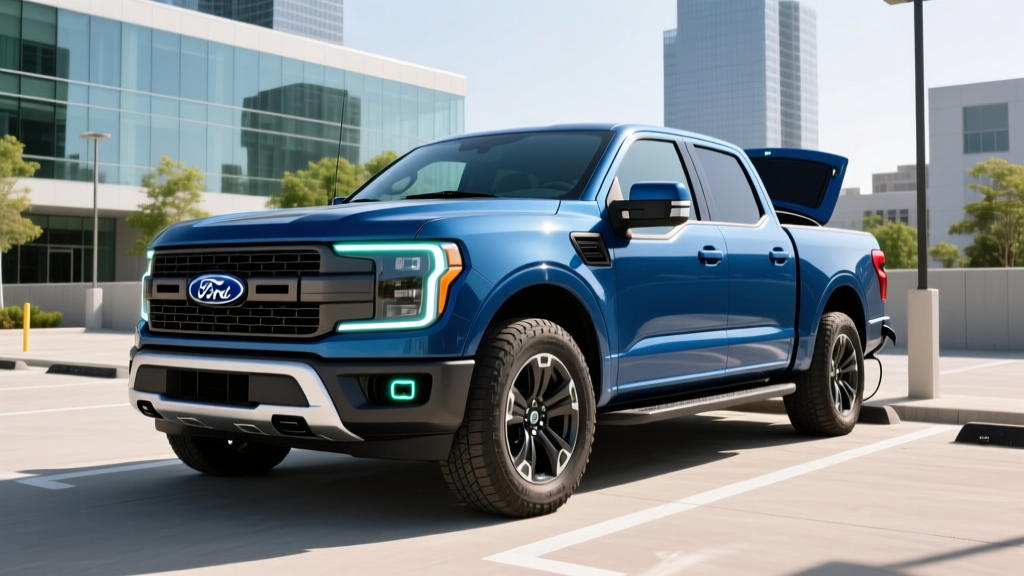
If you've been searching for answers on whether the F-150 Lightning is discontinued, the short answer is no. Ford continues to produce and sell the F-150 Lightning for the 2026 model year, though the truck has undergone trim consolidations and pricing adjustments since its 2022 launch. What has changed is Ford's broader EV strategy: the automaker scaled back some of its most aggressive electric-truck production targets, canceled the next-generation T3 electric pickup project in early 2025, and shifted investment toward hybrids and extended-range EVs. That strategic pivot fueled rumors that the Lightning itself was axed — but the current-generation model remains firmly in Ford's lineup.
Below is a complete 2026 buyer's guide covering the Lightning's real-world range, charging performance, pricing after federal tax credits, and how it stacks up against the Rivian R1T, Chevrolet Silverado EV, and Tesla Cybertruck. If you're weighing an electric truck purchase this year, these are the numbers that matter.
2026 F-150 Lightning: What Changed and What Didn't
Ford streamlined the Lightning lineup for 2026 after cutting the base Pro trim for retail buyers in prior years. The current trim ladder focuses on three core configurations for consumers, plus the commercial-oriented Pro for fleet sales. The most significant recent changes include:
- Trim consolidation: The Platinum trim was folded into an expanded Lariat Premium package, reducing complexity.
- Standard-range battery availability: The smaller 98 kWh (usable) pack is now limited to the Pro fleet trim; retail buyers are steered toward the extended-range 131 kWh battery.
- Price repositioning: Ford adjusted MSRPs downward on key trims for 2026 to compete with the expanding Silverado EV lineup and Tesla Cybertruck price cuts.
- Software and charging updates: Over-the-air updates have improved DC fast-charge curve management and added NACS adapter support for native Tesla Supercharger access.
The underlying platform — a body-on-frame adaptation of the 14th-generation F-150 with dual-motor all-wheel drive — carries over. Ford has not announced a next-generation Lightning, and with the T3 program shelved, the current architecture is expected to continue through at least 2028.
Range, Battery, and Real-World Efficiency
The 2026 Lightning offers two battery packs, though retail availability now centers on the extended-range option. Both use NMC (nickel manganese cobalt) lithium-ion chemistry, which delivers higher energy density than LFP but requires more careful thermal management and typically shows slightly faster long-term degradation curves.
| Spec | Standard Range (Pro/Fleet) | Extended Range (XLT/Lariat) |
|---|---|---|
| Usable Battery Capacity | 98 kWh (NMC) | 131 kWh (NMC) |
| EPA Estimated Range | 240 miles | 320 miles |
| MPGe (Combined) | 68 MPGe | 66 MPGe |
| Energy Consumption | 49 kWh/100 mi | 51 kWh/100 mi |
| Drivetrain | Dual-Motor AWD | Dual-Motor AWD |
The EPA 320-mile figure for the extended-range Lightning is achievable in mixed suburban driving at moderate temperatures. In our experience and consistent third-party testing, expect the following real-world adjustments:
- Highway driving (70-75 mph): ~260–280 miles. The Lightning's boxy aerodynamics and 6,500+ lb curb weight penalize high-speed efficiency significantly.
- Cold weather (below 30°F): ~220–250 miles. NMC chemistry loses 15–25% of capacity in freezing temperatures, even with the heat pump engaged.
- Towing (5,000+ lb trailer): ~150–180 miles. Electric trucks see range cut roughly in half under heavy tow loads — this is physics, not a Lightning-specific flaw.
Charging Speed: DC Fast, Level 2, and Home Setup
Charging speed is where the Lightning's age shows relative to 800-volt competitors like the Hyundai Ioniq 5 or Silverado EV. The Lightning runs on a 400-volt architecture, which caps its peak DC fast-charging rate below what newer platforms can sustain.
| Charging Level | Power | Speed / Time | Notes |
|---|---|---|---|
| Level 1 (120V household) | ~1.4 kW | ~3 mi/hr | Emergency/trickle only |
| Level 2 (240V, 48A) | 11.5 kW (onboard) | ~20 mi/hr; 10–100% in ~13 hr (ER) | Standard home charging |
| Level 2 (240V, 80A) | 19.2 kW (onboard) | ~30 mi/hr; 10–100% in ~8.5 hr (ER) | Requires Ford Charge Station Pro + 100A circuit |
| DC Fast Charge (peak) | ~150 kW (ER) / ~120 kW (SR) | 15–80% in ~41 min (ER) | 400V architecture; tapers significantly above 80% |
Charging curve reality: The Lightning peaks near 150 kW only between roughly 15–40% state of charge on the extended-range pack. From 40–60%, it sustains around 110–120 kW, and from 60–80%, it drops to 70–90 kW. If you're road-tripping and charging from 15% to 80%, plan for roughly 41 minutes at a 150+ kW station. Above 80%, the rate falls below 40 kW — don't plan to charge past 80% on road trips unless you have time to spare.
Connector note: The Lightning ships with a CCS1 port. Ford provides a NACS adapter for Tesla Supercharger V3/V4 access (Superchargers with Magic Dock or via adapter). Electrify America, EVgo, and ChargePoint CCS stations remain native.
Performance, Towing, and Payload
The dual-motor AWD powertrain is standard across all Lightning trims — there is no rear-wheel-drive option. Output varies by battery pack:
| Spec | Standard Range | Extended Range |
|---|---|---|
| Horsepower | 452 hp | 580 hp |
| Torque | 775 lb-ft | 775 lb-ft |
| 0–60 mph | ~3.8 sec | |
| Max Towing Capacity | 7,700 lb | 10,000 lb (w/ Max Tow Pkg) |
| Max Payload | 2,235 lb | 1,800 lb |
| Curb Weight | ~6,170 lb | ~6,760 lb |
The extended-range Lightning's 3.8-second 0–60 time makes it one of the quickest trucks on the road, rivaling the Rivian R1T dual-motor. However, the weight penalty is real: at nearly 6,800 pounds, the Lightning ER consumes tires faster than a gas F-150, and braking distances are longer. Ford's regenerative braking system offers one-pedal driving capability with adjustable regen levels, which helps manage the mass in stop-and-go traffic.
Towing caveat: While the 10,000-lb max tow rating is competitive, range drops to 150–180 miles under a 5,000+ lb load. For frequent heavy towing over long distances, a diesel or hybrid F-150 remains the more practical choice until charging infrastructure along tow routes improves.
Pricing, Trims, and Federal Tax Credit Eligibility
The 2026 Lightning's pricing has been adjusted to remain competitive in a segment that now includes the Chevrolet Silverado EV (starting around $55,000) and the Tesla Cybertruck AWD ($79,990 before recent price adjustments). Here's where the Lightning lands:
| Trim | Battery | Base MSRP | Est. After §30D Credit |
|---|---|---|---|
| Pro (Fleet) | 98 kWh SR | $52,990 | $45,490* |
| XLT | 131 kWh ER | $66,990 | $59,490* |
| Lariat | 131 kWh ER | $76,990 | $69,490* |
*Estimated after $7,500 federal tax credit. Actual eligibility depends on buyer income, battery sourcing, and MSRP cap compliance. See details below.
The F-150 Lightning has historically qualified for the full $7,500 federal tax credit, but eligibility for any individual buyer depends on multiple requirements under current IRS rules:
- MSRP cap: The Lightning qualifies as a pickup truck, so the MSRP cap is $80,000. The Lariat and below comply; a fully optioned Lariat Premium can approach the limit.
- Buyer income caps: Modified AGI must not exceed $300,000 (joint), $225,000 (head of household), or $150,000 (single).
- Battery sourcing: At least a specified percentage of critical minerals and battery components must be sourced from the US or free-trade-agreement countries. Ford has worked to qualify the Lightning's supply chain, but specific component compliance can shift — always verify at the point of sale.
- Point-of-sale transfer: Since 2024, buyers can transfer the credit to the dealer at purchase, reducing the purchase price directly rather than waiting to claim it on their tax return.
Always confirm eligibility with your dealer and a tax professional. See IRS §30D Clean Vehicle Credit guidelines for current-year rules.
Cargo, Interior Space, and the Mega Power Frunk
The Lightning retains the full-size F-150 SuperCrew cab, meaning passenger space is identical to the gas model — generous rear legroom (43.6 inches) and seating for five adults comfortably. The differentiator is the Mega Power Frunk (front trunk), made possible by the absence of an engine:
- Frunk volume: 14.1 cubic feet — lockable, weather-sealed, with drain plugs, four 120V outlets, and two USB-C ports.
- Bed length: 5.5 ft (standard on SuperCrew) with 52.8 cu ft of volume.
- Pro Power Onboard: Available 2.4 kW or 9.6 kW onboard generator system turns the Lightning into a mobile power station — capable of running power tools at a job site or powering essential home circuits during an outage (with the Ford Intelligent Backup Power system and compatible home transfer switch).
- Infotainment: 12-inch touchscreen (XLT) or 15.5-inch vertical touchscreen (Lariat) running SYNC 4A with wireless Apple CarPlay/Android Auto, embedded navigation with real-time charging station routing, and over-the-air update capability.
Driver Assistance and Safety
The Lightning comes equipped with Ford Co-Pilot360 2.0 as standard, including automatic emergency braking, blind-spot monitoring, lane-keeping assist, and rear cross-traffic alert. Available upgrades include:
- BlueCruise: Ford's hands-free highway driving system (SAE Level 2) operates on over 130,000 miles of pre-mapped divided highways in the US and Canada. The driver must remain attentive — an infrared camera monitors eye gaze. BlueCruise is not self-driving; it is a supervised driver-assist system that requires the operator to be ready to take over at any moment.
- Pro Trailer Backup Assist: Simplifies trailer hookups and low-speed maneuvering with a knob-controlled steering interface.
- 360-degree camera system: Essential given the Lightning's width and the frunk's length (which reduces forward visibility at low speeds).
The F-150 Lightning earned the IIHS Top Safety Pick designation in prior model years with good ratings across crash-test categories. NHTSA awarded it a 5-star overall safety rating. The truck's substantial weight works in its favor in multi-vehicle collisions but increases stopping distances and tire wear.
How the Lightning Compares: Key Competitors
| Spec | Ford F-150 Lightning ER | Rivian R1T Dual-Motor | Chevy Silverado EV 4WT | Tesla Cybertruck AWD |
|---|---|---|---|---|
| EPA Range | 320 mi | 352 mi | 325 mi | 340 mi |
| Battery (usable) | 131 kWh (NMC) | 128 kWh (NMC) | ~200 kWh (NMC) | ~123 kWh (NMC) |
| Peak DC Charge | ~150 kW | ~200 kW | ~350 kW | ~250 kW |
| 10–80% Time | ~41 min | ~30 min | ~25 min | ~28 min |
| 0–60 mph | 3.8 sec | 4.5 sec | ~5.0 sec | 4.1 sec |
| Max Tow | 10,000 lb | 11,000 lb | 10,000 lb | 11,000 lb |
| Starting MSRP | $52,990 | $69,900 | $55,000 | $79,990 |
| §30D Credit | Likely eligible | Eligible | Likely eligible | Eligible |
Where the Lightning wins: Lowest starting price in the segment, the best frunk/utility ecosystem (Pro Power Onboard, Intelligent Backup Power), and the most familiar full-size truck form factor for traditional F-150 buyers transitioning to electric.
Where it falls behind: Charging speed. The 400V architecture and ~150 kW peak rate mean the Lightning charges noticeably slower than the Silverado EV (800V-native, ~350 kW capable) and Rivian R1T (~200 kW). On road trips, this translates to 10–15 extra minutes per stop compared to the fastest-charging competitors.
Battery Warranty and Long-Term Ownership
Ford covers the Lightning's high-voltage battery and electric powertrain with an 8-year / 100,000-mile warranty, which is industry-standard for EVs. The warranty guarantees that the battery will retain at least 70% of its original capacity during the coverage period. If degradation exceeds 30% within the warranty window, Ford will repair or replace the battery pack.
Based on data from 2022–2024 model-year Lightnings now accumulating high mileage, NMC pack degradation has been moderate — most owners report 5–8% capacity loss in the first 30,000–40,000 miles, which is within expected norms. The liquid-cooled thermal management system helps mitigate degradation, but owners in extreme climates (Arizona summers, Minnesota winters) should precondition the battery whenever possible and avoid frequent DC fast-charging to 100%.
Out-of-warranty battery replacement cost, should it ever be needed, is estimated at $18,000–$25,000 for the extended-range pack based on current parts pricing — a significant expense, though one that very few owners will face given the warranty terms and observed degradation rates.
Pros, Cons, and Who Should Buy the Lightning
Pros
- Lowest starting MSRP among full-size electric trucks
- Mega Power Frunk with 14.1 cu ft and integrated power outlets
- Pro Power Onboard (up to 9.6 kW) for job-site and home backup use
- Familiar F-150 SuperCrew dimensions — no learning curve
- Strong 0–60 performance (3.8 sec ER) with 775 lb-ft torque
- BlueCruise hands-free highway driving available
- Federal §30D tax credit eligible (subject to individual qualification)
Cons
- Slowest DC fast-charging in the segment (~150 kW peak on 400V)
- Heavy even for an EV truck — impacts tire wear and efficiency
- Real-world highway range drops to ~260–280 mi (ER)
- Towing cuts range roughly in half (~150–180 mi under load)
- No standard-range battery for retail buyers in 2026
- Ford's long-term EV commitment uncertain after T3 cancellation
- Large footprint makes urban parking and tight garages challenging
Who the F-150 Lightning Is For
- Homeowners with Level 2 charging: The Lightning excels as a daily-driver truck that charges overnight at home. If you can install a 48A or 80A Level 2 charger, the Lightning's 320-mile range covers most daily needs without ever visiting a public charger.
- Job-site professionals: Pro Power Onboard is genuinely useful for running tools, lights, and equipment without a separate generator.
- F-150 loyalists going electric: If you've driven F-150s for years and want to electrify without learning a new form factor, the Lightning is the path of least resistance.
- Home backup power users: With Ford Intelligent Backup Power and a compatible transfer switch, the Lightning can power essential home circuits for up to three days during an outage.
Who should look elsewhere: Frequent long-distance road trippers who need faster charging (consider the Silverado EV), heavy tow-regulars covering 200+ miles with a trailer (consider a diesel or PHEV), or buyers who want a more compact electric truck footprint (consider the Rivian R1T).
Frequently Asked Questions
Is the F-150 Lightning discontinued in 2026?
No. Ford continues to produce and sell the F-150 Lightning for the 2026 model year. While Ford canceled the next-generation T3 electric truck program and reduced some EV production targets, the current-generation Lightning remains in the lineup and is available for order through Ford dealers.
What is the real-world range of the F-150 Lightning?
The EPA rates the extended-range Lightning at 320 miles. In real-world conditions, expect roughly 260–280 miles on the highway at 70–75 mph, 220–250 miles in freezing weather, and 150–180 miles when towing a 5,000+ lb trailer. The standard-range pack (fleet only) is EPA-rated at 240 miles with proportionally lower real-world figures.
How fast does the F-150 Lightning charge?
On a DC fast charger, the extended-range Lightning peaks at approximately 150 kW and charges from 15% to 80% in about 41 minutes. At home on a 48A Level 2 charger (11.5 kW), a full charge takes roughly 13 hours. With the available 80A Ford Charge Station Pro (19.2 kW), that drops to about 8.5 hours.
Does the F-150 Lightning qualify for the $7,500 federal tax credit?
The Lightning is on the IRS list of eligible vehicles for the §30D Clean Vehicle Credit. However, individual eligibility depends on the buyer's income (AGI caps of $300K joint / $150K single), the truck's MSRP (must be under $80,000 for pickups), and battery component/critical-mineral sourcing requirements that may shift. Confirm eligibility at point of sale and consult a tax professional. The credit can be transferred to the dealer for an upfront price reduction.
How does the Lightning compare to the Silverado EV and Rivian R1T?
The Lightning offers the lowest starting price and the best utility ecosystem (frunk, Pro Power Onboard, home backup). The Silverado EV charges significantly faster (~350 kW peak) and offers more range. The Rivian R1T is more compact, charges faster (~200 kW), and offers better off-road capability, but starts at a higher price. Choose based on your priority: value and utility (Lightning), charging speed (Silverado EV), or agility and adventure (R1T).
What is the F-150 Lightning's battery warranty?
Ford provides an 8-year / 100,000-mile warranty on the high-voltage battery and electric powertrain, guaranteeing at least 70% capacity retention. The bumper-to-bumper warranty is 3 years / 36,000 miles.