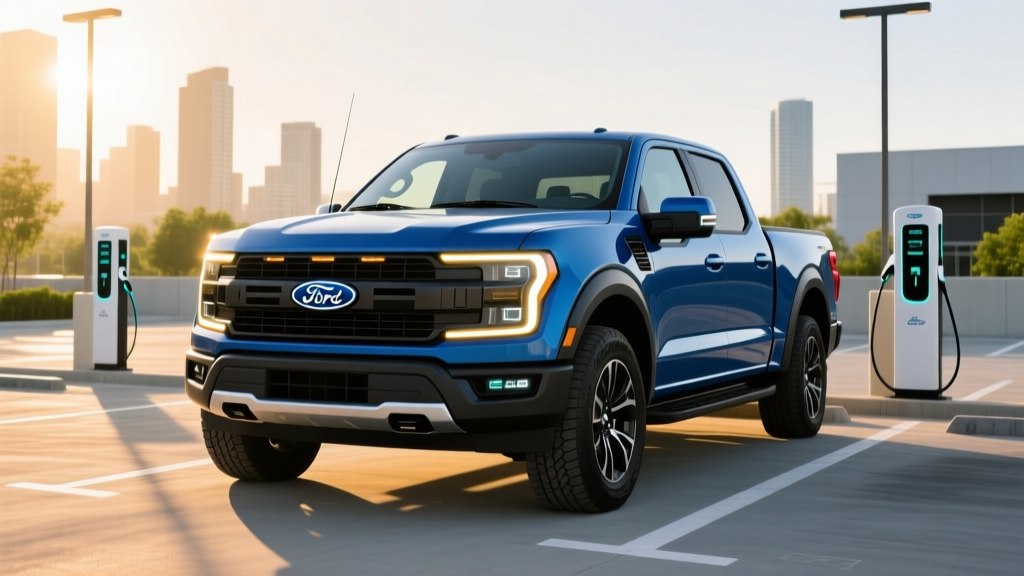
The Ford F-150 Lightning reshaped the electric truck market when it launched, proving that a full-size, body-on-frame pickup could run purely on electrons while still towing, hauling, and powering a job site. But as Ford reshuffles its EV strategy heading into the 2026 model year, buyers are asking a pointed question: is the F-150 Lightning discontinued?
The short answer is nuanced. Ford has not issued a formal discontinuation of the F-150 Lightning nameplate as of early 2026, but production volumes have been significantly reduced, and the company has pivoted investment toward next-generation platforms. For buyers, this means the Lightning is still available through dealer inventory and the final 2025 model-year run, but long-term model support, future refreshes, and residual values are now open questions.
Whether you're considering a remaining new unit, a certified pre-owned Lightning, or weighing it against the Rivian R1T, Chevrolet Silverado EV, or Tesla Cybertruck, this guide covers every spec, charging figure, and ownership cost you need to make an informed decision.
F-150 Lightning Final Specs at a Glance
| Spec | Standard Range | Extended Range |
|---|---|---|
| EPA Range | 240 miles | 320 miles |
| Battery Capacity (usable) | 98 kWh | 131 kWh |
| Battery Chemistry | NMC (Nickel Manganese Cobalt) | NMC |
| Drivetrain | Dual-Motor AWD | Dual-Motor AWD |
| Horsepower | 452 hp | 580 hp |
| Torque | 775 lb-ft | 775 lb-ft |
| 0–60 mph | ~3.8 sec | |
| Max DC Fast Charge | 120 kW | 150 kW |
| 10–80% DC Time | ~44 min | ~41 min |
| Level 2 Home Charge Rate | 11.3 kW (30 mi/hr) | 19.2 kW (52 mi/hr)* |
| MPGe (combined) | 68 MPGe | 70 MPGe |
| Efficiency | 49 kWh/100 mi | 47 kWh/100 mi |
| Max Towing | 7,700 lbs | 10,000 lbs |
| Payload | 2,235 lbs | 1,800 lbs |
| Base MSRP | $54,995 | $69,995 (Lariat) |
| Battery Warranty | 8 years / 100,000 miles (≥70% capacity retention) | |
*19.2 kW Level 2 requires the optional 80A Ford Charge Station Pro and a hardwired 100A circuit.
Real-World Range: What the EPA Sticker Doesn't Tell You
The Extended Range F-150 Lightning carries a 320-mile EPA estimate. In real-world mixed driving at 65–75 mph, expect 260–285 miles before needing to charge. In cold weather (below 32°F), that figure can drop to 210–240 miles due to cabin heating demands and reduced battery chemistry efficiency.
The Standard Range model's 240-mile EPA rating translates to roughly 190–210 miles highway in moderate temperatures, and as low as 160–180 miles in winter conditions.
These numbers matter because the Lightning is a heavy vehicle — over 6,500 lbs curb weight — and aerodynamic drag at highway speeds consumes energy aggressively. According to fueleconomy.gov, the Extended Range Lightning achieves 70 MPGe combined, which is respectable for a full-size truck but far below lighter EVs like the Hyundai Ioniq 5 (114 MPGe).
If you tow, the range story changes dramatically. Towing a 5,000-lb trailer at highway speeds can cut range by 40–50%, meaning an Extended Range Lightning may deliver just 150–170 miles before needing a charge. This is a physics reality all electric trucks share, not a Lightning-specific flaw, but it demands route planning for any trailer-hauling road trip.
Charging Speeds: DC Fast Charging and Home Setup
Charging is where the Lightning's age relative to newer EVs becomes apparent. The truck uses a CCS1 connector and tops out at 150 kW peak on the Extended Range model (120 kW on Standard Range). That's slower than the Hyundai Ioniq 5's 240 kW or the Cybertruck's 250+ kW peak.
| Charging Level | Power | Miles Added per Hour | Notes |
|---|---|---|---|
| Level 1 (120V household) | ~1.4 kW | ~3 mi/hr | Emergency/trickle only |
| Level 2 (240V, 32A mobile) | 7.7 kW | ~20 mi/hr | Standard mobile cord |
| Level 2 (240V, 48A Wall Connector) | 11.3 kW | ~30 mi/hr | Recommended home setup |
| Level 2 (240V, 80A Charge Station Pro) | 19.2 kW | ~52 mi/hr | Requires 100A circuit, hardwired |
| DC Fast Charge (peak) | 150 kW (Ext.) / 120 kW (Std.) | ~230 mi/hr at peak | 10–80% in ~41 min (Ext.) |
Charging curve reality: The Lightning's peak 150 kW rate holds roughly from 10% to 40% State of Charge (SoC), then tapers progressively. From 60% to 80%, you'll see closer to 70–90 kW. This taper is why the 10–80% time stretches past 40 minutes despite the seemingly adequate peak rate. On a road trip, plan for 40–50 minute stops at Electrify America or EVgo stations.
At home, the 19.2 kW Charge Station Pro is the gold standard for Lightning owners. It adds roughly 52 miles of range per hour, meaning a full overnight charge (10 hours) can replenish the entire Extended Range battery. The catch: it requires a dedicated 100-amp circuit and hardwired installation, which can push total home charging setup costs to $2,000–$3,500 depending on your electrical panel capacity. Most buyers opt for the 48A/11.3 kW setup, which is sufficient for daily driving and requires a more common 60A circuit.
Is the F-150 Lightning Discontinued? The Production Reality
Ford has not published a formal "end of production" notice for the F-150 Lightning. However, several factors signal a wind-down:
- Reduced production shifts: Ford's Rouge Electric Vehicle Center in Dearborn, Michigan, has cut shifts in response to softer-than-projected EV truck demand and rising competition.
- Strategic pivot: Ford's 2025–2026 investor communications have emphasized a next-generation universal EV platform and a shift toward smaller, more affordable electric vehicles.
- Dealer inventory: As of early 2026, dealer lots still carry remaining 2025 model-year Lightnings, and Ford continues to honor all warranty obligations.
- No 2026 model-year refresh announced: Unlike the Mustang Mach-E and E-Transit, the Lightning has not received a confirmed 2026 model-year update.
For buyers, this creates a decision framework: remaining new inventory may come with aggressive dealer discounts, but long-term residual values are uncertain. If you plan to own the truck for 8–10 years and rely on the battery warranty, the discontinuation risk is manageable. If you plan to sell or trade in within 3–4 years, expect steeper depreciation than a continuing-production model.
Pricing, Trims, and Federal Tax Credit Eligibility
The final 2025 F-150 Lightning lineup spans four trims, and pricing reflects its position as a premium electric workhorse:
| Trim | Battery | MSRP | Est. After §30D Credit | Eligible? |
|---|---|---|---|---|
| Pro (Standard Range) | 98 kWh | $54,995 | ~$47,495 | Yes* |
| XLT (Standard Range) | 98 kWh | $59,995 | ~$52,495 | Yes* |
| Lariat (Extended Range) | 131 kWh | $69,995 | ~$62,495 | Yes* |
| Platinum (Extended Range) | 131 kWh | $96,874 | ~$89,374 | Yes* |
Federal §30D Tax Credit Rules (2025–2026): The F-150 Lightning qualifies for up to $7,500 under IRS §30D, subject to the following requirements per irs.gov:
- MSRP cap: Trucks/vans/SUVs must have an MSRP at or below $80,000. The Platinum trim exceeds this cap and is ineligible.
- Buyer income cap: Modified AGI must not exceed $300,000 (joint), $225,000 (head of household), or $150,000 (individual).
- Battery sourcing: A percentage of critical minerals and battery components must be sourced from the U.S. or free-trade-agreement partners. Ford's North American battery assembly (via SK On in Georgia) has generally met these thresholds, but verify VIN-specific eligibility on fueleconomy.gov.
- Point-of-sale transfer: As of 2024, buyers can transfer the credit to the dealer at purchase, reducing the upfront cost rather than waiting for a tax refund.
*Always confirm eligibility with your tax professional and the IRS VIN lookup tool before purchase. Rules are subject to legislative change.
How It Stacks Up Against the Competition
If the Lightning's uncertain future gives you pause, here's how it compares to the electric trucks still in active production for 2026:
| Spec | Ford F-150 Lightning (Ext.) | Rivian R1T (Dual Max) | Chevy Silverado EV (4WT) | Tesla Cybertruck (AWD) |
|---|---|---|---|---|
| EPA Range | 320 mi | 410 mi | 492 mi | 340 mi |
| Battery (usable) | 131 kWh | 141 kWh | 200+ kWh | ~123 kWh |
| Peak DC Charge | 150 kW | 220 kW | 350 kW | 250+ kW |
| 0–60 mph | 3.8 sec | ~3.5 sec | ~4.5 sec | 4.1 sec |
| Max Towing | 10,000 lbs | 11,000 lbs | 10,000 lbs | 11,000 lbs |
| Starting MSRP | $54,995 | $79,900 | $55,900 | $79,990 |
| §30D Credit Eligible | Yes (under cap) | Limited | Yes | Yes |
The Lightning's strongest advantage remains its combination of price, payload, and proven truck utility. No other electric truck matches its sub-$55,000 starting price with a full-size bed, crew cab, and Pro Power Onboard. The Rivian R1T is more refined and tech-forward but costs $25,000 more. The Silverado EV offers class-leading range and 350 kW charging but has faced its own production and pricing turbulence. The Cybertruck delivers performance and attention but trails in ride comfort and practicality.
Ownership Costs, Warranty, and Long-Term Viability
Ford backs the F-150 Lightning's battery and electric powertrain with an 8-year / 100,000-mile warranty guaranteeing at least 70% capacity retention. The bumper-to-bumper warranty covers 3 years / 36,000 miles. Even if production ends, Ford is legally obligated to honor these warranties, and the company's dealer service network remains the largest in the country.
Estimated 5-year ownership costs for the Extended Range Lariat:
- Electricity (charging): ~$4,200 (at $0.14/kWh national average, 15,000 mi/yr)
- Maintenance: ~$2,100 (no oil changes, reduced brake wear from regen)
- Insurance: ~$11,500 (EV truck premiums run 15–25% above gas F-150)
- Estimated depreciation: $28,000–$35,000 (higher than average due to discontinuation uncertainty)
- 5-year total cost of ownership: ~$46,000–$53,000 (before tax credit savings)
The Pro Power Onboard system remains a standout feature — it turns the Lightning into a mobile generator with up to 9.6 kW of exportable power through bed-mounted 120V and 240V outlets. Contractors have used it to run job-site tools, and homeowners have wired it (via the optional Ford Intelligent Backup Power system) to power essential home circuits during outages. This vehicle-to-home (V2H) capability is rare in the EV market and adds genuine utility beyond transportation.
Pros, Cons, and Who Should Buy
- Lowest starting price of any full-size electric truck
- Pro Power Onboard (up to 9.6 kW V2H/V2L)
- Massive 14.1 cu ft front trunk (frunk)
- Comfortable ride quality for a body-on-frame truck
- Ford's extensive dealer and service network
- Qualifies for $7,500 §30D tax credit (most trims)
- BlueCruise hands-free highway driving (SAE Level 2)
- DC fast charging peaks at only 150 kW — slow for road trips
- Real-world highway range falls 40–60 miles short of EPA
- Towing cuts range by up to 50%
- Discontinuation uncertainty affects resale value
- No 2026 model-year refresh or NACS port confirmed
- Heavy curb weight reduces efficiency vs. lighter EVs
- Platinum trim exceeds $80,000 §30D MSRP cap
- Buy it if: You need a full-size electric truck at the lowest entry price, you charge primarily at home, you value Pro Power Onboard for job-site or backup power, and you plan to own the truck long-term (8+ years).
- Skip it if: You take frequent road trips and need 200+ kW charging, you tow heavy trailers over long distances regularly, or you need predictable resale value for a 3-year trade cycle.
- Consider alternatives if: Maximum range is your priority (Silverado EV 4WT at 492 mi EPA), or you want a confirmed 2026 model with an active production future (Rivian R1T, Silverado EV).
Interior, Cargo, and Technology
The Lightning uses the same cab architecture as the gas F-150, meaning interior space is generous: 43.6 inches of front legroom and 43.6 inches of rear legroom in the SuperCrew configuration. The 12-inch (Pro/XLT) or available 15.5-inch portrait touchscreen runs Ford's SYNC 4A system with wireless Apple CarPlay and Android Auto.
The party piece is the Mega Power Frunk — a 14.1 cubic-foot lockable front trunk with 400 lbs of payload capacity, four 120V outlets, and a drain for use as a cooler. Combined with the 5.5-foot bed (52.8 cu ft), the Lightning offers more enclosed cargo volume than any conventional truck.
BlueCruise (Ford's SAE Level 2 driver-assistance system) enables hands-free driving on over 130,000 miles of pre-mapped divided highways. It is not self-driving — the driver must remain attentive, and a camera monitors eye gaze. According to IIHS, the Lightning earns top marks for crashworthiness, though its driver-monitoring system has received mixed reviews for strictness.
Frequently Asked Questions
Is the Ford F-150 Lightning officially discontinued?
Ford has not issued a formal discontinuation notice as of early 2026, but production has been scaled back significantly and no 2026 model-year refresh has been confirmed. Remaining 2025 inventory is available at dealers, and Ford continues to honor all warranties.
What is the real-world range of the F-150 Lightning?
The Extended Range model's 320-mile EPA rating translates to approximately 260–285 miles in real-world mixed driving, and 210–240 miles in cold weather. The Standard Range model delivers roughly 190–210 miles highway in moderate temperatures.
How fast does the F-150 Lightning charge?
The Extended Range model peaks at 150 kW on DC fast chargers, achieving a 10–80% charge in approximately 41 minutes. At home on a 48A Level 2 charger (11.3 kW), it adds about 30 miles per hour. The optional 80A Charge Station Pro (19.2 kW) adds 52 miles per hour but requires a 100A dedicated circuit.
Does the F-150 Lightning qualify for the $7,500 federal tax credit?
Most trims qualify for the full $7,500 under IRS §30D, provided the buyer meets income caps ($150K individual / $300K joint) and the trim's MSRP is at or below $80,000. The Platinum trim ($96,874) exceeds the MSRP cap and is ineligible. Always verify via the IRS VIN tool and consult a tax professional.
Should I buy an F-150 Lightning or a Chevrolet Silverado EV?
Choose the Lightning if you prioritize a lower entry price, Pro Power Onboard, and Ford's service network. Choose the Silverado EV if you need maximum range (up to 492 miles EPA) and faster 350 kW DC charging. The Silverado EV's own production stability should also be researched before purchase.
Will Ford still service the Lightning if production ends?
Yes. Federal law requires automakers to honor stated warranties regardless of production status. Ford's 8-year/100,000-mile battery warranty remains in effect, and the company's 6,000+ dealer network will continue to provide service and parts for the foreseeable future.
Does the F-150 Lightning have a NACS charging port?
No. The F-150 Lightning was built with a CCS1 port. Ford has committed to adopting the NACS (Tesla-style) connector on future EVs, but the Lightning was not updated to include it. Owners can use a CCS-to-NACS adapter at Tesla Superchargers where Ford has enabled access, but native NACS is not available on this truck.