Quick Verdict: Is the F-150 Lightning Worth the Price Tag?
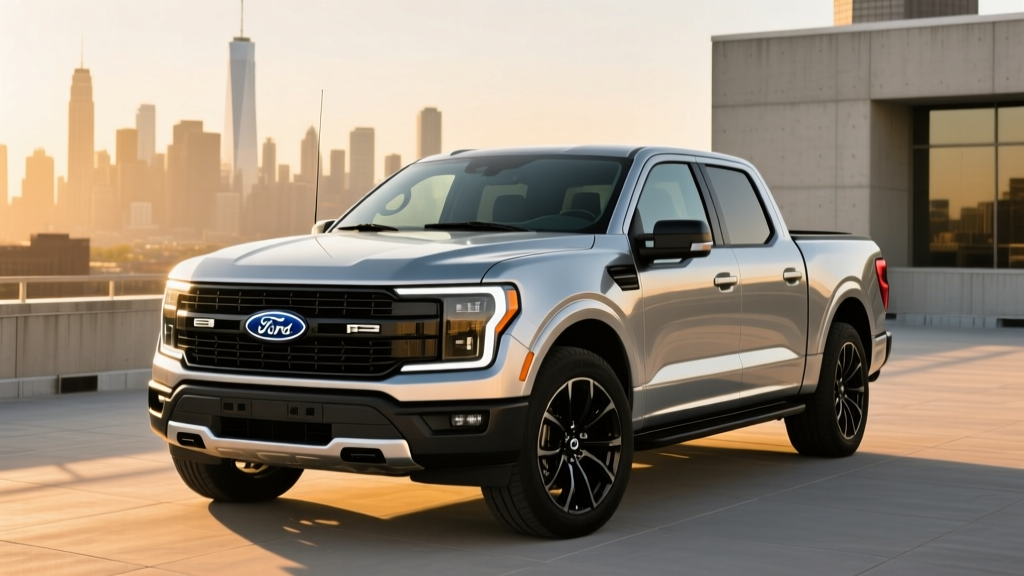
The 2026 Ford F-150 Lightning remains the benchmark for full-size electric pickups — a truck that can tow, haul, and power your home during an outage while delivering 580 horsepower and a usable 230–320 miles of EPA range depending on the battery pack. But the F-150 Lightning cost story is more nuanced than the sticker price. After factoring in federal tax credits, home charging installation, and real-world electricity rates, the Lightning can undercut its gas-powered F-150 sibling on total cost of ownership — or fall short, depending on your driving profile and trim selection.
This review breaks down every dollar: MSRP by trim, §30D tax credit eligibility under current IRS rules, charging infrastructure costs, and five-year operating expenses. Whether you're cross-shopping the Chevrolet Silverado EV, Rivian R1T, or a gas F-150, the numbers below will tell you exactly where the Lightning stands.
2026 F-150 Lightning Pricing by Trim
Ford restructured the Lightning lineup for 2025 and carried it forward into 2026, consolidating trims while keeping the dual-battery strategy. Here's what the current F-150 Lightning cost looks like before any incentives:
| Trim | Battery | EPA Range | MSRP | Drivetrain |
|---|---|---|---|---|
| Pro (Standard Range) | 98 kWh usable (NMC) | 230 mi | $54,995 | AWD / Dual-Motor |
| XLT (Standard Range) | 98 kWh usable (NMC) | 230 mi | $64,995 | AWD / Dual-Motor |
| Lariat (Extended Range) | 131 kWh usable (NMC) | 320 mi | $76,995 | AWD / Dual-Motor |
| Platinum (Extended Range) | 131 kWh usable (NMC) | 300 mi | $95,875 | AWD / Dual-Motor |
Destination charge: $2,095 (add to all trims). As-tested pricing: A fully loaded Lariat with the Max Tow package, BlueCruise subscription, and bed accessories typically lands around $82,000–$84,000 before incentives.
The Pro trim is a commercial and fleet favorite and represents the lowest F-150 Lightning cost of entry, but most retail buyers will target the XLT or Lariat for the additional comfort and technology features. The Platinum competes with luxury trucks like the GMC Sierra EV Denali but pushes well past the federal tax credit MSRP cap — a critical point we'll address below.
Federal Tax Credit Eligibility: §30D Rules for 2026
The F-150 Lightning's eligibility for the federal clean vehicle credit under IRS §30D depends on three factors that shift annually: buyer income, vehicle MSRP, and battery component/critical-mineral sourcing. Here's where the Lightning stands for 2026:
- MSRP cap: The §30D cap for trucks is $80,000. The Pro, XLT, and Lariat trims all fall under this threshold. The Platinum ($95,875 base) does not qualify.
- Buyer income caps: Modified adjusted gross income (MAGI) must not exceed $150,000 (single), $225,000 (head of household), or $300,000 (married filing jointly).
- Battery sourcing requirements: The Lightning's NMC battery pack must meet escalating critical-mineral and battery-component thresholds that tighten each year. Ford has sourced significant battery materials from FTA-partner countries, but the exact credit amount (up to $7,500) depends on the specific build date and supply-chain certification for your VIN.
- Point-of-sale transfer: As of 2024, buyers can transfer the credit to the dealer at purchase, effectively reducing the out-of-pocket cost by up to $7,500 at the dealership rather than waiting for a tax refund.
- ✅ MSRP under $80,000 — Pro, XLT, Lariat qualify; Platinum does not
- ✅ Buyer MAGI within IRS limits ($150K single / $300K joint)
- ⚠️ Battery sourcing — verify with your dealer at purchase; credit may be $3,750 or $7,500 depending on mineral/component compliance
- ✅ Point-of-sale transfer available — reduces drive-off price immediately
- ❌ No stacking with used-EV credit (§25E) — this is a new-vehicle purchase
Effective F-150 Lightning cost after maximum credit: An XLT Standard Range drops from ~$67,090 (with destination) to approximately $59,590 if you qualify for the full $7,500. That puts it within striking distance of a comparably equipped gas F-150 XLT with the 3.5L EcoBoost — before you factor in fuel savings.
Range, Battery, and Real-World Efficiency
The Lightning uses two battery options, both with NMC (nickel manganese cobalt) chemistry chosen for energy density and cold-weather performance — a deliberate trade-off over LFP, which is heavier and less energy-dense but offers longer cycle life.
Standard Range (98 kWh): EPA 230 miles. Expect 195–210 miles on sustained highway driving at 70+ mph. In freezing temperatures (below 32°F), plan for 160–180 miles due to cabin heating demands and battery resistance.
Extended Range (131 kWh): EPA 320 miles (Lariat). Expect 265–285 miles highway in moderate weather, and 210–240 miles in deep cold. The Platinum's heavier wheels and equipment reduce this to EPA 300 / ~250 real-world highway.
Source: EPA fueleconomy.gov
Efficiency varies significantly by configuration. The Standard Range Pro rates at approximately 66 MPGe combined (roughly 51 kWh/100 mi), while the Extended Range Lariat drops to around 70 MPGe combined due to the larger, heavier pack offsetting its range advantage. For context, a gas F-150 4WD with the 3.5L EcoBoost rates at about 20 MPG combined — the Lightning uses the energy equivalent of roughly 60–70 MPG in electricity.
Towing impact: Ford rates the Lightning at up to 10,000 lbs (Extended Range, Max Tow package). In real-world towing at highway speeds, expect range to drop 40–55%. A 320-mile Extended Range truck towing 8,000 lbs at 65 mph may deliver only 140–170 miles before needing a charge. This is physics, not a flaw — every EV truck behaves similarly — but it's a critical planning factor for anyone buying the Lightning for regular trailer duty.
Charging Speed: DC Fast, Level 2, and Home Setup
The F-150 Lightning's charging capability is one of its more debated specs. Ford equipped the truck with a 150 kW peak DC fast-charge rate, which trails the 350 kW architecture of the Rivian R1T (with Max Pack) and the Hyundai Ioniq 5's 800V system. Here's what that means in practice:
| Charging Level | Power | Speed | Use Case |
|---|---|---|---|
| Level 1 (120V household) | ~1.4 kW | ~2–3 mi/hr | Emergency/overnight trickle |
| Level 2 (240V, Ford Mobile Charger) | ~9.6 kW (40A) | ~16–19 mi/hr | Daily home charging |
| Level 2 (240V, Ford Charge Station Pro) | 19.2 kW (80A) | ~30–37 mi/hr | Fastest home charging; full overnight refill |
| DC Fast Charge (CCS) | Peak 150 kW | 10–80% in ~41 min (Std Range) 10–80% in ~45 min (Ext Range) |
Road trips, highway corridors |
Charging curve reality: The 150 kW peak only holds between roughly 10–30% state of charge on the Extended Range pack. From 30–60%, expect a sustained 100–120 kW, and above 80%, the rate drops below 50 kW as the battery management system protects cell longevity. This taper means a 10–90% session will take closer to 55–60 minutes. Plan road-trip stops accordingly — you won't match a gas truck's five-minute fill-up, but the Lightning's curve is predictable and well-documented.
Home charging cost: The Ford Charge Station Pro (19.2 kW, 80A) costs approximately $1,200 for the unit, but installation by a licensed electrician typically runs $800–$2,500 depending on panel proximity and whether your home needs a 200A service upgrade. Total home charging setup: $2,000–$3,700 in most cases. The payoff is a full charge overnight at residential electricity rates (~$0.13–$0.17/kWh national average), making a 131 kWh refill cost roughly $17–$22 — compared to $60–$80 for a gas F-150 fill-up at current fuel prices.
NACS adapter note: Ford began shipping Lightnings with NACS charge ports for the 2025 model year, granting native access to Tesla Superchargers. If you have a 2022–2024 model with a CCS port, Ford provides a NACS adapter. This significantly expands the Lightning's road-trip charging network compared to CCS-only trucks.
Performance, Capability, and What It Drives Like
| Spec | Standard Range | Extended Range |
|---|---|---|
| Horsepower | 580 hp | 580 hp |
| Torque | 775 lb-ft | 775 lb-ft |
| 0–60 mph | ~4.0 sec | ~3.8 sec |
| Drivetrain | AWD (dual-motor) | AWD (dual-motor) |
| Max Payload | 2,235 lbs | 1,800 lbs |
| Max Towing | 7,700 lbs | 10,000 lbs (Max Tow pkg) |
The dual-motor AWD powertrain delivers instantaneous torque that makes the Lightning feel absurdly quick for a 6,500-pound truck. The 0–60 time of roughly 3.8 seconds (Extended Range) beats most sport sedans and every gas F-150 short of the Raptor R. More practically, that torque makes merging, passing, and low-speed maneuvering effortless.
Ride quality benefits from the independent rear suspension — a Lightning-exclusive feature in the F-150 lineup that replaces the solid rear axle. Unloaded, the Lightning rides noticeably smoother than a gas F-150 over broken pavement and highway expansion joints. The trade-off is a slightly lower payload rating on the Extended Range model due to the heavier battery.
Pro Power Onboard: The Lightning's killer feature for many buyers is its bidirectional power capability. The available Pro Power Onboard system offers up to 9.6 kW of exportable power through outlets in the bed, cabin, and frunk. This can run power tools at a job site, tailgate electronics, or — with the Ford Charge Station Pro and a home transfer switch — power your home for up to three days during an outage. Ford calls this Intelligent Backup Power, and it's a genuine differentiator versus the gas F-150's limited Pro Power option.
Cargo, Interior, and Daily Usability
The Lightning retains the SuperCrew cab configuration with seating for five (six with the available front bench on Pro and XLT trims). Rear-seat legroom measures 43.6 inches — best-in-class for full-size crew cabs and genuinely comfortable for adults on long trips.
- Bed length: 5.5 ft (standard on all Lightning trims)
- Bed volume: 52.8 cu ft
- Mega Power Frunk: 14.1 cu ft (400 lbs payload capacity) — lockable, drainable, with 120V outlets and LED lighting
- Total front luggage volume: The frunk effectively adds the cargo space of a midsize SUV's rear compartment
- Rear-seat fold-flat: 60/40 split with under-seat storage bins
The 15.5-inch vertical touchscreen (SYNC 4A, standard on Lariat and above; 12-inch on Pro/XLT) handles infotainment, climate, and vehicle settings. Wireless Apple CarPlay and Android Auto are standard across the lineup. The available BlueCruise system offers hands-free highway driving on pre-mapped divided roads — but this is a SAE Level 2 driver-assistance system. You must keep your eyes on the road, and the driver-monitoring camera will alert and disengage the system if you look away.
Warranty and Long-Term Battery Outlook
Ford backs the Lightning with a competitive warranty package:
- Battery & powertrain: 8 years / 100,000 miles (whichever comes first), covering capacity loss below 70% of original
- Bumper-to-bumper: 3 years / 36,000 miles
- Corrosion perforation: 5 years / unlimited miles
- Roadside assistance: 5 years / 60,000 miles
The 70% capacity retention threshold is standard across the industry (matched by GM, Hyundai, and VW). In practice, NMC batteries in liquid-cooled packs like the Lightning's have shown degradation of approximately 8–12% over the first 100,000 miles based on fleet data from earlier model years. A Standard Range Lightning might see its 230-mile EPA range drop to roughly 205–210 miles at the 100,000-mile mark — noticeable but not debilitating. Battery replacement out of warranty would cost an estimated $20,000–$28,000, though no mainstream EV owner should expect to face this cost within normal ownership horizons.
F-150 Lightning vs. Competitors: Cost and Value
The Lightning doesn't exist in a vacuum. Here's how its F-150 Lightning cost and specs compare to the three closest electric truck alternatives in 2026:
| Vehicle | Base MSRP | EPA Range | DC Fast Charge | Tax Credit |
|---|---|---|---|---|
| Ford F-150 Lightning XLT | $64,995 | 230 mi | 150 kW | Up to $7,500 |
| Chevrolet Silverado EV LT | $62,300 | 280 mi | 200 kW | Up to $7,500 |
| Rivian R1T (Dual-Motor Std) | $71,700 | 270 mi | 200 kW | Up to $7,500 |
| Tesla Cybertruck AWD | $79,990 | 325 mi | 250 kW | Likely ineligible* |
*The Cybertruck's MSRP exceeds the $80,000 truck cap for §30D as of its current pricing; verify with the IRS before purchasing.
The Lightning's advantage is breadth: no competitor matches its combination of Pro Power Onboard, frunk utility, home backup power, and dealer network depth. The Silverado EV offers more range and faster charging at a slightly lower entry price but sacrifices the frunk (no front trunk on GM's BEV3 platform truck) and has a smaller dealer service footprint. The Rivian R1T is more refined and better off-road but starts $7,000 higher and has limited service centers. The Cybertruck offers the best range and charge speed but is ineligible for the credit and carries polarizing styling.
- Pro Power Onboard + home backup capability
- Massive frunk (14.1 cu ft) with outlets
- Smooth independent rear suspension ride
- 580 hp / 3.8-sec 0–60 in a full-size truck
- Broad Ford dealer service network
- Tax-credit eligible on 3 of 4 trims
- 150 kW DC charge rate trails rivals
- 41–45 min 10–80% time is slow for road trips
- Extended Range needed for 300+ mi (adds $12K+)
- 5.5-ft bed only — no 6.5-ft option
- Heavy towing cuts range by 40–55%
- Platinum trim exceeds tax credit MSRP cap
Who Should Buy the F-150 Lightning?
- You need a full-size truck for work or family and want zero tailpipe emissions for daily driving
- Home backup power during outages is a priority (Intelligent Backup Power is unmatched)
- You drive under 200 miles round-trip most days and can charge at home overnight
- You value a smooth ride and instant torque over maximum towing range
- You want the widest dealer service network among EV trucks
Look elsewhere if:
- You regularly tow heavy trailers over 300+ miles (the charge stops will frustrate you)
- You need DC fast-charge speeds above 200 kW for frequent road trips (consider Silverado EV or Cybertruck)
- You need a 6.5-ft or 8-ft bed (Lightning only comes in 5.5 ft)
- Your budget is below $50,000 — the Lightning doesn't reach that price point even with credits
Frequently Asked Questions
What is the real-world range of the F-150 Lightning?
The EPA rates the Standard Range at 230 miles and the Extended Range at 300–320 miles depending on trim. In real-world mixed driving at moderate temperatures, expect 200–215 miles (Standard) and 270–290 miles (Extended). Highway-only driving at 75 mph drops these by roughly 10–15%, and freezing weather can cut range by 20–30% due to battery resistance and cabin heating demands.
How fast does the F-150 Lightning charge?
On a DC fast charger, the Lightning peaks at 150 kW and charges from 10–80% in approximately 41 minutes (Standard Range) or 45 minutes (Extended Range). At home on a 240V Level 2 Ford Charge Station Pro (80A/19.2 kW), a full charge takes about 8–10 hours. On a standard 120V outlet, expect 2–3 miles of range per hour — useful only for topping off.
How much does the F-150 Lightning cost after tax credits?
With the full $7,500 §30D federal credit applied at point of sale, the XLT Standard Range drops to approximately $59,590 (including destination). The Lariat Extended Range falls to roughly $71,590. The Platinum at $95,875 exceeds the $80,000 MSRP cap and does not qualify. State incentives (like Colorado's $5,000 credit or California's CVRP) may stack on top — check your state's current programs.
Does the F-150 Lightning qualify for the federal EV tax credit?
Yes, the Pro, XLT, and Lariat trims qualify for up to $7,500 under IRS §30D, provided the buyer meets income caps ($150K single / $300K joint) and the vehicle's battery meets the 2026 critical-mineral and component-sourcing thresholds. The Platinum trim exceeds the $80,000 truck MSRP cap and is ineligible. Always verify your specific VIN's eligibility with your dealer and reference IRS guidance before purchase.
Is the F-150 Lightning worth buying vs. a gas F-150?
For buyers who drive under 30,000 miles per year, have home charging access, and don't regularly tow over long distances, the Lightning's lower operating costs (electricity vs. fuel, no oil changes, reduced brake wear from regenerative braking) typically offset the higher purchase price within 4–6 years, especially after the $7,500 tax credit. For high-mileage towing users or those without home charging, a gas or hybrid F-150 PowerBoost remains more practical.
What is the battery warranty on the F-150 Lightning?
Ford covers the battery and electric powertrain for 8 years or 100,000 miles, whichever comes first. The warranty guarantees the battery will retain at least 70% of its original capacity during that period. If degradation drops below this threshold, Ford will repair or replace the battery pack at no cost.