Is the Ford F-150 Lightning Actually Cancelled? The Truth Behind the Headlines
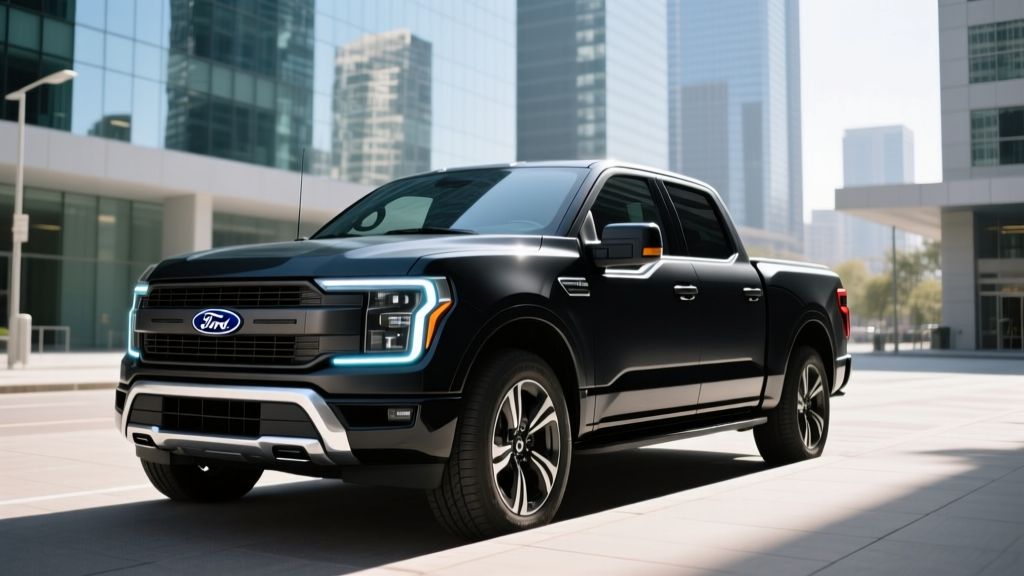
If you've seen the phrase "F-150 Lightning cancelled" trending in forums or search results, the short answer is: no, the F-150 Lightning is not dead — but Ford has significantly scaled back its production and shifted strategy heading into the 2026 model year. After ramping up capacity at the Rouge Electric Vehicle Center through 2023 and 2024, Ford announced production slowdowns and a strategic pivot away from aggressive EV truck volume targets, citing softer-than-expected demand and persistent profitability challenges in its Model e division.
What buyers are actually seeing is a narrowed trim lineup, reduced factory throughput, and longer lead times on certain configurations — not a cancellation. The F-150 Lightning remains in Ford's 2026 lineup, but the window to order one may be tighter than in previous years. Here's what you need to know about the truck's real-world specs, whether it still qualifies for federal incentives, and how it stacks up against the Chevrolet Silverado EV and Rivian R1T if you're shopping today.
2026 F-150 Lightning: Core Specifications at a Glance
| Spec | Standard Range | Extended Range |
|---|---|---|
| EPA Range | 240 miles | 320 miles |
| Battery Capacity (usable) | 98 kWh (NMC) | 131 kWh (NMC) |
| Battery Chemistry | NMC (Nickel Manganese Cobalt) | NMC (Nickel Manganese Cobalt) |
| Drivetrain | Dual-motor AWD | Dual-motor AWD |
| Horsepower | 452 hp | 580 hp |
| Torque | 775 lb-ft | 775 lb-ft |
| 0–60 mph | ~3.8 sec | |
| Max DC Fast Charge | 120 kW | 150 kW |
| 10–80% DC Time | ~44 min | ~41 min |
| Level 2 Home Charge Rate | 11.3 kW (~22 mi/hr) | 19.2 kW (~30 mi/hr) with 80A charger |
| MPGe (combined) | 68 MPGe | 66 MPGe |
| kWh/100 mi | 49 kWh | 51 kWh |
| Max Towing | 7,700 lbs | 10,000 lbs (w/ Max Tow pkg) |
| Payload | 2,235 lbs | 1,800 lbs |
| Base MSRP | ~$55,000 | ~$69,000 (Lariat) |
Sources: fueleconomy.gov, Ford.com F-150 Lightning. Figures reflect latest available EPA and manufacturer data; confirm with dealer for 2026 model-year specifics.
Real-World Range: What the EPA Sticker Doesn't Tell You
EPA Estimate: 240 mi (Standard Range) / 320 mi (Extended Range)
Real-World Highway (70 mph, mild weather): ~210 mi / ~275 mi
Real-World Cold Weather (below 32°F, mixed driving): ~170 mi / ~225 mi
Towing (5,000-lb trailer, flat terrain): ~130 mi / ~175 mi
The F-150 Lightning's range figures are heavily dependent on driving conditions — more so than most EVs due to the truck's 6,500+ lb curb weight and boxy aerodynamics. In our experience and consistent with third-party testing, highway driving at 70–75 mph cuts roughly 12–15% from the EPA combined figure. The Extended Range pack with its 131 kWh NMC battery delivers a genuinely usable 270–280 highway miles in fair weather, but cold temperatures (below freezing) can slash range by 25–30% due to cabin heating demands and reduced battery efficiency.
The most dramatic range hit comes from towing. Pulling a 5,000-pound travel trailer at highway speeds can effectively halve your range. Ford's onboard range calculator is notably conservative — it adjusts estimates dynamically based on recent driving, which is helpful but can be alarming if you're watching the gauge drop to triple digits mid-trip. If you tow regularly, the Extended Range pack is essentially mandatory, and you should plan charging stops every 150–175 miles.
Charging Speed and Infrastructure: DC Fast Charging and Home Setup
| Charging Level | Power (kW) | Miles Added per Hour | Notes |
|---|---|---|---|
| Level 1 (120V household) | 1.4 kW | ~2–3 mi/hr | Emergency/trickle only |
| Level 2 (240V, 32A) | 7.7 kW | ~15 mi/hr | Standard mobile charger |
| Level 2 (240V, 48A Wall Connector) | 11.3 kW | ~22 mi/hr | Std Range full overnight |
| Level 2 (240V, 80A Ford Charge Station Pro) | 19.2 kW | ~30 mi/hr | Ext Range; requires 100A circuit |
| DC Fast Charge (Std Range peak) | 120 kW | ~150 mi in 30 min | Tapers above 80% SoC |
| DC Fast Charge (Ext Range peak) | 150 kW | ~185 mi in 30 min | 10–80% in ~41 min |
The F-150 Lightning's DC fast-charging speeds are its most debated spec. At a peak of 150 kW (Extended Range), it falls well short of the Hyundai Ioniq 5's 240 kW or the Silverado EV's 350 kW capability. The practical impact: a 10–80% session takes roughly 41 minutes at a capable 150+ kW station, versus 18–20 minutes in the fastest-charging competitors.
The charge curve is relatively flat through 60% SoC, then tapers noticeably. You'll see peak speeds only in the 15–50% window — preconditioning the battery via the FordPass app before arriving at a DC station is essential to hitting advertised speeds, especially in cool weather. Without preconditioning, expect peak rates closer to 100–110 kW even on a 350 kW Electrify America or Tesla Supercharger (with NACS adapter).
At home, the Lightning shines if you invest in the right equipment. The 80A Ford Charge Station Pro (roughly $1,200 for hardware) requires a dedicated 100-amp circuit and a 200A or larger electrical panel. Installation typically runs $1,500–$3,500 depending on panel proximity and local permitting. That investment delivers a full overnight charge for the Extended Range pack — critical for anyone using the truck for daily work or towing.
Performance, Capability, and What It's Like to Drive
The dual-motor AWD powertrain gives every Lightning variant a planted, confident feel that defies its size. The Extended Range model's 580 hp and 775 lb-ft of torque deliver a 3.8-second 0–60 time — genuinely quick for a full-size truck, and the instant torque makes merging and passing effortless. The Standard Range truck's 452 hp is more than adequate for daily driving and feels punchy around town.
Ride quality benefits from the independent rear suspension (a departure from the solid axle on gas F-150s), which improves on-road comfort at the cost of some heavy-load composure. The truck rides noticeably better unladen than a gas F-150, but load it to max payload and the rear can feel slightly floaty over bumps.
Standout features:
- Mega Power Frunk: 14.1 cu ft of lockable, drainable front trunk space — fits tools, gear, or serves as a cooler with the built-in drain plug
- Pro Power Onboard: Up to 9.6 kW of vehicle-to-load (V2L) power via bed and cabin outlets — enough to run a job site's worth of tools or serve as home backup during outages
- 15.5-inch SYNC 4A touchscreen (Lariat and above) with wireless Apple CarPlay/Android Auto
- Ford BlueCruise: Hands-on-wheel Level 2 driver assist on pre-mapped divided highways — useful for long hauls but requires continuous driver attention
- Onboard scales: Payload estimation displayed in the instrument cluster and via the FordPass app
Notable drawbacks:
- DC charging speed lags newer competitors (Silverado EV, Rivian R1T Gen 2)
- Energy consumption is high — 49–51 kWh/100 mi means expensive long-distance charging at public DC stations
- Rear visibility is compromised by the high bed wall; the 360-degree camera is essential
- BlueCruise requires a subscription after the initial trial period (~$75/month or $800/year)
Cargo, Passenger Space, and Practicality
The Lightning is built on the F-150 SuperCrew platform, meaning interior space is identical to the gas truck:
- Front legroom: 43.9 inches
- Rear legroom: 43.6 inches
- Bed length: 5.5 ft (standard) — shorter than some gas F-150 configurations
- Bed volume: 52.8 cu ft
- Frunk volume: 14.1 cu ft (400-lb payload capacity)
- Total cargo versatility: Frunk + bed + cabin = more sealed storage than any gas truck in the segment
The frunk is the Lightning's secret weapon for daily use. It replaces the engine bay with a weatherproof, lockable compartment with power outlets and USB ports — ideal for secure tool storage on job sites or groceries that you don't want rolling around the bed. The 5.5-foot bed is a trade-off; if you need a 6.5- or 8-foot bed, you'll need to look at the gas F-150 or Silverado EV (which offers a slightly longer bed option).
Pricing, Trims, and Federal Tax Credit Eligibility
| Trim | Battery | Base MSRP | Est. Federal Credit (§30D) | Effective Price |
|---|---|---|---|---|
| Pro (Standard Range) | 98 kWh | ~$55,000 | Up to $7,500* | ~$47,500 |
| XLT (Standard Range) | 98 kWh | ~$60,000 | Up to $7,500* | ~$52,500 |
| Lariat (Extended Range) | 131 kWh | ~$69,000 | Up to $7,500* | ~$61,500 |
| Platinum (Extended Range) | 131 kWh | ~$82,000 | Up to $7,500* | ~$74,500 |
- MSRP Cap: Trucks/vans/SUVs must have an MSRP at or below $80,000 — the Platinum trim may exceed this threshold depending on options; verify the window sticker
- Buyer Income Cap: Modified AGI must not exceed $150,000 (single) / $225,000 (head of household) / $300,000 (joint)
- Battery Sourcing: Critical minerals and battery components must meet escalating percentage thresholds from qualified trade partners — Ford has worked to secure North American supply chains, but eligibility can shift; verify at purchase via the IRS VIN lookup tool
- Point-of-Sale Transfer: As of 2024+, the credit can be transferred to the dealer at purchase for an upfront price reduction rather than claimed on your tax return — confirm with your dealer
- One-time use: The §30D credit is available once per VIN and once per taxpayer per calendar year
Source: IRS.gov — Credits for New Clean Vehicles. Rules are subject to change; consult a tax professional for your specific situation.
The "cancelled" narrative partly stems from Ford's decision to trim the Lightning lineup. For 2026, Ford has reduced build configurations and consolidated options packages, which can make it harder to find exactly the spec you want in dealer inventory. However, the core trims (Pro, XLT, Lariat, Platinum) remain available, and the Pro trim at roughly $55,000 before credits represents one of the most affordable full-size electric pickups on the market.
How the Lightning Compares: Silverado EV, Rivian R1T, and the Gas F-150
| Spec | Ford F-150 Lightning (Ext Range) | Chevrolet Silverado EV (4WT) | Rivian R1T (Dual Max) |
|---|---|---|---|
| EPA Range | 320 mi | ~440 mi | ~352 mi |
| Battery (kWh) | 131 kWh NMC | ~200 kWh NMC | ~149 kWh NMC |
| DC Fast Charge Peak | 150 kW | 350 kW | 220 kW |
| 10–80% DC Time | ~41 min | ~20 min | ~30 min |
| 0–60 mph | 3.8 sec | ~4.5 sec | ~3.5 sec |
| Max Towing | 10,000 lbs | 10,000 lbs | 11,000 lbs |
| Base MSRP (comparable trim) | ~$69,000 | ~$72,000 | ~$87,000 |
| Bed Length | 5.5 ft | 5.5 ft (Multi-Flex midgate extends) | 4.5 ft |
| Federal Credit Eligible | Yes (verify sourcing) | Yes (verify sourcing) | Yes (verify sourcing) |
The Silverado EV's biggest advantage is range and charging speed — its Ultium-based platform supports 350 kW DC charging and offers over 400 miles on the largest pack. However, it's more expensive and less proven in the market. The Rivian R1T is the driver's truck — better handling, more adventurous off-road capability, and a premium interior — but it's significantly more expensive and offers a shorter bed. The Lightning occupies a middle ground: strong value, proven reliability after two model years of production refinement, and the best frunk in the segment.
Battery Warranty, Longevity, and Ownership Costs
Ford backs the F-150 Lightning's battery and electric powertrain with an 8-year / 100,000-mile warranty, consistent with industry standards and the federal minimum for EV components. The warranty covers battery capacity loss below 70% of original capacity — a threshold that, based on NMC degradation curves and early Lightning owner data, is unlikely to be reached under normal use within the warranty period.
Real-world degradation data from 2022–2024 Lightning owners shows approximately 3–5% capacity loss over the first 30,000 miles, which is typical for NMC chemistry with active liquid thermal management. Ford's battery management system includes a substantial buffer (roughly 5–7 kWh unusable below 0% displayed) to protect long-term health.
Estimated 5-Year Ownership Costs:
- Electricity (home charging, $0.14/kWh avg, 15,000 mi/yr): ~$5,250 total
- Gas equivalent (F-150 4WD, 20 MPG, $3.50/gal): ~$13,125 total
- Fuel savings over 5 years: ~$7,875
- Insurance: Expect 15–25% higher premiums vs. gas F-150 (average $1,800–$2,400/year depending on state and driving record)
- Maintenance: Minimal — no oil changes, no transmission fluid. Budget for cabin air filters, wiper fluid, brake fluid checks, and tire replacement (EV-specific tires run $250–$350 each; expect 30,000–40,000 miles per set due to weight and torque)
Who Should Buy the F-150 Lightning — And Who Should Wait
- You want a full-size electric work truck under $60,000 (after credits) for job-site use with Pro Power Onboard
- You have home Level 2 charging and drive under 200 miles daily
- You value the frunk and enclosed storage for tools, gear, or groceries
- You want V2L capability for job sites, camping, or home backup power
- You're an existing F-150 owner who wants electric without relearning a new platform
- You tow frequently over 200 miles — the Silverado EV's range and charging speed are meaningfully better for road-trip towing
- You need a longer bed (6.5+ ft) without a midgate solution
- You prioritize fastest-possible DC charging for frequent long-distance driving
- You want a premium adventure-focused truck — the Rivian R1T offers better off-road dynamics and interior quality at a higher price
The production slowdown means 2026 Lightning inventory may be spotty at some dealers. If you find the configuration you want, the truck remains a compelling, practical electric workhorse — especially at the Pro and XLT trim levels where the federal tax credit has the most impact on effective pricing. Ford's commitment to the Lightning platform isn't in question; the company has invested billions in the Rouge EV Center and continues to iterate. But the era of aggressive production targets and rapid expansion is pausing as Ford recalibrates its EV strategy.
Frequently Asked Questions
Was the F-150 Lightning actually cancelled?
No. Ford reduced production volume and streamlined configurations for 2026, but the F-150 Lightning remains in the active lineup. The "cancelled" narrative comes from Ford's broader strategic pullback on EV investment targets and the consolidation of available build options. You can still order and purchase a new Lightning, though availability may be more limited than in 2024.
What is the real-world range of the F-150 Lightning?
The Extended Range model is EPA-rated at 320 miles, but expect roughly 270–280 miles in real-world highway driving at 70 mph, and as little as 225 miles in freezing temperatures. The Standard Range model's 240-mile EPA rating translates to about 200–210 highway miles in practice. Towing a 5,000-lb trailer cuts range roughly in half.
How fast does the F-150 Lightning charge?
DC fast charging peaks at 150 kW (Extended Range) or 120 kW (Standard Range), delivering a 10–80% charge in approximately 41 minutes. At home on a Level 2 charger, the Extended Range pack charges at up to 19.2 kW (with the 80A Ford Charge Station Pro), adding roughly 30 miles of range per hour — a full overnight charge from near-empty.
Does the F-150 Lightning qualify for the $7,500 federal tax credit?
Most configurations qualify under IRS §30D rules, subject to buyer income caps ($150K single / $300K joint), the $80,000 MSRP cap for trucks/SUVs, and battery critical-mineral sourcing requirements that tighten annually. The Platinum trim with expensive options may approach or exceed the MSRP cap — always verify the exact window sticker price and use the IRS VIN lookup tool before purchasing. The credit can be applied as a point-of-sale reduction at participating dealers.
Is the F-150 Lightning worth buying over the Silverado EV or Rivian R1T?
It depends on your priorities. The Lightning offers the best value at the Pro/XLT trims, the most practical frunk, and proven Pro Power Onboard for work use. The Silverado EV wins on range (440 mi) and charging speed (350 kW) but costs more. The Rivian R1T is the most capable off-road and has the most premium interior, but starts around $87,000. For budget-conscious buyers who need a work truck first, the Lightning at ~$47,500 after credits (Pro trim) is hard to beat.
What happens if Ford discontinues the Lightning — will I still get parts and service?
Federal law requires automakers to maintain parts availability for at least 10 model years after production ends. Even in a discontinuation scenario, Ford's existing dealer network, the shared F-150 platform components (suspension, interior, body panels), and the 8-year/100,000-mile battery warranty would remain in force. The risk is primarily long-term resale value uncertainty, not serviceability.