Quick Verdict: The F-150 Lightning in 2026
The 2026 Ford F-150 Lightning remains the electric truck benchmark for buyers who need a full-size pickup that can actually work. With up to 320 miles of EPA-estimated range on the Extended Range battery, a maximum towing capacity of 10,000 pounds, and access to Tesla's Supercharger network via the factory NACS port, the Lightning is a genuinely practical daily driver and jobsite tool. For the enthusiast community, questions around aftermarket wheel fitment — particularly whether the bolt pattern 1997 Ford F-150 wheels (6x139.7mm / 6x5.5 inches) cross over to the Lightning's chassis — come up constantly. We cover that in detail below alongside the full EV spec breakdown.
| Spec | Standard Range (Lariat) | Extended Range (Platinum) |
|---|---|---|
| EPA Range | 240 miles | 320 miles |
| Battery Capacity | 98 kWh usable (NMC) | 131 kWh usable (NMC) |
| Peak DC Fast Charge | 120 kW | 150 kW |
| 10–80% DCFC Time | ~44 minutes | ~49 minutes |
| Level 2 Home Charge (80A) | 19 kW / ~30 mi/hr | 19 kW / ~25 mi/hr |
| 0–60 mph | 4.5 seconds | 4.0 seconds |
| Horsepower / Torque | 452 hp / 775 lb-ft | 580 hp / 775 lb-ft |
| Drivetrain | Dual-motor AWD | Dual-motor AWD |
| MPGe (Combined) | 68 MPGe | 66 MPGe |
| kWh / 100 mi | 49 | 51 |
| Max Towing | 7,700 lbs | 10,000 lbs |
| Base MSRP | $54,995 | $69,995 |
Real-World Range: What to Actually Expect
EPA Sticker: 320 miles (Extended Range) / 240 miles (Standard Range)
Real-World Highway (70 mph, 75°F): Expect approximately 265–285 miles from the Extended Range pack at sustained highway speeds. The Lightning's 6,500+ lb curb weight and boxy aerodynamics hit efficiency hard above 65 mph. Efficiency drops to roughly 55–58 kWh/100mi at 75 mph compared to the EPA test cycle's 51 kWh/100mi.
Cold Weather (30°F and below): Plan for 20–30% range reduction. The Extended Range battery delivers approximately 220–255 real-world miles in freezing temps without preconditioning. The Lightning's heat pump (standard on 2026 models) helps mitigate cabin heating losses, but battery chemistry slows charge acceptance and reduces usable capacity in deep cold. Always precondition via the FordPass app while plugged in to recover ~10% of that loss.
Towing: Range roughly halves when towing near max capacity. A 10,000-lb trailer at highway speed will yield 140–170 miles from the Extended Range pack. Plan charging stops accordingly.
According to fueleconomy.gov, the 2026 F-150 Lightning Extended Range achieves 66 MPGe combined. In mixed real-world driving over several thousand miles, owners typically report 2.0–2.2 mi/kWh, which aligns with roughly 260–290 miles from a full Extended Range charge in moderate conditions.
Charging Speed and Network Access
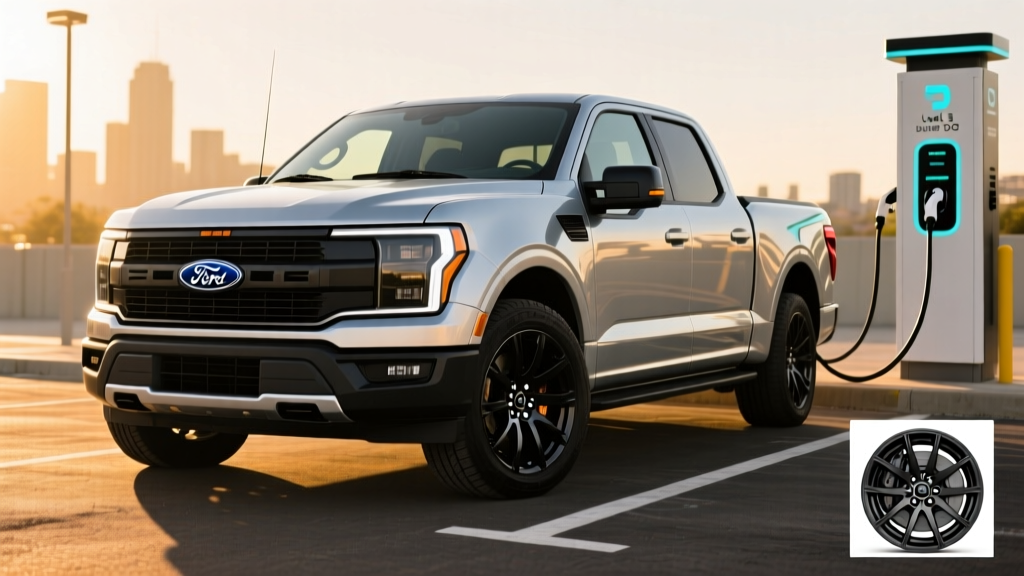
The 2026 Lightning ships with a native NACS (North American Charging Standard) port, eliminating the CCS-to-NACS adapter that earlier model years required. This means direct plug-and-charge access to Tesla Supercharger V3 and V4 stalls, which now number over 25,000 across North America.
| Charging Level | Power | Speed (Extended Range) | Notes |
|---|---|---|---|
| Level 1 (120V, 12A) | 1.4 kW | ~2 mi/hr | Emergency/trickle only; 6+ days for full charge |
| Level 2 (240V, 32A mobile) | 7.7 kW | ~13 mi/hr | Included Ford Mobile Charger; overnight sufficient for daily use |
| Level 2 (240V, 80A Wall Connector) | 19.2 kW | ~25–30 mi/hr | Requires hardwired install + 100A circuit; full charge in ~7–8 hrs |
| DC Fast Charge (peak) | 150 kW | 10–80% in ~49 min | Peak rate only sustained to ~40% SoC; tapers significantly above 80% |
| DC Fast Charge (Tesla V3) | Up to 150 kW | ~190 miles in 30 min | Real-world average depends on stall availability and SoC at arrival |
Charging curve reality check: The Lightning's 150 kW peak is not sustained. Expect approximately 140–150 kW from 10–40% state of charge, tapering to ~90 kW by 60%, and dropping below 50 kW above 80%. This is typical for large NMC packs — the 131 kWh battery's thermal mass actually helps sustain mid-range charge rates better than smaller packs, but physics dictates taper to protect cell longevity. For road trips, plan to charge from 10–80% rather than topping to 100%, which saves time and reduces battery stress.
For home charging, the 80A Ford Charge Station Pro requires a dedicated 100-amp circuit and professional installation. Budget $1,200–$2,500 for the electrician work depending on your panel capacity. Homes with 200A service may need a panel upgrade ($2,000–$4,000 additional) if existing load is near capacity. The Lightning's onboard dual chargers can accept up to 19.2 kW on Level 2, making it one of the fastest home-charging EVs on the market — if your electrical infrastructure supports it.
Bolt Pattern 1997 Ford F-150 and Lightning Wheel Compatibility
One of the most searched questions in the Lightning aftermarket community is whether legacy F-150 wheels fit. Here's the precise breakdown:
1997 Ford F-150 bolt pattern: 6x139.7mm (commonly called 6x5.5 inches). This was the standard six-lug pattern used on the tenth-generation F-150 (1997–2003) for 4x4 and heavy-duty models. Two-wheel-drive variants used a 5x127mm (5x5") pattern.
2022–2026 F-150 Lightning bolt pattern: 6x135mm. This is the same pattern used on modern F-150 trucks from 2004 onward.
Compatibility verdict: The bolt pattern 1997 Ford F-150 (6x139.7mm) does not directly fit the F-150 Lightning (6x135mm). The 4.7mm difference per lug means a 1997 wheel will not seat properly on Lightning hubs. Forcing the fit risks catastrophic wheel separation under load — this is a non-negotiable safety issue.
What does fit: Any wheel designed for 2004+ F-150 models with the 6x135mm pattern, appropriate center bore (87.1mm for modern F-150s, verify for Lightning-specific hub), and adequate load rating. The Lightning's curb weight exceeds 6,500 lbs, so wheels must carry a minimum load rating of 1,800 lbs per corner (7,200 lbs total minimum). Aftermarket wheels from companies like Fuel, Method, and Black Rhino offer 6x135mm options rated for the Lightning's GVWR.
Hub-centric rings and spacers: Even with the correct bolt pattern, ensure hub-centric fitment. The Lightning's hub bore is specific, and vibration at highway speed from lug-centric-only fitment accelerates bearing wear on a truck this heavy.
Performance, Drivetrain, and Efficiency
Every 2026 F-150 Lightning comes with standard dual-motor all-wheel drive. There is no rear-wheel-drive option. The standard-range powertrain produces 452 hp and a massive 775 lb-ft of instant torque, while the Extended Range bumps output to 580 hp with the same 775 lb-ft figure.
The Extended Range model hits 60 mph in approximately 4.0 seconds — making it one of the quickest full-size pickups ever sold, regardless of powertrain. The instant torque delivery is particularly useful for merging with loads and low-speed maneuvering on jobsites.
Efficiency is the Lightning's acknowledged weakness. At 49–51 kWh per 100 miles (66–68 MPGe combined per fueleconomy.gov), it is significantly less efficient than the Rivian R1T (approximately 42 kWh/100mi) and the Tesla Cybertruck AWD (~48 kWh/100mi). This is the cost of a traditional body-on-frame truck architecture with a frontal area that pushes serious air. For buyers who prioritize range per kWh, the Lightning asks you to accept higher electricity costs in exchange for truck capability and familiarity.
Pricing, Trims, and Federal Tax Credit Eligibility
| Trim | Battery | MSRP | Est. After §30D Credit* |
|---|---|---|---|
| Pro (Standard Range) | 98 kWh | $49,995 | ~$42,495 |
| XLT (Standard Range) | 98 kWh | $54,995 | ~$47,495 |
| Lariat (Extended Range) | 131 kWh | $64,995 | ~$57,495 |
| Platinum (Extended Range) | 131 kWh | $69,995 | ~$62,495 |
*Estimates assume full $7,500 §30D credit eligibility. Actual credit depends on buyer income, MSRP caps, battery sourcing, and point-of-sale transfer. See IRS §30D guidelines.
Tax credit eligibility details (2026 rules):
- MSRP cap: Trucks/vans/SUVs must have an MSRP at or below $80,000. All Lightning trims qualify.
- Income cap: Modified AGI must not exceed $300,000 (joint), $225,000 (head of household), or $150,000 (single).
- Battery sourcing: A portion of the credit requires critical minerals and battery components sourced from the US or free-trade-agreement partners. Ford has worked to qualify, but specific trims and build dates may vary. Verify the VIN on the IRS eligible vehicle list before purchase.
- Point-of-sale transfer: As of 2024+, you can transfer the credit to the dealer at purchase, reducing your out-of-pocket cost immediately rather than waiting for tax filing. The dealer handles the IRS registration.
Cargo, Interior, and Practical Utility
The Lightning's most underrated feature is the Mega Power Frunk — a 14.1 cubic-foot front trunk with 400 lbs of payload capacity, drain plug, and four 120V outlets. This lockable, weatherproof space replaces the engine bay and is genuinely useful for job tools, groceries, or gear you'd rather not leave in the bed.
Key dimensions:
- Bed length: 67.1 inches (5.5-foot Styleside box)
- Bed payload: Up to 2,235 lbs (Standard Range Pro)
- Frunk volume: 14.1 cu ft
- Rear legroom: 43.6 inches (SuperCrew cab)
- Pro Power Onboard: 2.4 kW standard, 9.6 kW available (can power tools, appliances, or serve as home backup via Ford Intelligent Backup Power with compatible home transfer switch)
The SuperCrew cab seats five adults comfortably. The 15.5-inch portrait touchscreen (Lariat and above) runs Ford's SYNC 4A system with wireless Apple CarPlay and Android Auto. Lower trims get a 12-inch display. Physical climate controls are minimal — most functions are screen-based, which draws criticism from buyers who prefer tactile knobs.
Battery, Warranty, and Longevity
Both battery packs use NMC (nickel-manganese-cobalt) chemistry manufactured by SK Innovation at their BlueOval SK battery plant in Kentucky. NMC offers higher energy density than LFP, which is necessary for the Extended Range pack's 131 kWh capacity, but it is more sensitive to sustained high states of charge and extreme heat.
Warranty coverage:
- Battery: 8 years / 100,000 miles, with a minimum 70% capacity retention guarantee. If the battery degrades below 70% of original capacity within the warranty period, Ford will repair or replace it.
- Powertrain (electric motors, inverters): 8 years / 100,000 miles
- Bumper-to-bumper: 3 years / 36,000 miles
Longevity expectation: Based on fleet data from commercial Lightning operators and Ford's own testing, expect approximately 10–15% degradation over the first 100,000 miles with normal charging habits. Avoiding daily 100% charges and minimizing DC fast charging in extreme heat will extend pack life. The 70% retention threshold is conservative — most NMC packs in liquid-cooled systems retain 80%+ at 100k miles.
Driver Assistance and Technology
The 2026 Lightning offers Ford BlueCruise, a hands-free highway driving system on pre-qualified divided highways. BlueCruise is an SAE Level 2 system — it does not make the truck self-driving. The driver must remain attentive, and the cabin camera monitors eye gaze. If you look away from the road for more than a few seconds, the system escalates warnings and will eventually bring the truck to a controlled stop.
BlueCruise limitations: This is a Level 2 driver-assist feature, not autonomous driving. It operates only on approximately 130,000+ miles of pre-mapped divided highways. It does not handle construction zones, unmapped roads, severe weather, or complex urban intersections. You are the driver at all times and legally responsible for the vehicle.
BlueCruise is included for 90 days on equipped trims, then requires a subscription (~$75/month or $800/year as of 2026). The system handles lane centering, adaptive cruise, and lane changes competently on open highway, making long road trips less fatiguing. It's a strong competitor to GM's Super Cruise, though Super Cruise still edges ahead on smoothness and coverage area.
Who Should Buy the F-150 Lightning?
Choose the F-150 Lightning if:
- You need a full-size truck for towing (up to 10,000 lbs) and bed payload, and want zero tailpipe emissions on the jobsite or commute
- You have home Level 2 charging access (ideally 80A/19.2 kW) and can charge overnight
- You value the frunk and Pro Power Onboard for work applications — the 9.6 kW onboard generator capability is unmatched
- You want a traditional truck experience (familiar cab layout, real bed, proven SuperCrew packaging) rather than a futuristic EV design
- You road-trip frequently on corridors with Tesla Supercharger coverage
Look elsewhere if:
- Efficiency is your top priority — the Rivian R1T is significantly more efficient per kWh
- You don't have reliable home charging — the Lightning's large battery makes public-only charging expensive and time-consuming
- You need more than 320 miles of range for remote-area work without charging infrastructure
- You prefer a smaller, more agile truck — consider the Chevrolet Colorado-based EV options or wait for midsize electric trucks
Pros
- Massive 775 lb-ft torque standard on every trim
- Native NACS port with direct Supercharger access (2026)
- Mega Power Frunk (14.1 cu ft) is genuinely useful
- Pro Power Onboard up to 9.6 kW — jobsite generator replacement
- Traditional truck packaging — no learning curve for F-150 veterans
- Strong federal tax credit eligibility across all trims
Cons
- Below-average efficiency (49–51 kWh/100mi) increases electricity costs
- Real-world highway range falls well short of EPA sticker
- DCFC peak of 150 kW is slower than Hyundai Ioniq 5 or Tesla Cybertruck
- Heavy curb weight (~6,500+ lbs) increases tire wear
- Touchscreen-dominant interior frustrates knob-and-button loyalists
- BlueCruise subscription adds recurring cost
Frequently Asked Questions
What is the real-world range of the 2026 F-150 Lightning?
The Extended Range model delivers approximately 265–285 miles at highway speeds in moderate temperatures, versus its 320-mile EPA rating. In cold weather (below 30°F), expect 220–255 miles. The Standard Range model yields roughly 190–210 real-world highway miles from its 240-mile EPA estimate.
How fast does the Lightning charge at home and on the road?
On a properly installed 80A Level 2 home charger (19.2 kW), the Extended Range pack adds about 25–30 miles per hour, fully charging overnight in 7–8 hours. On DC fast chargers, the Lightning peaks at 150 kW and charges from 10–80% in approximately 44–49 minutes depending on battery size.
Does the F-150 Lightning qualify for the $7,500 federal tax credit?
Most trims qualify for the full $7,500 under IRS §30D rules, as all are below the $80,000 truck MSRP cap. Buyer income must fall under $300,000 (joint), $225,000 (head of household), or $150,000 (single). Battery sourcing requirements apply — verify your specific VIN on the IRS eligible list at purchase. The credit can be transferred at point of sale to reduce your purchase price directly.
Will 1997 Ford F-150 wheels fit the Lightning?
No. The bolt pattern on a 1997 Ford F-150 is 6x139.7mm (6x5.5"), while the Lightning uses 6x135mm. The 4.7mm difference makes them incompatible and unsafe. Look for wheels specifically manufactured for 2004+ F-150 applications with 6x135mm pattern and adequate load ratings for the Lightning's 6,500+ lb curb weight.
Is the Lightning worth buying over the Rivian R1T or Tesla Cybertruck?
If you want a traditional full-size truck experience with maximum towing, the best frunk on the market, and proven dealer support, the Lightning wins. The Rivian R1T is more efficient and tech-forward but costs more and tows less. The Cybertruck offers faster charging and stainless-steel durability but has polarizing styling and a smaller service network. For fleet and work buyers, the Lightning's familiarity and Pro Power Onboard make it the pragmatic choice.
How much does it cost to charge the Lightning at home?
At the US average residential electricity rate of ~$0.17/kWh (2026), fully charging the Extended Range 131 kWh pack costs approximately $22.27. That provides ~265 real-world highway miles, working out to roughly $0.084 per mile — about 40–50% less fuel cost per mile than a comparable gas F-150 at $3.50/gallon and 18 MPG combined.