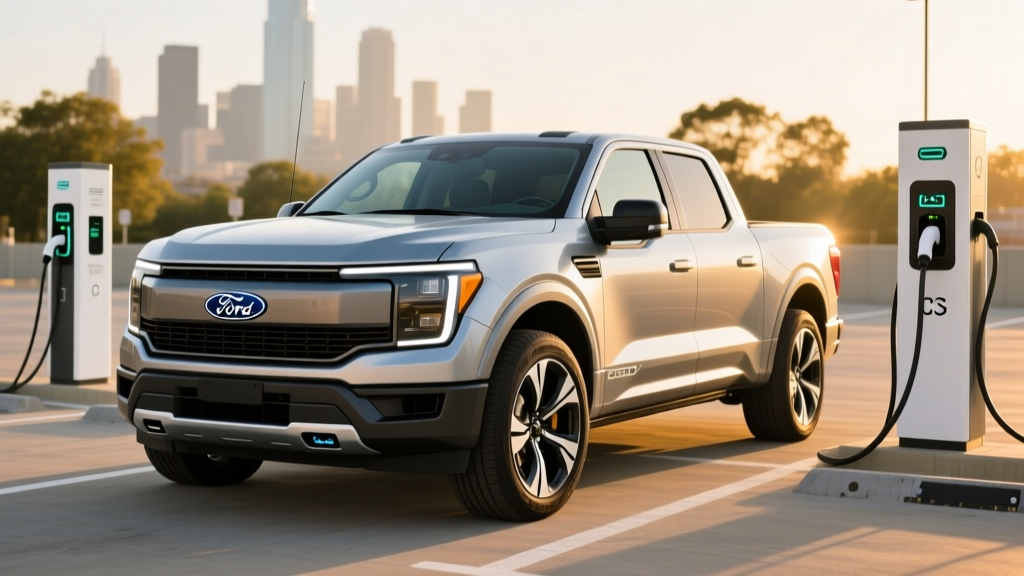
Quick Verdict: The Electric Truck That Still Feels Like an F-150
If you're a long-time F-150 owner researching the Lightning — and specifically wondering whether your existing wheel collection from a 2014 F-150 will bolt right on — you're not alone. The bolt pattern for 2014 F-150 models (6×135 mm) carried forward through the 2020 generation, but Ford changed the platform significantly for the Lightning. The 2026 F-150 Lightning uses the same 6×135 mm bolt pattern, but hub bore, offset, and brake-caliper clearance differences mean most 2014-era wheels will not clear the Lightning's larger brake assemblies and independent rear suspension components. We'll break down exactly what fits and what doesn't, alongside a complete EV ownership profile.
The 2026 F-150 Lightning remains one of the most capable electric trucks on the market, balancing real work-truck utility with daily-driver refinement. But range realities, charging logistics, and tax-credit eligibility deserve a hard look before you sign.
Range, Battery, and Real-World Efficiency
The 2026 Lightning offers two battery packs across its trim lineup:
- Standard Range: 98 kWh usable (NMC lithium-ion) — EPA-estimated 240 miles
- Extended Range: 131 kWh usable (NMC lithium-ion) — EPA-estimated 320 miles
Real-World Range Check
EPA Sticker: 320 miles (Extended Range, XLT/Lariat)
Expect in practice: ~260–285 miles on mixed highway driving at 70 mph. In cold weather (below 30°F), plan for 200–230 miles due to battery resistance and cabin heating demands. Towing a 5,000-lb trailer cuts range to roughly 150–170 miles regardless of pack size. The Lightning's heat pump helps, but physics wins when you're pushing 6,500+ lbs of truck through winter air.
Efficiency lands at 66 MPGe combined (Extended Range) per fueleconomy.gov, which translates to roughly 51 kWh per 100 miles. That's thirstier than a Tesla Model Y or Rivian R1T, but expected for a full-size body-on-frame truck with this much frontal area.
| Spec | Standard Range | Extended Range |
|---|---|---|
| Usable Battery | 98 kWh (NMC) | 131 kWh (NMC) |
| EPA Range | 240 mi | 320 mi |
| MPGe (combined) | 68 MPGe | 66 MPGe |
| kWh / 100 mi | 49 | 51 |
| Peak DC Fast Charge | 150 kW | 150 kW |
| 10–80% DCFC Time | ~44 min | ~49 min |
| Level 2 Home Charge Rate | 11.5 kW (30 mi/hr) | 11.5 kW (22 mi/hr) |
| 0–60 mph | ~5.0 sec | ~3.8 sec |
| Horsepower | 452 hp | 580 hp |
| Drivetrain | Dual-motor AWD | Dual-motor AWD |
Charging Speed: DC Fast, Level 2, and What You Need at Home
The Lightning's 150 kW peak DC fast-charge rate is conservative compared to rivals like the Rivian R1T (which peaks near 200+ kW on its Max pack) or the Silverado EV (350 kW capable). Ford prioritized battery longevity and charge-curve consistency over peak numbers, but the practical impact is real on road trips.
| Charge Level | Power (kW) | Miles Added per Hour | 10–80% Time |
|---|---|---|---|
| Level 1 (120V / 12A) | ~1.4 kW | ~2–3 mi/hr | Multiple days |
| Level 2 (240V / 48A) | 11.5 kW | 22–30 mi/hr | ~8–10 hours (overnight) |
| DC Fast Charge | 150 kW peak | ~180 mi/hr (peak) | 44–49 minutes |
Charging-curve reality: The Lightning sustains near-peak power from roughly 10–55% State of Charge, then tapers progressively. From 80–100%, expect the rate to drop below 40 kW. On a road trip, plan your stops around the 10–80% window for maximum efficiency — charging past 80% adds significant time for diminishing range returns.
Home charging setup: Ford includes a 30-amp Mobile Power Cord for Level 2 charging at ~7.2 kW (adding roughly 14–18 mi/hr). For the full 11.5 kW rate, you'll need a 48-amp hardwired Level 2 station like the Ford Charge Station Pro or a third-party unit (ChargePoint Home Flex, Emporia Vue). Budget $500–$800 for the charger and $800–$2,500 for professional installation depending on your panel capacity. A 200-amp electrical panel is usually sufficient, but older homes may need a $1,500–$3,000 panel upgrade — factor this into your total purchase cost.
Wheel Bolt Pattern: 2014 F-150 Compatibility Explained
This is where truck enthusiasts get specific, and rightly so. Here's the technical breakdown:
- 2014 F-150 bolt pattern: 6×135 mm (6 lug, 135 mm circle diameter)
- 2026 F-150 Lightning bolt pattern: 6×135 mm — same pattern
- Hub bore (2014): 87.1 mm
- Hub bore (2026 Lightning): 87.1 mm — same
On paper, the bolt pattern matches. In practice, three factors prevent most 2014-era wheels from fitting the Lightning:
- Brake caliper clearance: The Lightning's regenerative braking system and larger front rotors require more inner-barrel clearance than 2014 wheels were designed to provide. Most 17-inch and some 18-inch wheels from that era will contact the caliper.
- Offset and backspacing: The Lightning's independent rear suspension and wider track shift the optimal offset range. Running 2014 wheels with incorrect offset can cause suspension-component interference or alter bearing load in ways Ford's engineering team did not validate.
- Load rating: The Lightning's curb weight (~6,200–6,800 lbs depending on trim and battery) exceeds the 2014 F-150's by roughly 1,000–1,500 lbs. Wheels must carry an adequate load rating — many aftermarket 2014-era wheels were rated for lighter GVWR applications.
Bottom line: Don't assume bolt-pattern compatibility equals full fitment. If you want to reuse wheels, have a qualified tire shop verify caliper clearance, offset, and load rating before mounting. Ford's factory 18-, 20-, and 22-inch Lightning wheels are engineered for the platform and remain the safest choice.
Performance, Cargo, and Daily Utility
The dual-motor AWD powertrain is standard across all 2026 Lightning trims. The Extended Range model's 580 hp and 775 lb-ft of torque deliver a 3.8-second 0–60 mph time — genuinely quick for a truck that can tow up to 10,000 lbs (with the Max Trailer Tow Package on Lariat and Platinum trims).
Cargo and space dimensions:
- Bed length: 67.1 inches (5.5-ft box, SuperCrew only)
- Bed volume: 52.8 cu ft
- Mega Power Frunk (front trunk): 14.1 cu ft, 400-lb payload capacity, drainable and lockable
- Rear-seat legroom: 43.6 inches (best-in-class for crew cabs)
- Pro Power Onboard: 2.4 kW standard, 9.6 kW available (runs tools, appliances, or a home circuit during outages)
The frunk is a genuine differentiator. It's large enough for two carry-on bags or a full set of power tools, and the drain plug makes it practical for tailgating with ice. The 9.6 kW Pro Power Onboard option turns the Lightning into a mobile generator — Ford estimates it can power essential home circuits for up to three days during an outage when paired with the Ford Intelligent Backup Power system (requires a compatible home transfer switch, installed separately).
Pricing, Trims, and Federal Tax Credit Eligibility
The 2026 Lightning lineup spans four trims. Pricing below reflects base MSRP including destination, before any incentives:
| Trim | Battery | MSRP | Est. After §30D Credit* |
|---|---|---|---|
| Pro (fleet/commercial) | Standard Range | $52,090 | ~$44,590 |
| XLT | Standard Range | $57,574 | ~$50,074 |
| XLT | Extended Range | $68,574 | ~$61,074 |
| Lariat | Extended Range | $77,974 | ~$70,474 |
| Platinum | Extended Range | $96,874 | ~$89,374 |
*Federal tax credit caveats (IRS §30D): The Lightning qualifies for up to $7,500, but eligibility depends on three IRS requirements that change periodically:
- MSRP cap: Trucks/vans/SUVs must be under $80,000 MSRP. The Platinum trim exceeds this cap and is not eligible.
- Buyer income cap: Modified AGI must not exceed $150,000 (single), $225,000 (head of household), or $300,000 (joint filing).
- Battery sourcing: A percentage of critical minerals and battery components must be sourced from the U.S. or free-trade-agreement countries. Ford has worked to qualify, but verify current-year compliance on irs.gov before purchase.
- Point-of-sale transfer: As of 2024, the credit can be transferred to the dealer at purchase, reducing your out-of-pocket cost immediately rather than waiting until tax filing.
Always confirm eligibility with your tax professional and the IRS's official clean-vehicle credit page before finalizing your purchase. Rules have shifted annually since the Inflation Reduction Act took effect.
Tech, Driver Assists, and Notable Drawbacks
Infotainment: The 12-inch touchscreen (15.5-inch on Lariat/Platinum) runs Ford SYNC 4 with wireless Apple CarPlay and Android Auto, over-the-air updates, and a built-in modem for FordPass remote features (preconditioning, charge scheduling, vehicle location). The interface is responsive but occasionally lags on cold starts — a minor frustration that software updates continue to address.
Driver assistance: Ford Co-Pilot360 2.0 is standard, including adaptive cruise control with stop-and-go, lane centering, blind-spot monitoring with trailer coverage, and evasive steering assist. BlueCruise (hands-free highway driving on pre-mapped divided highways) is available as a subscription — $75/month or $800/year after a 90-day trial. Note: BlueCruise is SAE Level 2 driver assistance. It requires your eyes on the road (monitored by an interior camera) and you must be ready to take over at any time. It is not self-driving.
Pros
- Mega Power Frunk is best-in-class utility
- Pro Power Onboard (9.6 kW) replaces a home generator
- Comfortable, quiet ride with independent rear suspension
- Strong tow rating (10,000 lbs) for an EV truck
- Spacious SuperCrew cabin with class-leading rear legroom
- Over-the-air updates continue to improve the truck post-purchase
Cons
- 150 kW DC fast-charge peak is slow vs. Silverado EV and R1T
- Extended Range trims push past the $80K tax-credit MSRP cap
- Towing slashes range to ~150–170 miles — plan accordingly
- Only available in SuperCrew / 5.5-ft bed — no long-bed option
- Curb weight (6,500+ lbs) accelerates tire wear
- BlueCruise subscription adds ongoing cost after trial period
Warranty and Long-Term Battery Outlook
Ford covers the Lightning's battery and electric powertrain for 8 years or 100,000 miles (whichever comes first), with a capacity-retention threshold of 70%. If the battery degrades below 70% of original capacity within that window, Ford will repair or replace it under warranty.
The NMC chemistry in both packs has proven durable in Ford's fleet data, but NMC is more sensitive to sustained high-State-of-Charge storage than LFP chemistry (used in the Tesla Model Y Standard Range and Rivian's standard pack). Best practice: charge to 80–90% for daily use, reserve 100% for road-trip days, and avoid leaving the truck plugged in at full charge for extended periods in hot weather.
Bumper-to-bumper coverage is 3 years / 36,000 miles — typical for Ford, though shorter than Hyundai/Kia's 5-year/60,000-mile basic warranty.
Who Should Buy the 2026 F-150 Lightning?
Choose the Lightning if:
- You need a full-size crew-cab truck with genuine towing capability and home backup power
- You can charge at home (Level 2) and most daily driving is under 200 miles
- You value the frunk, Pro Power Onboard, and a refined independent-rear-suspension ride
- You're upgrading from a 2014–2020 F-150 and want to stay in the Ford ecosystem
Look elsewhere if:
- You regularly tow long distances — range drops make the Lightning impractical for 300+ mile towing runs
- You need a long bed (8-ft) — Lightning only comes in 5.5 ft
- You want faster DC charging — consider the Chevy Silverado EV or Rivian R1T
- Your budget is under $50K after incentives — the Lightning Pro is fleet-oriented and spartan; the XLT still starts near $50K after credit
Frequently Asked Questions
What is the real-world range of the 2026 F-150 Lightning?
The Extended Range model's EPA estimate is 320 miles. In mixed real-world driving at highway speeds, expect 260–285 miles. In sub-30°F winter conditions, plan for 200–230 miles. Towing a trailer cuts range to approximately 150–170 miles regardless of pack size.
How fast does the Lightning charge at home and on the road?
At home on a 48-amp Level 2 charger (11.5 kW), the Extended Range pack fills overnight in about 10–12 hours, adding roughly 22 miles of range per hour. On a DC fast charger, the Lightning peaks at 150 kW and charges from 10–80% in approximately 49 minutes (Extended Range). The charge rate tapers significantly above 80%.
How much does the Lightning cost after federal tax credits?
The XLT Standard Range starts at $57,574 MSRP and drops to roughly $50,074 after the maximum $7,500 §30D credit — assuming you meet income caps and battery-sourcing requirements. The Platinum trim at $96,874 exceeds the $80,000 truck MSRP cap and is not eligible for the federal credit.
Will wheels from a 2014 F-150 fit the 2026 Lightning?
The bolt pattern (6×135 mm) and hub bore (87.1 mm) are identical. However, most 2014-era wheels will not clear the Lightning's larger brake calipers, and offset differences plus the Lightning's higher curb weight create fitment and safety concerns. Verify clearance, offset, and load rating with a professional before attempting to use older wheels.
Is the F-150 Lightning worth buying over the Rivian R1T or Silverado EV?
The Lightning wins on traditional truck utility — towing capacity, frunk space, Pro Power Onboard, and Ford dealer network access. The Rivian R1T is more adventure-oriented with faster charging and a quad-motor option but costs more and has a smaller bed. The Silverado EV offers dramatically faster 350 kW charging and an available long bed, but availability is limited and pricing is higher. For a traditional F-150 buyer going electric, the Lightning is the most natural transition.
Does the Lightning qualify for the full $7,500 federal EV tax credit?
Most trims under $80,000 MSRP (Pro, XLT, and Lariat Extended Range) qualify, provided the buyer meets income caps and current-year battery-sourcing requirements are satisfied. The Platinum trim does not qualify due to the MSRP cap. Always verify on irs.gov and consult a tax professional before purchase.