Why the F-150 Lightning's Bolt Pattern Matters for EV Truck Buyers
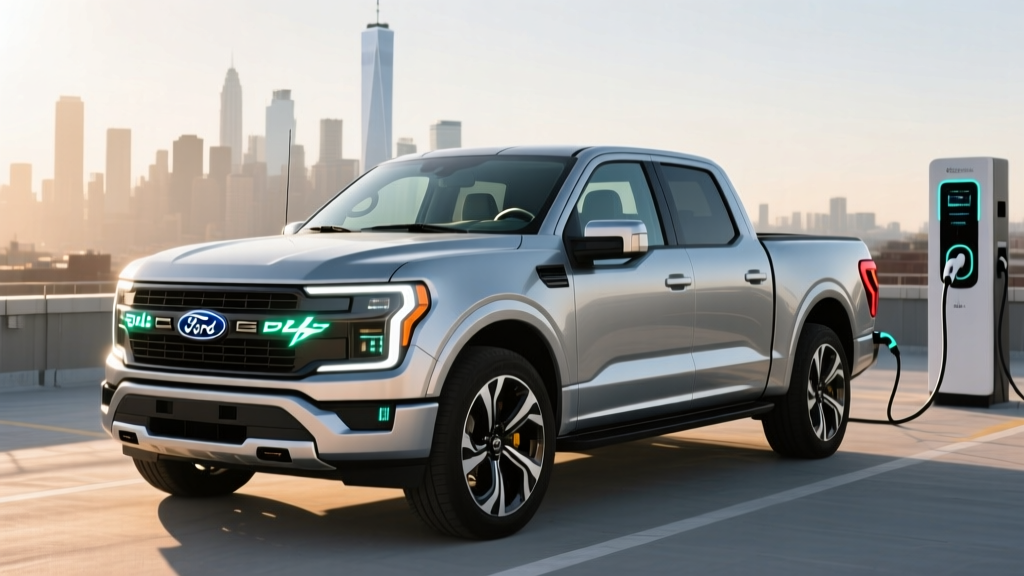
If you're shopping for a 2026 Ford F-150 Lightning and planning to swap wheels — whether for winter tires, off-road setups, or aftermarket rims — understanding the bolt pattern is step one. The 2026 F-150 Lightning uses a 6x135mm bolt pattern (six lug nuts arranged on a 135mm circle), the same pattern Ford has used on the F-150 platform since the 2004 model year. This is important because it means many aftermarket wheels designed for gas-platform F-150s will physically bolt on, but you must also account for the Lightning's significantly higher curb weight (6,000+ lbs) and instant torque when selecting load-rated wheels.
But the bolt pattern is just the starting point. The F-150 Lightning is a full-size electric pickup that competes directly with the Rivian R1T, Chevrolet Silverado EV, and the Tesla Cybertruck. Below, we break down everything a real buyer needs: EPA range, real-world efficiency, charging speeds, pricing after federal tax credits, and whether the Lightning still holds up in 2026's increasingly competitive EV truck segment.
2026 F-150 Lightning Core Specifications
| Spec | Standard Range (SRW) | Extended Range (SRW) |
|---|---|---|
| EPA Range | 240 miles | 320 miles |
| Battery Usable Capacity | 98 kWh (NMC) | 131 kWh (NMC) |
| Drivetrain | Dual-Motor AWD | Dual-Motor AWD |
| Horsepower | 452 hp | 580 hp |
| Torque | 775 lb-ft | 775 lb-ft |
| 0-60 mph | ~3.8 sec | |
| Max DC Fast Charge Rate | 150 kW | 150 kW |
| 10-80% DC Fast Charge | ~44 min | ~41 min |
| Level 2 Home Charge Rate | 11.3 kW (30 mi/hr) | 19.2 kW (52 mi/hr) w/ 80A |
| MPGe (Combined) | 68 MPGe | 66 MPGe |
| Max Payload | 2,235 lbs | 1,952 lbs |
| Max Towing | 7,700 lbs | 10,000 lbs (w/ Max Tow Pkg) |
| Bolt Pattern | 6x135mm | |
| Battery/Powertrain Warranty | 8 years / 100,000 miles | |
Source: EPA fueleconomy.gov, Ford Motor Company 2026 spec sheets.
Real-World Range: What the EPA Sticker Doesn't Tell You
Extended Range (131 kWh): EPA 320 mi. Expect ~265-285 mi on the highway at 70 mph; ~230-250 mi in sub-freezing temps (30°F and below).
Standard Range (98 kWh): EPA 240 mi. Expect ~195-210 mi highway; ~170-185 mi in cold weather.
The F-150 Lightning's boxy aerodynamics and 6,000+ lb curb weight work against highway efficiency. In our experience, the Extended Range model delivers roughly 2.1-2.3 kWh/mile on flat interstate driving at 70-75 mph, which translates to approximately 270 miles from a full charge. City driving with regenerative braking recapturing energy improves that figure closer to the EPA combined number.
Cold weather is the real range killer for electric trucks. At 20°F, expect a 25-35% reduction in range due to battery heating demands and increased rolling resistance. The Lightning does include a heat pump on Extended Range trims (standard on Lariat and above for 2026), which mitigates cabin heating losses but doesn't fully offset cell-level cold-weather chemistry slowdown. If your commute is under 80 miles round-trip and you charge at home nightly, the Standard Range pack is adequate. For towing or road trips, the Extended Range is the pragmatic choice.
Charging Speeds: Home and DC Fast Charging
Charging speed remains one of the Lightning's weaker competitive points in 2026. The truck tops out at 150 kW peak DC fast charging, which trails the Rivian R1T (220 kW), the Hyundai Ioniq 5-based platforms (350 kW), and the Silverado EV (350 kW). On a 150 kW charger, the charge curve is relatively flat through 60% SoC, then tapers significantly above 85%.
| Charging Level | Power | Standard Range (mi/hr) | Extended Range (mi/hr) |
|---|---|---|---|
| Level 1 (120V) | ~1.4 kW | ~3 mi/hr | ~2 mi/hr |
| Level 2 (240V, 32A) | 7.7 kW | ~20 mi/hr | ~14 mi/hr |
| Level 2 (240V, 48A) | 11.3 kW | ~30 mi/hr | ~21 mi/hr |
| Level 2 (240V, 80A)* | 19.2 kW | ~52 mi/hr | ~37 mi/hr |
| DC Fast Charge | 150 kW peak | 10-80% in ~44 min | 10-80% in ~41 min |
*80A Level 2 requires the Ford Charge Station Pro and a dedicated 100A circuit. Installation by a licensed electrician typically costs $1,500-$3,000 including panel evaluation. Consult a licensed electrician for your specific home setup.
For most Lightning owners, overnight Level 2 charging at 32A-48A is the daily routine. The Extended Range battery takes roughly 13-14 hours from near-empty on a 48A/11.3 kW setup, which is manageable if you plug in when you get home. The Ford Charge Station Pro at 80A cuts that to about 7-8 hours — useful if you're doing high-mileage work days and need a full pack by morning.
On road trips, plan for 35-45 minute stops at 150 kW chargers. The Lightning uses the NACS (Tesla-style) connector for 2026, granting native access to Tesla Supercharger V3 and V4 stalls — a significant infrastructure advantage over CCS-only trucks. Ford's BlueOval Charge Network aggregates Electrify America, EVgo, and other networks through the FordPass app.
Pricing, Trims, and Federal Tax Credit Eligibility
| Trim | Base MSRP | Key Features |
|---|---|---|
| Pro (Standard Range) | $52,990 | Fleet-oriented, 12" touchscreen, Pro Power Onboard 2.4 kW |
| XLT (Standard Range) | $57,990 | Cloth/leatherette, 15.5" screen option, 360° camera |
| Lariat (Extended Range) | $68,990 | Leather, heat pump, BlueCruise 1.5, Pro Power 9.6 kW |
| Platinum (Extended Range) | $82,990 | Multi-contour seats, B&O 18-speaker, moonroof, BlueCruise |
| Flash (Extended Range) | $64,990 | New for 2026 — sport appearance, blacked-out trim, 22" wheels |
Does the 2026 F-150 Lightning qualify for the $7,500 federal EV tax credit? Eligibility under IRS §30D rules depends on three factors that change annually:
- MSRP cap: Pickup trucks must be under $80,000 MSRP. The Pro, XLT, Lariat, and Flash trims qualify; the Platinum may exceed the cap depending on options.
- Buyer income cap: Modified AGI must not exceed $150,000 (single), $225,000 (head of household), or $300,000 (joint filers).
- Battery sourcing: Critical minerals and battery components must meet escalating domestic/free-trade-agreement thresholds. Ford has moved significant battery cell sourcing to U.S. and FTA-partner plants for 2026, but confirm VIN-specific eligibility at fueleconomy.gov before purchasing.
As of 2026, the §30D credit can be transferred to the dealer at point of sale, reducing your out-of-pocket cost by up to $7,500 at purchase rather than waiting for a tax refund. Always verify with a tax professional for your specific situation.
Performance, Towing, and Practical Utility
The dual-motor AWD layout gives every Lightning all-wheel drive with torque vectoring that's useful on loose surfaces. The Extended Range model's 580 hp and 775 lb-ft of torque deliver a 0-60 mph time of roughly 3.8 seconds — genuinely quick for a truck that weighs over 6,500 lbs in Extended Range trim. That instant electric torque also means no turbo lag when merging or pulling away from a stop with a load.
Towing is where the Lightning shows both its promise and its limits. With the Max Trailer Tow Package, the Extended Range model is rated for 10,000 lbs. However, towing at or near max capacity cuts range roughly in half. Expect 140-160 miles from a full charge when pulling a 9,000-lb trailer on flat terrain at 65 mph — and significantly less in mountains or headwinds. Ford's Intelligent Range system factors in trailer weight, terrain, and weather to provide more accurate range estimates when towing, which helps with trip planning.
The Mega Power Frunk (front trunk) offers 14.1 cubic feet of lockable storage with a 400-lb payload capacity — a genuine differentiator versus gas trucks. Combined with the 5.5-foot bed (52.8 cu ft volume), total cargo versatility is excellent. The Pro Power Onboard system (up to 9.6 kW on Lariat and above) turns the truck into a mobile generator capable of running power tools, a welder, or backing up essential home circuits during an outage via Ford Intelligent Backup Power (requires home transfer switch installation).
Front legroom: 43.9 in | Rear legroom: 41.4 in (SuperCrew)
Seating: 5 passengers (bench front seat) or 5 passengers (bucket seats with console)
Infotainment: SYNC 4A with 12" (Pro/XLT) or 15.5" (Lariat/Platinum/Flash) portrait touchscreen
Driver Assist: Ford BlueCruise 1.5 (hands-free on pre-mapped highways, SAE Level 2 — driver supervision required at all times)
Pros, Cons, and Competitive Position
- Pro Power Onboard (9.6 kW) — best-in-class mobile power
- Mega Power Frunk adds 14.1 cu ft of secure storage
- NACS connector gives native Supercharger access
- Strong towing capacity (10,000 lbs) with good trailer integration tech
- Competitive pricing in the EV truck segment
- BlueCruise hands-free highway driving (SAE Level 2)
- 150 kW peak DC charging trails rivals (Rivian 220 kW, Silverado EV 350 kW)
- Real-world highway range drops significantly vs. EPA
- Towing cuts range roughly in half — limits long-haul towing feasibility
- Heavy curb weight increases tire wear (choose load-rated replacements)
- Standard Range battery feels undersized for a full-size truck
- Platinum trim may exceed $80K MSRP tax credit cap
Is it worth buying vs. the competition? The F-150 Lightning occupies a specific niche: it's the EV truck for buyers who want traditional pickup utility, familiar F-150 ergonomics, and a strong dealer/service network, rather than the tech-forward approach of Rivian or the polarizing design of the Cybertruck. If you need a work truck that can double as a job-site generator and you charge at home nightly, the Lightning remains compelling. If fast road-trip charging and cutting-edge efficiency are your priorities, the Silverado EV's 350 kW architecture or the Rivian R1T's 220 kW charging may serve you better.
Who the F-150 Lightning Suits Best
Buy the Lightning if: You need a full-size work truck with onboard power, you have home Level 2 charging, your daily driving is under 200 miles, and you value Ford's dealer network for service. The Extended Range Lariat with Pro Power Onboard 9.6 kW is the sweet-spot configuration for most owner-operator and fleet buyers.
Look elsewhere if: You regularly tow heavy trailers over 200+ miles, you lack home charging access and need the fastest possible DC charging, or you prioritize efficiency and range over payload and utility.
Frequently Asked Questions
What is the bolt pattern on the 2026 Ford F-150 Lightning?
The 2026 F-150 Lightning uses a 6x135mm bolt pattern (6 lug nuts, 135mm bolt circle diameter), with a center bore of 87.1mm and M14x2.0 lug nuts. This matches the gas F-150 platform. When selecting aftermarket wheels, ensure they are load-rated for the Lightning's 6,000-6,800 lb curb weight — many wheels rated for lighter gas trucks are insufficient for the electric version's mass and instant torque delivery.
What is the real-world range of the F-150 Lightning?
The Extended Range model is EPA-rated at 320 miles, but real-world highway driving at 70 mph yields approximately 265-285 miles. In cold weather (below 30°F), expect 230-250 miles. The Standard Range model's 240-mile EPA rating translates to roughly 195-210 highway miles and 170-185 in cold conditions.
How fast does the F-150 Lightning charge?
DC fast charging peaks at 150 kW, achieving a 10-80% charge in approximately 41-44 minutes depending on battery size. At home on a 48A Level 2 charger (11.3 kW), the Extended Range battery adds about 21 miles per hour of charging, taking roughly 13-14 hours from near-empty to full. The optional 80A Ford Charge Station Pro (19.2 kW) cuts that to about 7-8 hours.
Does the 2026 F-150 Lightning qualify for the federal EV tax credit?
Most trims qualify for up to $7,500 under IRS §30D, provided the buyer meets income caps ($150K single / $300K joint) and the specific VIN meets battery-sourcing requirements. The Platinum trim may exceed the $80,000 MSRP cap for trucks depending on options. The credit can be transferred to the dealer at point of sale as of 2024 and beyond. Verify eligibility at IRS.gov and fueleconomy.gov before purchasing.
Can the F-150 Lightning tow a camper?
Yes — the Extended Range model with the Max Trailer Tow Package is rated for 10,000 lbs. However, towing at or near max capacity reduces range to roughly 140-160 miles per charge. For campers over 7,000 lbs, plan charging stops carefully and use Ford's Intelligent Range feature for more accurate estimates. The truck's onboard scales and Pro Trailer Hitch Assist make hookup straightforward.
What wheel and tire sizes fit the 2026 F-150 Lightning?
The Lightning comes with 18" (Pro), 20" (XLT/Lariat), or 22" (Platinum/Flash) wheels from the factory, all on the 6x135mm bolt pattern. Stock tire sizes range from 265/70R18 to 275/45R22. When replacing, select tires with adequate load index for the truck's GVWR — the Lightning's weight demands LT-metric or high-load-index P-metric tires. Ford recommends maintaining the factory overall tire diameter to preserve speedometer accuracy and range estimation.