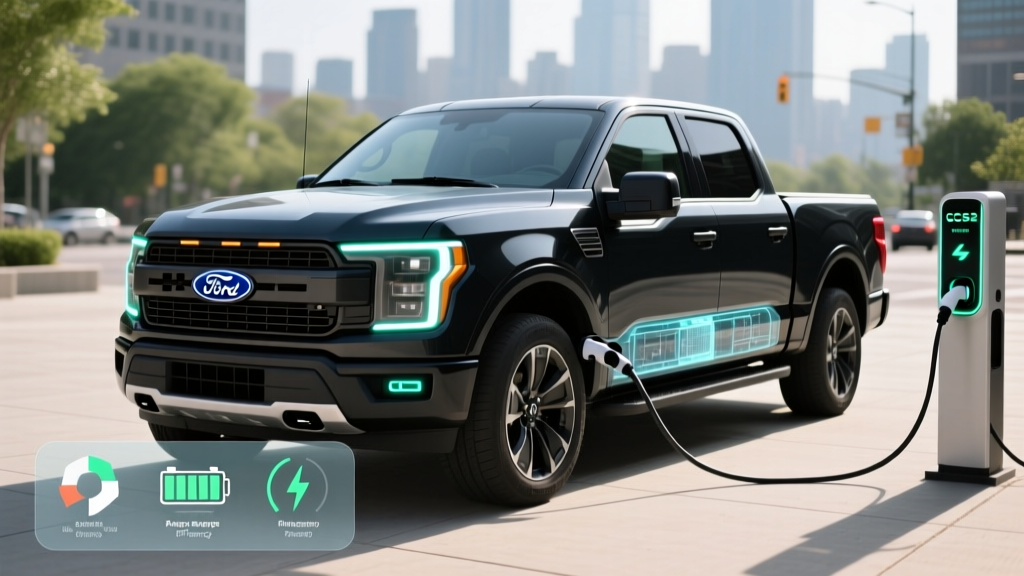
Quick Verdict: The F-150 Lightning in 2026
If you've landed here searching for the bolt pattern 2003 F-150 and stumbled onto the electric F-150 Lightning, you're not alone. Truck buyers cross-reference legacy specs constantly — especially when swapping wheels, ordering aftermarket rims, or comparing chassis dimensions across generations. The 2003 F-150 used a 6×135 mm (6-lug, 135 mm bolt circle) pattern, while the 2026 F-150 Lightning carries forward the modern F-150's 6×135 mm bolt pattern on most trims, meaning many aftermarket wheel options bridge both eras. But the Lightning is a fundamentally different machine underneath.
This review covers the 2026 F-150 Lightning as a daily-driver EV: real-world range, charging speeds, pricing after the federal §30D tax credit, and how it stacks against the Rivian R1T and Chevrolet Silverado EV for buyers who actually need a truck.
| Spec | Value |
|---|---|
| EPA Range | 320 miles (Extended Range); 230 miles (Standard Range) |
| Usable Battery | 131 kWh (Extended); 98 kWh (Standard) |
| Battery Chemistry | NMC (Nickel Manganese Cobalt) |
| Peak DC Fast Charge | 150 kW |
| 10–80% DC Charge Time | ~41 minutes (Extended Range) |
| Level 2 Home Charge Rate | 19.2 kW (80A) / ~30 mi/hr |
| 0–60 mph | 3.8 seconds (Extended Range AWD) |
| Horsepower / Torque | 580 hp / 775 lb-ft |
| Drivetrain | Dual-motor AWD (all trims) |
| Max Towing | 10,000 lbs (Extended Range, Max Tow pkg) |
| Payload | 2,235 lbs |
| MPGe (Combined) | 70 MPGe (2.0 kWh/mi) |
| Base MSRP | $54,995 (Pro Standard Range) |
| Warranty (Battery) | 8 years / 100,000 miles (≥70% retention) |
Real-World Range: What the EPA Sticker Doesn't Tell You
The EPA rates the Extended Range F-150 Lightning at 320 miles. In practice, expect 260–280 miles at sustained 70 mph highway speeds in mild weather. Cold weather (below 32°F) knocks that down another 15–25%, yielding roughly 210–230 highway miles in winter conditions — a reality of NMC chemistry paired with a 6,500-lb curb weight and a brick-like frontal area.
EPA: 320 miles
Real-world highway (70°F): ~270 miles
Real-world highway (20°F): ~220 miles
City/commuter (mixed, mild): ~295 miles
Towing 7,000-lb trailer: ~150–170 miles
For buyers coming from a gas F-150, the range math matters most on road trips and towing. A 7,000-lb enclosed trailer cuts range nearly in half due to aero drag and rolling mass — the Lightning simply can't match a 35-gallon gas tank's effective 500+ towing miles yet. For daily commuting and job-site runs under 150 miles round-trip, home charging makes range a non-issue.
Charging: 150 kW Peak, But Watch the Curve
The Lightning's peak DC fast-charge rate is 150 kW — respectable but no longer class-leading in 2026. The Hyundai Ioniq 5 and Tesla Cybertruck both push past 250 kW on equivalent infrastructure. Ford's charge curve holds near peak only between ~15–55% State of Charge (SoC), then tapers progressively. The 10–80% time of roughly 41 minutes reflects this taper honestly.
| Level | Power | Miles Added per Hour | Use Case |
|---|---|---|---|
| Level 1 (120V) | 1.4 kW | ~3 mi/hr | Emergency top-up only |
| Level 2 (240V, 48A) | 11.5 kW | ~18 mi/hr | Standard home install |
| Level 2 (240V, 80A) | 19.2 kW | ~30 mi/hr | Full overnight recovery |
| DC Fast (150 kW) | 150 kW peak | ~230 mi/hr (peak) | Road trips, 10–80% in 41 min |
Home charging on a 48A Level 2 circuit (the most common residential install) recovers about 18 miles of range per hour — enough to refill a 100-mile daily commute in roughly 5.5 hours overnight. The optional 80A Ford Charge Station Pro requires a 100-amp dedicated circuit and a panel that can support it; budget $1,200–$2,500 for the electrician work depending on your home's existing service, per Ford's home charging guide.
Performance and Drivetrain
Every 2026 Lightning is dual-motor AWD. The Extended Range powertrain delivers 580 hp and 775 lb-ft, launching the truck to 60 mph in 3.8 seconds — quicker than any 2003 F-150 SVT Lightning ever did. The Standard Range trims make 452 hp and the same 775 lb-ft, still good for a ~4.5-second 0–60.
Regen braking is one-pedal-capable, though the pedal feel takes a week to dial in for truck buyers used to engine braking. The independent rear suspension (a departure from the solid rear axle on gas F-150s) improves ride quality when unloaded but reduces max payload slightly vs. its ICE sibling.
Bolt Pattern, Wheels, and 2003 F-150 Compatibility
Addressing the search directly: the 2003 Ford F-150 bolt pattern is 6×135 mm (six lugs, 135 mm bolt circle diameter). The 2026 F-150 Lightning uses the same 6×135 mm pattern, with a 14×2.0 thread pitch and approximately 87.1 mm center bore. This means many aftermarket wheel families (Method, Fuel, Black Rhino) fit both generations — but critical differences exist:
- Offset and backspacing differ substantially; the Lightning's wider track and EV-specific suspension geometry require modern offset specs.
- Load rating is non-negotiable: the Lightning's 6,500+ lb curb weight demands LT-metric or high-load-rating wheels (load index 115+). Wheels rated for a 4,800-lb 2003 F-150 may not be safe.
- Hub-centric rings may be required for aftermarket wheels to avoid vibration.
If you're cross-shopping wheels between a legacy 2003 F-150 and a Lightning, confirm load index and offset with the wheel manufacturer — don't rely on bolt pattern alone.
Pricing, Trims, and Federal Tax Credit (2026)
The 2026 Lightning lineup starts at $54,995 for the Pro Standard Range and climbs to ~$96,000 for a loaded Platinum Extended Range. Here's how the key trims break down:
| Trim | Battery | MSRP | Est. After §30D Credit |
|---|---|---|---|
| Pro | Standard (98 kWh) | $54,995 | $47,495* |
| XLT | Standard | $62,995 | $55,495* |
| Lariat | Extended (131 kWh) | $76,995 | $69,495* |
| Platinum | Extended | $96,000 | $88,500* |
*Assumes full $7,500 §30D credit eligibility. See IRS rules below.
The federal EV tax credit under IRS §30D offers up to $7,500 for qualifying buyers and vehicles. Eligibility hinges on three factors:
- MSRP cap: Trucks/SUVs must be ≤$80,000. This eliminates the Platinum trim from credit eligibility in 2026.
- Buyer income cap: Modified AGI ≤$300,000 (joint), $225,000 (head of household), $150,000 (single).
- Battery sourcing: Critical minerals and battery components must meet phased-in domestic/free-trade sourcing thresholds, which tighten annually. Ford has qualified most Lightning trims for at least partial credit in recent years, but verify the specific VIN on the IRS portal before purchase.
Point-of-sale transfer is available, letting dealers apply the credit as a down-payment reduction rather than waiting for a tax refund.
Interior, Tech, and Driver Assists
The Lightning's cabin is essentially the gas F-150's — which is a compliment. The 15.5-inch portrait touchscreen (SYNC 4A) runs Apple CarPlay and Android Auto wirelessly. The Mega Power Frunk (front trunk) offers 14.1 cu ft of lockable, drainable storage — genuinely useful for job-site tools or groceries. Rear-seat legroom is 43.6 inches, matching the SuperCrew gas truck.
Ford BlueCruise (hands-free driving on pre-mapped divided highways) is available on Lariat and above. This is SAE Level 2 driver assistance — not self-driving. You must remain attentive, and the system monitors via a driver-facing camera. It works well on interstates but does not handle city streets, construction zones, or unmapped roads.
Pro Power Onboard turns the Lightning into a mobile generator: 2.4 kW standard, 9.6 kW optional (enough to run a job site's worth of saws and lights, or power a home during an outage via a transfer switch).
Efficiency and Operating Costs
The Extended Range Lightning is EPA-rated at 70 MPGe combined, translating to roughly 2.0 kWh per mile. At the national average electricity rate of $0.17/kWh, that's ~$0.34/mile — about half the per-mile fuel cost of a gas F-150 at $3.50/gallon and 18 MPG combined. Home charging on a time-of-use plan can drop that to $0.20/mile or less. Public DC fast charging, at $0.40–$0.60/kWh, narrows the gap considerably.
Who the F-150 Lightning Suits Best
Buy the Lightning if: You commute under 150 miles daily, have Level 2 home charging, want frunk/fridge/job-site power, and tow occasionally under 200 miles.
Look elsewhere if: You regularly tow long distances (>250 mi), live in an apartment without charging access, or need the Platinum trim's luxury and can't justify paying $96k without a tax credit.
Pros and Cons
Pros
- Massive frunk + Pro Power Onboard (9.6 kW optional)
- Quick 0–60 and smooth one-pedal driving
- Real truck capability: 10,000-lb tow, 2,235-lb payload
- BlueCruise hands-free highway driving
- Qualifies for up to $7,500 §30D credit (sub-$80k trims)
Cons
- 150 kW peak charge rate trails rivals (Rivian, Tesla, Hyundai)
- Towing range drops sharply (~150–170 mi with heavy trailer)
- Platinum trim exceeds $80k MSRP cap, loses tax credit
- Cold-weather highway range falls to ~220 mi
- Independent rear suspension reduces max payload vs gas F-150
Competitor Check: Lightning vs Rivian R1T vs Silverado EV
The Rivian R1T (Dual-Motor, ~$75,900) offers faster 200+ kW charging and more sophisticated air suspension, but a smaller bed and no true fleet/work-truck trim. The Chevrolet Silverado EV (4WT and RST trims, up to 440 miles EPA on the 4WT) beats the Lightning on range and charging speed, but availability is limited and pricing creeps above $90k for the RST. For fleet buyers and traditional truck owners transitioning to electric, the Lightning's dealer network, familiar form factor, and Pro Power Onboard remain compelling — per fueleconomy.gov comparisons.
Frequently Asked Questions
What is the real-world range of the 2026 F-150 Lightning?
Expect ~270 highway miles in mild weather and ~220 in freezing temps from the Extended Range pack. The EPA sticker says 320 miles, but that reflects a mixed city/highway cycle at moderate speeds.
How fast does the Lightning charge at home and on the road?
On a 48A Level 2 home charger, about 18 miles per hour (~14 hours for a full 0–100% charge). On DC fast charging, 10–80% takes roughly 41 minutes at a 150 kW-capable station, though the curve tapers above 55% SoC.
Does the 2026 Lightning qualify for the $7,500 federal EV tax credit?
Most trims under the $80,000 MSRP cap do, provided the buyer meets income limits (≤$300k joint) and the vehicle's battery sourcing qualifies under current-year IRS rules. The Platinum trim (~$96k) does not qualify. Verify your VIN on the IRS portal before purchase.
What is the bolt pattern on a 2003 Ford F-150, and does it match the Lightning?
The 2003 F-150 uses a 6×135 mm bolt pattern. The 2026 Lightning uses the same 6×135 mm pattern, but offset, center bore, and load rating differ — confirm wheel specs before swapping between generations.
Is the Lightning worth buying over the Rivian R1T or Silverado EV?
If you need a traditional truck footprint, a dealer-serviced work vehicle, and Pro Power Onboard for job-site or backup power, yes. If charging speed and range are top priorities, the Silverado EV (440-mi variant) or Rivian R1T may serve better at similar price points.
How does towing affect Lightning range?
Heavily. A 7,000-lb enclosed trailer cuts range to roughly 150–170 miles due to aerodynamic drag. Open utility trailers fare slightly better. Plan charging stops accordingly and avoid relying on DC fast chargers for long towing hauls.