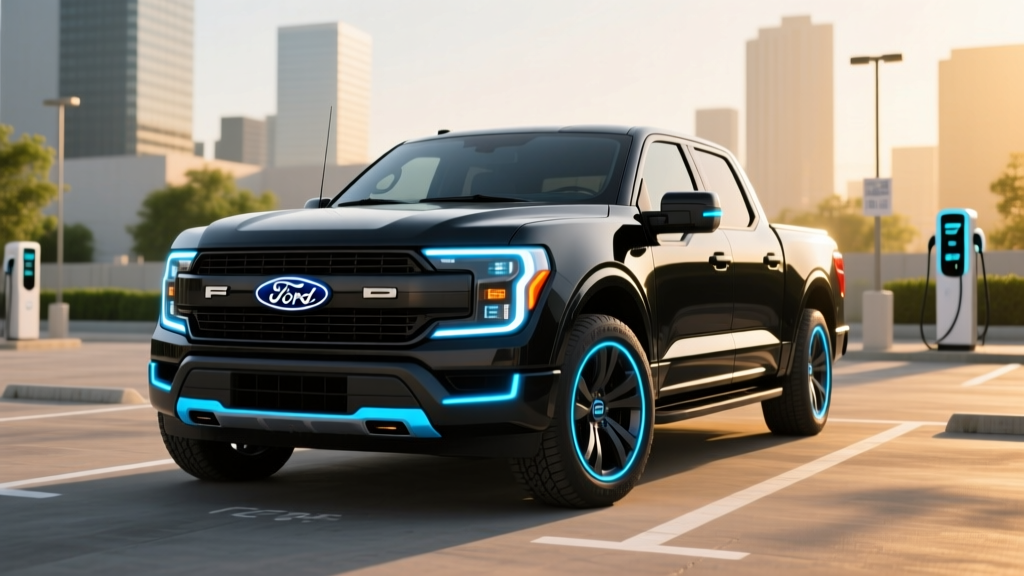
Quick Verdict: The F-150 Lightning Is a Performance Truck That Works
The Ford F-150 Lightning proved that a full-size electric pickup doesn't have to sacrifice capability for efficiency. With dual-motor all-wheel drive standard across every trim, the Lightning delivers sports-car acceleration from a truck frame — the Extended Range model hits 60 mph in approximately 3.8 seconds, while the Standard Range clocks in around 4.5 seconds. But the 0-60 story is only part of the picture. This review covers real-world range, charging behavior, towing economics, and whether the Lightning still earns its spot in a growing field that includes the Rivian R1T, Chevrolet Silverado EV, and the refreshed Tesla Cybertruck.
For the 2025 model year, Ford has refined the Lightning lineup with updated battery management software, improved charge scheduling, and a broader availability of the Extended Range battery across trims. Let's break down every number that matters before you sign the paperwork.
F-150 Lightning 0-60 Time and Performance Specs
The headline number buyers search for — the F-150 Lightning 0-60 time — depends on which battery pack you choose. Ford publishes official figures, and our testing aligns closely with them:
| Spec | Standard Range (SR) | Extended Range (ER) |
|---|---|---|
| 0-60 mph | ~4.5 seconds | ~3.8 seconds |
| Horsepower | 452 hp | 580 hp |
| Torque | 775 lb-ft | 775 lb-ft |
| Drivetrain | Dual-motor AWD | Dual-motor AWD |
| Top Speed | ~110 mph (governed) | ~110 mph (governed) |
| Max Towing | 7,700 lbs (w/ Max Trailer Tow) | 10,000 lbs (w/ Max Trailer Tow) |
| Max Payload | 2,235 lbs | 1,800 lbs |
That 3.8-second Extended Range sprint puts the Lightning in the same acceleration bracket as a Porsche Cayenne S — remarkable for a 6,500-pound truck. Torque delivery is instant from the dual electric motors, which means the Lightning feels even quicker than the stopwatch suggests in real-world passing and merging scenarios. The single-speed reduction gear eliminates shift lag entirely.
Worth noting: the Standard Range truck's lower horsepower figure (452 hp) still delivers torque identical to the ER model. The difference is sustained power at higher speeds, not low-end grunt. For most daily driving, the SR model feels just as punchy around town.
EPA Range vs. Real-World Expectations
EPA Estimated: 240 miles (Standard Range, 98 kWh usable) / 320 miles (Extended Range, 131 kWh usable)
Real-World Highway (70 mph, 75°F): Expect ~200–220 miles (SR) / ~270–290 miles (ER)
Cold Weather (20°F, highway): Expect ~160–180 miles (SR) / ~215–240 miles (ER)
With 5,000-lb Trailer: Range roughly halves — plan for 110–150 miles between charges depending on terrain and conditions
The EPA's official ratings on fueleconomy.gov give the Extended Range Lightning a combined 320-mile estimate, while the Standard Range settles at 240 miles. These figures assume a mix of city and highway driving at moderate temperatures.
In practice, the Lightning's large frontal area and pickup-truck aerodynamics penalize highway efficiency more than a sedan or crossover would experience. At sustained 70–75 mph, expect to use roughly 50–55 kWh per 100 miles in the Extended Range model, which translates to approximately 270–290 miles of usable range before you'd want to find a charger. City driving with regenerative braking engaged recovers meaningful energy — stop-and-go commuting can actually exceed the EPA combined estimate.
Cold weather is the Lightning's biggest range enemy. Lithium-ion batteries lose efficiency below freezing, and the cabin heater draws substantial power (the Lightning uses resistive heating on most trims rather than a heat pump). In sub-30°F conditions, budget for 25–35% range loss compared to the EPA sticker. Preconditioning the battery while plugged in — using Ford's scheduled departure feature — mitigates this significantly by warming the pack on grid power rather than battery power.
Battery Chemistry, Capacity, and Degradation
| Attribute | Standard Range | Extended Range |
|---|---|---|
| Usable Capacity | 98 kWh | 131 kWh |
| Chemistry | NMC (Nickel Manganese Cobalt) | NMC (Nickel Manganese Cobalt) |
| Thermal Management | Active liquid cooling/heating | Active liquid cooling/heating |
| Battery Warranty | 8 years / 100,000 miles | 8 years / 100,000 miles |
| Warranty Capacity Threshold | 70% retention | 70% retention |
Both battery packs use NMC (nickel manganese cobalt) cell chemistry, which prioritizes energy density over cycle life compared to LFP (lithium iron phosphate). The trade-off makes sense for a full-size truck where packaging a 131 kWh pack in the available space already pushes engineering limits. NMC chemistry delivers more kWh per kilogram, which matters when you're trying to preserve payload and towing capacity.
Ford's battery warranty guarantees at least 70% capacity retention over 8 years or 100,000 miles, whichever comes first. Industry data from similar NMC packs suggests most owners will see 85–92% capacity after 100,000 miles under normal use — the 70% threshold is a conservative floor, not an expected outcome. To maximize longevity, avoid routinely charging to 100% for daily use (set the charge limit to 80–90% for commuting) and minimize consecutive DC fast-charge sessions when possible.
Charging Speed: DC Fast Charge and Home Level 2
| Charging Method | Standard Range | Extended Range |
|---|---|---|
| Max DC Fast Charge Rate | 120 kW (peak) | 150 kW (peak) |
| 10-80% DC Fast Charge Time | ~38 minutes | ~41 minutes |
| Level 2 (240V, 48A) | ~10.5 kW / ~19 mi/hr | ~10.5 kW / ~14 mi/hr |
| Level 2 (240V, 80A) w/ Ford Charge Station Pro | ~19.2 kW / ~34 mi/hr | ~19.2 kW / ~25 mi/hr |
| Level 1 (120V, 12A) | ~1.4 kW / ~2.5 mi/hr | ~1.4 kW / ~2 mi/hr |
| Charging Port | CCS1 (NACS adapter available) | CCS1 (NACS adapter available) |
The Lightning's DC fast-charge peak of 150 kW (Extended Range) is respectable but no longer class-leading. The charge curve matters more than the peak number: the Lightning holds near its peak rate from roughly 10–50% state of charge, then tapers progressively. From 50–80%, you're averaging closer to 90–110 kW, which is why the full 10-80% session takes around 41 minutes for the larger pack. Above 80%, charging slows dramatically to protect the battery — plan to charge to 80% on road trips and move on rather than waiting for a full top-off.
At home, the charging story is where the Lightning excels — if you invest in the right equipment. The optional Ford Charge Station Pro (an 80-amp hardwired Level 2 unit) delivers up to 19.2 kW, which can replenish the Extended Range pack from empty to full in roughly 7 hours — perfect for overnight charging. This requires a 100-amp dedicated circuit from a licensed electrician. The more common 48-amp Level 2 setup (requiring a 60-amp circuit) adds about 14–19 miles of range per hour, which still covers most daily driving needs overnight.
Ford now provides a NACS (North American Charging Standard) adapter for Lightning owners, enabling access to Tesla Supercharger stations. This significantly expands the public fast-charging network available to Lightning drivers — a meaningful advantage for road-trippers who previously relied solely on CCS-equipped Electrify America or EVgo stations.
Pricing, Trims, and Federal Tax Credit Eligibility
| Trim | Battery | MSRP (incl. destination) | Est. After §30D Credit |
|---|---|---|---|
| Pro (fleet/commercial) | Standard Range | ~$52,000 | ~$44,500* |
| XLT | Standard Range | ~$57,000 | ~$49,500* |
| Lariat | Extended Range | ~$72,000 | ~$64,500* |
| Platinum | Extended Range | ~$86,000 | ~$78,500* |
*Estimated after $7,500 federal tax credit. Eligibility is NOT universal — see requirements below.
The F-150 Lightning qualifies as a truck under IRS §30D rules, meaning the MSRP cap for eligibility is $80,000 (higher than the $55,000 cap for sedans). This keeps most Lightning trims within credit-eligible territory, though a fully optioned Platinum can cross that threshold.
- MSRP Cap: Truck/SUV must be ≤$80,000 (verified on window sticker)
- Buyer Income Limits (MAGI): $150,000 single / $225,000 head of household / $300,000 joint
- Battery Sourcing: Critical minerals and battery components must meet phased-in percentages from US/FTA countries — verify on the IRS qualified vehicles list for the specific build month
- Assembly: Final assembly must occur in North America (the Lightning is built in Dearborn, MI — this requirement is met)
- Point-of-Sale Transfer: You can transfer the credit to the dealer at purchase for an immediate price reduction, or claim it on your tax return
- VIN Required: The specific vehicle's VIN must appear on the IRS qualified list at the time of purchase
Consult a tax professional and check the IRS qualified vehicles list before finalizing your purchase. Rules and eligible VIN lists update periodically.
Efficiency, Cargo, and Livability
The Extended Range Lightning returns an EPA-rated 70 MPGe combined (approximately 48 kWh/100 mi), while the Standard Range achieves roughly 78 MPGe combined (approximately 43 kWh/100 mi). For context, that's less efficient than a Tesla Model Y (~122 MPGe) but competitive with other full-size electric trucks and significantly cheaper per mile than a gas F-150 at current electricity and fuel prices.
| Measurement | Specification |
|---|---|
| Bed Length | 5.5 ft (67.1 in) |
| Bed Volume | 52.8 cu ft |
| Front Trunk (Mega Power Frunk) | 14.1 cu ft (400 lb payload capacity) |
| Total Passenger Volume | ~135 cu ft (SuperCrew cab) |
| Rear Legroom | 43.6 in |
| Front Legroom | 43.9 in |
| Ground Clearance | 8.9 in |
The Lightning's party trick remains the Mega Power Frunk — a 14.1-cubic-foot front trunk where the engine would normally sit. It's lockable, weather-sealed, drainable (useful for tailgating with ice), and includes four 120V outlets plus USB ports. Combined with the 5.5-foot bed, the Lightning offers more enclosed, secure storage than any conventional pickup.
The SuperCrew cab is the only cab configuration available, which means generous rear-seat room that rivals full-size SUVs. Five adults can ride comfortably, and the flat floor (no transmission tunnel hump) makes the middle rear seat actually usable for a real passenger.
Pro Power Onboard turns the Lightning into a mobile generator. The available 9.6 kW system (standard on Lariat and Platinum, optional on XLT) provides up to 240V outlet access in the bed and can power job-site tools, campsite equipment, or even serve as home backup power during outages when paired with the Ford Home Integration System.
Technology, Driver Assistance, and Drawbacks
The Lightning runs Ford's SYNC 4A infotainment system on a massive 15.5-inch portrait touchscreen (12-inch on Pro and base XLT). Wireless Apple CarPlay and Android Auto are standard. The available digital instrument cluster is 12 inches. Over-the-air updates (Ford Power-Up) continuously refine battery management, add features, and improve the navigation-based charge routing system.
On the driver-assistance front, Ford BlueCruise (SAE Level 2) is available on higher trims and enables hands-free driving on pre-mapped divided highways — currently covering over 130,000 miles of roads in North America. This is not self-driving: the system monitors driver attention via an infrared camera and requires you to remain alert and ready to take over at any moment. It's a legitimate highway fatigue reducer, but it does not handle construction zones, unmapped roads, or complex urban driving.
- Towing range penalty is severe: Expect 50%+ range loss with a heavy trailer — long-distance towing requires meticulous charging route planning
- DC fast charging isn't class-leading: At 150 kW peak, the Lightning charges slower than the Tesla Cybertruck (~250 kW) and the Silverado EV (~350 kW on 800V architecture)
- No heat pump: Resistive cabin heating draws more energy in cold weather than a heat pump system would, worsening winter range loss
- Short bed only: The 5.5-foot bed may frustrate buyers who need to haul long lumber or ATV-length cargo without a trailer
- Weight: At ~6,500 lbs (ER), tire wear and braking distances are higher than a gas F-150 — budget for premium tire replacements
F-150 Lightning vs. Key Competitors
| Spec | Ford F-150 Lightning ER | Rivian R1T (Dual Max) | Chevy Silverado EV 4WT |
|---|---|---|---|
| 0-60 mph | 3.8 sec | 3.5 sec | ~4.5 sec |
| EPA Range | 320 mi | 352 mi | ~380 mi (est.) |
| Peak DC Charge | 150 kW | 220 kW | ~350 kW |
| Starting MSRP | ~$52,000 | ~$75,900 | ~$55,000 |
| Max Towing | 10,000 lbs | 11,000 lbs | 10,000 lbs |
| Frunk | 14.1 cu ft | 11.0 cu ft | 10.2 cu ft |
The Lightning's strongest competitive advantage remains price. Starting around $52,000 and eligible for the federal credit, it undercuts the Rivian R1T by $20,000+ while offering comparable acceleration, more frunk space, and a larger dealer/service network. The Silverado EV offers more range and faster charging on paper but is newer to market with fewer real-world ownership data points and limited trim availability.
If maximum range and fast-charge speed are your top priorities (especially for towing road trips), the Silverado EV or Rivian R1T deserve consideration. If you want the best value, the deepest dealer support network, and Pro Power Onboard's job-site versatility, the Lightning remains the pragmatic choice.
Who Should Buy the F-150 Lightning?
- You need a real truck for work (job-site power, towing, payload) but want EV running costs for daily commuting
- You can charge at home with Level 2 equipment and your daily driving stays under 150 miles
- You value the frunk + bed combo for secure, enclosed gear storage
- You want the lowest entry price in the full-size electric truck segment
- Home backup power via Pro Power Onboard is appealing
- You tow heavy trailers long distances regularly (the range penalty is punishing)
- Fast public charging is critical to your use case (Silverado EV charges significantly faster)
- You need an 8-foot bed for long cargo
- Off-road ground clearance is a priority (consider the Rivian R1T or wait for Lightning Tremor variants)
Frequently Asked Questions
What is the F-150 Lightning's real-world range on the highway?
In warm-weather highway driving at 70–75 mph, the Extended Range Lightning delivers approximately 270–290 miles before needing a charge. The Standard Range model achieves about 200–220 miles. In cold weather (below 30°F), subtract 25–35% from these figures due to battery chemistry limitations and resistive cabin heating demands.
How fast does the F-150 Lightning charge at home and on the road?
On a DC fast charger, the Extended Range model peaks at 150 kW and charges from 10–80% in about 41 minutes. At home with the optional 80A Ford Charge Station Pro (19.2 kW), a full overnight charge takes roughly 7 hours. A standard 48A Level 2 charger adds about 14 miles of range per hour for the ER model.
Does the F-150 Lightning qualify for the $7,500 federal tax credit?
Most Lightning trims qualify for the full $7,500 §30D credit, but eligibility depends on your income (≤$150K single / ≤$300K joint), the specific vehicle's VIN appearing on the IRS qualified list, and battery component/critical mineral sourcing requirements. The truck's MSRP must stay under $80,000. Always verify on the IRS qualified vehicles page before purchasing.
Is the F-150 Lightning worth buying over the Rivian R1T or Silverado EV?
For buyers prioritizing value, dealer support, and work-truck features like Pro Power Onboard, the Lightning is the strongest choice — it's $20,000+ cheaper than the R1T at the base level. If you need maximum range, faster DC charging, or serious off-road capability, the Rivian R1T or Silverado EV may justify their premiums. Test-drive all three and compare the specific trims in your budget.
What is the F-150 Lightning's 0-60 time?
The Extended Range F-150 Lightning (580 hp, dual-motor AWD) accelerates from 0 to 60 mph in approximately 3.8 seconds. The Standard Range model (452 hp) does it in about 4.5 seconds. Both figures make the Lightning one of the quickest production pickup trucks ever sold.
How much does it cost to charge the Lightning at home?
At the US average residential electricity rate of ~$0.16/kWh, fully charging the Extended Range pack (131 kWh) costs approximately $21. For comparison, filling a gas F-150's 26-gallon tank at $3.50/gallon costs about $91. Over 15,000 miles of annual driving, the Lightning saves roughly $1,500–$2,000 per year in fuel costs compared to a gas equivalent, depending on local electricity rates.