Quick Verdict: The F-150 Lightning Still Sets the Electric Truck Benchmark
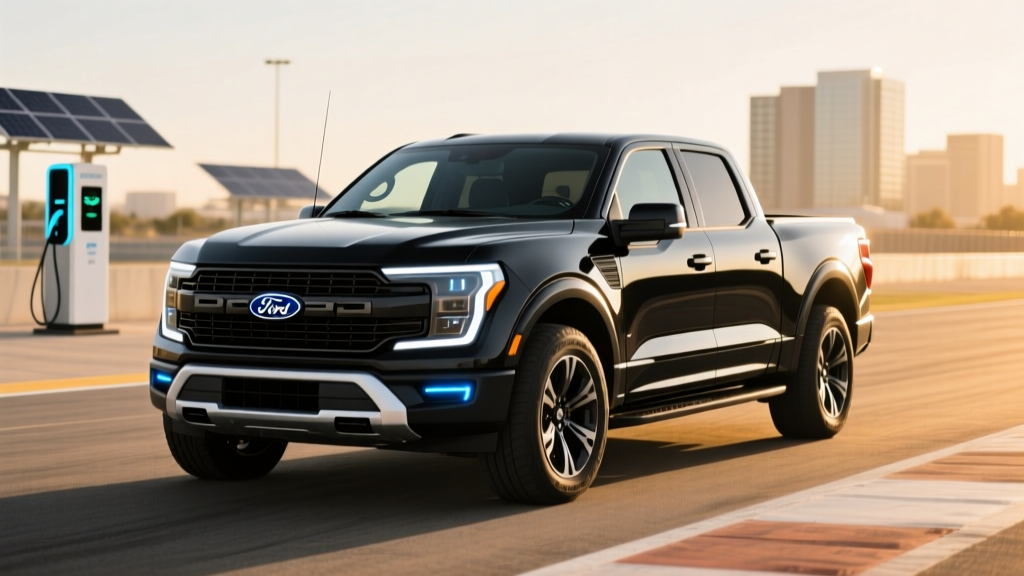
The Ford F-150 Lightning proved that a full-size pickup can go electric without sacrificing capability — and the 2026 model year continues that formula with minor packaging updates. With dual-motor all-wheel drive standard across every trim, the Lightning delivers sports-car acceleration in a 6,500-pound truck body. The Extended Range variant hits 0-60 mph in approximately 3.8 seconds, making it one of the quickest production pickups ever sold in the United States. But the Lightning's appeal extends far beyond its launch times: up to 320 miles of EPA-estimated range, a usable 98 kWh battery, 7,700 pounds of max towing, and available Pro Power Onboard turn it into a genuine workhorse and family hauler.
This review covers every number that matters — from real-world highway range to DC fast-charge taper, from the §30D tax credit math to the total cost of ownership — so you can decide whether the Lightning fits your driveway.
F-150 Lightning 0-60 and Performance Specs
The headline number draws shoppers in: the F-150 Lightning Extended Range posts a 0-60 mph time of 3.8 seconds in independent testing, with Ford's official claim at 3.9 seconds for the dual-motor powertrain. The Standard Range model, with a smaller battery and slightly lower output, clocks 0-60 in approximately 4.5 seconds. Both figures are remarkable for a body-on-frame truck weighing over three tons.
| Spec | Standard Range | Extended Range |
|---|---|---|
| 0-60 mph | ~4.5 sec | ~3.8 sec |
| Horsepower | 452 hp | 580 hp |
| Torque | 775 lb-ft | 775 lb-ft |
| Drivetrain | Dual-motor AWD | Dual-motor AWD |
| Top Speed | 110 mph (governed) | 110 mph (governed) |
| Max Payload | 2,235 lbs | 1,800 lbs |
| Max Towing (Max Tow Pkg) | 7,700 lbs | 10,000 lbs |
Both variants use a permanent-magnet dual-motor setup with one motor per axle, providing full-time all-wheel drive. Torque is available from 0 rpm, which is why the Lightning pulls away from stoplights with an immediacy that no turbocharged gas F-150 can match. The trade-off is mass: Extended Range models carry roughly 6,500 pounds of curb weight, which you feel in cornering and braking distances. This is a straight-line monster, not a canyon carver.
Range and Efficiency: EPA vs. Real World
The F-150 Lightning is offered with two battery packs, and range varies significantly between them. Standard Range models carry a 98 kWh usable battery (NMC chemistry) rated at 230 miles EPA. Extended Range models step up to a 131 kWh usable pack (also NMC) rated at 320 miles EPA — though the Platinum trim with its larger wheels drops to 280 miles.
The 320-mile EPA figure assumes mixed driving with moderate climate loads. Expect approximately 260–280 miles at sustained 75 mph highway speeds in fair weather. In cold conditions (below 32°F), range can drop to 200–230 miles due to cabin heating demands and reduced battery efficiency. City and suburban driving with frequent regenerative braking opportunities often matches or slightly exceeds the EPA sticker. If your daily route involves long highway stretches in northern winters, plan charging stops accordingly.
Efficiency is rated at 2.0 kWh/mile (50 kWh/100 mi) for Extended Range models, translating to approximately 67 MPGe combined according to fueleconomy.gov. That is thirsty by EV standards — the physics of pushing a 6,500-pound brick through the air at highway speed demand energy. For context, a Rivian R1T Dual-Motor Large Pack returns roughly 2.1 kWh/mile, while the Chevrolet Silverado EV 4WT achieves around 1.8 kWh/mile on a larger battery.
Charging Speed: DC Fast, Level 2, and Home Setup
Charging is where the Lightning's mass and large battery create a mixed picture. The Extended Range model peaks at 150 kW on DC fast chargers using its CCS1 connector (NACS adapter available for Tesla Supercharger access). The 10-80% charge takes approximately 41 minutes on a capable 150+ kW station. The Standard Range model peaks at roughly 120 kW, with a 10-80% time near 44 minutes due to its smaller battery accepting less peak power.
| Charging Level | Power (kW) | Speed | Notes |
|---|---|---|---|
| Level 1 (120V household) | ~1.3 kW | ~3 mi/hr | Emergency/trickle only |
| Level 2 (240V, 32A mobile) | 7.7 kW | ~19 mi/hr | Included Mobile Charger |
| Level 2 (240V, 48A Wall Connector) | 11.5 kW | ~28 mi/hr | Ford Charge Station Pro |
| Level 2 (240V, 80A — Extended Range only) | 19.2 kW | ~47 mi/hr | Requires 100A circuit + panel capacity |
| DC Fast Charge (peak) | 150 kW (ER) / 120 kW (SR) | 10-80% in ~41 min (ER) | Tapers significantly above 80% |
A critical detail for home charging: the Extended Range model supports 19.2 kW AC Level 2 charging when paired with the Ford Charge Station Pro and a dedicated 100-amp circuit. This means a full overnight charge from 10-100% in roughly 8 hours — a significant advantage for owners who regularly deplete the large 131 kWh pack. However, this requires a 200-amp (minimum) electrical panel with available capacity. Many homes will need a panel upgrade, which adds $1,500–$3,500 to installation costs. Always have a licensed electrician evaluate your panel before committing to the 80A setup.
For road trips, the 150 kW DC peak is respectable but not class-leading. The GMC Sierra EV and Silverado EV on GM's Ultium platform can accept over 350 kW on compatible chargers. Plan Lightning road trips around 30-40 minute charging stops every 220-250 miles of highway driving for comfort.
Pricing, Trim Levels, and Federal Tax Credit
The 2026 F-150 Lightning lineup spans four trims, all with dual-motor AWD. Pricing has stabilized after several years of volatility, and the Lightning remains one of the more accessible full-size electric trucks on the market.
| Trim | Battery | Base MSRP | Est. After §30D Credit |
|---|---|---|---|
| Pro (Standard Range) | 98 kWh | $52,995 | ~$45,495* |
| XLT (Standard Range) | 98 kWh | $59,995 | ~$52,495* |
| LARIAT (Extended Range) | 131 kWh | $72,995 | ~$65,495* |
| Platinum (Extended Range) | 131 kWh | $96,874 | ~$89,374* |
*Tax credit estimates assume full §30D eligibility. Actual credit varies by buyer.
- Credit amount: Up to $7,500 ($3,750 for battery components + $3,750 for critical minerals sourcing)
- MSRP cap: Trucks, vans, and SUVs must have an MSRP at or below $80,000 — this eliminates the Platinum trim from eligibility
- Buyer income cap: AGI must not exceed $150,000 (single), $225,000 (head of household), or $300,000 (joint filers)
- Battery sourcing: Must meet escalating critical-minerals and battery-component requirements per IRS guidelines
- Point-of-sale transfer: Eligible buyers can transfer the credit to the dealer at purchase, reducing the sale price directly
The Pro and XLT trims fall comfortably under the $80,000 MSRP cap. The LARIAT Extended Range at ~$72,995 also qualifies. The Platinum at $96,874 exceeds the cap and is not eligible for the federal credit. Consult a tax professional for your specific situation, as sourcing requirements shift annually.
Cargo, Interior Space, and Practicality
The F-150 Lightning is offered exclusively in the SuperCrew (four full doors) configuration with a 5.5-foot bed. Interior volume matches the gas F-150 SuperCrew, which is to say it is enormous.
| Dimension | Measurement |
|---|---|
| Front Legroom | 43.9 in |
| Rear Legroom | 43.6 in |
| Front Headroom | 40.8 in |
| Rear Headroom | 40.4 in |
| Bed Length | 67.1 in (5.5 ft) |
| Bed Volume | 52.8 cu ft |
| Mega Power Frunk | 14.1 cu ft (400 lbs payload) |
| Total Cargo (bed + frunk) | ~67 cu ft |
The Mega Power Frunk (front trunk) is a standout feature unique to the Lightning among full-size trucks. At 14.1 cubic feet with 400 pounds of payload capacity, it swallows a full set of golf bags, multiple carry-ons, or a week's worth of groceries. It features a drain plug (doubles as a cooler), 120V outlet, and LED lighting. For job-site use, the frunk provides lockable, weather-sealed storage that a traditional truck bed cannot match.
The 5.5-foot bed is the Lightning's main practicality compromise. If you regularly haul 8-foot lumber or use a bed-mounted toolbox, the short bed may frustrate. The Rivian R1T offers a shorter 4.5-foot bed but compensates with a gear tunnel; the Chevrolet Silverado EV provides a longer 5-foot-11-inch bed with a pass-through midgate.
Tech, Driver Assists, and Pro Power Onboard
The Lightning's technology suite centers on Ford's SYNC 4A infotainment system displayed on a 12-inch touchscreen (Pro/XLT) or a massive 15.5-inch portrait touchscreen (LARIAT/Platinum). Wireless Apple CarPlay and Android Auto are standard. The 12-inch digital instrument cluster replaces traditional gauges with configurable EV-specific readouts including energy flow, range prediction, and one-pedal driving status.
Ford BlueCruise (SAE Level 2) is available on LARIAT and Platinum trims and optional on XLT. It enables hands-free driving on over 130,000 miles of pre-mapped divided highways. Note: BlueCruise is not self-driving — the system monitors driver attention via an interior camera and requires you to remain engaged. It is a competent highway companion that reduces fatigue on long trips, but you must keep your eyes on the road.
Pro Power Onboard transforms the Lightning into a mobile generator. Available in 2.4 kW or 9.6 kW configurations, it provides 120V and 240V outlets in the bed and frunk. The 9.6 kW version can run power tools at a job site, keep a refrigerator running during an outage, or even back-feed your home's electrical panel (with proper transfer switch installation). During Texas grid emergencies, Lightning owners have used Pro Power to keep essential home circuits alive for days — a capability no gas truck can replicate without a separate generator.
Warranty and Battery Longevity
Ford backs the F-150 Lightning with competitive warranty coverage:
- Basic Vehicle: 3 years / 36,000 miles
- Powertrain (incl. drive motors): 5 years / 60,000 miles
- High-Voltage Battery: 8 years / 100,000 miles (retains ≥70% capacity)
- Corrosion Perforation: 5 years / unlimited miles
The battery warranty guarantees that the pack will retain at least 70% of its original capacity over 8 years or 100,000 miles. Ford uses NMC (nickel manganese cobalt) chemistry in both battery sizes. NMC offers higher energy density than LFP (lithium iron phosphate), which is why the Extended Range pack fits 131 kWh in the same physical space. The trade-off is slightly faster long-term degradation compared to LFP, though real-world data from 2022-2024 Lightning owners shows modest degradation of 3-5% over the first 40,000 miles when following recommended charging practices (avoiding sustained 100% SoC, using DC fast charging in moderation).
If you plan to keep the truck beyond the warranty period, note that a full battery replacement would likely cost $20,000–$30,000+ based on current NMC pricing — a significant long-term ownership risk to budget for.
Pros and Cons: The Honest Scorecard
✓ Pros
- 0-60 in 3.8 sec — quickest full-size truck available
- Mega Power Frunk (14.1 cu ft) is genuinely useful
- Pro Power Onboard (up to 9.6 kW) replaces a jobsite generator
- 19.2 kW home Level 2 charging (best-in-class AC speed)
- Spacious SuperCrew cabin with 43+ inches rear legroom
- Pro trim starts under $53K — accessible for a full-size EV truck
- Strong federal tax credit eligibility on most trims
✗ Cons
- 150 kW DC peak is slow vs. 350 kW competitors
- Short 5.5-ft bed limits cargo versatility
- Heavy curb weight (~6,500 lbs) hurts efficiency
- Cold-weather range loss can drop below 220 mi
- Platinum trim exceeds $80K MSRP cap — no tax credit
- BlueCruise requires subscription after trial period
- NMC battery degrades faster than LFP long-term
Is the F-150 Lightning Worth Buying? Decision Framework
Choose the F-150 Lightning If:
- You need a full-size truck for work or family and want to eliminate fuel costs
- Pro Power Onboard replaces a separate generator you'd otherwise buy
- You can charge at home with Level 2 and your daily driving is under 200 miles
- You want the quickest production pickup made and value straight-line performance
- The frunk's lockable, weatherproof storage solves a real problem for you
Consider Alternatives If:
- You regularly tow over 8,000 lbs on long highway trips (range drops dramatically when towing — expect 100-140 miles)
- You need a longer bed (look at the Silverado EV or wait for longer-bed Lightning variants)
- You rely exclusively on DC fast charging and need the quickest possible road-trip stops (the Silverado EV or Hyundai Ioniq 5 charge far faster)
- You live in an area with limited charging infrastructure and need maximum range flexibility
Against the Rivian R1T, the Lightning wins on price, interior space, and tax-credit accessibility but loses on bed versatility (Rivian's gear tunnel) and off-road capability. Against the Chevrolet Silverado EV, the Lightning wins on refinement, frunk utility, and dealer network but loses on DC charging speed and bed length. The Tesla Cybertruck undercuts on price and charges faster on Superchargers but remains polarizing in design and has a smaller service network.
Frequently Asked Questions
What is the F-150 Lightning's real-world range?
The Extended Range model is EPA-rated at 320 miles, but expect 260-280 miles at highway speeds and 200-230 miles in cold weather (below freezing). The Standard Range model's 230-mile EPA rating translates to roughly 185-200 miles highway in fair weather.
How fast does the F-150 Lightning charge at home and on the road?
At home on Level 2, the Extended Range model charges at up to 19.2 kW (47 mi/hr) with the Ford Charge Station Pro and an 80A circuit — a full charge overnight. On DC fast chargers, it peaks at 150 kW with a 10-80% time of approximately 41 minutes. Above 80% SoC, charging slows significantly to protect battery health.
Does the F-150 Lightning qualify for the $7,500 federal EV tax credit?
The Pro, XLT, and LARIAT trims all fall under the $80,000 MSRP cap for trucks and are potentially eligible for up to $7,500 via IRS §30D. The Platinum trim at $96,874 exceeds the cap and does not qualify. Buyer income limits ($150K single / $300K joint) and battery-sourcing requirements also apply. The credit can be transferred to the dealer at the point of sale to reduce your purchase price directly.
How much does the F-150 Lightning cost to charge vs. a gas F-150?
At the national average electricity rate of ~$0.17/kWh, fully charging the 131 kWh Extended Range battery costs approximately $22.27 for ~280 real-world miles — about $0.08/mile. A gas F-150 with a 5.0L V8 averaging 19 MPG combined at $3.40/gallon costs about $0.18/mile. Over 15,000 annual miles, the Lightning saves roughly $1,500/year in energy costs, though exact savings depend on your local electricity rate and gas prices.
Is the F-150 Lightning good for towing?
The Extended Range with the Max Trailer Tow Package is rated for 10,000 lbs — competitive with gas half-tons. However, towing dramatically increases energy consumption. Expect real-world range to drop to approximately 100-140 miles when towing a 7,000+ lb trailer at highway speeds. For frequent long-distance towing, a diesel or gas truck remains more practical. For occasional local towing under 50 miles round-trip, the Lightning handles it well with instant torque and smooth power delivery.
What is the F-150 Lightning 0-60 time?
The Extended Range dual-motor F-150 Lightning accelerates from 0-60 mph in approximately 3.8 seconds with 580 horsepower and 775 lb-ft of torque. The Standard Range model achieves 0-60 in roughly 4.5 seconds with 452 hp. Both figures make the Lightning the quickest production full-size pickup available.