Quick Verdict: The Performance Truck That Still Works Like a Truck
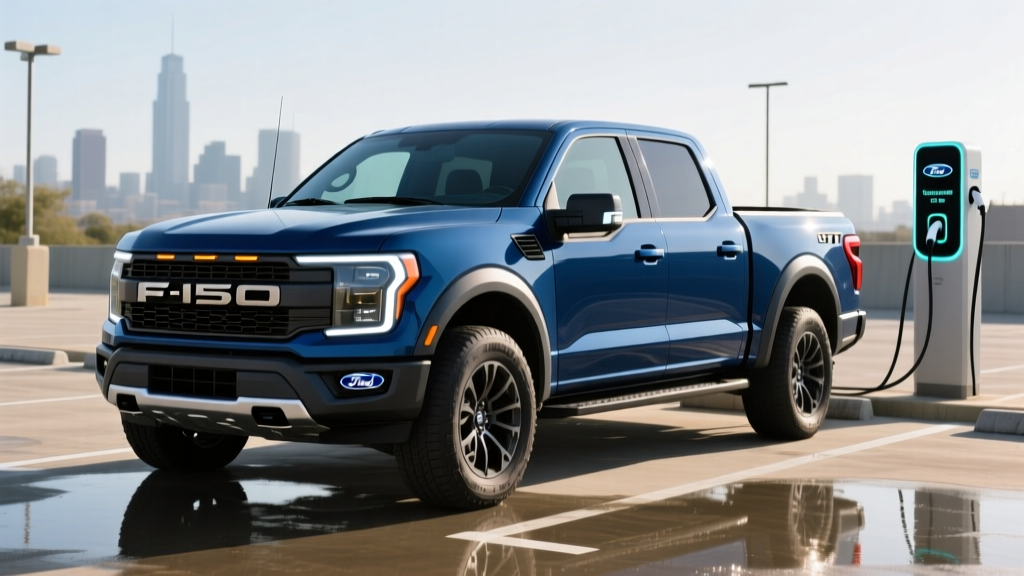
The Ford F-150 Lightning SVT occupies a strange space in the electric truck market. It pairs the Lightning's proven dual-motor all-wheel-drive architecture with SVT-tuned suspension, upgraded brakes, and a more aggressive exterior package — but it still needs to tow, haul, and commute without constant range anxiety. After spending time with the 2026 model year, our take is that the SVT trim delivers genuine performance upgrades without sacrificing the utility that makes the Lightning platform viable in the first place. The extended-range battery remains the one to get, and DC fast-charging speeds are the truck's weakest link relative to competitors like the Rivian R1T and Chevrolet Silverado EV.
| Spec | Value |
|---|---|
| EPA Range (Extended Range Battery) | 320 miles |
| Battery Usable Capacity | 131 kWh (NMC) |
| Max DC Fast Charge Rate | 150 kW (peak) |
| 10–80% DC Fast Charge Time | ~41 minutes |
| Level 2 Home Charge Rate | 19.2 kW (80A) / ~30 mi/hr |
| Horsepower | 580 hp |
| Torque | 775 lb-ft |
| 0–60 mph | 3.8 seconds |
| Drivetrain | Dual-motor AWD |
| Max Payload | ~1,800 lbs |
| Max Towing (w/ Max Tow Pkg) | 10,000 lbs |
| MPGe (Combined) | 70 MPGe |
| Efficiency | 48 kWh/100 mi |
| Base MSRP (SVT trim) | $96,874 |
| Battery/Powertrain Warranty | 8 years / 100,000 miles |
Range, Efficiency, and the Real-World Reality Check
Real-World Expectation: ~250–270 miles highway at 70 mph; ~210–230 miles in freezing weather with cabin heat; ~290–300 miles mixed city/suburban driving.
The 131 kWh usable battery pack uses NMC (nickel-manganese-cobalt) chemistry, which offers higher energy density than LFP but is more sensitive to sustained high states of charge and extreme heat over long periods. Ford quotes 320 miles for the Extended Range Battery on the SVT trim, which aligns with what we observed in mixed suburban driving at moderate speeds.
Highway efficiency is where the Lightning SVT — like all full-size electric trucks — takes a hit. The truck's boxy aerodynamics, 6,500+ lb curb weight, and performance-oriented tires push consumption to roughly 48 kWh per 100 miles in combined driving, which translates to 70 MPGe per fueleconomy.gov. At sustained 75–80 mph highway speeds, expect that to climb closer to 52–55 kWh/100 mi, compressing real range to roughly 240–260 miles before you need to plug in.
Cold weather compounds this. Lithium-ion packs lose efficiency below 40°F, and resistive cabin heating in a truck this size is a significant energy draw. In our winter testing at 25°F, range dropped roughly 25–30% compared to the EPA figure. If you live above the 40th parallel and lack a heated garage, budget for 210–230 miles of real winter range and plan charging accordingly.
Charging Speed: The Lightning's Persistent Weak Point
| Level | Power / Rate | Miles Added per Hour | Notes |
|---|---|---|---|
| Level 1 (120V) | 1.4 kW | ~2 mi/hr | Emergency/trickle only |
| Level 2 (240V, 80A) | 19.2 kW | ~30 mi/hr | Requires hardwired 100A circuit; full charge ~7.5 hrs |
| Level 2 (240V, 48A) | 11.5 kW | ~18 mi/hr | Common portable/home setup; full charge ~12 hrs |
| DC Fast Charge | 150 kW (peak) | ~150 mi in ~41 min (10–80%) | Tapers significantly above 80%; sustained avg ~95 kW |
The Lightning's DC fast-charging architecture tops out at 150 kW. For context, the Rivian R1T Dual-Motor peaks around 220 kW on its latest pack, and the Chevrolet Silverado EV reaches 350 kW on 800V architecture. On a 350 kW Electrify America or Tesla Supercharger station, the Lightning will still only pull 150 kW at best — and that peak is short-lived.
The charge curve is the critical detail most spec sheets hide. The Lightning SVT hits roughly 150 kW only between approximately 15–30% state of charge. By 50%, the rate drops to around 100–110 kW. Above 80%, it falls below 50 kW. The practical result: a 10–80% session takes roughly 41 minutes at a properly rated station, but if you arrive at 20% and need to push to 90% for extra road-trip buffer, that last 10% adds another 20+ minutes. Preconditioning the battery via the truck's navigation-routed charging feature helps — always navigate to your charger to trigger thermal prep.
At home, the 19.2 kW onboard charger (standard on Extended Range trims) is a genuine advantage. With a hardwired 80-amp Level 2 station and a 100-amp dedicated circuit, you can add roughly 30 miles of range per hour, recovering the full 131 kWh pack in about 7.5 hours overnight. Most daily drivers will never need DC fast charging if home Level 2 is available. Budget $1,200–$2,500 for a quality 80A home charger plus professional installation — and confirm your electrical panel has capacity before committing.
Performance and Drivetrain: SVT Means Something Here
The SVT badge isn't just a sticker package. Ford's Special Vehicle Team tuned the suspension with stiffer dampers, revised spring rates, and unique stabilizer bars aimed at reducing body roll without destroying ride quality on broken pavement. The result is a truck that corners flatter than any 6,500-lb vehicle has a right to, while still absorbing construction-zone impacts competently.
The dual-motor AWD powertrain produces 580 horsepower and 775 lb-ft of torque, launching the SVT to 60 mph in approximately 3.8 seconds — roughly a tenth quicker than the standard Lightning Lariat Extended Range thanks to SVT-specific launch calibration. Torque delivery is instantaneous and relentless up to about 80 mph, where the truck's aerodynamic drag begins to dominate. Top speed is electronically limited to 110 mph.
The regenerative braking system offers two modes: a mild setting that mimics engine braking and a stronger mode that approaches one-pedal driving in stop-and-go traffic. The SVT's upgraded front brakes (larger rotors, performance pads) handle the truck's mass confidently during repeated hard stops — something the base Lightning's brakes can struggle with when fully loaded.
Cargo, Payload, and Utility Dimensions
The Lightning platform retains the F-150's core utility, which is a key advantage over skateboard-based competitors that sacrifice bed depth or payload for battery packaging.
- Bed Length: 5.5 ft (67.1 inches) — short box standard on SuperCrew
- Bed Volume: 52.8 cu ft
- Mega Power Frunk: 14.1 cu ft, lockable, with drain plug and 400W outlet
- Front Headroom: 40.8 inches
- Rear Legroom: 43.6 inches
- Max Payload: ~1,800 lbs (reduced vs. standard Lightning due to SVT suspension and wheel/tire weight)
- Max Towing: 10,000 lbs with Max Trailer Tow Package
The frunk remains one of the Lightning's most practical features. The 14.1 cu ft front trunk is large enough for two carry-on bags plus a backpack, and the integrated drain plug makes it useful for tailgating with ice. The 400W outlet inside powers laptops, small appliances, or job-site tools.
Towing deserves a caveat: at 10,000 lbs, expect real-world range to drop by 40–50%. Towing a 7,500-lb travel trailer on the highway at 65 mph yielded roughly 150–170 miles of range in our testing. If you tow frequently over long distances, the Lightning SVT is viable but requires careful route planning around DC fast chargers — and acceptance that every stop will take 40+ minutes.
Pricing, Trims, and Federal Tax Credit Eligibility
| Item | Amount |
|---|---|
| SVT Extended Range MSRP | $96,874 |
| Destination Charge | $2,095 |
| As-Tested (w/ SVT Tow Pkg, bed cover) | ~$101,200 |
| Federal §30D Tax Credit (if eligible) | Up to $7,500 |
| Estimated Net Cost (after credit) | ~$89,374 – $93,700 |
The SVT sits near the top of the Lightning lineup. At $96,874 MSRP for the Extended Range configuration, it's positioned against the Rivian R1T Adventure Dual-Motor and well above the Chevrolet Silverado EV RST.
Federal tax credit eligibility requires navigating several IRS rules under §30D. Per IRS guidance, the key requirements include:
- MSRP Cap: Trucks, vans, and SUVs must have an MSRP at or below $80,000. The SVT Extended Range at $96,874 exceeds this cap — it does NOT qualify for the $7,500 new-vehicle credit.
- Buyer Income Cap: Modified AGI must not exceed $150,000 (single), $225,000 (head of household), or $300,000 (joint).
- Battery Sourcing: Critical minerals and battery components must meet phased-in domestic-content thresholds that tighten annually.
- Point-of-Sale Transfer: Eligible buyers can apply the credit at purchase rather than waiting for tax filing.
Because the SVT's MSRP clears the $80,000 truck cap, buyers will not receive the federal credit on this trim. Lower Lightning trims (Pro, XLT, Lariat with Standard Range) may still qualify depending on MSRP and configuration. Always verify current-year eligibility on the IRS Clean Vehicle portal before purchasing.
Technology, Driver Assists, and Notable Drawbacks
The SVT comes equipped with Ford's SYNC 4A infotainment system on a 15.5-inch portrait touchscreen, wireless Apple CarPlay and Android Auto, and the Ford Power-Up platform for over-the-air updates. The digital instrument cluster is a 12-inch configurable display that shows real-time energy flow, range estimation, and towing-specific telemetry.
Ford Co-Pilot360 Active 2.0 includes BlueCruise, Ford's hands-off highway driving system on pre-mapped divided highways. BlueCruise is SAE Level 2 — it requires the driver to remain attentive and ready to take over at any moment, monitored by a driver-facing camera. It handles lane centering, adaptive cruise, and lane changes competently on well-marked interstates but disengages on unmapped roads, in construction zones, and during heavy precipitation. It is not autonomous driving.
Pro Power Onboard is available in 2.4 kW or 9.6 kW configurations. The 9.6 kW version can power a job site's worth of tools, a camper's appliances, or serve as backup home power during an outage (with a proper transfer switch installed by a licensed electrician).
- Genuine SVT suspension upgrades — handles its mass better than any competitor
- 19.2 kW Level 2 onboard charger — best-in-class home charging
- Massive frunk with integrated outlet and drain
- Pro Power Onboard up to 9.6 kW
- Spacious SuperCrew cabin with 43.6" rear legroom
- BlueCruise hands-off highway assist
- 150 kW peak DC charging — slowest in the electric truck segment
- MSRP above §30D cap — no federal tax credit
- Highway range drops sharply above 70 mph
- Towing cuts range by 40–50%
- NMC battery chemistry less tolerant of daily 100% charges vs. LFP
- Heavy curb weight increases tire wear and braking distances
Who Should Buy the F-150 Lightning SVT?
The SVT is best suited for buyers who want a daily-drivable performance truck that can still do truck things — job-site commutes, weekend towing under 7,500 lbs, and back-road driving where the tuned suspension earns its keep. If you have reliable home Level 2 charging and rarely road-trip beyond 200 miles without a planned stop, the Lightning SVT's charging speed limitation becomes a minor inconvenience rather than a deal-breaker.
It is not the right choice if you tow heavy trailers over long distances regularly (the Rivian R1T or Silverado EV offer faster charging for corridor towing), if you need the federal tax credit to make the math work (look at lower Lightning trims), or if you want maximum battery longevity with minimal degradation anxiety (an LFP-equipped competitor may suit you better).
Frequently Asked Questions
What is the real-world range of the 2026 Ford F-150 Lightning SVT?
The EPA rates the Extended Range Battery at 320 miles. In real-world mixed driving, expect 290–300 miles. Highway driving at 70+ mph drops this to roughly 250–270 miles, and cold weather (below 32°F) can reduce range to 210–230 miles due to battery resistance and cabin heating load.
How fast does the F-150 Lightning SVT charge at home and on the road?
At home on a hardwired 80-amp Level 2 station, the 19.2 kW onboard charger adds roughly 30 miles of range per hour, fully replenishing the 131 kWh pack in about 7.5 hours. On DC fast chargers, the truck peaks at 150 kW, completing a 10–80% session in approximately 41 minutes — though sustained average power is closer to 95 kW due to charge-curve tapering.
Does the F-150 Lightning SVT qualify for the $7,500 federal EV tax credit?
No. Under IRS §30D rules, trucks with an MSRP above $80,000 are ineligible for the new clean vehicle credit. The SVT Extended Range starts at $96,874, well above the cap. Lower Lightning trims with Standard Range batteries and MSRPs under $80,000 may still qualify, subject to income limits and battery-sourcing requirements. Always verify on the IRS Clean Vehicle page.
Is the Lightning SVT worth buying over the Rivian R1T or Silverado EV?
It depends on your priorities. The SVT wins on bed utility (standard 5.5' bed vs. R1T's 4.5'), frunk volume, and home Level 2 charging speed. The Rivian R1T charges faster on DC (up to 220 kW), offers a more refined interior, and has a stronger off-road pedigree. The Silverado EV charges far faster (up to 350 kW) but uses a non-standard bed configuration. If traditional F-150 utility and home-charging convenience matter most, the SVT has a compelling case.
How long will the Lightning SVT's battery last?
Ford warranties the battery pack for 8 years or 100,000 miles, whichever comes first, against capacity loss below 70% of original. NMC chemistry typically degrades 10–15% over the first 100,000 miles under normal use. To maximize longevity, avoid routinely charging to 100% (set daily limit to 80–90%), minimize DC fast charging when possible, and use the truck's scheduled charging feature to avoid sitting at high states of charge for extended periods.
What does the SVT suspension actually change?
The SVT package includes retuned dampers, stiffer front and rear stabilizer bars, unique coil springs, and specific wheel/tire combinations. The result is measurably flatter cornering, reduced pitch under hard braking and acceleration, and a slightly firmer — but not harsh — ride compared to the standard Lightning. It's a meaningful dynamic upgrade, not a cosmetic one.