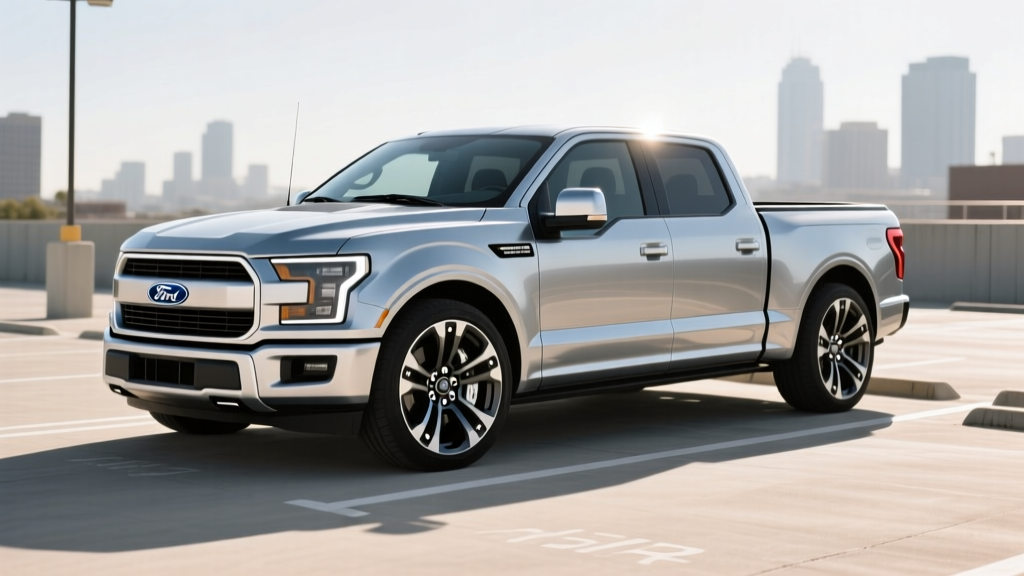
If you're researching the 2016 Ford F-150 bolt pattern—whether for aftermarket wheels, a winter tire set, or planning an electric-vehicle conversion—getting the exact numbers right is critical. A mismatched bolt pattern (also called a bolt circle or PCD) means the wheel simply won't mount. Below, we break down every wheel-mounting spec for the 2016 F-150, explain real-world fitment considerations, and discuss how these dimensions factor into EV swap projects that are gaining traction in the truck community.
2016 Ford F-150 Bolt Pattern: The Exact Specification
The 2016 Ford F-150 uses a 6×135mm bolt pattern. This means six lug nuts arranged on a circle with a diameter of 135 millimeters. Ford has used this bolt pattern on the F-150 since the 2004 model year, making it one of the most consistent wheel-mounting standards in the full-size truck segment.
| Specification | Value |
|---|---|
| Bolt Pattern (PCD) | 6×135mm (6×5.31 inches) |
| Lug Nut Count | 6 |
| Lug Nut Thread Size | M14 × 1.5 |
| Lug Nut Torque Spec | 150 lb-ft (203 Nm) |
| Center Bore (Hub Bore) | 87.1mm |
| Stock Wheel Sizes | 17", 18", 20", 22" (varies by trim) |
| Typical Offset Range | +40mm to +44mm (stock wheels) |
| Stock Tire Sizes | 245/70R17, 265/70R17, 265/60R18, 275/55R20 |
Every trim level of the 2016 F-150—XL, XLT, Lariat, King Ranch, Platinum, and Limited—shares the same 6×135mm bolt pattern. The variation between trims is in wheel diameter, width, offset, and tire size, not in the bolt circle itself.
Why the 6×135mm Pattern Matters for Wheel Buyers
The 6×135mm bolt pattern is proprietary to Ford's truck lineup. You won't find it on Chevrolet, Ram, Toyota, or any import-brand truck. This means:
- Cross-brand wheel swaps won't work without adapters (which we strongly advise against for daily driving or towing due to added stress on studs and altered offset geometry).
- Within the Ford ecosystem, wheels from 2004–2025 F-150 models share the 6×135mm pattern. However, center bore, offset, and brake-caliper clearance may differ between generations—always verify fitment before purchasing.
- The 87.1mm hub bore is specific enough that many universal aftermarket wheels require hub-centric rings to prevent vibration at highway speeds.
When shopping aftermarket wheels, look for listings explicitly marked "6×135" or "6×5.31" (the inch equivalent). A wheel drilled for 6×139.7mm (the common GM/Toyota 6-lug pattern) will not fit, even though the difference seems small—the studs simply won't align.
Torque Specs and Lug Nut Best Practices
Ford specifies 150 lb-ft of torque for the M14×1.5 lug nuts on the 2016 F-150. This is higher than many passenger vehicles (typically 80–100 lb-ft) and reflects the truck's towing and payload demands.
Key practices:
- Always use a calibrated torque wrench—not an impact gun—for final tightening.
- Re-torque after the first 50–100 miles following any wheel removal or rotation.
- If you're running aftermarket wheels with conical-seat (tapered) lug nuts versus Ford's stock ball-seat style, confirm the seat type matches the wheel's lug hole. Mismatched seats cause uneven clamping and can lead to wheel separation.
- For EV conversions (discussed below), the added weight of battery packs increases unsprung-load stress—maintaining proper torque becomes even more critical.
2016 F-150 Bolt Pattern in EV Conversion Builds
The 2016 F-150 has become a popular donor chassis for electric-vehicle conversions, thanks to its aluminum body (which saves weight to offset battery mass), abundant aftermarket support, and straightforward frame geometry. When builders swap in an EV powertrain—commonly using salvaged Tesla drive units, NetGain Hyper9 motors, or Cascadia Motion systems—the stock 6×135mm bolt pattern presents both an advantage and a constraint.
Advantage: Wide Wheel and Tire Availability
Because the 6×135mm pattern has been in production for two decades, there's a deep catalog of replacement and upgrade wheels. For an EV-converted F-150, builders often select low-rolling-resistance tires to maximize range, and the 6×135mm pattern offers enough variety to find suitable options.
Constraint: Drivetrain Adapter Plates
If an EV conversion uses a Tesla drive unit (which has its own bolt pattern for the axle flange), an adapter plate is needed between the motor/gearbox and the F-150's stock axles or custom CV shafts. This is a drivetrain interface issue—not a wheel bolt pattern issue—but builders sometimes conflate the two. The wheel-end 6×135mm pattern remains unchanged regardless of what's powering the truck.
Weight and Offset Considerations
A typical F-150 EV conversion adds 800–1,500 lbs of battery mass. This extra weight increases load on wheel bearings, studs, and suspension components. Builders should:
- Stay within the wheel's rated load capacity (check the stamp on the wheel's back side).
- Avoid extreme positive or negative offsets that alter scrub radius and increase bearing wear under heavier loads.
- Consider upgrading to wheels rated for heavier-duty applications, such as those from Ford's Super Duty lineup—though these require different bolt patterns (8×170mm or 8×200mm) and won't fit without hub adapters, which are not recommended for safety reasons.
Fitment Guide: What Fits and What Doesn't
Here's a quick-reference compatibility matrix for wheels often considered by 2016 F-150 owners:
| Wheel Source | Bolt Pattern | Hub Bore | Fits 2016 F-150? |
|---|---|---|---|
| 2004–2025 Ford F-150 OEM | 6×135mm | 87.1mm | Yes (verify offset/caliper clearance) |
| 2004–2025 Ford F-150 Aftermarket | 6×135mm | Varies | Yes (may need hub-centric rings) |
| Chevrolet Silverado 1500 (2019+) | 6×139.7mm | 78.1mm | No |
| Ram 1500 (2019+) | 6×139.7mm | 77.8mm | No |
| Toyota Tundra (2007–2021) | 5×150mm | 110.1mm | No |
| Toyota Tundra (2022+) | 6×139.7mm | 77.8mm | No |
| Ford F-250/F-350 Super Duty | 8×170mm or 8×200mm | 124.9mm+ | No |
| Ford Expedition (2007–2025) | 6×135mm | 87.1mm | Yes (verify offset/width) |
| Lincoln Navigator (2007–2025) | 6×135mm | 87.1mm | Yes (verify offset/width) |
The Ford Expedition and Lincoln Navigator share the 6×135mm pattern and 87.1mm hub bore with the F-150, making their OEM wheels potential cross-compatible options—provided the offset and width work with the F-150's brake calipers and suspension geometry.
EV Swap Spotlight: The F-150 Lightning Comparison
For readers considering whether to convert a 2016 F-150 to electric or simply buy a factory EV truck, it's worth noting that Ford's F-150 Lightning (2022–present) uses a different bolt pattern: 6×135mm on most trims, maintaining continuity with the gas F-150 lineage. However, the Lightning's wheels are engineered for the truck's higher curb weight (roughly 6,000–6,500 lbs versus 4,000–5,000 lbs for the 2016 gas F-150) and its instant-torque delivery characteristics.
If you're sourcing Lightning wheels for a conversion build on a 2016 chassis, they will physically bolt on, but the heavier wheel/tire assembly may affect unsprung mass and ride quality on the lighter 2016 suspension.
Frequently Asked Questions
Is the 2016 F-150 bolt pattern the same as the 2025 F-150?
Yes. Ford has used the 6×135mm bolt pattern on every F-150 from 2004 through the current 2025 model year. The center bore (87.1mm) has also remained consistent, though offsets and available wheel diameters have evolved.
Can I put 6×139.7mm wheels on my 2016 F-150 with adapters?
While bolt-pattern adapters exist, we do not recommend them for daily driving, towing, or any EV conversion. Adapters add thickness (typically 25–32mm), which alters the wheel offset, increases stress on wheel bearings, and introduces a failure point. For a truck that may carry heavy payloads or tow trailers, the safety risk outweighs any aesthetic benefit.
What size lug nuts does the 2016 F-150 use?
M14 × 1.5 thread pitch, torqued to 150 lb-ft. Ford uses a ball-seat (spherical) lug nut on OEM wheels. If you install aftermarket wheels with a conical (tapered) seat, you'll need matching conical-seat lug nuts.
Does the 2016 F-150 bolt pattern affect an EV conversion?
The bolt pattern itself doesn't change during an EV conversion—it remains 6×135mm at the wheel hub. However, the added weight of batteries means you should verify that your chosen wheels have an adequate load rating. A typical EV conversion adds 800–1,500 lbs to the vehicle, so wheels rated for at least 2,500 lbs each (per corner) provide a safe margin.
What other Ford vehicles share the 6×135mm bolt pattern?
The Ford Expedition (2007–present), Lincoln Navigator (2007–present), and Ford F-150 Lightning (2022–present) all use 6×135mm. Earlier Ford trucks like the 1997–2003 F-150 used a 5×139.7mm (5×5.5") pattern, which is not compatible.
Where can I verify my specific vehicle's bolt pattern?
Check the owner's manual, measure directly with a bolt-pattern gauge, or reference Ford's official F-150 specifications page. For aftermarket fitment, reputable wheel retailers like Tire Rack list verified fitment data by year, make, and model.
Key Takeaways for Truck Owners and EV Builders
The 2016 Ford F-150's 6×135mm bolt pattern with an 87.1mm hub bore is a well-established standard shared across two decades of Ford trucks and SUVs. Whether you're mounting a set of all-terrain wheels, planning winter rubber, or building an EV conversion, this spec is your starting point for compatibility.
For EV conversion builders specifically: the bolt pattern is the easy part. The harder challenges are managing added battery weight within wheel load ratings, maintaining proper offset to preserve bearing life, and sourcing drivetrain adapter plates that interface between your chosen electric motor and the F-150's existing axle assembly. Get those right, and the 2016 F-150's aluminum-body platform makes a compelling electric truck project.