Quick Verdict: America's Electric Workhorse in 2026
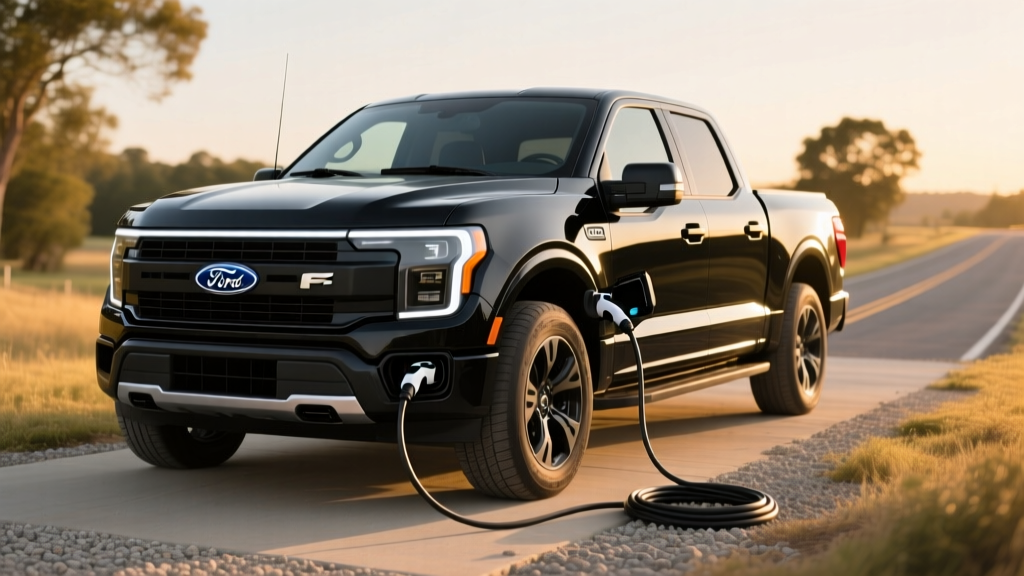
The Ford F-150 Lightning remains the benchmark for buyers who need a full-size pickup that can actually work — not just commute. Now in its fourth model year, the Lightning has matured past early-production stumbles into a genuinely capable electric truck that tows, hauls, and powers a job site while undercutting most rivals on price. With an EPA range of up to 320 miles on the Extended Range battery, a massive front trunk (frunk), and Ford's BlueCruise Level 2 highway assist, it's the most complete electric pickup on the market for 2026 — but charging speed and real-world highway range still demand honest conversation before you sign.
This review covers the 2026 Ford F-150 Lightning lineup end to end: exact EPA figures, real-world range expectations, DC fast-charging curves, home Level 2 setup, §30D tax-credit eligibility, and how it stacks against the Chevrolet Silverado EV and Rivian R1T. All numbers reflect the 2026 model year as listed on Ford's official spec pages and fueleconomy.gov.
Range & Efficiency: EPA Sticker vs. Real-World Miles
EPA estimate: 240 mi (Standard Range) / 320 mi (Extended Range)
Real-world highway (70 mph, 75°F): expect ~210–225 mi (Std) / ~265–285 mi (Ext)
Cold weather (25°F, highway): ~170–190 mi (Std) / ~220–245 mi (Ext)
Why the gap? Aerodynamic drag dominates at highway speed on a 6,500-lb brick-shaped truck, and lithium-ion cells lose efficiency below ~40°F.
The Standard Range battery pack delivers 240 miles EPA across Pro, XLT, and Lariat trims, while the Extended Range pack bumps that to 320 miles EPA (available on Lariat, Platinum, and standard on Platinum). On paper, 320 miles is strong for a full-size pickup. In practice, expect to plan charging stops around the 250-mile mark on highway road trips in warm weather and closer to 220 miles in winter.
Efficiency checks in at roughly 66 MPGe combined (2.0 kWh/mile) for the Extended Range model, per EPA data. That's typical for the segment — the Silverado EV 4WT comes in slightly higher, while the Rivian R1T Dual-Motor is similar. Towing drops efficiency dramatically; expect 1.5–1.8 kWh/mile (equivalent to ~37–40 MPGe) when pulling a 5,000-lb trailer, cutting real range roughly in half.
Battery Chemistry, Capacity & Longevity
| Attribute | Standard Range | Extended Range |
|---|---|---|
| Usable capacity | 98 kWh | 131 kWh |
| Chemistry | NMC (nickel-manganese-cobalt) | NMC |
| Thermal management | Active liquid cooling/heating | Active liquid cooling/heating |
| Warranty | 8 yr / 100,000 mi (≥70% retention) | 8 yr / 100,000 mi (≥70% retention) |
Both packs use NMC lithium-ion cells with active liquid thermal management. Ford does not offer an LFP option on the Lightning (unlike the Tesla Cybertruck's base variant). NMC provides higher energy density — necessary to push a 6,500-lb truck past 300 miles — but it's more sensitive to sustained 100% State of Charge. Daily charging to 80–90% and avoiding frequent DC fast charges above 90% will maximize long-term State of Health.
Ford's battery warranty guarantees at least 70% capacity retention over 8 years or 100,000 miles, whichever comes first. Independent fleet data from earlier model years suggests real degradation is tracking around 4–6% after 60,000 miles for mixed-use trucks — comfortably inside the warranty threshold.
Charging Speed: DC Fast, Level 2 & Home Setup
| Charging Level | Max Rate | Speed / Time | Connector |
|---|---|---|---|
| Level 1 (120V) | ~1.4 kW | ~3 mi/hr | NACS (native) |
| Level 2 (240V home) | 11.5 kW (48A) / 19.2 kW (80A optional) | ~26 mi/hr / ~42 mi/hr | NACS |
| DC Fast Charge | 150 kW (Std) / 150 kW (Ext) | 10–80% in ~41 min (Ext Range) | NACS (Supercharger access native) |
Ford switched the Lightning to the NACS (North American Charging Standard) connector starting with the 2025 model year, meaning 2026 trucks plug directly into Tesla Superchargers without an adapter — a significant road-trip advantage over CCS-only trucks. Access to Tesla's 17,000+ U.S. Supercharger stalls is the single biggest practical upgrade the Lightning has received since launch.
Charging-curve reality: The Extended Range pack peaks at roughly 150 kW but only sustains that rate between approximately 15–40% State of Charge. Above 60%, the curve tapers progressively — expect ~90 kW at 70% SoC and ~45 kW past 85%. That's why Ford quotes 10–80% in about 41 minutes; pushing to 100% adds another 35–45 minutes. For road trips, plan 20–25 minute stops from 10–70% and skip the last 10% unless you need the range to reach your destination.
At home, the 19.2 kW onboard charger (optional on Lariat, standard on Platinum) is among the fastest in the segment, recovering ~42 miles per hour of charging. An overnight session (10 hours) easily replenishes the full Extended Range pack. Expect to pay $1,200–$2,500 for a licensed electrician to install a 100-amp dedicated circuit and hardwired Wall Connector — more if your panel needs a 200-amp service upgrade ($2,000–$4,000 additional).
Performance, Towing & Payload
| Trim | Horsepower | Torque (lb-ft) | 0–60 mph | Max Tow | Payload |
|---|---|---|---|---|---|
| Pro Std Range | 563 hp | 775 | ~4.0 sec | 7,700 lb | 2,235 lb |
| XLT / Lariat Ext Range | 563 hp | 775 | ~3.8 sec | 10,000 lb (Max Tow Pkg) | 1,952 lb |
| Platinum | 563 hp | 775 | ~3.8 sec | 8,600 lb | 1,807 lb |
Every Lightning is dual-motor all-wheel drive with a fixed single-speed reduction gear. The 563 hp / 775 lb-ft output is identical across trims — only battery size and weight change the 0–60 time slightly. Acceleration is genuinely startling for a truck this size; merging onto highways and passing on two-lane roads requires zero planning.
Towing is the Lightning's honest conversation. The 10,000-lb max tow rating (with the Max Trailer Tow Package on XLT/Lariat) is real, but range drops to 100–130 miles at highway speed with a heavy enclosed trailer. Ford's Pro Power Onboard (up to 9.6 kW of 240V output from the bed and frunk) remains the segment's best job-site power feature — it will run a chop saw, compressor, and job-site lights simultaneously without a generator.
Interior, Tech & Driver Assistance
The cabin is straightforward Ford truck — upright seating, physical climate knobs (thankfully), and a 12-inch touchscreen on Pro/XLT or a 15.5-inch portrait screen on Lariat and Platinum running SYNC 4A. Wireless Apple CarPlay and Android Auto are standard. The Mega Power Frunk offers 14.1 cubic feet of lockable, drainable storage with 400 lb of payload capacity — the most usable front trunk on any production vehicle in 2026.
Rear-seat legroom measures 43.4 inches (SuperCrew cab only — there is no regular-cab Lightning), which is genuinely limousine-grade and exceeds the gas F-150 SuperCrew. The bed is a 5.5-foot box with 52.8 cubic feet of volume; the tailgate doubles as a work surface with built-in ruler and cupholders.
Driver assistance: Ford Co-Pilot360 2.0 is standard (automatic emergency braking, blind-spot monitoring with trailer coverage, lane-keeping). BlueCruise — Ford's Level 2 hands-free highway driving system — is available on Lariat and standard on Platinum. It works on 130,000+ miles of pre-mapped divided highways and handles steering, throttle, and braking, but it is not self-driving. You must remain attentive; the driver-monitoring camera will issue warnings and eventually disengage if you look away.
Pricing, Trims & Federal Tax Credit (2026)
| Trim | Battery | MSRP | §30D Credit Eligible? | Est. Net Price |
|---|---|---|---|---|
| Pro | Std Range | $54,995 | Up to $7,500 | ~$47,495 |
| XLT | Std Range | $62,995 | Up to $7,500 | ~$55,495 |
| Lariat | Ext Range | $76,995 | Up to $7,500 | ~$69,495 |
| Platinum | Ext Range | $96,995 | Up to $7,500 | ~$89,495 |
§30D tax-credit rules for 2026 (verify at IRS.gov):
- MSRP cap: $80,000 for pickups and SUVs. This excludes the Platinum trim ($96,995) from the credit.
- Income cap: MAGI ≤ $300,000 (joint) / $225,000 (head of household) / $150,000 (single).
- Battery sourcing: Increasing percentages of critical minerals and battery components must be sourced from the U.S. or FTA partners — eligibility shifts annually, and Ford has confirmed Pro/XLT/Lariat trims meet 2026 sourcing thresholds for the full $7,500.
- Point-of-sale transfer: You can transfer the credit to the dealer at purchase to reduce the sale price directly, rather than waiting for tax filing.
Always confirm current eligibility with your tax professional before signing — battery-sourcing rules have changed mid-year in the past.
Pros & Cons
- Native NACS access to Tesla Supercharger network
- Massive 14.1 cu-ft frunk with 400-lb payload
- 9.6 kW Pro Power Onboard (best-in-class)
- Up to 10,000-lb tow rating with Max Tow Package
- Class-leading rear legroom (43.4 in)
- Full $7,500 §30D credit on Pro/XLT/Lariat (under MSRP cap)
- DC fast charge peaks at only 150 kW — slow for a 131 kWh pack
- Real highway range drops sharply (to ~265 mi Ext Range)
- Towing cuts range roughly in half — not viable for long hauls
- Platinum trim priced above §30D MSRP cap ($80k)
- NMC chemistry requires daily SoC management for longevity
- Heavy curb weight (~6,800 lb) increases tire wear
Who Should Buy the F-150 Lightning in 2026?
- You need a full-size pickup for daily work, job-site power, and weekend towing under 150 miles round-trip.
- You can charge at home (Level 2) and want a truck that earns money via Pro Power Onboard.
- You value Supercharger-network access for road trips without adapter hassle.
- You want the tax credit — Pro and XLT Std Range are the sweet-spot trims (under $63k MSRP, full $7,500 eligible).
- You regularly tow heavy trailers over 200+ highway miles (the Silverado EV 4WT has a larger battery and longer tow range).
- You prioritize sporty handling and off-road prowess — the Rivian R1T is more agile, though pricier and smaller.
- You want LFP battery chemistry for daily 100% charging without degradation concern (consider the Cybertruck base variant).
Frequently Asked Questions
What is the real-world range of the 2026 F-150 Lightning?
EPA rates it at 240 mi (Standard Range) and 320 mi (Extended Range). In real-world highway driving at 70 mph in moderate temperatures, expect ~210–225 mi (Std) and ~265–285 mi (Ext). Cold weather below freezing reduces those figures by 15–25%.
How fast does the F-150 Lightning charge?
DC fast charging peaks at 150 kW, delivering 10–80% in approximately 41 minutes on the Extended Range pack. At home on a 19.2 kW Level 2 charger, you'll recover about 42 miles per hour — a full overnight charge for either battery.
Does the F-150 Lightning qualify for the federal EV tax credit?
Yes — Pro, XLT, and Lariat trims qualify for up to $7,500 under §30D, provided your MAGI is within IRS limits and you take delivery in 2026. The Platinum trim exceeds the $80,000 MSRP cap for pickups and is not eligible. Confirm current battery-sourcing eligibility at IRS.gov before purchase.
Is the F-150 Lightning worth buying vs. the Silverado EV or Rivian R1T?
For traditional truck buyers who need SuperCrew space, a 5.5-ft bed, Pro Power Onboard, and Supercharger access, the Lightning is the strongest all-around value — especially the XLT Std Range around $55,495 after the credit. The Silverado EV offers a longer 4WT battery for heavy tow routes; the Rivian R1T is smaller, more expensive, but more dynamically capable off-road.
Can I tow a camper with the F-150 Lightning?
Yes, up to 10,000 lb with the Max Trailer Tow Package. But plan conservatively: expect real-world range of 100–130 miles at highway speed with a 5,000+ lb trailer. It works beautifully for lake-cabin weekends within 80 miles; it does not work for cross-country Airstream trips without lengthy charging stops.
How long will the Lightning's battery last?
Ford warrants the battery for 8 years / 100,000 miles at ≥70% capacity retention. Real-world fleet data from 2022–2024 trucks shows ~4–6% degradation at 60,000 miles with mixed charging habits. With daily charging limited to 80–90% and moderate DC fast-charge use, most owners should expect 150,000+ miles before noticeable range loss.