Quick Answer: eVTOL vs Your Ground-Based EV
Electric vertical takeoff and landing eVTOL aircraft are real, FAA-certified, and entering limited commercial service in 2026 — but they are not a replacement for your daily-driver EV. Current eVTOL models like the Joby S4 and Archer Midnight offer 20–100 miles of range at $3–$6 per passenger-mile (ride-hail), while personal ownership remains years away and priced above $1 million. For 99% of buyers, a ground-based EV like the Tesla Model Y (EPA 320 mi, ~$0.04/mi energy cost) or Chevrolet Equinox EV (EPA 319 mi, ~$41,900) remains the practical electrified-transport decision. eVTOL matters now as a complement to EVs — think airport hops and congested urban corridors — not a substitute.
What Is an eVTOL and How Does It Compare to an Electric Car?
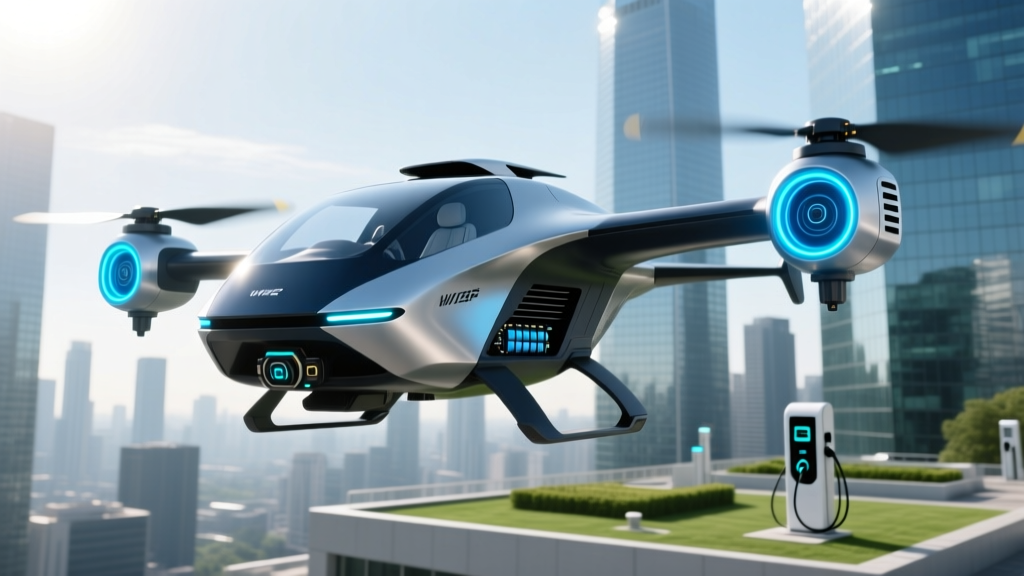
Electric vertical takeoff and landing eVTOL aircraft use distributed electric propulsion — typically 4 to 12 electric motors spinning rotors — to take off and land vertically like a helicopter, then transition to wing-borne forward flight for efficiency. The FAA certified the first production eVTOL, Joby Aviation's S4, under Part 21 in late 2025, with Archer Aviation's Midnight following in early 2026.
The powertrain parallels a battery-electric car: lithium-based traction batteries (mostly NMC chemistry for energy density), inverters, electric motors, and thermal management. But the operating envelope is radically different:
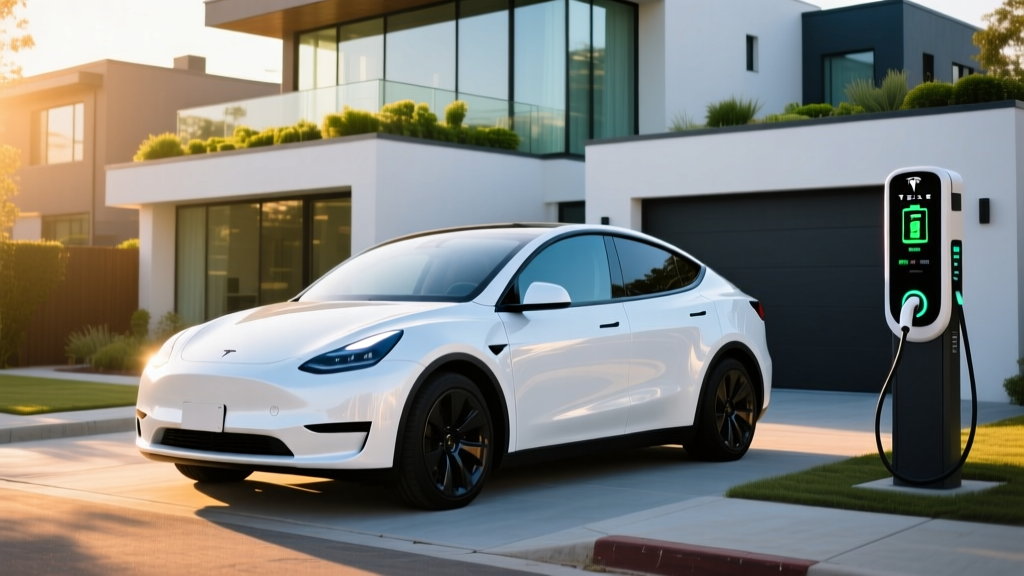
| Metric | Tesla Model Y LR (Ground EV) | Joby S4 (eVTOL) | Archer Midnight (eVTOL) |
|---|---|---|---|
| Usable Battery | 75 kWh (NMC) | ~77 kWh (NMC) | ~72 kWh (NMC) |
| Range | EPA 320 mi | ~100 mi (FAA-certified mission) | ~20 mi back-to-back urban hops |
| Cruise Speed | 75 mph (typical hwy) | 200 mph | 150 mph |
| Passengers | 5 | 4 + pilot | 4 + pilot |
| Energy Cost / Mile | ~$0.04–$0.06 | ~$3–$6 per passenger (ride-hail) | ~$4–$7 per passenger |
| Purchase Price | $44,990 MSRP | Not sold to consumers | Not sold to consumers |
| Automation Level | SAE Level 2 (driver required) | Piloted (human PIC required) | Piloted (human PIC required) |
The headline: an eVTOL battery is roughly the same kWh capacity as a midsize EV, but aviation's energy-per-mile cost is roughly 10× higher because lifting mass vertically and sustaining flight demands far more power (kW) than rolling on asphalt.
The Real Cost of eVTOL Ownership vs Ground EV Ownership
Personal eVTOL ownership in 2026 is functionally nonexistent for consumers. Joby and Archer sell aircraft to fleet operators (Delta, United, Toyota-affiliated services), not individuals. Estimated per-aircraft prices land between $1.5M and $3M, with annual insurance, hangarage, pilot salary, and Part 135 compliance pushing operating costs well above $500K/year for a single unit.
| Cost Category | Tesla Model Y LR | eVTOL Ride (50 trips/yr, 25 mi avg) | Toyota Camry (gas) |
|---|---|---|---|
| Purchase / Access | $44,990 (eligible for up to $7,500 §30D credit) | $0 (pay-per-ride) | $28,500 |
| Energy / Fuel (annual) | ~$540 (12,000 mi @ $0.045/mi) | ~$6,250 ($125 per trip) | ~$1,560 (12,000 mi @ 32 mpg, $4.15/gal) |
| Maintenance (annual) | ~$300 | $0 (operator absorbs) | ~$900 |
| Insurance (annual) | ~$1,800 | $0 | ~$1,400 |
| 5-Year Total (approx.) | ~$57,000 net of credit | ~$31,250 | ~$56,800 |
eVTOL ride-hail makes financial sense only for time-critical trips — airport transfers in cities like Los Angeles, New York, or Dubai where a 20-minute flight replaces a 90-minute Uber stuck in surface traffic. For daily commuting, a ground EV wins on cost by two orders of magnitude.
Source: fueleconomy.gov for EV efficiency baselines; operator pricing from Joby/Archer 2025 investor disclosures.
Range, Charging, and Battery Chemistry: eVTOL vs EV
Both platforms predominantly use NMC (nickel-manganese-cobalt) cells because aviation demands high energy density — roughly 250–300 Wh/kg at the cell level. LFP (lithium iron phosphate), common in the Tesla Model 3 RWD and Ford Mustang Mach-E Select for its longevity and lower cost, is too heavy for current eVTOL airframes.
Charging profiles diverge sharply:
- Ground EV (Tesla Model Y): DC fast charge peaks at 250 kW, 10–80% in ~22 minutes; Level 2 home at 11.5 kW adds ~44 mi/hr.
- eVTOL (Joby S4): Megawatt-class DC charging (~1 MW peak) enables ~7-minute turnarounds between hops. This is mandatory for the airline-style schedule operators promise — but requires vertiport-grade electrical infrastructure (typically 1–2 MW grid connections), not your garage.
Battery degradation is the eVTOL industry's quiet crisis. Aviation safety margins demand replacement around 80% state of health (SoH), and high-C-rate discharge during hover (up to 8C) accelerates wear. Operators budget for pack swaps every 2,000–4,000 flight cycles — roughly every 2–3 years in heavy service — compared to a ground EV's expectation of 150,000–200,000 miles before meaningful degradation.
Common eVTOL Misconceptions vs Facts
| Myth | Fact |
|---|---|
| "eVTOLs are self-flying air taxis." | All 2026-certified models require a human pilot-in-command. Autonomous (Level 4/5) eVTOL certification is not expected before 2030+. |
| "I can buy one for my driveway." | No consumer sales channel exists. Vertiport zoning, FAA Part 135 operator rules, and pilot licensing block personal use. |
| "It'll replace my EV commute." | At $4–$6/passenger-mile, a daily 20-mile eVTOL commute costs ~$20,000/year in fares alone — 37× the energy cost of a ground EV. |
| "eVTOLs are zero-emission." | Tailpipe-zero, yes. Upstream emissions depend on grid mix — the same caveat that applies to every EV charged on a fossil-heavy utility. |
| "Noise is worse than helicopters." | Distributed electric rotors at lower tip speeds produce ~10–20 dB less perceived noise than a Bell 407; hover is still audible but cruise is remarkably quiet. |
Real-World Ownership Considerations: Who Should Care About eVTOL Today?
If you are an individual buyer shopping for electrified transportation in 2026, your decision tree is straightforward:
eVTOL vs EV: Decision Framework
- Choose a ground EV (BEV or PHEV) if: You need daily transportation, have a commute under 100 miles, want sub-$0.06/mile energy cost, and plan to own the vehicle 5+ years. Models like the Hyundai Ioniq 5 (EPA 318 mi, $42,600), Chevrolet Equinox EV (319 mi, $41,900), or Toyota RAV4 PHEV (42 mi electric-only, 94 MPGe) cover 95% of use cases.
- Use eVTOL ride-hail if: You live in LA, NYC, or Dubai, frequently transit to LAX/JFK/DXB, and value a 20-minute flight over a 90-minute surface trip at $100–$200 per leg.
- Wait on personal eVTOL ownership if: You are anyone reading this article. FAA type-certified personal eVTOLs, vertiport access, and pilot licensing pathways do not exist at consumer scale in 2026.
Home charging access remains the make-or-break for ground EVs: ~70% of US EV owners charge at home (Level 2, 240V), but apartment dwellers and street-parkers face real barriers. eVTOL doesn't solve this — it sidesteps it entirely by being an operator-owned service, not a consumer product.
Climate matters. Cold-weather ground EVs lose 20–30% range at 20°F; eVTOLs face similar lithium-ion chemistry limits plus icing and density-altitude penalties, which is why early commercial routes cluster in Southern California, Florida, Texas, and the UAE.
Federal Tax Credits and Incentives: Does §30D Apply to eVTOL?
No. The IRS §30D Clean Vehicle Credit applies to on-road four-wheeled vehicles under 14,000 lbs GVWR meeting MSRP caps ($80,000 SUVs/pickups, $55,000 sedans), buyer income limits ($300K MFJ / $150K single), and critical-mineral/battery-sourcing requirements. eVTOL aircraft are certificated under FAA Part 21/23 and fall outside the statute entirely.
For ground EV buyers, the 2026 credit landscape remains active but constrained — many popular models (Tesla Model Y, Ford F-150 Lightning, Rivian R1S) qualify only if battery sourcing thresholds are met, and the point-of-sale transfer option lets dealers apply the credit at purchase. Always verify eligibility against the current IRS qualified vehicle list at purchase time.
Frequently Asked Questions
Can I buy an eVTOL aircraft for personal use in 2026?
No production eVTOL is sold to individual consumers in 2026. Joby and Archer sell exclusively to airline-affiliated fleet operators and defense customers. Personal ownership pathways — including FAA registration, pilot certification, and vertiport access — are not yet established.
How much does an eVTOL air-taxi ride cost?
Operator projections target $3–$6 per passenger-mile, translating to roughly $100–$200 for a 20–30 mile airport transfer. Initial routes in LA and NYC are priced closer to premium Uber Black than economy, with volume pricing expected as fleets scale past 2028.
Is an eVTOL safer than driving a car?
FAA certification requires eVTOLs to meet Part 23 safety standards comparable to commercial aviation — an order of magnitude safer per mile than ground vehicles. However, the operational dataset is still small; meaningful safety statistics will require millions of revenue flight hours, expected by the late 2020s. See NHTSA traffic-fact data for ground-vehicle baseline fatality rates.
Will eVTOLs ever replace ground EVs for daily commuting?
Not in any foreseeable timeframe. Physics (energy-per-mile), economics ($/passenger-mile), airspace capacity, and noise constraints make eVTOL a niche mobility layer — analogous to helicopters today, not sedans. Ground EVs will remain the dominant electrified-transport platform for personal use through at least 2040.
What's the battery lifespan of an eVTOL vs a ground EV?
Ground EVs typically retain 85–90% battery SoH at 150,000 miles (8–10 years). eVTOL packs endure far higher C-rates during hover and are swapped at ~80% SoH every 2,000–4,000 cycles — roughly 2–3 years in commercial service. Replacement cost for an eVTOL pack is estimated at $40,000–$80,000, absorbed by operators, not riders.
Should I wait to buy an EV until eVTOLs are mainstream?
No. eVTOL will not compete with ground EVs on price, range, or accessibility within the next 15+ years. If your transportation need is personal, daily, and cost-sensitive, a 2026-model ground EV (with §30D credit where eligible) is the right decision now.
Authoritative sources: FAA Urban Air Mobility, Joby Aviation type-certificate data, Archer Midnight investor disclosures, fueleconomy.gov, IRS §30D guidance.