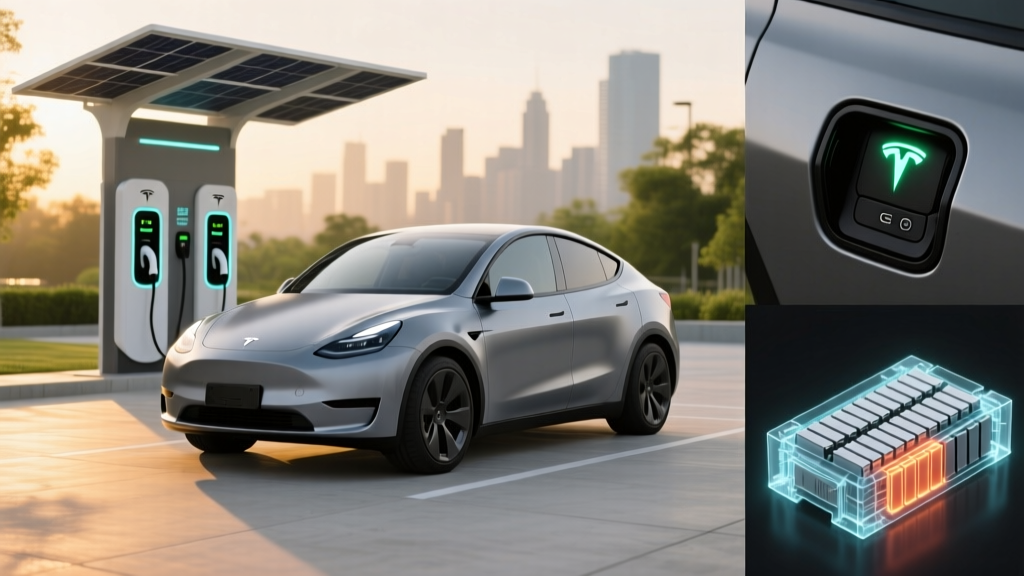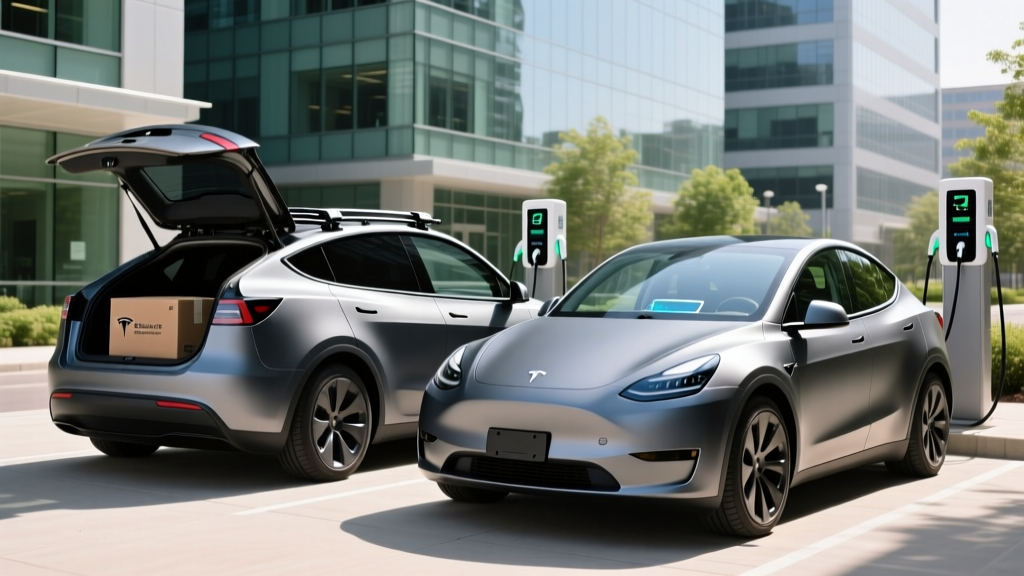
The federal EV tax credit didn't disappear in 2026, but qualifying for the full $7,500 under IRS §30D requires threading a needle of income caps, MSRP limits, and battery-sourcing requirements that change year to year. Meanwhile, the total cost of owning an EV has shifted: electricity prices have risen in some regions, insurance premiums for EVs remain stubbornly high, and depreciation curves are still settling after years of aggressive price cuts.
This guide breaks down exactly what the EVs tax credit 2026 rules look like today, how much an EV actually costs to own over five years compared to a gas equivalent, and where the real savings — and real surprises — show up in your budget.
The 2026 Federal EV Tax Credit: Who Actually Qualifies
The §30D Clean Vehicle Credit still offers up to $7,500 for qualifying new EVs and up to $4,000 for qualifying used EVs. But "up to" is doing heavy lifting. The credit is split into two $3,750 halves — one tied to critical-mineral sourcing, the other to battery-component manufacturing — and both have tightened considerably since the Inflation Reduction Act first passed.
§30D Eligibility Checklist for 2026
- Income caps (modified AGI): $150,000 single / $225,000 head of household / $300,000 joint — applies to the lesser of your current or prior tax year
- MSRP caps: $55,000 for sedans, wagons, and hatchbacks; $80,000 for SUVs, vans, and pickups — the vehicle's base MSRP plus factory-installed options cannot exceed these limits
- Battery sourcing: Critical minerals must meet escalating percentages sourced from the U.S. or FTA partners; battery components must be manufactured or assembled in North America at rising thresholds; any battery containing components from a "foreign entity of concern" (FEOC) disqualifies the vehicle entirely
- Point-of-sale transfer: You can transfer the credit to the dealer at purchase to reduce the sale price immediately rather than waiting to claim it on your tax return — the dealer must be IRS-registered
- Vehicle eligibility: Must be a new BEV or qualifying PHEV with at least 7 kWh battery capacity, assembled in North America, and listed on the IRS qualified vehicles list
The practical result: many popular EVs that qualified in 2024 have lost partial or full eligibility as battery-sourcing rules tightened. Before committing to a purchase, verify the specific model and trim on the IRS list — eligibility can change mid-year as manufacturers adjust supply chains. A tax professional can confirm how the credit interacts with your specific tax situation.
5-Year Total Cost of Ownership: EV vs. Gas Baseline
To ground this in real numbers, let's compare a representative EV and a comparable gas sedan over five years and 75,000 miles. We're using a Tesla Model 3 Rear-Wheel Drive ($38,990 MSRP, 272-mile EPA range, ~25 kWh/100 mi) against a Toyota Camry LE (~$28,990 MSRP, 32 MPG combined). Both are popular, well-equipped, mid-size sedans.
| Cost Category | Tesla Model 3 RWD (EV) | Toyota Camry LE (Gas) |
|---|---|---|
| Purchase price (MSRP) | $38,990 | $28,990 |
| Federal tax credit (§30D) | −$7,500 (if eligible) | $0 |
| Effective purchase price | $31,490 | $28,990 |
| Energy/fuel (75,000 mi) | $3,375 (home L2 avg) | $6,563 (gas at $3.50/gal) |
| Insurance (5 years) | $10,500 (~$2,100/yr) | $7,500 (~$1,500/yr) |
| Maintenance (5 years) | $1,500 | $3,750 |
| Depreciation (est. 5-yr) | $15,200 (~39%) | $11,000 (~38%) |
| 5-Year Total Cost | $52,065 | $50,803 |
Several caveats apply. The EV's tax credit eligibility depends on your income, the vehicle's sourcing compliance, and dealer registration. Insurance costs vary wildly by state, driving record, and insurer. Depreciation estimates are based on current resale trends and could shift. And if you rely primarily on DC fast charging at public stations, your energy costs will be significantly higher — we'll break that down next.
Charging vs. Gas: The Real Cost Per Mile
The single biggest operational savings for EV owners comes from energy costs — but the gap between home charging and public charging is enormous, and it's where many buyers miscalculate.
Cost Per Mile: EV Charging Scenarios vs. Gas
| Scenario | Rate | Cost/Mile (Model 3 at 25 kWh/100mi) | Annual Cost (15,000 mi) |
|---|---|---|---|
| Home Level 2 (national avg) | $0.18/kWh | $0.045 | $675 |
| Home with solar/TOU off-peak | $0.08/kWh | $0.020 | $300 |
| Public DC fast charging (avg) | $0.42/kWh | $0.105 | $1,575 |
| Tesla Supercharger (avg) | $0.30/kWh | $0.075 | $1,125 |
| Gas sedan (32 MPG) | $3.50/gal | $0.109 | $1,640 |
If you charge at home on a standard utility rate, an EV costs roughly 60% less per mile than a 32-MPG gas car. If you have solar panels or access to off-peak time-of-use rates, the savings approach 80%. But if you rely entirely on public DC fast charging — common for apartment dwellers without home charging access — the per-mile cost can equal or exceed gasoline. This is why home charging access is the single most important variable in EV ownership economics.
Source for efficiency data: fueleconomy.gov side-by-side comparison tool.
Maintenance Savings: Where EVs Quietly Win
EV maintenance savings are real but often overstated. You won't save thousands per year — the advantage is steady and cumulative, and it comes from the elimination of internal-combustion service items rather than from zero maintenance altogether.
| Maintenance Item | Gas Vehicle (5-yr cost) | EV (5-yr cost) | Notes |
|---|---|---|---|
| Oil changes | $750 (6 changes) | $0 | EVs have no engine oil |
| Brake pads/rotors | $800 | $200 | Regen braking extends pad life 2-3x; expect 80,000+ mi on original pads |
| Transmission fluid | $200 | $0 | Most EVs use single-speed reduction gears with sealed, lifetime fluid |
| Engine air filter | $150 | $0 | No engine, no air filter; cabin air filter still required (~$100) |
| Coolant flush | $200 | $100 | EVs still use thermal management coolant loops, but intervals are longer |
| Tire rotation/replacement | $1,650 | $1,900 | EVs are heavier and deliver instant torque; expect 10-15% faster tire wear |
| Total (5 years) | $3,750 | $2,200 | Net EV savings: ~$1,550 over 5 years |
The tire cost deserves attention. EVs typically wear through tires faster than equivalent gas vehicles due to higher curb weight (batteries add 500-1,000 lbs) and instant torque application. Budget for premium EV-rated tires and plan for replacement at 30,000-40,000 miles rather than the 50,000+ miles typical of lighter gas sedans.
Insurance: The Cost EV Owners Don't See Coming
EV insurance premiums are typically 15-30% higher than equivalent gas vehicles. This isn't arbitrary — it reflects real cost factors that insurers have documented across millions of claims:
- Higher repair costs: EV battery packs and power electronics are expensive to replace after collision damage. A minor rear-end impact that would cost $2,000 to repair on a gas sedan can total an EV if the battery enclosure is compromised.
- Specialized labor: High-voltage system repairs require certified technicians, and fewer shops have that certification — driving up labor rates.
- Parts availability: EV-specific collision parts (battery modules, inverter assemblies, charge port housings) often have longer lead times and higher unit costs.
- Total-loss frequency: Insurers are more likely to declare an EV a total loss after battery-adjacent damage due to the cost and complexity of battery inspection and recertification.
For the Model 3 in our comparison, expect annual premiums around $1,800-$2,400 depending on state, driving record, and coverage level — compared to $1,300-$1,800 for the Camry. Shop quotes from at least three insurers before purchase, and ask specifically about EV-experienced adjusters in your area. Some insurers now offer EV-specific policies with battery replacement riders that can be worthwhile for high-mileage drivers.
Depreciation and Resale Value: The Moving Target
EV depreciation has been volatile. Between 2022 and 2024, aggressive price cuts by Tesla and other manufacturers cratered resale values across the segment — early adopters who bought at peak pricing absorbed 50-60% depreciation over just two years. By 2026, the market has stabilized somewhat, but EVs still depreciate faster on average than comparable gas vehicles.
Current 5-year depreciation expectations:
- Mass-market EVs (Model 3, Ioniq 6, Equinox EV): 35-45% over 5 years
- Premium EVs (Model S, iX, Lucid Air): 45-55% over 5 years
- Comparable gas sedans (Camry, Accord): 30-40% over 5 years
- Hybrids (Camry Hybrid, Prius): 25-35% over 5 years — currently the depreciation sweet spot
Several factors continue to pressure EV resale values: rapid battery technology improvements making older packs seem dated, manufacturer price competition, and lingering buyer uncertainty about long-term battery health. If minimizing depreciation is a priority, a PHEV or traditional hybrid currently holds value better than a pure BEV in most segments.
State, Local, and Utility Incentives: The Layered Savings
Important: State and local incentives vary dramatically by jurisdiction and change frequently. The figures below are representative examples — verify current availability with your state energy office and utility provider before relying on them in your budget.
Federal incentives are only one layer. Many states, municipalities, and utilities stack additional rebates on top of §30D:
- State purchase rebates: States like Colorado ($5,000 for income-qualified buyers), Massachusetts ($3,500 MOR-EV rebate), and New York ($2,000 Drive Clean rebate) offer direct purchase incentives. Some states offer nothing. Check your state energy office website.
- Utility rebates: Many electric utilities offer $250-$1,500 rebates for purchasing an EV and/or installing a home Level 2 charger. Pacific Gas & Electric, ConEdison, and Xcel Energy have historically offered these programs, but availability and amounts change annually.
- HOV lane access: States including California, Colorado, and Virginia grant single-occupant carpool lane access to qualifying EVs — a significant time savings for commuters, though some states are beginning to phase this out as EV adoption grows.
- Home charging installation credits: The federal §30C Alternative Fuel Vehicle Refueling Property Credit offers up to $1,000 (30% of cost) for home charger installation, subject to census-tract eligibility requirements. Many utilities layer their own rebates on top.
- Registration fee offsets: Some states charge higher annual registration fees for EVs (to offset lost gas tax revenue) — these range from $50 to $225/year and should be factored into your state-specific math.
The combined effect can be substantial. A Colorado buyer eligible for the full $7,500 federal credit, $5,000 state rebate, $500 utility charger rebate, and $1,000 §30C installation credit could reduce their net vehicle cost by $14,000 — fundamentally changing the ownership math. But stacking these incentives requires careful timing, documentation, and eligibility verification.
The Decision Framework: When the Math Works
Based on the data above, here's when EV ownership economics make the strongest case — and when they don't:
Choose an EV if:
- You qualify for the full $7,500 federal credit (income + vehicle eligibility)
- You have reliable home charging access (garage, driveway, or workplace L2)
- Your state stacks meaningful additional incentives ($2,000+)
- You drive 12,000+ miles annually (more miles = more fuel savings to recoup the price premium)
- You plan to own the vehicle 5+ years (amortizes the higher purchase price and depreciation hit)
Consider a hybrid or PHEV if:
- You don't qualify for the federal credit (income above caps, vehicle ineligible)
- You live in an apartment without charging access and your area has limited public infrastructure
- You drive fewer than 8,000 miles annually (fuel savings won't offset the price premium)
- Resale value is a top priority (hybrids currently depreciate less)
- You frequently drive in extreme cold or tow heavy loads (range loss compounds quickly)
Frequently Asked Questions
How much does it really cost to own an EV over 5 years?
For a mid-range EV like the Tesla Model 3 RWD with full tax credit eligibility and home charging, expect approximately $50,000-$55,000 in total 5-year cost including purchase, energy, insurance, maintenance, and depreciation. A comparable gas sedan runs $48,000-$53,000 over the same period. The gap narrows considerably with state incentives, solar-powered charging, or higher annual mileage.
Do I qualify for the 2026 federal EV tax credit?
Eligibility requires meeting all of these conditions: modified AGI below $150K/$225K/$300K (single/HOH/joint), vehicle MSRP below $55K (cars) or $80K (SUVs/trucks), battery components and critical minerals meeting 2026 sourcing thresholds, and North American final assembly. Check the IRS qualified vehicle list for the specific model and trim you're considering — eligibility can change without notice.
How much do I save on fuel and maintenance with an EV?
Home-charged EVs save approximately $600-$900 per year on fuel compared to a 30-MPG gas car at $3.50/gallon. Maintenance savings average $300-$400 per year from eliminated oil changes, extended brake life, and fewer fluid services. Combined operational savings run $900-$1,300 annually — but only if you're primarily charging at home. Public DC fast charging can erase the fuel savings entirely.
Are EVs more expensive to insure?
Yes, typically 15-30% more expensive than equivalent gas vehicles. The average EV insurance premium runs $1,800-$2,400 annually compared to $1,300-$1,800 for a gas sedan. Higher repair costs, specialized labor requirements, and greater total-loss frequency after battery-adjacent damage all contribute. Get at least three quotes before purchasing, as premiums vary significantly between insurers.
How well do EVs hold their value compared to gas cars?
EVs currently depreciate 35-55% over five years depending on the segment, compared to 30-40% for gas sedans and 25-35% for hybrids. Rapid technology evolution, manufacturer price competition, and battery longevity uncertainty continue to pressure EV resale values. If you prioritize resale value, hybrids currently lead the market. Leasing an EV can mitigate depreciation risk by transferring that exposure to the lessor.
Can I transfer the tax credit to the dealer at point of sale?
Yes. Since 2024, §30D allows you to transfer the credit to an IRS-registered dealer at the time of purchase, reducing your out-of-pocket cost immediately rather than claiming it as a credit on your tax return the following year. The dealer must be registered with the IRS Energy Credits Online portal. Confirm dealer registration before signing any purchase agreement — not all dealers participate.