The short answer on buying an EV van in 2026: The Ford E-Transit remains the most accessible electric cargo van with an EPA-estimated 126 miles of range, a 68 kWh usable battery, and a starting MSRP around $49,995. If you need more range and can spend more, the Mercedes-Benz eSprinter offers up to 203 miles EPA from its 113 kWh battery at roughly $73,000. For high-volume last-mile delivery, GM's BrightDrop Zevo 600 provides up to 272 miles EPA from a 165 kWh pack, starting near $75,000. Federal commercial EV tax credits under IRS §45W can offset up to $7,500 for vehicles under 14,000 lbs GVWR, but eligibility depends on battery sourcing and your business tax liability.
What Is an EV Van and Who Should Consider One?
An EV van is a battery-electric commercial or passenger van that replaces a conventional internal-combustion powertrain with an electric motor and a large lithium-ion traction battery. Unlike passenger EVs optimized for range and performance, EV vans prioritize cargo volume, payload capacity, low operating cost per mile, and depot-based charging routines.
The typical EV van buyer in 2026 falls into one of three categories:
- Last-mile delivery fleets — Amazon DSPs, FedEx Ground contractors, and independent couriers running 80-150 miles of stop-and-go urban routes daily.
- Tradespeople and service businesses — electricians, plumbers, HVAC techs who drive 40-90 miles daily with predictable return-to-base patterns.
- Passenger shuttle operators — airport shuttles, hotel courtesy vans, and paratransit services on fixed loops.
If your daily driving exceeds 200 highway miles, involves heavy towing, or operates in regions with extreme cold and no depot charging, an EV van may not yet be practical. Read on for the numbers that matter.
2026 EV Van Lineup: Specs, Range, and Pricing Compared
The U.S. market has three primary electric cargo vans available for the 2026 model year, plus a growing passenger-van segment. Below is a side-by-side spec comparison with real-world caveats every buyer should weigh.
| Spec | Ford E-Transit (2026) | Mercedes-Benz eSprinter (2026) | BrightDrop Zevo 600 (2026) |
|---|---|---|---|
| EPA Range | 126 mi (low-roof cargo) | 203 mi (150" WB, high-roof) | 272 mi (estimated) |
| Battery (usable) | 68 kWh, NMC | 113 kWh, NMC | 165 kWh, NMC |
| Motor Output | 266 hp / 317 lb-ft | 201 hp / 332 lb-ft | ~250 hp / 320 lb-ft (est.) |
| DC Fast Charge (peak) | 115 kW | 115 kW | ~120 kW (est.) |
| 10-80% DC Charge | ~45 min | ~42 min | ~60 min (est.) |
| Level 2 AC Charge | 10.5 kW (~7.2 hr full) | 11 kW (~10.5 hr full) | 11.5 kW (~14 hr full) |
| Cargo Volume (max) | 487.3 cu ft (high-roof ext.) | 533 cu ft (high-roof ext.) | 615 cu ft |
| Payload Capacity | ~3,880 lbs | ~3,330 lbs | ~2,900 lbs (est.) |
| Starting MSRP | $49,995 | $73,095 | $74,995 (est.) |
| Battery Warranty | 8 yr / 100,000 mi | 8 yr / 100,000 mi | 8 yr / 100,000 mi (est.) |
Real-World Range Reality Check: The EPA range figures above assume mixed driving at moderate temperatures. In real-world commercial use — fully loaded, with frequent HVAC use and highway segments — expect the E-Transit to deliver roughly 90-105 miles, the eSprinter 155-175 miles, and the Zevo 600 200-230 miles. In sub-freezing temperatures, reduce those estimates by another 15-25%. If your route exceeds these adjusted figures, you'll need mid-day DC fast charging or a different vehicle.
EV Van vs. Gas Van: Total Cost of Ownership
The purchase price of an EV van is substantially higher than its gas counterpart. A Ford Transit cargo van with the 3.5L EcoBoost V6 starts around $46,000 — nearly identical to the E-Transit on paper, but the gas Transit doesn't qualify for commercial EV credits and will cost significantly more to fuel and maintain over five years.
Here's a five-year cost-of-ownership comparison for a fleet vehicle driven 25,000 miles/year (125,000 total miles), comparing the E-Transit against the gas Ford Transit 3.5L EcoBoost:
| Cost Category | Ford E-Transit (EV) | Ford Transit Gas (3.5L EcoBoost) |
|---|---|---|
| Purchase Price (MSRP) | $49,995 | $46,000 |
| Federal Tax Credit (§45W commercial) | -$7,500 (if eligible) | $0 |
| Net Purchase Cost | $42,495 | $46,000 |
| Fuel/Energy (5 yr, 125k mi) | $5,625 (depot L2 at $0.13/kWh, 2.0 kWh/mi) | $18,750 (gas at $3.50/gal, 14 MPG combined) |
| Maintenance (5 yr) | $2,500 (tires, cabin filter, brake fluid) | $6,800 (oil, filters, brakes, belts, trans fluid) |
| Insurance (5 yr avg) | $11,250 | $9,500 |
| 5-Year Total Cost | $61,870 | $81,050 |
| Cost Per Mile | $0.495 | $0.648 |
The E-Transit saves roughly $19,180 over five years — about $0.153 per mile. The savings widen further if your depot electricity rate is below $0.13/kWh or if gas prices rise above $3.50/gal. The key variables that can erode savings: public DC fast charging at $0.40-$0.55/kWh (avoid relying on it as your primary source), higher commercial insurance premiums for EVs, and potential battery-out-of-warranty replacement costs beyond year 8.
Source: fueleconomy.gov — Ford E-Transit for EPA efficiency data.
Charging Infrastructure: What EV Van Buyers Must Plan For
Unlike passenger EV owners who can rely on public charging networks, EV van operators almost always need depot-based Level 2 charging. Here's what that means in practice:
| Charging Level | Power (kW) | Miles Added Per Hour | Use Case for EV Vans |
|---|---|---|---|
| Level 1 (120V) | 1.4 kW | ~2-3 mi/hr | Not practical for vans (too slow) |
| Level 2 (240V, 48A) | 10.5-11.5 kW | ~18-24 mi/hr | Overnight depot charging — primary method |
| DC Fast Charge | 50-115 kW | ~100-160 mi/hr (peak) | Mid-day top-up only; sustained rate is lower due to charge-curve taper above 80% SoC |
Home/depot charging installation costs vary significantly. A single Level 2 charger (e.g., ChargePoint CPF3210 or Ford Connected Charge Station) on an existing 200A panel with short conduit runs costs $1,200-$2,500 installed. If your facility needs a panel upgrade to 400A or a new dedicated circuit with long conduit runs, costs can reach $5,000-$12,000 per charger. For fleets installing 5+ chargers, expect to work with your utility on demand charges and possibly a dedicated transformer.
| Component | Single Charger (Residential/Small Biz) | Fleet Depot (5+ Chargers) |
|---|---|---|
| Level 2 EVSE Hardware | $600-$1,200 | $500-$900 per unit (bulk) |
| Electrical Labor | $400-$1,500 | $1,500-$4,000 per unit |
| Panel Upgrade (if needed) | $1,500-$3,500 | $8,000-$25,000 (shared) |
| Permitting & Inspection | $100-$400 | $500-$2,000 total |
| Utility Demand Charge Setup | N/A (residential rate) | $500-$5,000+ |
| Total Estimated | $1,200-$6,600 | $5,000-$15,000 per stall |
Critical note: Always hire a licensed electrician for EV charger installation. The final cost depends on your existing electrical panel capacity, conduit run length, and local code requirements. Consult your utility about commercial EV charging rates before committing to a fleet depot buildout — demand charges can significantly affect per-kWh costs.
Federal Tax Credits and Incentives for EV Vans
Commercial EV van buyers should look to IRS §45W (Commercial Clean Vehicle Credit) rather than the consumer §30D credit. Here's the framework:
- Credit amount: Up to $7,500 for vehicles under 14,000 lbs GVWR; up to $40,000 for heavier vehicles (not applicable to most cargo vans).
- Eligible buyers: Businesses and tax-exempt organizations that purchase the vehicle for business use in the U.S.
- Battery sourcing requirements: The vehicle must meet critical mineral and battery component requirements set by the IRS, which tighten annually. Verify current-year compliance with the manufacturer and your tax professional.
- No MSRP cap or buyer income cap: Unlike §30D, §45W does not impose MSRP or adjusted gross income limits — but the credit cannot exceed your business's total tax liability (it is non-refundable for most for-profit businesses).
- Point-of-sale transfer: §45W does not currently allow point-of-sale transfer the way §30D does — you claim the credit on your tax return.
Additionally, many states and utilities offer commercial EV rebates or make-ready infrastructure grants. California's CEC and various air-quality management districts have historically offered $10,000-$40,000+ per commercial EV — but these programs have waitlists and eligibility changes. Always check current state and utility incentives directly.
Source: IRS.gov — Commercial Clean Vehicle Credit
EV Van Myths vs. Facts
| Myth | Fact (with data) |
|---|---|
| "EV vans can't handle a full workday of driving." | U.S. Census data shows the average commercial van drives under 75 miles/day. The E-Transit's real-world ~95-mile range covers most urban routes; the eSprinter's ~165-mile range covers nearly all single-shift routes. |
| "The battery will need replacing and it costs a fortune." | All three vans carry 8-year/100,000-mile battery warranties with a 70% capacity retention threshold. NMC batteries in commercial use with daily Level 2 charging (no frequent DC fast charging) typically degrade 1.5-2.5% per year. Out-of-warranty replacement for a 68-113 kWh pack currently ranges from $12,000-$22,000, but prices are declining. |
| "EV vans can't handle cold weather." | Cold weather reduces range by 15-30% depending on temperature and HVAC use. The E-Transit with a heat pump (available on select trims) performs better than resistive heating. Preconditioning the cabin and battery while still plugged in at the depot recovers significant range. In real-world fleet testing at 20°F, expect ~70-80 miles from an E-Transit — plan routes accordingly. |
| "Public charging is unreliable, so EV vans don't work." | EV vans should primarily charge at a depot on Level 2 — public DC fast charging is a backup, not a daily requirement. This is an advantage: depot charging is cheaper, more reliable, and doesn't depend on network uptime. |
| "EV vans can't tow or carry heavy loads." | The E-Transit offers up to 3,880 lbs payload — competitive with the gas Transit's ~4,300 lbs. Towing is limited (E-Transit: not rated for towing in most configs), so if you need a 7,500-lb tow rating, a gas or diesel van is still the better tool. |
Decision Framework: Which EV Van Should You Buy?
Choose the Ford E-Transit if:
- Your daily route is under 90 miles (real-world adjusted).
- You want the lowest entry price ($49,995 MSRP) and strong dealer service network.
- You need maximum payload (3,880 lbs) and don't need extended range.
- You're replacing gas Transit vans and want commonality with existing fleet service relationships.
Choose the Mercedes-Benz eSprinter if:
- Your daily route runs 120-170 miles and you can't mid-day charge.
- You need the largest cargo volume in a premium package (533 cu ft).
- Your budget allows $73,000+ and you value Mercedes fleet support and telematics.
Choose the BrightDrop Zevo 600 if:
- Your daily route runs 150-220 miles and you need maximum range without mid-day charging.
- You're operating a high-volume last-mile delivery fleet (Amazon DSP, FedEx Ground).
- You can accommodate the higher purchase price and longer charge times from the 165 kWh pack.
Stick with a gas/diesel van if:
- Your daily mileage regularly exceeds 220 miles with no opportunity for mid-day charging.
- You need heavy towing (5,000+ lbs).
- You operate in extreme cold (-10°F or below) with no climate-controlled depot.
- You have no access to depot charging and cannot install Level 2 infrastructure.
Frequently Asked Questions
Can I charge an EV van at home with a standard outlet?
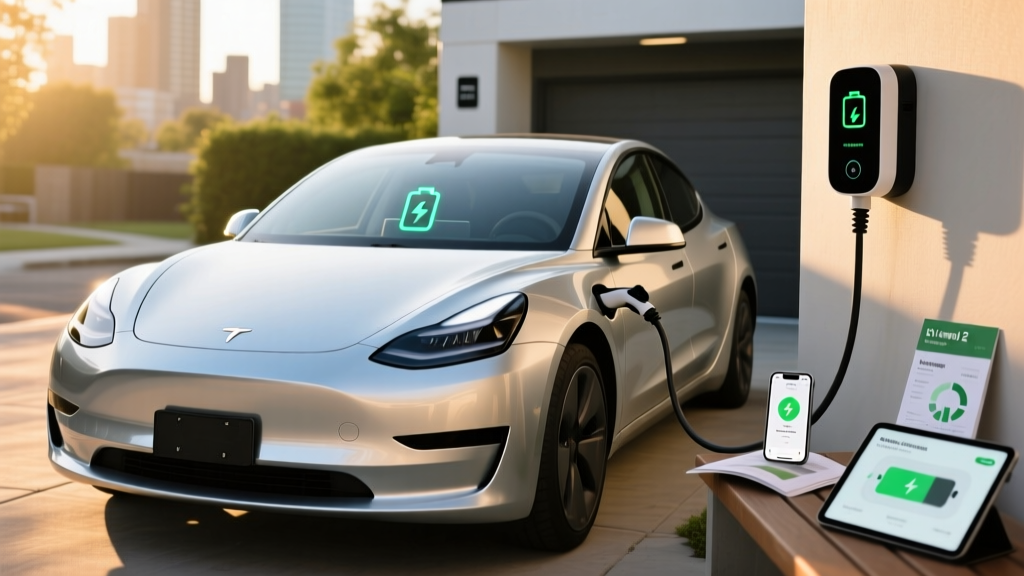
Technically yes, on Level 1 (120V, ~1.4 kW), but it adds only 2-3 miles of range per hour. Charging the E-Transit's 68 kWh battery from empty on Level 1 would take roughly 48 hours. A 240V Level 2 home charger (10.5 kW) reduces that to about 6.5 hours — overnight charging that works for most daily routes. Budget $1,200-$3,500 for a professional Level 2 installation, depending on your panel capacity and conduit run.
How long do EV van batteries last?
Based on degradation data from fleet operators running 2022-2024 model-year E-Transits and eSprinters, NMC batteries in daily Level 2 charging cycles lose approximately 1.5-2.5% capacity per year. At that rate, you'd retain roughly 85-90% capacity after five years. All three manufacturers warrant the battery for 8 years or 100,000 miles against falling below 70% capacity. Real-world fleet data from Ford Pro telematics supports these figures for depot-charged vehicles.
Do EV vans qualify for the $7,500 federal tax credit?
Commercial buyers should claim the §45W Commercial Clean Vehicle Credit (not the consumer §30D credit). The credit is up to $7,500 for vehicles under 14,000 lbs GVWR, provided the battery meets IRS sourcing requirements for critical minerals and components. The credit is non-refundable for most for-profit businesses, meaning it can only offset your actual tax liability. Consult a tax professional and verify current-year compliance at IRS.gov.
What happens if I run out of charge on a route?
Plan conservatively: size your route to use no more than 75-80% of real-world range, leaving buffer for traffic, detours, and HVAC load. All three vans support DC fast charging on CCS1 connectors ( Electrify America, EVgo, and other networks), but peak rates of 115-120 kW mean a 10-80% top-up takes 42-60 minutes. This is mid-day downtime — not ideal for time-sensitive deliveries. The best strategy is right-sizing the battery to your route and charging overnight at the depot.
Are EV vans more expensive to insure?
Generally, yes — commercial EV insurance premiums run 10-20% higher than equivalent gas vans, primarily due to higher repair costs for battery and power electronics. Expect to pay $2,000-$2,500/year per vehicle for commercial auto coverage on an E-Transit, versus $1,700-$2,100 for a gas Transit. Shop multiple commercial insurers and ask about EV-specific fleet discounts.
Can an EV van handle stop-and-go city delivery routes?
Stop-and-go driving is actually where EV vans excel. Regenerative braking recovers energy during deceleration, and electric motors don't idle or waste fuel at stops. An E-Transit on a dense urban delivery route with 80+ stops can achieve efficiency near its EPA rating of 2.0 kWh/mile or better, while a gas Transit in the same conditions drops well below its 14 MPG combined rating. The EV van's lower operating cost per mile is maximized in exactly this use case.