The Bottom Line on the Ford E-Transit
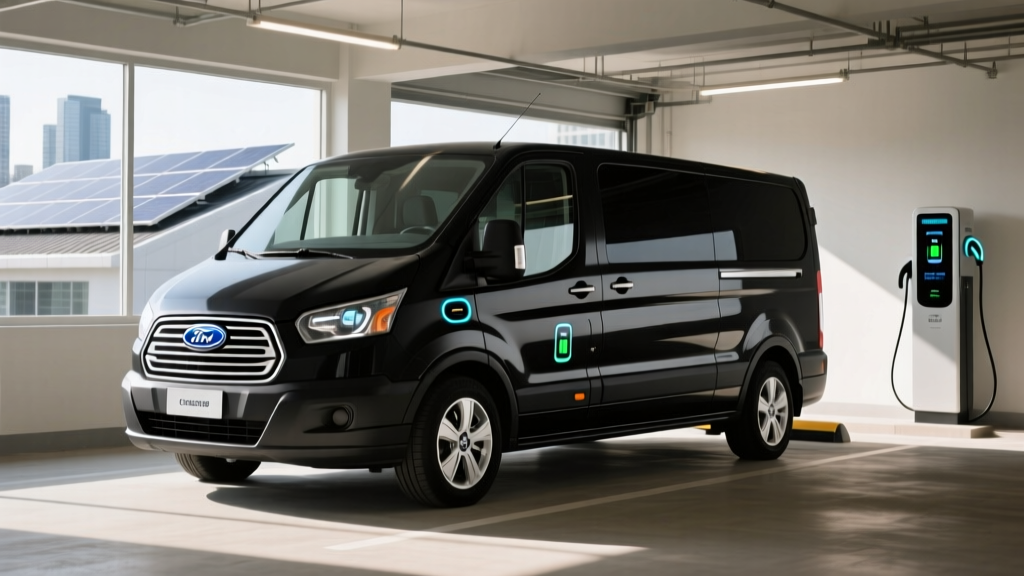
The Ford E-Transit is the dominant EV transit van in the US commercial market, offering an EPA-estimated 126 miles of range (low-roof cargo van), 126 kW peak DC fast charging, and a starting MSRP around $51,995 for the 2025/2026 model year. It's best suited for businesses with predictable daily routes under 100 miles and access to overnight Level 2 depot charging. Compared to a gas Transit, the E-Transit trades ~300 miles of range for dramatically lower per-mile fuel and maintenance costs — typically saving $2,500–$4,000 annually per vehicle depending on mileage and electricity rates.
Range, Battery, and Real-World Expectations
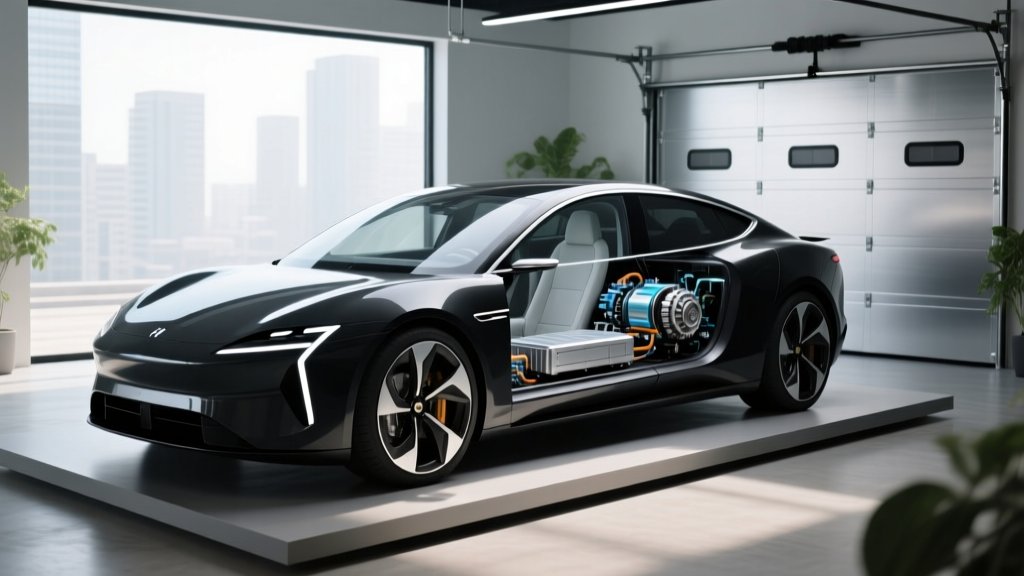
The E-Transit uses a 68 kWh usable lithium-ion NMC battery pack paired with a 266-horsepower (198 kW) rear-mounted electric motor producing 317 lb-ft of torque. The EPA-rated range varies by body configuration:
| Configuration | EPA Range | Battery (usable) | Motor Output |
|---|---|---|---|
| Low Roof Cargo Van (130" WB) | 126 miles | 68 kWh NMC | 266 hp / 317 lb-ft |
| Medium Roof Cargo Van (130" WB) | 118 miles | 68 kWh NMC | 266 hp / 317 lb-ft |
| High Roof Cargo Van (148" WB) | 108 miles | 68 kWh NMC | 266 hp / 317 lb-ft |
| Cutaway / Chassis Cab | ~108–126 miles | 68 kWh NMC | 266 hp / 317 lb-ft |
Real-World Range Reality Check
The 126-mile EPA figure assumes moderate-speed mixed driving in temperate conditions. Expect 90–110 miles in real-world urban delivery use with frequent stops, cargo load, and HVAC usage. Highway driving at 70 mph drops range to roughly 85–95 miles. In cold weather (below 32°F), plan for a 20–35% range reduction, bringing effective range to 70–90 miles for the low-roof model. The E-Transit does not currently offer a heat pump — it uses resistive cabin heating, which draws more from the battery in winter.
This range profile means the E-Transit works for last-mile delivery, service routes, and urban logistics — not long-haul or inter-city runs. Ford's own E-Transit spec page notes that telematics data from existing Transit fleet customers shows a median daily drive of about 74 miles, which fits comfortably within the E-Transit's envelope.
Charging Speed and Depot Setup
For commercial vans, charging logistics matter as much as the vehicle itself. Here's what the E-Transit supports:
| Charging Level | Power | Time (Approx.) | Best For |
|---|---|---|---|
| Level 1 (120V) | ~1.4 kW | ~48+ hours (0–100%) | Emergency only |
| Level 2 (240V, 48A) | 11.5 kW | ~8 hours (0–100%) | Overnight depot charging |
| Level 2 (240V, 32A) | 7.7 kW | ~10–11 hours (0–100%) | Standard L2 stations |
| DC Fast Charge | 126 kW peak | ~45 min (15–80%) | Mid-day top-ups |
The 126 kW peak DC charge rate is modest by passenger-car standards (where 250–350 kW is now common), but for a fleet depot it's functional. The charge curve tapers significantly above 80% state of charge, so Ford recommends charging to 80% for daily use to preserve battery health and reduce charge time. A 15–80% DC fast charge takes roughly 45 minutes — long enough for a driver lunch break, but not quick enough to rely on mid-route charging for high-utilization routes.
Depot charging installation is a critical cost factor. A commercial Level 2 installation (Ford Pro offers the Ford Connected Charge Station) typically runs $1,500–$3,000 per charger for equipment and electrical work, assuming adequate panel capacity. For a 5-van fleet, budget $10,000–$20,000 for a multi-station depot setup including permits, conduit, and potential panel upgrades. Many utilities offer commercial EV charging incentives that offset 30–50% of infrastructure costs — check with your local utility before purchasing.
EV Transit Van vs. Gas Transit: Cost Comparison
The core buying decision comes down to total cost of ownership. The E-Transit costs more upfront but saves on fuel and maintenance. Here's a side-by-side based on 2026 pricing and national averages:
| Factor | Ford E-Transit (EV) | Ford Transit 250 Cargo (Gas, 3.5L V6) |
|---|---|---|
| Base MSRP | ~$51,995 | ~$49,500 |
| Federal Tax Credit (§30D) | Up to $7,500 (if eligible) | $0 |
| Effective Purchase Price | ~$44,495–$51,995 | ~$49,500 |
| Fuel/Energy Cost per Mile | ~$0.06–$0.10 (electric) | ~$0.20–$0.28 (gasoline) |
| Annual Fuel/Energy (20,000 mi) | ~$1,200–$2,000 | ~$4,000–$5,600 |
| Annual Maintenance | ~$400–$700 | ~$1,200–$1,800 |
| 5-Year Fuel + Maintenance | ~$8,000–$13,500 | ~$26,000–$37,000 |
| EPA Efficiency | ~2.0 kWh/mi (MPGe varies by config) | ~16–18 MPG combined |
The math favors the E-Transit strongly if you drive 15,000–25,000 miles per year and charge primarily at your depot on commercial electricity rates (typically $0.08–$0.15/kWh). At 20,000 miles annually, the E-Transit saves roughly $3,000–$5,000 per year in fuel and maintenance combined. Over a 5-year ownership cycle, that's $15,000–$25,000 in operational savings — enough to more than offset the higher purchase price even without the tax credit.
The IRS §30D clean vehicle credit can provide up to $7,500 at point of sale for eligible commercial purchasers, though battery sourcing and critical mineral requirements apply and change annually. For fleet purchases, the §45W commercial clean vehicle credit may apply instead, offering up to $7,500 for vehicles under 14,000 lbs GVWR. Consult a tax professional to determine which credit your business qualifies for — eligibility depends on your entity type, vehicle sourcing, and tax liability.
Real-World Ownership: What Fleet Buyers Need to Know
Who the E-Transit Works For
- Urban and suburban delivery routes under 100 miles/day with return-to-base charging
- Service and trades businesses (plumbers, electricians, HVAC) with predictable daily mileage
- Fleet operators with depot access and the ability to install Level 2 chargers
- Municipal and campus fleets with short, fixed routes
Who Should Look Elsewhere
- Long-haul or inter-city routes exceeding 100 miles without mid-day charging time
- Businesses in extreme cold climates (northern Minnesota, Alaska) where winter range drops below daily needs
- Operators without depot charging access — relying on public DC fast charging is slow, expensive, and unreliable for daily commercial use
- Heavy-payload applications — the E-Transit has a max payload of ~3,880 lbs (low roof), which is less than some gas Transit configurations
Decision Framework: Should You Buy the E-Transit?
Choose the E-Transit if:
- Your daily route is under 100 miles (including a 20% cold-weather buffer)
- You can install Level 2 depot charging at your base
- You drive 15,000+ miles/year (higher mileage = faster payback)
- Your local electricity rates are under $0.18/kWh
- You want lower maintenance downtime (no oil changes, fewer brake replacements due to regen)
Stick with the gas Transit if:
- Your routes regularly exceed 120 miles/day or vary unpredictably
- You lack depot charging and can't install it (rented yard, shared facility)
- You operate in sustained sub-zero temperatures with high daily mileage
- You need maximum payload capacity (gas Transit offers up to ~4,300 lbs depending on config)
Maintenance, Warranty, and Battery Longevity
One of the strongest ownership arguments for the E-Transit is reduced maintenance. Electric drivetrains eliminate oil changes, spark plugs, transmission fluid, and exhaust system repairs. Regenerative braking significantly extends brake pad life — many EV fleet operators report brake replacements at 80,000–120,000 miles versus 30,000–50,000 for gas equivalents.
Ford's warranty coverage for the E-Transit:
- Battery: 8 years / 100,000 miles (retains at least 70% of original capacity)
- Electric powertrain components: 5 years / 60,000 miles
- Bumper-to-bumper: 3 years / 36,000 miles
The 70% capacity retention threshold is standard for the industry. In practice, liquid-cooled NMC packs in commercial use typically degrade 1.5–2.5% per year under normal charging habits (avoiding daily 100% charges and DC fast-charging exclusively). At year 8, expect roughly 82–88% state of health — well above the warranty threshold. Full battery replacement costs are estimated at $15,000–$22,000 out of warranty, though this is rare within the vehicle's useful commercial life.
Common Misconceptions About the E-Transit
| Myth | Fact |
|---|---|
| "126 miles of range isn't enough for any real business." | Ford's telematics data shows the median commercial van drives ~74 miles/day. For most urban delivery and service routes, 100+ real-world miles is sufficient with overnight charging. |
| "The E-Transit can't carry as much as a gas Transit." | The E-Transit low-roof offers ~3,880 lbs payload vs. ~4,300 lbs for a comparable gas Transit 250. It's a real difference, but most cargo-van loads are volume-limited, not weight-limited. |
| "Charging takes too long for commercial use." | Overnight Level 2 charging (8 hours) fully replenishes the battery. For most fleets, vans charge while parked — no driver time lost. Mid-day DC fast charging adds ~60 miles in 30 minutes. |
| "Electric vans cost more to insure." | Commercial EV insurance varies by carrier. Some fleets report comparable or slightly higher premiums (~5–10%), offset by fuel and maintenance savings. Get quotes before purchasing. |
| "The battery will need expensive replacement in a few years." | NMC batteries with liquid thermal management typically retain 85%+ capacity at 100,000 miles. Ford warrants the pack for 8 years/100,000 miles at 70% retention. |
Charging Infrastructure and Fleet Planning
Before ordering an E-Transit, solve your charging infrastructure. Here's a practical planning sequence:
- Audit daily routes: Pull GPS or telematics data from your current vans. What's the 95th-percentile daily mileage? If it's under 100 miles, the E-Transit fits.
- Assess electrical capacity: Contact a licensed electrician to evaluate your depot's panel. A single 48A Level 2 charger needs a 60A dedicated circuit. Five chargers may require a panel upgrade ($5,000–$15,000 depending on existing infrastructure).
- Check utility incentives: Many commercial utilities offer make-ready programs covering 50–100% of electrical infrastructure costs for fleet charging. This dramatically improves the E-Transit's ROI.
- Plan charge scheduling: With 8-hour Level 2 charging, vans returning by 10 PM are fully charged by 6 AM. Staggered charging (using smart chargers with load management) avoids peak demand charges from your utility.
- Consider Ford Pro ecosystem: Ford's Ford Pro commercial services division offers integrated telematics, charging hardware, and fleet management software that can optimize charge scheduling and route planning.
Frequently Asked Questions
What is the real-world range of the Ford E-Transit?
The EPA rates the low-roof E-Transit at 126 miles. In real-world urban delivery use with cargo, HVAC, and frequent stops, expect 90–110 miles. Highway driving at sustained speeds drops this to 85–95 miles. In sub-freezing temperatures, plan for 70–90 miles. Always size your route around the worst-case scenario, not the EPA sticker.
How long does it take to charge the E-Transit?
On a 48A Level 2 charger (11.5 kW), a full 0–100% charge takes approximately 8 hours — ideal for overnight depot charging. On a DC fast charger, 15–80% takes about 45 minutes at the 126 kW peak rate. The charge curve tapers above 80%, so a full DC charge takes significantly longer.
Does the E-Transit qualify for the federal tax credit?
The E-Transit may qualify for up to $7,500 under the §30D clean vehicle credit or the §45W commercial clean vehicle credit, depending on your business entity type and tax situation. Battery component and critical mineral sourcing requirements apply and change annually. The MSRP and buyer income caps under §30D may not apply if you're purchasing through a business entity using §45W. Consult the IRS guidelines and a qualified tax professional before relying on credit eligibility.
How does the E-Transit compare to the gas Ford Transit in payload?
The E-Transit low-roof cargo van offers approximately 3,880 lbs of payload capacity, compared to roughly 4,300 lbs for a similarly configured gas Transit 250. The difference (~420 lbs) is due to battery weight. For most delivery and service applications, cargo volume is the limiting factor, not weight. The E-Transit provides up to 487.3 cu ft of cargo volume (high-roof, extended wheelbase), matching the gas Transit's dimensions.
Can I use the E-Transit for towing?
The E-Transit is rated for up to 7,500 lbs of towing capacity (when properly equipped), which is competitive with gas Transit models. However, towing significantly reduces range — expect a 30–50% range reduction depending on trailer weight and aerodynamics. If you tow frequently and far, the gas Transit remains the more practical choice.
What is the E-Transit's top speed?
The E-Transit is electronically limited to approximately 75 mph. For commercial fleet use, this is adequate and helps manage energy consumption. Ford Pro's telematics can enforce custom speed limits for fleet vehicles.