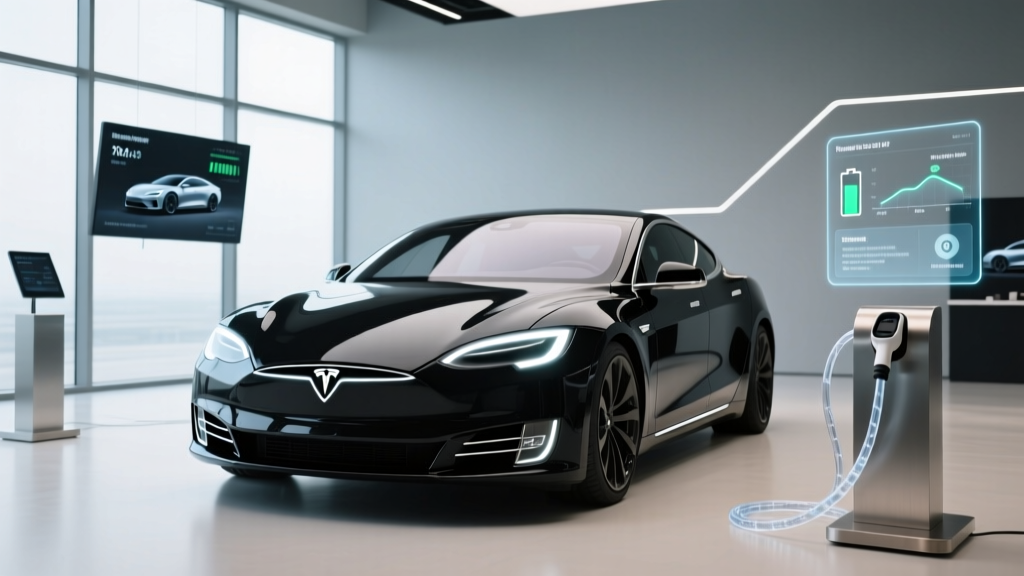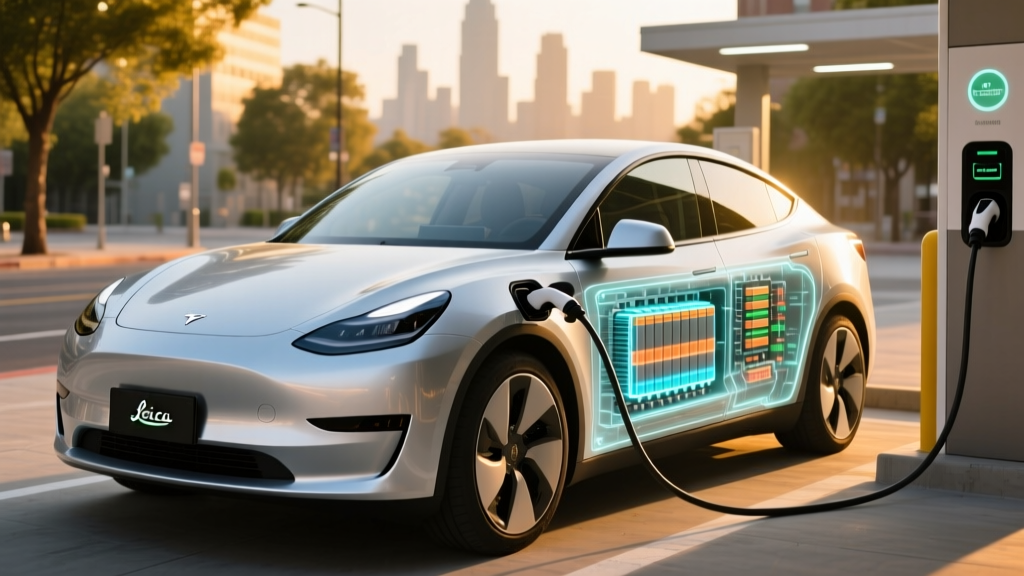
When new EV owners search for "how to recharge auto battery" systems, they often conflate two very different components: the 12-volt auxiliary battery (which powers lights, infotainment, and computers) and the high-voltage traction battery (which propels the vehicle). This guide focuses entirely on the traction battery — the expensive, complex lithium-ion or lithium iron phosphate pack that stores 50 to 130+ kWh of energy and determines your EV's range, charging speed, and long-term ownership cost.
Understanding how to properly recharge, monitor, and care for your EV's traction battery is the single most impactful thing you can do to protect your investment. Battery replacement remains the largest potential out-of-warranty expense in EV ownership, but with correct habits and a clear grasp of your warranty coverage, most drivers will never face that bill.
LFP vs NMC/NCA: Which Battery Chemistry Should You Choose?
Every EV sold in the US in 2026 uses one of two dominant cathode chemistries in its traction battery: Lithium Iron Phosphate (LFP) or Nickel Manganese Cobalt / Nickel Cobalt Aluminum (NMC/NCA). The chemistry dictates your vehicle's range, charging behavior, cold-weather performance, and expected lifespan.
| Attribute | LFP (Lithium Iron Phosphate) | NMC/NCA (Nickel-based) |
|---|---|---|
| Energy Density | Lower (~160 Wh/kg cell-level) | Higher (~250-300 Wh/kg cell-level) |
| Typical Cycle Life | 3,000-5,000+ cycles to 80% SoH | 1,000-2,000 cycles to 80% SoH |
| Cold Performance | Moderate loss (~15-25% range drop below 32°F) | Better retention (~10-20% range drop below 32°F) |
| Recommended Daily SoC | 100% (charge fully as often as needed) | 80% for daily; 100% only for trips |
| DC Fast-Charging Tolerance | Excellent — handles frequent fast charging well | Good — frequent 100% fast charges accelerate wear |
| Cost (cell-level, 2026) | ~$70-90/kWh | ~$100-130/kWh |
| Cobalt Content | None | Contains cobalt/nickel |
| Notable 2026 Applications | Tesla Model 3/Y RWD, Ford Mustang Mach-E Select (LFP option), base Chevy Equinox EV | Tesla Long Range, Hyundai Ioniq 5/6, Rivian R1T/R1S, BMW iX, most PHEVs |
The practical takeaway: If your daily commute is under 100 miles and you want a battery you can charge to 100% every night without worry, LFP is the more durable and lower-maintenance choice. If you need maximum range for long road trips and can commit to 80% daily charging limits, NMC/NCA delivers more miles per kWh of battery weight.
How Long Do EV Batteries Last? Real Degradation Data
The short answer: far longer than most buyers fear. According to data aggregated by Recurrent Auto from over 15,000 EVs in real-world service, the average EV battery retains approximately 90-95% of its original capacity after 5 years and 100,000 miles. Degradation is not linear — it follows a curve that's steeper in the first 1-2 years, then flattens significantly.
Typical Degradation Curve (NMC 75-82 kWh pack, mixed use):
- Year 1 / 15,000 mi: ~2-4% capacity loss (initial formation loss)
- Year 3 / 45,000 mi: ~5-8% total loss
- Year 5 / 75,000 mi: ~7-10% total loss
- Year 8 / 120,000 mi: ~10-15% total loss
- Year 10 / 150,000 mi: ~12-18% total loss (varies heavily by climate and charging habits)
LFP packs typically degrade more slowly, with many owners reporting 92-96% retention at the 5-year mark under normal use.
A concrete example: A 2022 Tesla Model 3 Long Range with an original EPA range of 358 miles and an NMC pack might realistically deliver ~320 miles of usable range at the 5-year mark under moderate use — still more than adequate for most daily driving. The EPA figures from fueleconomy.gov represent new-vehicle performance; expect a gradual decline.
What Does the EV Battery Warranty Actually Cover?
Federal law mandates a minimum battery warranty of 8 years or 100,000 miles (whichever comes first) for all EVs sold in the US. California Air Resources Board (CARB) states extend this to 10 years or 150,000 miles. Most manufacturers meet or exceed these minimums. The critical detail is the capacity retention threshold — the point below which the manufacturer must replace or repair the battery.
| Manufacturer | Warranty Period | Capacity Threshold | Notes |
|---|---|---|---|
| Tesla (Model 3/Y) | 8 yr / 100,000 mi (SR); 8 yr / 120,000 mi (LR) | 70% | Long Range gets higher mileage cap |
| Hyundai / Kia | 10 yr / 100,000 mi | 70% | Among the longest coverage in the industry |
| Ford (Mach-E, F-150 Lightning) | 8 yr / 100,000 mi | 70% | Covers battery and electric drivetrain components |
| General Motors (Ultium) | 8 yr / 100,000 mi | 70% | Modular pack allows partial module replacement |
| BMW (iX, i4) | 8 yr / 100,000 mi | 70% | Includes high-voltage system components |
| Rivian (R1T/R1S) | 8 yr / 175,000 mi | 70% | Highest mileage cap among major OEMs |
What "70% capacity" means in practice: If your 82 kWh NMC battery degrades to below 57.4 kWh of usable capacity within the warranty period, the manufacturer must remedy the issue — typically by replacing failed modules or the entire pack. This threshold is generous enough that very few batteries actually qualify for warranty replacement, which is itself evidence of modern pack durability.
How Much Does an EV Battery Replacement Cost?
Out-of-warranty battery replacement is the scenario that generates the most anxiety — and the most misleading headlines. Here are the actual numbers as of 2026, based on manufacturer parts pricing and independent shop data:
| Vehicle | Battery Size (kWh) | Chemistry | Full Pack Replacement | Typical Need Timeline |
|---|---|---|---|---|
| Tesla Model 3 RWD | ~60 kWh | LFP | $10,000 - $13,000 | Rarely before 200,000+ mi |
| Tesla Model Y Long Range | ~82 kWh | NMC | $14,000 - $18,000 | Rarely before 180,000+ mi |
| Hyundai Ioniq 5 | 77.4 kWh | NMC | $13,000 - $16,000 | Rarely before 180,000+ mi |
| Ford Mustang Mach-E Ext. Range | 91 kWh (usable) | NMC | $16,000 - $22,000 | Rarely before 170,000+ mi |
| Ford F-150 Lightning Ext. Range | 131 kWh | NMC | $22,000 - $30,000 | Rarely before 150,000+ mi |
| Chevy Bolt EV/EUV | 65 kWh | NMC | $14,000 - $16,000 (post-recall pack) | Post-2022 recall packs show strong durability |
The critical context most articles omit: Full pack replacement is increasingly rare. Modern EV batteries are modular — a technician can diagnose and replace individual cell modules (typically 12-24 modules per pack) for $1,500-$4,000 per module rather than swapping the entire assembly. GM's Ultium platform and Hyundai's E-GMP architecture were specifically designed with modular serviceability in mind.
Furthermore, cell-level pricing has dropped dramatically. According to BloombergNEF, average lithium-ion pack prices fell below $100/kWh at the cell level in 2025, meaning a replacement 75 kWh pack's raw cell cost is approximately $7,500 — with labor, diagnostics, and markup adding the remainder. Expect continued cost declines through 2030.
Factors That Accelerate (or Preserve) Battery Life
Your charging and driving habits materially affect how quickly your traction battery degrades. Here are the five most impactful factors, ranked by influence:
1. State of Charge (SoC) Habits — Highest Impact
- NMC/NCA: Keep daily SoC between 20-80%. Charge to 100% only when departing on a road trip. Avoid leaving the car parked at 100% for more than a few hours.
- LFP: Charge to 100% at least once per week. LFP cells need full-charge calibration for the BMS (battery management system) to accurately estimate range. Daily 100% charging is fine.
- Both: Avoid regularly draining below 10%. If you must store the vehicle for weeks, leave it at ~50% SoC.
2. DC Fast-Charging Frequency
- Occasional DC fast charging (1-2 times per week on road trips) has minimal impact on modern packs with active thermal management.
- Daily DC fast charging at 150+ kW without preconditioning accelerates degradation by an estimated 1-3% per year versus Level 2 home charging.
- Always use your vehicle's preconditioning feature (e.g., Tesla's "On-Route Battery Warmup," Hyundai's battery conditioning) before arriving at a DC fast charger. This brings the pack to optimal temperature (~95-105°F) and dramatically reduces stress on cells.
3. Extreme Temperature Exposure
- Prolonged exposure to ambient temperatures above 95°F (parking in unshaded desert lots for weeks) accelerates calendar degradation.
- Charging in sub-freezing temperatures without preconditioning can cause lithium plating on the anode — permanent damage. Modern BMS systems restrict charge rate in cold conditions to prevent this.
- Garage parking and preconditioning are your best defenses.
4. Driving Style and Regen Settings
- Aggressive acceleration draws high C-rates from the pack, generating heat. Moderate driving extends battery life.
- High regen settings are generally fine — the BMS manages charge acceptance to prevent over-stress.
5. Software Updates and BMS Calibration
- Manufacturer OTA updates frequently refine charge algorithms and thermal management. Keep your vehicle updated.
- Some manufacturers (notably Tesla) have increased usable capacity via software unlocks as degradation data improved — a benefit of staying current.
How to Check and Monitor Your Battery's State of Health (SoH)
State of Health (SoH) is the percentage of your battery's original capacity that remains usable. A new EV has 100% SoH; a pack at 85% SoH has lost 15% of its original capacity. Here's how to check it:
Built-in vehicle tools:
- Tesla: The mobile app displays estimated range at 100% charge. Compare this to the original EPA range — the ratio approximates SoH. Third-party apps like Tessie or Stats provide more granular SoH estimates using OBD-II data.
- Hyundai/Kia: The EV menu in the infotainment system shows battery health percentage on many 2023+ models. The Bluelink/Kia Connect app also surfaces this data.
- Ford: The FordPass app includes a battery health indicator on Mach-E and Lightning models.
- GM (Ultium): The myChevrolet/myCadillac apps provide battery condition status.
OBD-II diagnostic tools: Devices like the OBDLink SX or Carista adapter, paired with apps such as EVNotify or LeafSpy (Nissan Leaf) and Scan My Tesla, can read the BMS-reported SoH directly. This is the most accurate consumer-accessible method and is recommended before purchasing any used EV.
Dealer diagnostic reports: Any authorized dealer can run a full battery health report, typically for $50-$150. Request this during routine service visits and especially before a warranty claim.
What's Next: Solid-State and Silicon-Anode Batteries
Two emerging technologies promise to reshape EV batteries in the coming years — but neither is available in production vehicles sold in the US as of 2026.
Solid-state batteries replace the liquid electrolyte with a solid ceramic, polymer, or sulfide conductor. The theoretical benefits are substantial: 40-50% higher energy density, faster charging (potentially 10-80% in under 10 minutes), improved safety (no flammable electrolyte), and longer cycle life. Toyota has announced plans to commercialize solid-state cells in limited production by 2027-2028, while QuantumScape (backed by Volkswagen) continues pre-production validation. Samsung SDI targets 2027 for mass production. Realistic availability in mainstream US-market vehicles: 2029-2032.
Silicon-anode batteries replace the graphite anode with silicon, which can store roughly 10x more lithium ions per unit mass. Companies like Sila Nanotechnologies (partnered with Mercedes-Benz and Panasonic) and Group14 (partnered with Porsche) are bringing silicon-dominant anodes to production in 2025-2026, initially in premium applications. Expect 15-25% energy density gains in the near term, scaling to 40%+ as silicon content increases. This technology will reach mainstream US vehicles faster than solid-state — likely 2027-2029 for broader adoption.
Neither technology changes the advice in this guide. Current lithium-ion and LFP batteries are mature, durable, and well-warrantied. The care habits described above will serve you well regardless of what comes next.
Quick-Reference: Key Answers to Common Battery Questions
How long do EV batteries last in years and miles?
Most modern EV batteries (2020+) retain 85-92% of original capacity after 10 years or 150,000 miles under normal use. LFP packs tend to last longer, with many projected to exceed 200,000 miles before reaching the 70% warranty threshold. Full pack failure before 150,000 miles is statistically rare.
How much does an EV battery cost to replace?
Full pack replacement ranges from approximately $10,000 (smaller LFP packs like the Tesla Model 3 RWD) to $30,000 (large NMC packs like the F-150 Lightning Extended Range). However, most out-of-warranty repairs involve replacing individual modules at $1,500-$4,000 per module, not the entire pack. Cell pricing continues to decline annually.
What does the battery warranty cover?
All US-market EV batteries carry a minimum 8-year/100,000-mile warranty (10 yr/150,000 mi in CARB states) guaranteeing at least 70% capacity retention. This covers cell degradation, module failures, BMS faults, and thermal management system defects. It does not cover damage from accidents, flooding, or unauthorized modifications.
How do I check my EV battery's health?
Use your vehicle's built-in battery health display (accessible via the infotainment system or companion app), an OBD-II adapter with an EV-specific app like EVNotify or Scan My Tesla, or request a dealer diagnostic report. Compare your current 100%-charge range to the original EPA estimate for a quick SoH approximation.
LFP vs NMC — which is better for me?
Choose LFP if you want maximum cycle life, can charge at home daily to 100%, and your daily driving is under 150 miles. Choose NMC/NCA if you need the longest possible range per charge, frequently drive long distances, and can commit to 80% daily SoC limits. Neither is universally "better" — the right choice depends on your driving pattern and charging access.
Does fast charging damage my EV battery?
Occasional DC fast charging (a few times per week) has a small, measurable impact — typically an extra 1-2% degradation over 5 years compared to exclusive Level 2 home charging. The bigger risk is fast charging a cold battery without preconditioning, which can cause lithium plating. Always precondition before fast charging, and rely on Level 2 for daily needs.
Can I jump-start an EV if the traction battery is dead?
No. The high-voltage traction battery cannot be jump-started like a conventional 12V car battery. If your traction battery is fully depleted, the vehicle must be towed to a charger or charged via a mobile charging service. However, the separate 12V auxiliary battery can be jump-started using standard methods if it dies — consult your owner's manual for the 12V battery location and procedure.
For authoritative information on EV efficiency ratings and range data, consult the US Department of Energy's fueleconomy.gov database. For current federal EV tax credit rules that may offset your purchase and indirectly protect your battery investment through vehicle value retention, see the IRS Clean Vehicle Credits page.