Buying an electric vehicle isn't just a powertrain swap — it's a financial restructuring. The sticker price is only the opening move. What actually determines whether an EV saves or costs you money over five years is a tangle of EV taxes, federal and state credits, utility rebates, electricity rates, insurance premiums, and depreciation curves that behave very differently from gas cars.
This guide dissects the real math of EV ownership in 2026. We'll walk through the federal §30D tax credit (including the income, MSRP, and battery-sourcing caveats that disqualify many buyers), compare charging costs against gasoline mile-for-mile, and confront the categories where EVs cost more — not less.
The Federal EV Tax Credit: What §30D Actually Requires in 2026
The Internal Revenue Code §30D Clean Vehicle Credit remains the single most impactful incentive for new EV buyers — but it is not a blanket $7,500 handed to everyone who plugs in. The credit is split into two halves of $3,750 each, and eligibility hinges on a matrix of requirements that changed significantly under the Inflation Reduction Act and continue to evolve. According to the IRS, here is what you must satisfy:
- Vehicle MSRP caps: Vans, SUVs, and pickup trucks must have an MSRP at or below $80,000. Sedans and other passenger cars are capped at $55,000.
- Buyer income limits (modified AGI): $300,000 for joint filers, $225,000 for heads of household, $150,000 for single filers. If your income exceeds the threshold in either the year of delivery or the prior year, you are ineligible.
- Battery component sourcing: To qualify for the first $3,750, a specified percentage of battery components must be manufactured or assembled in North America. For 2026, this threshold continues to tighten year over year.
- Critical minerals requirement: The second $3,750 requires that a specified percentage of critical minerals in the battery were extracted or processed in the U.S. or a country with a qualifying free-trade agreement, or recycled in North America.
- Foreign entity of concern (FEOC) exclusion: Vehicles containing battery components from a FEOC (effectively Chinese-sourced components above a de minimis threshold) are disqualified entirely, regardless of other criteria.
- Final assembly in North America: The vehicle must undergo final assembly in the U.S., Canada, or Mexico.
- Point-of-sale transfer: Since 2024, buyers can elect to transfer the credit to the dealer at the point of sale, receiving it as an immediate price reduction rather than waiting to claim it on their tax return. This is optional — you can still claim it at tax time — but it effectively lowers your out-of-pocket cost on day one.
The practical result: many popular EVs qualify for only $3,750 or nothing at all depending on their battery supply chain. Always verify a specific VIN's eligibility on fueleconomy.gov before committing to a purchase, as manufacturer sourcing can shift mid-model-year.
5-Year Total Cost of Ownership: EV vs. Gasoline Baseline
To ground the discussion, let's compare a representative 2026 EV — the Hyundai Ioniq 6 SE Long Range (EPA 361 miles, 77.4 kWh battery, 168 kW peak DC charging, $42,715 MSRP) — against a comparably equipped gasoline midsize sedan averaging 30 MPG combined. We'll assume 15,000 miles per year, a 5-year hold period, and national-average energy costs.
| Cost Category | Hyundai Ioniq 6 SE (EV) | Gas Sedan Baseline (30 MPG) |
|---|---|---|
| Purchase price (MSRP) | $42,715 | $33,000 |
| Federal tax credit (§30D) | −$7,500 (if eligible) | $0 |
| Net purchase after credit | $35,215 | $33,000 |
| Fuel/energy (5 yr, 75,000 mi) | $5,063 (at $0.16/kWh, 3.5 mi/kWh) | $8,750 (at $3.50/gal, 30 MPG) |
| Maintenance (5 yr) | $1,800 | $3,500 |
| Insurance (5 yr) | $11,250 (avg $2,250/yr) | $8,750 (avg $1,750/yr) |
| Estimated depreciation | $18,500 (~52% of net) | $14,000 (~42%) |
| 5-Year Total Cost | $52,828 | $50,500 |
| Cost per mile | $0.70 | $0.67 |
Several observations: the EV's fuel and maintenance savings are substantial — roughly $5,387 over five years — but higher insurance premiums and steeper depreciation narrow the gap significantly. If you qualify for the full $7,500 credit and your state offers additional rebates, the EV pulls ahead. If you don't qualify (due to income, MSRP, or sourcing rules), the math tilts the other way.
Real-world efficiency note: The Ioniq 6 SE's EPA rating of 140 MPGe combined translates to about 3.5 miles per kWh. In cold-weather highway driving (below 35°F), expect efficiency to drop 20–30%, reducing effective range from 361 miles to roughly 250–290 miles. This affects your charging frequency and, marginally, your per-mile energy cost if you rely on pricier DC fast charging during road trips.
Charging vs. Gasoline: The Per-Mile Cost Reality
The single most variable line item in EV ownership is energy cost, because it depends entirely on how and where you charge. Here's the spread:
| Charging Scenario | Cost per kWh | Cost per Mile (at 3.5 mi/kWh) | Annual Cost (15,000 mi) |
|---|---|---|---|
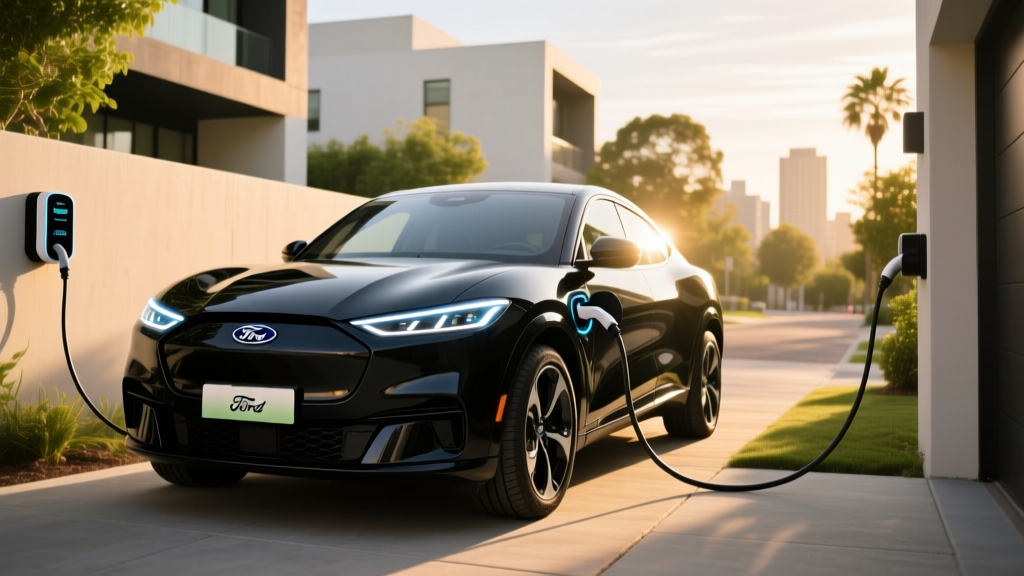
| Home Level 2 (national avg residential) | $0.16 | $0.046 | $686 |
| Home with utility EV rate (off-peak) | $0.09 | $0.026 | $386 |
| Public Level 2 (networks like ChargePoint) | $0.30–$0.45 | $0.086–$0.129 | $1,286–$1,929 |
| DC fast charging (Electrify America, EVgo) | $0.40–$0.60 | $0.114–$0.171 | $1,714–$2,571 |
| Tesla Supercharger (member pricing) | $0.25–$0.40 | $0.071–$0.114 | $1,071–$1,714 |
| Gasoline baseline: $3.50/gal ÷ 30 MPG = $0.117/mile ($1,750/year) | |||
Home charging on an off-peak utility rate is where the EV economics shine — roughly $386 per year versus $1,750 for gas, a $1,364 annual savings. But if you rely exclusively on DC fast charging, your per-mile cost can actually exceed gasoline. This is why home charging access is the single most important factor in EV ownership economics.
Maintenance Savings: Where EVs Genuinely Win
EVs have far fewer moving parts than internal combustion engines. No oil changes, no spark plugs, no timing belts, no exhaust systems, and no multi-speed transmissions. Regenerative braking dramatically reduces brake pad wear — many EV owners report original brake pads at 80,000+ miles.
| Maintenance Item | EV (5-year cost) | Gas Car (5-year cost) |
|---|---|---|
| Oil changes | $0 | $600–$900 |
| Brake pads/rotors | $200–$400 | $800–$1,500 |
| Transmission fluid/service | $0 | $300–$600 |
| Engine air filter | $0 | $150–$250 |
| Coolant flush | $150 | $200–$400 |
| Tire rotation/replacement | $1,200–$1,600 | $1,000–$1,400 |
| Cabin air filter, wipers, misc. | $250 | $250 |
| Total estimated | $1,800–$2,400 | $3,300–$5,300 |
The one area where EVs cost more: tires. Heavier curb weights (the Ioniq 6 weighs ~4,500 lbs) and instant torque accelerate tire wear. Budget for tire replacement roughly 10,000–15,000 miles sooner than you would on a comparable gas sedan.
The Insurance Reality: Why EVs Cost More to Insure
This is the cost category that catches many new EV owners off guard. On average, EV insurance premiums run 15–30% higher than equivalent gasoline vehicles. For the Ioniq 6, expect annual premiums around $2,100–$2,400 versus $1,600–$1,900 for a comparable gas sedan.
The reasons are structural, not arbitrary:
- Higher repair costs: EV battery packs and power electronics are expensive to replace after collision damage. A minor rear-end collision that would cost $2,000 to repair on a gas car can total an EV if the battery enclosure is compromised.
- Specialized labor: High-voltage system repairs require certified technicians, and fewer body shops have that certification.
- Higher vehicle values: Comprehensive and collision coverage premiums scale with vehicle replacement cost.
- Repair data scarcity: Insurers have decades of claims data on gas cars; EV actuarial models are still maturing, and insurers price in that uncertainty.
Some insurers now offer EV-specific policies with bundling discounts for home charger installation. It's worth shopping quotes from at least three carriers before purchase — premiums for the same EV can vary by $500+ annually between insurers.
Depreciation and Resale Value: The Evolving Picture
EV depreciation has historically been steeper than gasoline vehicles, driven by three factors: rapid technology advancement (newer models with more range make older ones less desirable), battery health uncertainty for used buyers, and aggressive price cuts by manufacturers (notably Tesla in 2023–2024) that cascaded through the used market.
As of 2026, the picture is stabilizing but still mixed:
- Average 5-year EV depreciation: 45–55% of purchase price (before tax credit). Applied to the Ioniq 6 at $42,715 MSRP, that's roughly $19,200–$23,500 in value lost.
- Average 5-year gas car depreciation: 38–45% of purchase price.
- LFP battery vehicles (like base Tesla Model 3 RWD) are showing stronger resale values because LFP chemistry degrades more slowly and tolerates 100% charging without damage, giving used buyers more confidence.
- Leasing as a hedge: If depreciation is your primary concern, leasing an EV transfers that risk to the lessor. Many 2026 EV leases are priced aggressively, and the leasing company (not you) absorbs the resale value hit.
The federal tax credit also changes the depreciation math. If you buy at $42,715 and receive $7,500 at point of sale, your effective cost basis is $35,215. Depreciation of 52% on that basis is $18,312 — much closer to the gas car baseline.
State, Local, and Utility Incentives: The Variable Layer
Important: State and local incentives vary enormously by jurisdiction and change frequently. The examples below are illustrative — always verify current programs through your state energy office, utility provider, and the Alternative Fuels Data Center.
Beyond the federal §30D credit, a patchwork of state, local, and utility incentives can meaningfully reduce your net cost:
- State purchase rebates: States like California (CVRP, up to $2,000 for income-qualified buyers), Colorado (up to $5,000 state tax credit for new EVs), and Massachusetts (MOR-EV, up to $3,500) stack on top of federal credits.
- Utility rebates: Many utilities offer $300–$1,000 rebates for purchasing an EV, and an additional $300–$500 for installing a Level 2 home charger. Check with your local provider.
- HOV lane access: States including California, Colorado, Virginia, and Maryland offer single-occupant HOV lane access for qualifying EVs — a perk with real time and economic value for commuters.
- Registration fee variations: Some states charge EVs higher annual registration fees (e.g., Ohio at $200/year, Washington at $225/year) to offset lost gas tax revenue. Others waive fees entirely. This is a real "EV tax" that varies state-to-state and should be factored into your 5-year cost.
- Home charging equipment tax credits: The §30C Alternative Fuel Infrastructure Tax Credit covers 30% of home charger equipment and installation costs, up to $1,000, subject to census-tract eligibility requirements.
The Used EV Credit: §25E for Budget-Conscious Buyers
If the new-EV credit's income and MSRP caps exclude you — or if you simply prefer a lower purchase price — the §25E Used Clean Vehicle Credit offers up to $4,000 (or 30% of the sale price, whichever is less) on a qualifying pre-owned EV. Key requirements:
- The vehicle must be at least two model years old.
- Sale price must be $25,000 or less.
- Buyer income limits are lower: $150,000 joint, $112,500 head of household, $75,000 single.
- The vehicle must be purchased from a licensed dealer (private-party sales don't qualify).
- The credit can also be transferred at the point of sale as an immediate price reduction.
This makes a 2–3 year old EV with moderate mileage one of the best value propositions in the market — you get a proven vehicle with most of its battery warranty intact, at a price point that undercuts new gas cars.
Frequently Asked Questions
How much does it really cost to own an EV over 5 years?
For a mainstream EV like the Hyundai Ioniq 6 SE, expect a 5-year total cost of ownership around $50,000–$56,000 including purchase (net of tax credits), energy, insurance, maintenance, and depreciation. This is broadly comparable to a gasoline midsize sedan at $48,000–$53,000. The EV wins on fuel and maintenance; the gas car wins on insurance and depreciation. Your specific costs depend on local electricity rates, insurance quotes, and whether you qualify for the full federal credit.
Do I qualify for the federal EV tax credit?
You may qualify for up to $7,500 under §30D if your modified adjusted gross income falls below $300,000 (joint), $225,000 (head of household), or $150,000 (single); the vehicle's MSRP is under $80,000 (SUVs/trucks/vans) or $55,000 (cars); the vehicle meets battery component and critical mineral sourcing requirements; and final assembly occurred in North America. Check your specific vehicle's VIN on fueleconomy.gov and consult a tax professional for your personal situation.
How much do I save on fuel and maintenance?
Home-charging EV owners typically save $1,000–$1,400 per year on fuel compared to a 30 MPG gas car at $3.50/gallon. Maintenance savings add another $300–$600 per year. Combined, that's roughly $6,500–$10,000 over five years. However, these savings shrink significantly if you rely on expensive public DC fast charging.
Are EVs more expensive to insure?
Yes, typically 15–30% more than a comparable gas vehicle. For a $42,000 EV, expect annual premiums of $2,100–$2,400 versus $1,600–$1,900 for a gas equivalent. The gap is driven by higher repair costs, specialized labor requirements, and higher vehicle replacement values. Shop at least three insurers — quotes vary widely.
How well do EVs hold their value?
Average EV depreciation is 45–55% over five years, steeper than the 38–45% typical for gas cars. However, this gap is narrowing as the market matures. LFP-battery vehicles and models from established brands are retaining value better. Leasing remains the most effective strategy to hedge depreciation risk on a new EV purchase.
Do I owe extra EV taxes or registration fees?
Possibly. Over 30 states impose additional annual registration fees on EVs (ranging from $50 to $225/year) to compensate for lost gas tax revenue. A few states also impose one-time EV purchase surcharges. Check your state's DMV or department of revenue for current fees — these are a real ownership cost that should be included in your 5-year calculation.
The bottom line: EV ownership economics in 2026 are favorable for buyers who can charge at home, qualify for federal and state incentives, and plan to hold the vehicle long enough to recoup the higher purchase price through fuel and maintenance savings. Run the numbers for your specific situation — your utility rate, your commute, your insurance quote, your state's registration fees — before signing. The spreadsheet always beats the brochure.